



The Ultimate Guide to Wig Heads and Stands for Professionals
Whether you're new to the world of wigs or a seasoned professional, you'll quickly realise that wig heads and stands are more than just accessories. They are the essential toolkit for keeping your wigs in top condition, making styling a breeze, and displaying them properly. Think of them as the foundation for protecting your investment and ensuring your wig looks its best for years to come.
Your Essential Introduction to Wig Heads and Stands
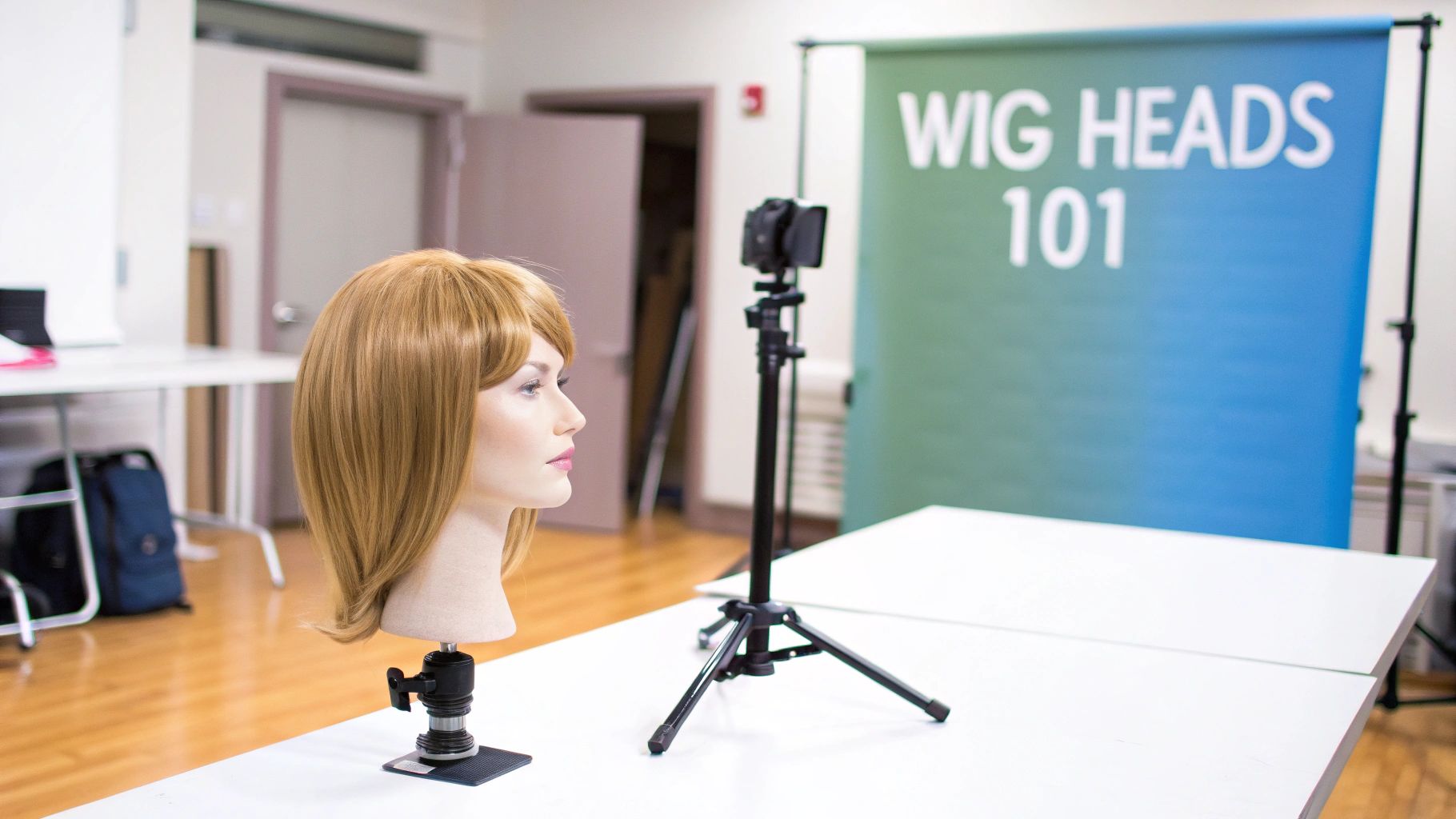
Ever tried to style a wig just holding it in your lap? It’s a recipe for disaster – a tangled, frustrating mess. That's exactly why wig heads and stands are so indispensable. They act as a stand-in for a human head, giving you a stable, realistic form to work on. Whether you're a stylist, a retailer, or simply someone who loves wearing wigs at home, these tools are the secret to getting polished, professional results every single time.
The demand for high-quality wig tools has skyrocketed right alongside the wig market itself. In the UK, the female hairpiece and wig market was valued at a staggering $612.9 million in 2019 and is expected to climb to $1,185.1 million by 2027. This isn't just a niche industry anymore; it's a mainstream market where professionals and enthusiasts alike need reliable gear for styling and display.
What Do They Actually Do?
At its heart, a good wig head and stand setup does a few crucial jobs that protect your wig and make your life easier. For many, wigs are a deeply personal choice, so it's worth understanding wigs as a hair loss solution to appreciate why maintaining their condition is so important to the wearer.
Here’s a breakdown of their primary roles:
- Keeps the Wig’s Shape: When you’re not wearing it, a wig can easily get crushed or lose its shape. A wig head provides the proper support to keep the cap's structure and the hairstyle intact, dramatically extending its lifespan.
- Makes Styling So Much Simpler: Having your wig secured on a head and stand frees up both of your hands. This is an absolute game-changer for precise cutting, colouring, or heat styling—a must-have for any stylist who needs accuracy.
- Creates an Effective Display: In a shop, a wig slung over a hook just doesn't sell. A beautifully styled wig on an elegant mannequin head helps customers truly see how it will look and feel when worn, which can make all the difference.
- Helps with Making and Mending: For wig makers and repair specialists, a sturdy canvas block head is their workbench. It’s where all the intricate work of ventilating, knotting, and fixing the piece happens.
A quality wig head and stand setup turns wig maintenance from a clumsy chore into a streamlined, professional process. It’s the key to both presentation and preservation.
In this guide, we'll walk you through everything you need to know. We’ll look at the different materials for wig heads, the various types of stands available, and give you practical advice to help you choose the perfect setup for your needs. My goal is to make sure you can make a confident, well-informed decision.
Choosing Your Foundation: A Guide to Wig Head Materials

Picking the right wig head is a lot like choosing the perfect artist's easel; the material you select directly shapes how well you can create, style, and preserve your work. Not all wig heads are built the same, and getting to grips with the differences is the first step towards a setup that genuinely serves your needs. From a simple stand for storage to a professional-grade styling block, the foundation really does matter.
Think of it as matching the tool to the task. A basic foam head might be perfect for keeping a wig tidy between wears, but it simply won’t hold up to the demands of professional wig making or intensive styling. Let’s break down the most common options to help you find your perfect match.
The Everyday Essential: Polystyrene Heads
You've probably seen these everywhere. Often called styrofoam heads, polystyrene wig heads are by far the most common and affordable choice out there. They're incredibly lightweight and easy to find, which makes them a go-to for beginners, home users, or anyone just needing a simple storage solution.
Their main draws are the low price and portability. The downside? They aren't built for heavy-duty work. You can stick pins in them, but doing so repeatedly will quickly wear out the foam, and the grip is never secure enough for things like tight styling or wig construction. They’re at their best for air-drying, light brushing, and keeping your wig’s shape when it’s not being worn.
The Professional Workhorse: Canvas Block Heads
For serious stylists, theatre professionals, and dedicated wig makers, the canvas block head is the undisputed industry standard. These heads are built to last, with a tough polyurethane base covered in durable canvas fabric. This creates a resilient surface that can handle just about anything you throw at it.
The standout feature of a canvas head is how brilliantly pin-friendly it is. The dense material allows you to insert and remove T-pins over and over again without causing any real damage. This rock-solid grip is essential for holding a wig firmly in place during intensive jobs like:
- Styling: Using heat tools, creating complex updos, or setting curls.
- Colouring: Keeping the wig taut for a flawless, even application.
- Ventilating: The delicate process of hand-tying new hair onto a wig cap.
Canvas heads are a huge step up in both function and durability from polystyrene. They represent a smart investment for any professional or serious enthusiast. If you want to learn more, our guide on selecting a mannequin head for your wig has some great tips.
The Premium Choice: Cork-Filled Canvas Heads
Taking things to the next level, cork-filled canvas heads offer the ultimate in stability and longevity. On the outside, they look just like a standard canvas head. It’s what’s inside that counts: a core of compressed cork, a material famous for its firm grip and self-healing properties.
This cork interior provides a superior hold for pins, gripping them even more securely than a standard polyurethane block. It’s also incredibly resilient, meaning the head can endure constant, heavy pinning for years without losing its shape or integrity. This makes it the top choice for artisans and professionals who work on wigs day in, day out.
If a standard canvas head is a reliable work van, a cork-filled head is a heavy-duty truck. It's built for the most demanding jobs, offering unparalleled grip and a lifespan that justifies its higher price point for dedicated professionals.
The Display Specialist: Mannequin Heads
Finally, we have mannequin display heads. These are less about hands-on work and all about presentation. Crafted from materials like fibreglass, plastic, or high-grade PVC, these heads often feature realistic facial features, various skin tones, and sometimes even makeup.
Their purpose is purely visual. They are designed to showcase exactly how a wig will look on a person, making them indispensable for retail shops, trade shows, and professional photography. The aesthetic appeal of these heads helps create an attractive display that can be the deciding factor for a customer.
This is particularly relevant today, as the UK leads European growth in the hair wigs and extensions market. With wigs holding a staggering 74.18% revenue share in 2021, effective retail display has never been more crucial.
Comparing Wig Head Materials at a Glance
To make the choice a little easier, here’s a quick rundown of how these materials stack up against each other.
| Material Type | Best For | Pin-Friendly | Durability | Price Point |
|---|---|---|---|---|
| Polystyrene | Basic storage, air-drying, and light brushing | Limited – wears out quickly | Low | £ |
| Canvas Block | Professional styling, colouring, and wig making | Yes – excellent for repeated use | High | ££ |
| Cork-Filled Canvas | Heavy-duty, daily professional use | Yes – superior grip and self-healing | Very High | £££ |
| Mannequin Display | Retail display, photography, and showcasing | No – not designed for pinning | Varies (Medium to High) | ££ - ££££ |
Ultimately, the best wig head is the one that fits your specific tasks. Whether you need a simple perch or a robust workstation, understanding these material differences will ensure you invest in a tool that helps you, rather than hinders you.
Selecting the Right Support System: Types of Wig Stands
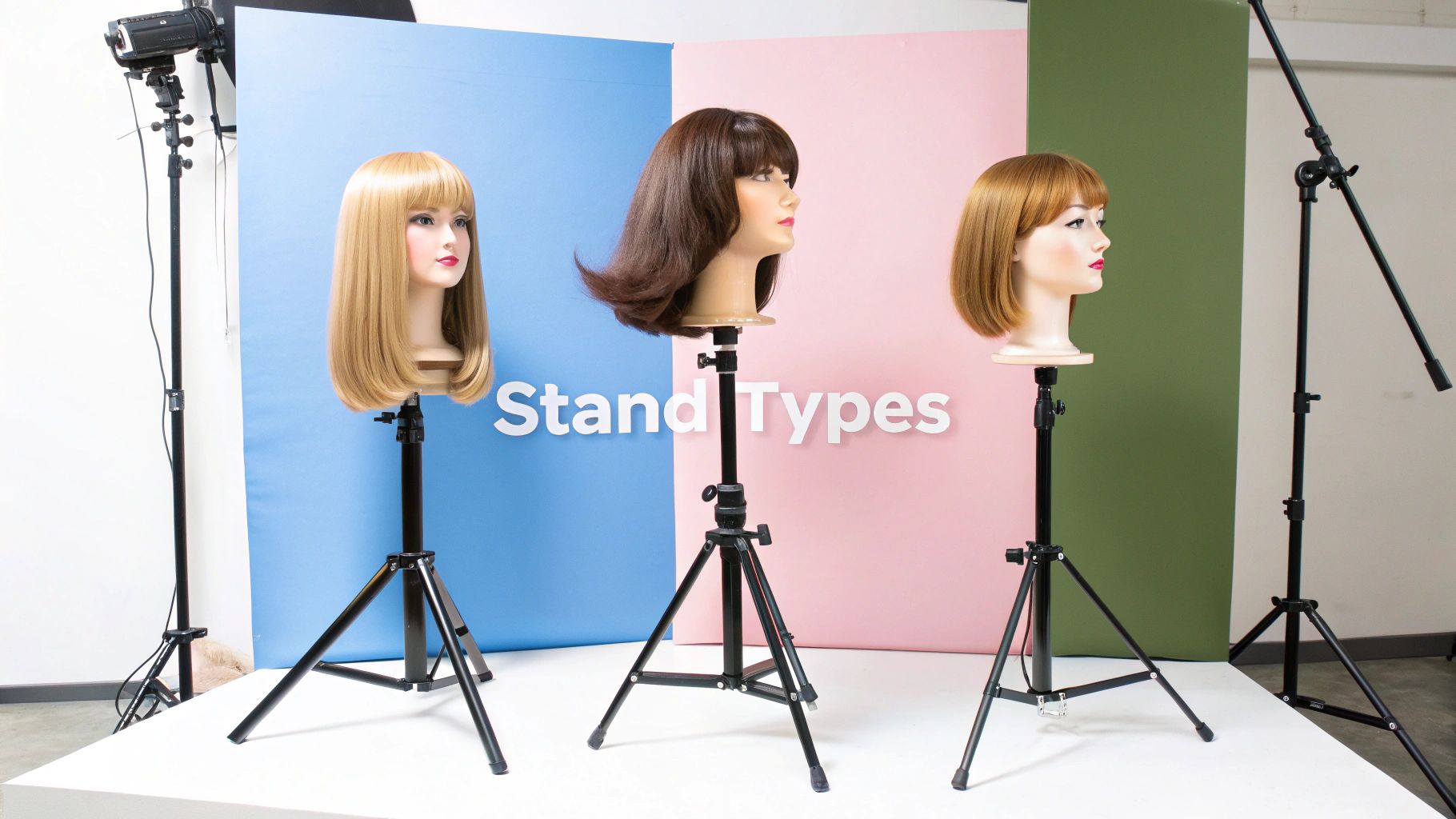
A professional-grade wig head is only half the story. Its true potential is unlocked by the stand that holds it. The right stand turns your wig head from a static form into a fully functional workstation, giving you the height, angle, and security needed for precise, creative work. You wouldn't expect a painter to work without a sturdy easel, and the same principle applies here.
Choosing the right support system is all about matching the stand’s design to your specific needs and workspace. The three main options—tripod stands, round-base stands, and tabletop clamp mounts—each have their own distinct advantages in stability, portability, and adjustability. Getting to grips with these differences is the key to creating an efficient and comfortable setup for styling, displaying, or storing your wigs.
The Professional Standard: Tripod Stands
For any serious stylist, wig maker, or theatrical designer, the tripod stand is the undisputed champion. Its three-legged design creates a wide, stable footprint that all but eliminates wobbling—an absolute must when you're doing detailed work like cutting, colouring, or setting intricate styles. Think of it as the heavy-duty workhorse of the wig world.
The real beauty of a tripod is its incredible adjustability. Most models offer a generous range of height settings, so you can work comfortably whether you’re sitting or standing. This ergonomic flexibility makes a huge difference, reducing back and neck strain during those long styling sessions. Many also feature a rotating head mount, giving you 360-degree access to the wig without having to shuffle the whole stand around.
When you're shopping for a tripod, look for a few tell-tale signs of quality:
- Sturdy Leg Locks: You need secure mechanisms that won't buckle under pressure.
- Durable Materials: Metal construction will always outlast plastic for both stability and longevity.
- Non-Slip Feet: Rubber or gripped feet are essential to keep the stand firmly planted on any floor surface.
The Elegant Display: Round-Base Stands
If your main goal is showcasing a wig rather than intensive styling, the round-base stand is a fantastic choice. These stands feature a single, solid column rising from a heavy, flat base, creating a sleek and minimalist look that’s perfect for retail displays, photo shoots, or trade shows.
While they don’t offer the height adjustment of a tripod, their strength lies in their rock-solid stability and visual appeal. The weighted base provides a low centre of gravity, making them incredibly difficult to knock over. This makes them the ideal platform for presenting a beautifully styled wig in a busy shop or creating a polished, professional look in a salon. If you're focusing on presentation, exploring a guide on the uses of a head mannequin stand can offer more ideas for display-centric setups.
The round-base stand is all about presentation and stability over portability. It’s the perfect choice when you want your wig head to stay put and look immaculate, anchoring your display with a touch of class.
The Space-Saving Solution: Tabletop Clamp Mounts
For home users, students, or professionals working in tight spaces, the tabletop clamp mount is a brilliantly practical bit of kit. This compact device lets you securely attach your wig head to the edge of a desk, table, or workbench. It takes up zero floor space, which is a lifesaver in smaller rooms or for temporary workstations.
Clamp mounts are incredibly portable and easy to set up, and a good one provides a surprisingly firm grip for most styling and maintenance tasks. The secret to a reliable clamp mount is its fastening mechanism. Look for a C-clamp design with a wide, padded grip that will hold tight without marking or damaging your furniture. While it isn't as versatile as a full-sized tripod, a quality clamp provides a perfectly stable foundation for everyday wig care. Looking at how other stands for professional equipment are built can give you a good sense of what makes for a stable and ergonomic design.
Matching Wig Heads and Stands to Your Profession
Choosing the right wig head and stand is never a one-size-fits-all affair. What you need it for will completely change the game. The ideal setup for a bustling shop floor is worlds away from what a theatrical costume designer needs in their workshop, or what a hobbyist requires at home.
Think of it this way: matching the right head material with the right type of stand transforms these simple accessories into essential professional tools. Get the combination right, and you’ll create a workflow that’s not just more efficient, but also delivers far better results.
Let's break down the best pairings for different professions, so you can invest in a system that truly supports your craft.
For Retail Shop Owners and Merchandisers
In retail, looks are everything. Your main job is to stop a customer in their tracks and help them imagine how fantastic a wig will look on them. For that, you need a display that’s both beautiful and stable.
The go-to combination for a shop floor is a fibreglass or plastic mannequin head set on a solid round-base stand. Why? Mannequin heads have those realistic, aspirational features that sell the dream. The heavy, sleek base of a round stand keeps the display rooted in place, even with customers browsing around it, and adds a touch of class.
This kind of setup is a cornerstone of the UK's thriving visual merchandising scene. In fact, an analysis of Wig & Hairpiece Retailing in the UK shows that England is home to over 70% of establishments, with cities like London and Manchester leading the way. If you want to dive deeper into creating displays that sell, you might find our guide on what visual merchandising is in retail useful.
For Professional Tailors and Costume Designers
When you're working in theatre, film, or bespoke tailoring, practicality always wins over prettiness. You need a workstation that's a true workhorse—something robust enough to handle constant use and precise enough for the tiniest adjustments.
The undisputed industry standard here is a cork-filled canvas block head mounted on a heavy-duty, fully adjustable tripod stand. This pairing is the ultimate in hands-on functionality.
- The Head: A cork-filled canvas block is brilliant because it grips T-pins tightly. This is non-negotiable when you’re securing a wig for intricate styling, a sharp cut, or fitting it precisely to an actor's measurements.
- The Stand: A tripod gives you that rock-solid stability you need, plus the freedom to adjust the height and angle. You can work comfortably whether you're sitting or standing, which makes all the difference during those long hours in the studio.
This combination gives you a 360-degree workspace with an unshakable foundation. It’s what allows you to perfect every single detail, from the hairline to the nape, ensuring the final piece is ready for the stage or screen.
For Home Sewing and Craft Enthusiasts
If you're a hobbyist or just enjoy styling your own wigs at home, you'll want something practical, affordable, and easy to store. Your priorities are different; you need a simple setup for washing, air-drying, and basic styling that won't take over your living room.
For home use, you can’t beat a lightweight polystyrene head paired with a handy tabletop clamp mount. This duo strikes the perfect balance between function and convenience, and it won't break the bank.
A polystyrene head is perfectly fine for maintaining the wig’s shape and for light styling tasks. But the real star is the clamp mount. It lets you secure the head to almost any desk or table edge, instantly creating a sturdy styling station without eating up any floor space. When you’re done, the whole thing comes apart in seconds and can be tucked away in a cupboard. It’s the ideal solution for smaller homes or multi-purpose craft areas.
A Practical Guide to Setup, Care, and Storage
Choosing the right wig head and stand is just the beginning. To get the most out of your investment, you need to know how to set them up properly, look after them, and store them correctly. Just like any professional tool, a little bit of ongoing care will keep your equipment performing reliably for years to come.
Think of it this way: a wobbly stand can completely ruin a precise haircut, and a dusty wig head can transfer grime straight onto a brand-new wig. Taking a few moments to get the basics right is fundamental to any professional workflow and will save you a world of frustration (and money) down the line.
Achieving a Rock-Solid Setup
Whether you’re styling a wig or putting one on display, stability is everything. A shaky base isn't just annoying; it’s a recipe for disaster that could damage your wig. Thankfully, getting a secure setup is simple once you know how.
For tripod stands, it’s all about the legs. Always spread them out to their widest possible footprint, as this creates a low centre of gravity and makes the whole thing much more stable. Before you even think about putting the head on, double-check that all the leg locks and height adjustment collars are clamped down tight. A common mistake is not extending the legs far enough, which leaves the stand top-heavy and dangerously easy to knock over.
If you're working with a tabletop clamp, the surface you attach it to is critical.
- Find a Sturdy Edge: Clamp it onto a solid, flat surface like a workbench or a heavy desk. Stay away from bevelled or rounded edges.
- Get Full Contact: Make sure the padded grips of the clamp are sitting flush against both the top and underside of the surface.
- Tighten, but Don't Overdo It: Screw the clamp until it’s firm and secure. Give it a little wiggle to test the grip, but be careful not to overtighten and leave a mark on your furniture.
Keeping Your Wig Heads in Prime Condition
Different materials need different cleaning approaches. Using the wrong products can cause real damage, so it's important to know what you’re working with.
- Polystyrene Heads: These are the most delicate of the bunch. Steer clear of any harsh chemical cleaners, as they can literally dissolve the foam. A quick wipe with a slightly damp cloth is all you need to get rid of dust. If you notice it starting to crumble, it's time for a replacement.
- Canvas Block Heads: Canvas is tough, but it can stain. For a general clean, a soft-bristled brush is perfect for whisking away loose hairs and dust. To tackle light stains, gently blot the area with a cloth dampened with water and a tiny drop of mild fabric detergent. Never soak the canvas, as the moisture can damage the core material underneath.
- Mannequin Display Heads: Fibreglass and plastic heads are the easiest to maintain. A quick wipe-down with a microfibre cloth and a gentle all-purpose cleaner is usually all it takes to keep them looking pristine for your shop floor.
A clean wig head isn’t just about looks—it’s about hygiene and professionalism. Wiping down your equipment regularly stops dust, styling product residue, and oils from getting onto your wigs, keeping them fresh and ready to wear.
Smart Storage for a Longer Lifespan
When your equipment isn't in use, storing it properly protects it from damage and helps your wigs keep their shape and style. Always find a cool, dry place away from direct sunlight, which can make materials brittle and fade colours over time.
For any kind of long-term storage, covering the wig and head is a must. Protecting them from the elements makes a huge difference. For valuable pieces, it's worth learning how a garment bag can offer moth-proof protection, as the same logic of creating a clean, sealed environment applies here. Even a simple plastic bag or a dedicated wig box can work wonders.
And don't forget the stand! Collapsible tripods should always be folded down and popped back in their travel bag. This tiny step prevents them from getting scratched or bent, ensuring your whole setup is organised and ready to go for next time.
Your Ultimate Wig Head and Stand Buying Checklist
Stepping into the world of wig heads and stands can feel a bit overwhelming, but narrowing down the right choice is simply about asking the right questions. Think of this checklist as a way to pull together everything we’ve talked about, helping you turn all that information into a confident purchase. Let’s walk through the key points to figure out which setup from the Display Guru collection is perfect for you.
This flowchart helps visualise how your main activity—be it display, styling, or storage—points you towards the best wig setup.
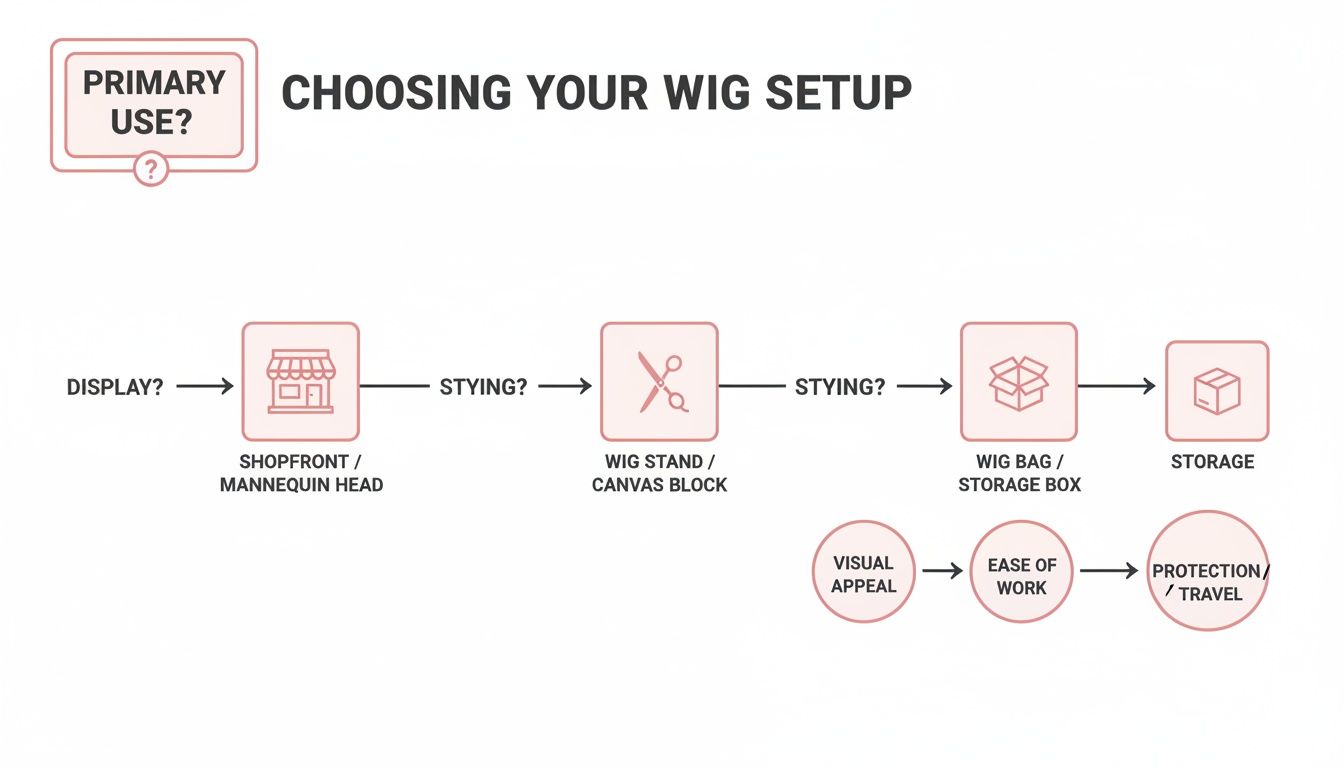
The real takeaway here is that your primary task should always dictate your choice of head and stand. This ensures you’re not just buying a piece of equipment, but investing in a tool that truly fits your workflow.
Assessing Your Primary Use
First things first: what will you be doing with your wig most of the time? Getting clear on this is the most critical step to finding the right gear.
- Retail Display: Is my main goal to make wigs look fantastic in a shop? If the answer is yes, then aesthetics and solid stability are what matter most.
- Professional Styling: Will I be constantly cutting, colouring, or heat-styling? This demands pure functionality, so a pin-friendly head and an adjustable stand are must-haves.
- Home Storage: Do I just need a simple way to keep my wig’s shape when I’m not wearing it? In that case, affordability and a space-saving design are the top priorities.
Choosing the Head Material
The kind of work you do will determine which head material can handle the daily grind. For a deeper look at the pros and cons of different materials, check out our complete guide to wig head mannequins.
- Pin Usage: Will I be using T-pins a lot to hold a wig in place? If so, a canvas or cork-filled head is non-negotiable for a secure grip. If it's just for storage, a simple polystyrene head will do the trick.
- Durability Needs: How long do I need this head to last, especially with heavy use? For daily professional styling, putting your money into a robust canvas head will save you headaches and money down the line.
Investing in the right tools from the start isn't an expense; it's a foundation for achieving professional-quality results, protecting your wigs, and making your entire creative process smoother.
Selecting the Right Stand
The stand is the foundation for all your work. The space you're in and the tasks you perform will decide whether you need something portable or something that won't budge.
- Workspace: Am I short on floor space? A tabletop clamp is a brilliant, space-saving solution. If you have a dedicated studio, a tripod offers far more freedom.
- Adjustability: Will I need to change the height and angle as I work? A tripod stand is really the only option that gives you that kind of ergonomic control.
- Stability vs Portability: Do I need to move my setup around, or will it stay put? For a fixed display that needs to be rock-solid, a heavy round-base stand offers stability you just can't beat.
Frequently Asked Questions
Got a few lingering questions about wig heads and stands? You're not alone. Let's clear up some of the most common queries so you can get the most out of your gear.
What Size Wig Head Do I Need?
Getting the size right is absolutely essential, especially for styling. A wig head that's too big can stretch out your wig's foundation, while one that's too small will have it slipping and sliding all over the place. Either way, precise work becomes a real headache.
To nail the perfect fit, you'll need to measure the circumference of your own head (or whoever will be wearing the wig). Just grab a soft tape measure, start it at the centre of your forehead, and wrap it around your head just above the ears, bringing it back around the most prominent point at the back of your skull. While a standard adult size is around 22 inches, you can find them in a whole range of sizes.
Think of it this way: a correctly sized wig head is like a perfect dress form for your wig. It ensures that every cut, curl, and adjustment you make will look just right when the wig is actually worn.
Can I Wash a Wig on a Polystyrene Head?
It might seem like a handy shortcut, but washing a wig on a polystyrene (styrofoam) head is a definite no-go. These heads are porous and simply weren't built to withstand a soaking. Water will eventually cause the foam to break down, crumble, and can even lead to mould growth – not something you want anywhere near your wigs.
On top of that, the texture of a polystyrene head can easily snag and damage delicate wig fibres during washing. For washing and drying, you're much better off with a sturdy, waterproof canvas block head or even a simple open-frame stand that lets air circulate freely. This helps the wig dry properly and keeps your equipment in top shape.
How Do I Stop My Tripod Stand from Wobbling?
A wobbly tripod is a common frustration, but thankfully, it's usually an easy fix. The key to a stable setup is a low centre of gravity and making sure everything is properly tightened. Here are a few quick tips to get a rock-solid base:
- Widen the Stance: Always extend the tripod legs out as far as they’ll go. A wider base is a more stable base.
- Lock It Down: Before you even think about putting the wig head on, go back and double-check every single leg lock and height-adjustment collar. Make sure they're all firmly tightened.
- Find a Flat Surface: Set up your stand on even, level ground. Trying to work on a slanted or bumpy floor is just asking for a wobbly disaster.
Follow these simple steps, and you’ll have a secure workstation ready for any styling challenge you throw at it.
At Display Guru, we provide the professional-grade tools you need to store, style, and showcase your wigs with confidence. Explore our extensive collection of high-quality wig heads and stands today. Find your perfect setup at https://www.displayguru.co.uk.