

What Is Visual Merchandising in Retail and How Does It Drive Sales
Ever walked past a shop and felt an irresistible pull to go inside? That’s visual merchandising at work. It's the silent, artful science of arranging your products and your entire retail space to attract, engage, and ultimately persuade customers to buy.
More than just making a shop look pretty, it’s about creating a journey for the shopper. It's the unsung hero, the silent salesperson, that works tirelessly to tell your brand's story.
The Silent Salesperson Your Store Needs
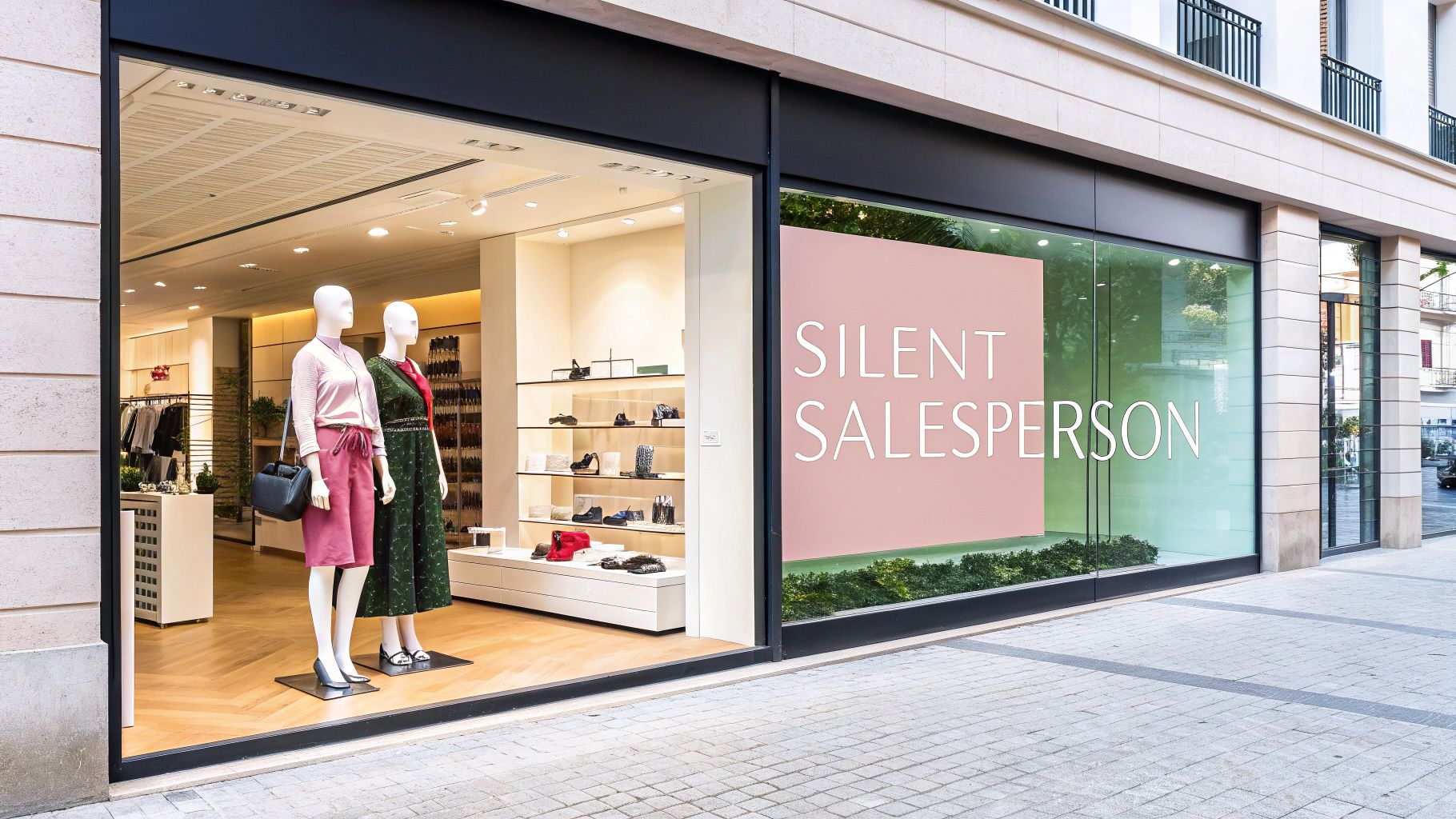
Imagine your retail space is a theatre. Your products are the cast, and visual merchandising is the director. It choreographs the entire customer experience, from the moment a potential buyer glances at your window display to the final, satisfying purchase at the till.
Just as a film director uses lighting and set design to create a mood, a skilled visual merchandiser uses colour, layout, and strategic product placement to spark desire. This thoughtful approach transforms a casual browser into an enthusiastic buyer by showing off your products' value and purpose without a word being spoken. While it shares some DNA with other retail disciplines, it's very much its own field. You can explore the distinctions in our guide on what is fashion merchandising.
More Than Just Decoration
At its heart, visual merchandising is a powerful communication tool. It anticipates and answers a customer's questions before they even think to ask them. It shows them not just what you're selling, but how your products can enhance their lives. A simple example? A mannequin styled in a complete outfit, right down to the shoes and handbag, isn't just selling a jacket—it's selling a whole look, a lifestyle.
This strategy is built on a few core goals that directly boost your business:
- Drawing People In: A stunning window display is your first, best chance to stop people in their tracks. It's not just a hunch; research shows window displays can influence purchase decisions 24% of the time in the UK, making them critical for driving footfall.
- Making Shopping a Pleasure: Nobody likes a cluttered, confusing shop. A well-organised and visually engaging layout makes it easy and enjoyable for customers to look around, encouraging them to stay longer and discover more.
- Driving Sales: By cleverly placing products and creating inspiring displays, you can nudge customers towards impulse buys and increase the value of each sale.
In essence, visual merchandising is about crafting a sensory experience. It connects with shoppers on an emotional level, turning a physical shop from a simple place to buy things into a destination—a powerful engine for building brand loyalty and growing revenue.
The Core Principles of Effective Displays
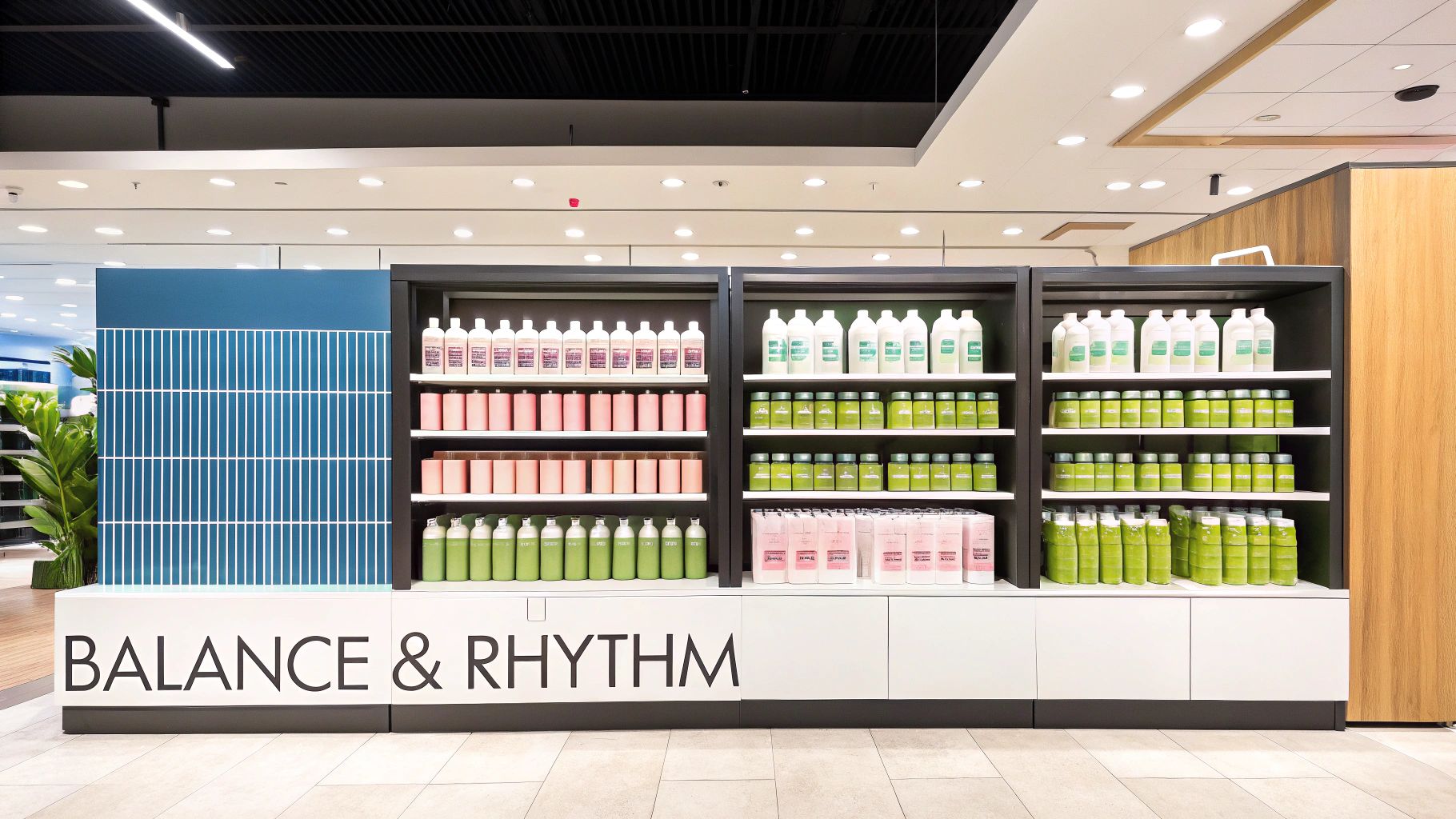
Truly great visual merchandising is so much more than just arranging products on a shelf. It’s a deliberate art, built on a foundation of solid design principles that speak directly to your customers. When you get it right, you're not just showing off stock; you're telling a compelling story that guides shoppers from the front door to the till.
These principles are the invisible threads that tie your entire store together. They create a shopping environment that feels intuitive, exciting, and professional, making it easier for customers to find what they love and discover new favourites along the way.
Creating an Inviting Atmosphere
Everything starts the moment a customer steps through your door. That first few feet of space, often called the decompression zone, is your chance to make a powerful first impression. Keep this area open and inviting, giving shoppers a moment to adjust from the hustle and bustle outside and get their bearings.
From there, customer psychology takes over. It's a well-known fact in UK retail that around 90% of shoppers instinctively turn to the right when they enter a store. This creates a natural anti-clockwise flow. Smart retailers use this predictable behaviour to their advantage, placing their most powerful displays and new arrivals along this primary path to guarantee they get seen.
Key Takeaway: A brilliant layout isn’t just about looking good; it's about understanding human nature. By tapping into how customers naturally move, you can strategically place displays to lead them on a journey, making their experience seamless and your sales stronger.
Structuring Your Displays for Impact
Once you’ve captured their attention, it’s the display itself that does the heavy lifting. This is where we borrow a few classic tricks from the worlds of art and design to elevate a simple product arrangement into something truly special. These ideas are the bedrock of effective merchandising, which we dive into deeper in our complete visual merchandising guidelines.
To help you get started, we've summarised these core concepts in the table below.
Key Principles of Visual Merchandising at a Glance
| Principle | Description | Practical Application Example |
|---|---|---|
| Balance | The sense of stability and equilibrium in a display. It can be symmetrical (mirrored) for a formal feel or asymmetrical for a more dynamic look. | Placing a large mannequin on one side of a window display, balanced by a stack of smaller, brightly coloured shoeboxes on the other. |
| Emphasis (Focal Point) | The star of the show! This is the one element or product that grabs a customer’s eye first, anchoring the entire display. | Using a spotlight to illuminate a single, high-value handbag placed on a pedestal in the centre of a display table. |
| Rhythm & Flow | Creating a visual pathway that guides the eye smoothly from one part of the display to another, telling a story along the way. | Arranging a series of T-shirts in a gradient of colour, from light to dark, to lead the eye across a wall display. |
| The Rule of Three | The simple but powerful idea that grouping items in odd numbers (especially threes) is more visually appealing and memorable. | A display table featuring a group of three complementary items: a scarf, a hat, and a pair of gloves, arranged at different heights. |
Mastering these principles gives you a powerful toolkit. They are the difference between a display that people walk past and one that stops them in their tracks, eager to take a closer look.
Essential Techniques for Retail Success
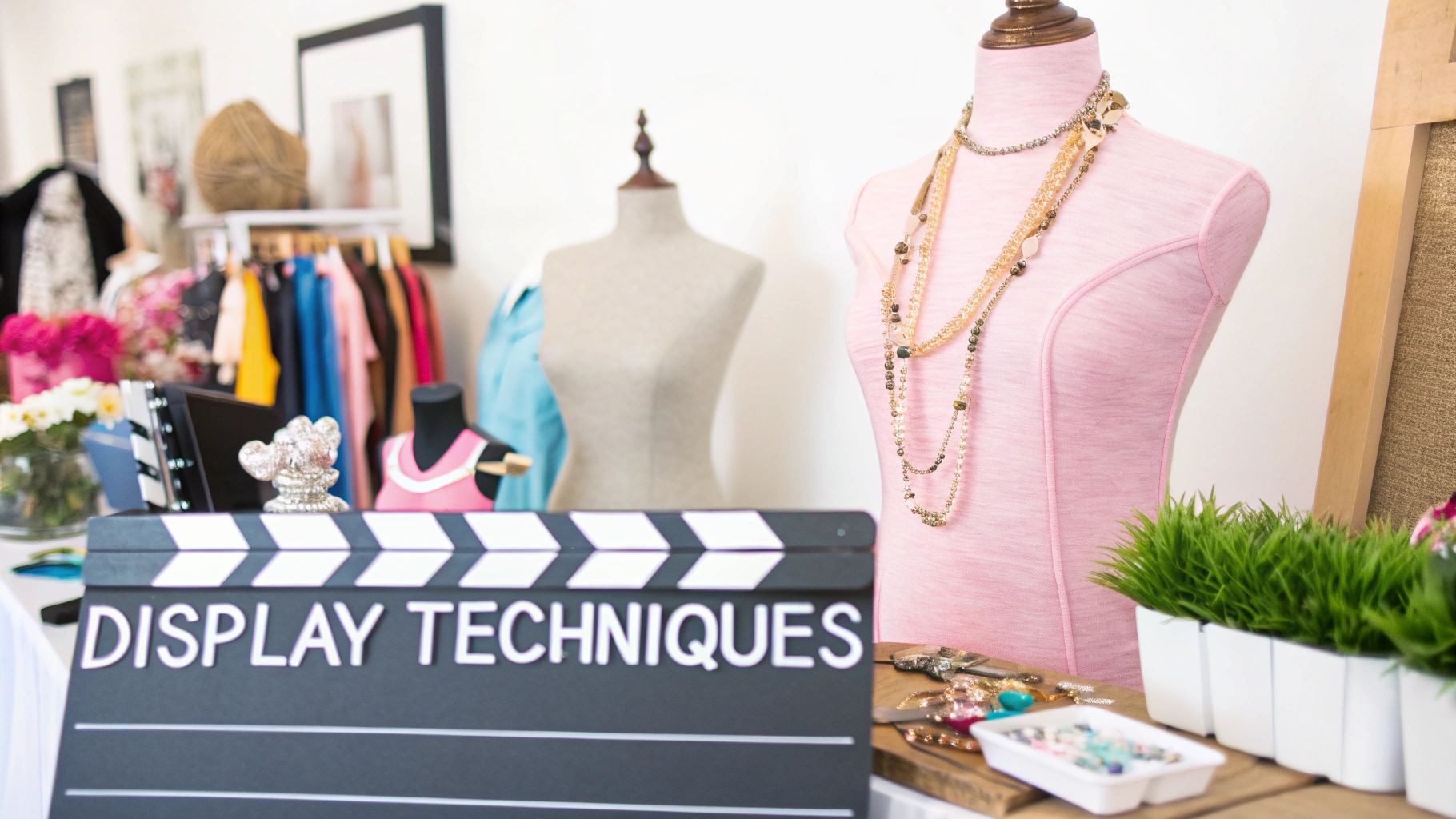
Knowing the principles is one thing, but putting them into practice is where the real magic happens. This is where you transform a retail space from a simple stockroom into a world your customers want to step into. These hands-on techniques are the bridge between your brand’s big ideas and the real-world customer experience, turning concepts like balance and rhythm into displays that actually sell.
Every touchpoint matters. From the show-stopping window installation that halts pedestrians in their tracks to the clever point-of-purchase setup that clinches that final impulse buy, each technique has a job to do. When you master them, you can guide shoppers, tell stories with your products, and build a much healthier bottom line.
Crafting a Narrative Through Product Storytelling
One of the most effective shifts you can make is to stop just showing products and start telling stories. It’s all about grouping items together to paint a picture, helping customers instantly visualise how your merchandise could fit into their own lives.
For example, don’t just display a single armchair. Instead, create a cosy reading nook, complete with a side table, a soft lamp, and a beautifully draped throw. You’re no longer selling a piece of furniture; you’re selling an experience. It preemptively answers the customer's silent question: "How would this look and feel in my home?"
A thematic display transforms products from standalone items into components of a desirable lifestyle. This contextual selling is far more persuasive than a simple price tag and is a cornerstone of effective visual merchandising in retail.
This narrative approach is invaluable for professionals, too. If you’re a tailor or costume designer, it’s how you show clients the potential of a fabric, pairing it with buttons, trims, and accessories to bring a finished look to life. It moves the conversation beyond the bolt of cloth.
Strategic Grouping and Cross Merchandising
How you group your products has a direct impact on your average basket size. Cross-merchandising is the simple but powerful art of displaying complementary items together to spark those add-on sales. Think about placing premium shoe polish right next to your leather loafers, or styling a mannequin in a new coat with the perfect scarf and handbag.
This isn’t just about upselling; it’s about making the shopping experience more convenient and inspiring. You’re planting a seed, suggesting a need the customer might not have even considered. For a deeper dive into this, have a look at our guide to creative shop display ideas.
Here are a few grouping strategies that always work well:
- By Colour: A display that flows through a single colour palette is visually arresting and makes it incredibly easy for customers to find what they're looking for.
- By Lifestyle: Group everything needed for a specific activity. Think workout gear, yoga mats, and water bottles all together in an "Active Lifestyle" zone.
- By Price Point: A "Gifts Under £25" table during the festive season is a brilliant way to make targeted shopping quick, easy, and painless.
And it’s not just about physical arrangements. The principles behind visual presentation, like those found in flat lay photography techniques, are directly transferable to a shop floor. Composition, styling, and creating a focal point are universal.
Using Fixtures to Create Impact
Your fixtures—mannequins, body forms, rails, and tables—are so much more than just product holders. They're the silent stagehands of your retail theatre. The right fixture doesn't just hold a product; it elevates it, creates a focal point, and helps direct the natural flow of traffic through your store.
Mannequins and body forms are indispensable for showing how garments truly fit and drape, bringing clothing to life in a way a hanger never could. Garment rails can be used to tell organised colour stories, while dump bins are perfect for promoting sales or shifting high-volume, low-cost items. The secret is to mix it up, using a variety of fixtures at different heights to create visual interest and keep the customer's eye moving and engaged.
Measuring the Impact on Your Bottom Line
Great visual merchandising is so much more than just making a shop look pretty; it's a hard-nosed business strategy that delivers real, measurable returns. There's a straight line connecting a brilliantly designed display to a healthy bottom line. When you get it right, your merchandising becomes one of your most powerful engines for growth.
The first and most obvious impact is on footfall. Think of your window display as a powerful magnet. A compelling setup can literally pull people off the street and into your store who might have otherwise just walked on by. Once they're inside, a clear, intuitive layout keeps them there longer, encourages them to explore, and massively increases the chances they'll buy something.
Key Performance Indicators to Track
To truly grasp the value of your visual merchandising, you need to look past the aesthetics and get into the numbers. Certain key performance indicators (KPIs) show you exactly how your displays are shaping customer behaviour and, ultimately, driving sales. Paying attention to these metrics allows you to stop guessing and start making decisions based on solid data.
-
Conversion Rate: This is the big one—the percentage of visitors who actually buy something. A well-merchandised shop guides a customer effortlessly from browsing to buying, which directly boosts this crucial number. If you have plenty of people coming in but not many buying, it’s a sure sign the in-store journey needs a rethink.
-
Average Transaction Value (ATV): Often called average basket size, this simply measures how much each customer spends on average. Smart techniques like cross-merchandising—placing a stylish belt next to the perfect pair of jeans, for example—are designed specifically to bump up the ATV by tempting shoppers with those extra, complementary items.
-
Inventory Turnover: Good displays sell products. It’s as simple as that. By creating a buzz around new arrivals, giving slow-moving items a fresh look, or using strategic retail display stands to draw the eye, you can dramatically increase the speed at which you sell through your stock.
Building Long-Term Value and Loyalty
Beyond the immediate transaction, visual merchandising is fundamental to building lasting customer relationships and brand loyalty. A memorable, enjoyable shopping experience creates an emotional connection. It’s what turns a one-time buyer into a loyal advocate for your brand—someone who feels you 'get' them.
This kind of positive experience is also the fuel for word-of-mouth marketing, which is still the most powerful and trusted advertising there is. In today's retail environment, understanding how to generate that buzz is critical, and the principles are the same whether online or off. For instance, the same visual storytelling that works in-store is now being used for boosting e-commerce sales with AI-generated UGC product videos.
The Takeaway: Visual merchandising isn’t an expense; it’s an investment. By tracking metrics like conversion rate, ATV, and inventory turnover, you can put a real number on its impact and prove its value. It changes your physical space from a simple shop into a powerful machine for winning customers, keeping them, and driving sustainable financial growth.
Actionable Best Practices for Your Store
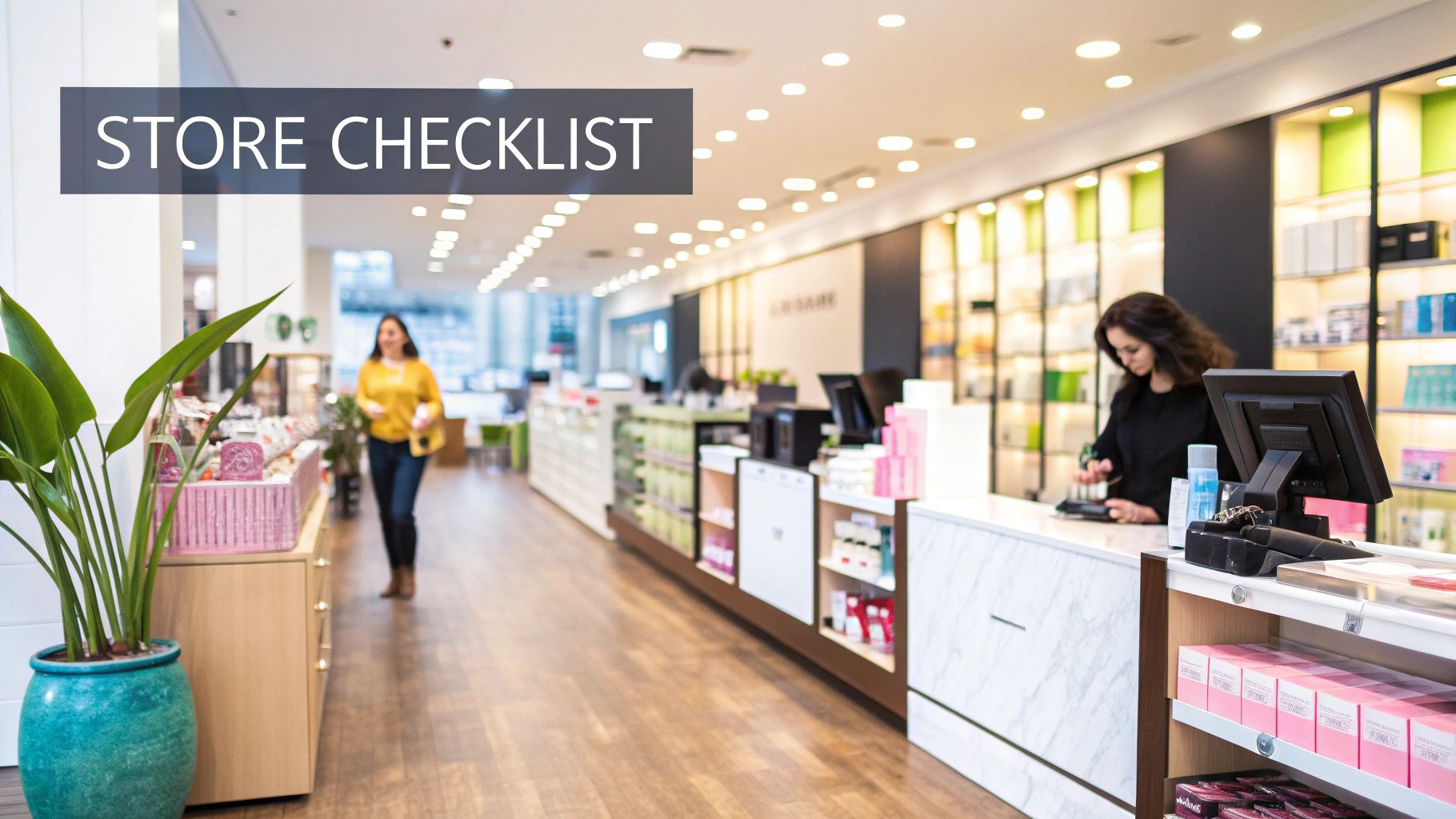
So, how do you take all this theory and put it into practice? Turning your shop from a simple room full of products into an experience starts with a few core habits. These aren't just abstract ideas; they are practical, proven techniques that create an environment that not only wows customers but also encourages them to buy.
Let's start with the customer's journey. When someone walks through your door, their path shouldn't be left to chance. You need to create a clear, natural route that guides them through your key product areas. Think of yourself as a director, choreographing their movement so they discover your best and newest items right away.
This path should deliberately lead them past your focal points—those high-impact displays you've created to stop people in their tracks and highlight your most profitable products or latest collections.
Create an Engaging Atmosphere with Lighting
Lighting is one of the most powerful, and frankly, most underused tools in a merchandiser's toolkit. It does so much more than just keep the dark out; it sets the mood, makes products irresistible, and tells the customer exactly where to look. A well-lit product just looks more desirable.
For the best results, think in layers. Combining different types of lighting creates depth and drama, preventing your store from looking flat and uninspired.
- Ambient Lighting: This is your foundation—the general, overall light that fills the space and sets the base mood, whether it's bright and airy or warm and intimate.
- Task Lighting: This is practical, focused light for areas where people need to see clearly, like at the till or inside fitting rooms.
- Accent Lighting: Here's where the magic happens. These are your spotlights, used to dramatise focal points and make hero products like a signature handbag, a piece of jewellery, or a featured garment really pop.
Get your lighting right, and you create a clear visual hierarchy, effortlessly guiding the shopper's eye to what you want them to see most.
Maintain and Refresh Your Displays Regularly
A store that never changes soon becomes invisible. That’s why the final, and perhaps most crucial, best practice is a commitment to keeping things fresh and consistent. This means ensuring your shop is always immaculate and that you're regularly updating displays to give returning customers a reason to be excited.
A well-maintained and dynamic store signals quality and care. It tells customers that you are proud of your space and your products, which builds trust and encourages them to spend more time—and money—with you.
This doesn't mean you need a complete refit every week. Even small tweaks—like rotating stock, updating your mannequins with new outfits, or bringing in seasonal props—can make the whole space feel new. For professionals working with anything from fashion to costumes, versatile display tools are essential. As you plan your updates, exploring different display stands for clothing can spark fresh ideas for showcasing items in more compelling ways. A simple, regular refresh schedule is the secret to keeping your visual merchandising effective.
Your Visual Merchandising Questions, Answered
As you start putting these ideas into practice, you'll naturally run into some practical questions. Getting these sorted helps turn visual merchandising from a lofty concept into a clear, actionable part of your day-to-day retail strategy. Let’s tackle some of the most common ones we hear.
How Often Should I Be Changing My Displays?
This is probably the number one question retailers ask. For your big, high-impact displays—like your main shop window—a good rule of thumb is to refresh them at least monthly. You should also aim to update them to match new seasons, big promotions, or when a major new collection arrives. This gives passers-by a reason to stop and look every time they walk past.
Inside the store, for smaller focal points and product groupings, you can be a bit more nimble. Aim to tweak these every one to two weeks. This doesn't mean a complete redesign every time. Sometimes, just swapping out a few key pieces or changing the colour story is enough to keep the space feeling dynamic and fresh, encouraging customers to pop in regularly to see what’s new.
Key Takeaway: Consistent updates send a powerful message: your shop is alive and always has something new to offer. It stops the space from feeling static and keeps your regulars intrigued.
What's the Real Difference Between Visual Merchandising and Store Design?
It's easy to get these two mixed up, but the distinction is crucial.
Think of store design as the bones of your building—the permanent, structural stuff. We're talking about the architecture, the flooring, the fixed lighting, the wall colours, and the fundamental layout. Store design is the stage.
Visual merchandising, then, is the performance that happens on that stage. It’s the art of arranging products, setting up compelling displays, and using mannequins, props, and furniture within that fixed space. It's the flexible, ever-changing layer that tells stories about your products and guides your customer’s eye.
Can Small Shops Really Do This on a Tight Budget?
Absolutely. And honestly, some of the most clever and effective displays come from creativity, not a huge budget. Visual merchandising is far more about strategy and ingenuity than it is about spending lots of money.
Small businesses can get fantastic results by focusing on the fundamentals. Start with these low-cost, high-impact tactics:
- A Good Tidy-Up: A clean, well-organised space instantly feels more professional and welcoming. This costs nothing but your time.
- Smart Lighting: You don’t need a new lighting rig. Just use what you have to create focal points. A single, well-aimed spotlight can turn an everyday item into the star of the show.
- Tell a Story: Group products by theme, colour, or use case. Creating a cohesive visual story costs nothing and makes your products far more appealing.
- Use the Rule of Three: Arranging items in odd-numbered groups, especially threes, is a classic design trick. It’s visually pleasing, creates a sense of balance, and is completely free to implement.
At the end of the day, your best tool is a deep understanding of your brand and your customer. That's what allows you to create displays that connect emotionally and drive sales, no matter the size of your budget.
Ready to bring your creative vision to life? Display Guru provides the professional-grade tailor's dummies, body forms, and garment rails you need to create stunning, effective displays. Explore our collection and start building a shopping experience that captivates your customers.