




A Professional Guide to Garment Bag Moth Proof Storage
Before you can moth-proof a garment bag, you first need to understand the real nature of the threat. The danger isn't the fluttering adult moth you might spot in a corner, but its nearly invisible larvae. These tiny grubs are the ones that methodically destroy natural fibres. Winning this battle means shifting your mindset from simply covering a garment to implementing a complete asset protection strategy.
Understanding the Moth Threat to Your Garments
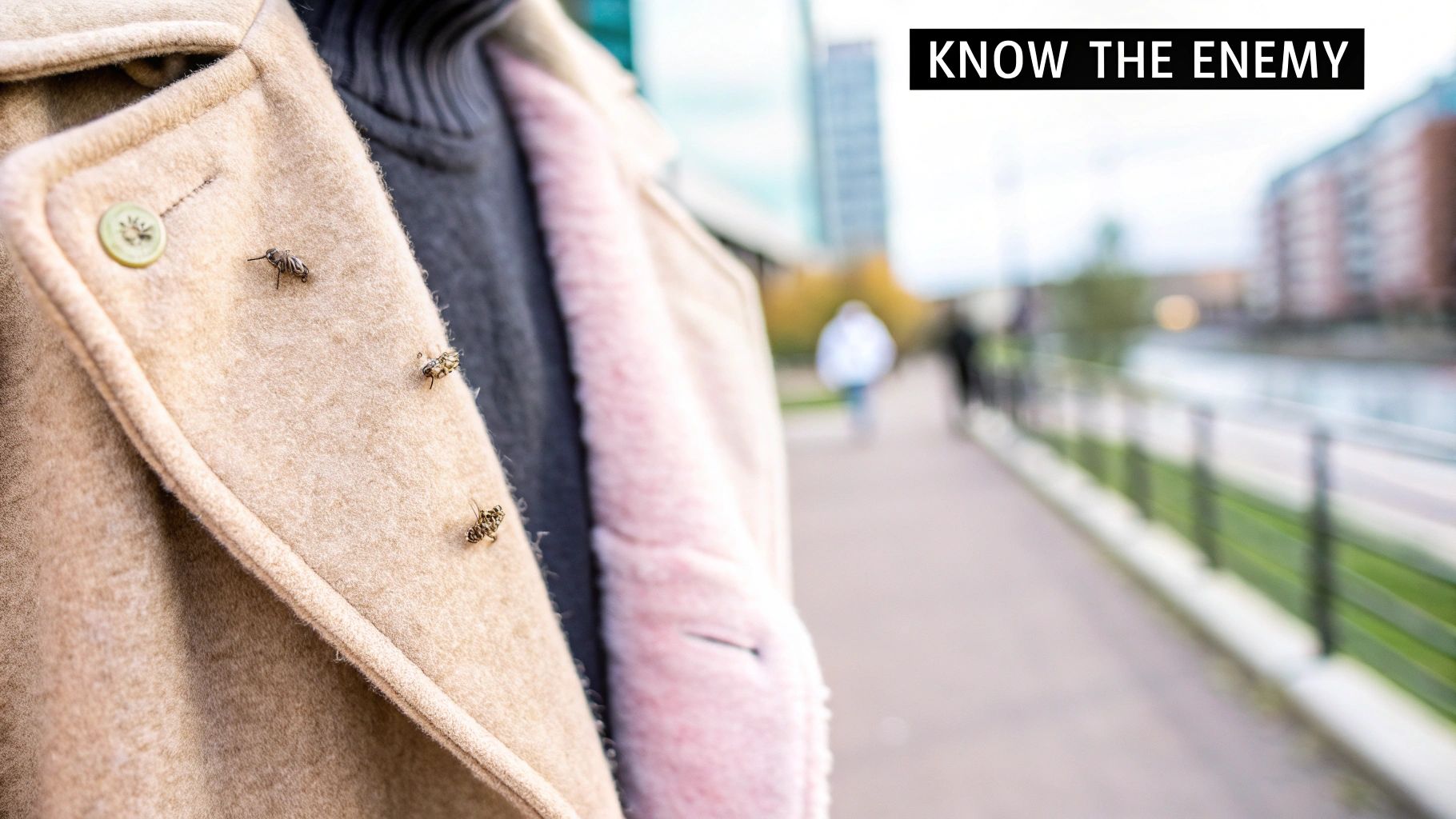
To properly protect valuable garments, you have to get specific about the enemy. For professionals here in the UK, the primary culprits are the Common Webbing Clothes Moth (Tineola bisselliella) and the Case-Bearing Clothes Moth (Tinea pellionella). Both species thrive in dark, quiet, undisturbed places, which makes stored textiles a perfect breeding ground.
The adult moths you see are harmless—they don’t even have functional mouths to eat fabric. Their one and only purpose is to reproduce. It's the larvae, which hatch from eggs laid directly onto your garments, that inflict all the damage.
These tiny grubs need keratin to grow, a protein found in any animal-based fibre. This dietary requirement puts certain materials at exceptionally high risk:
- Wool: Everything from fine merino jumpers to heavy tweed coats.
- Cashmere: A prized target due to its delicate, protein-rich structure.
- Silk: Often attacked, especially if it has any stains from food or body oils.
- Fur and Feathers: Common materials in couture, vintage pieces, and historical costumes.
Moths are particularly drawn to untreated natural fibers like wool batting, which can be destroyed if not properly stored. Even plant-based fibres like cotton or linen aren't entirely safe; if they're stained with sweat or food spills, they can provide just enough nutrients for larvae to survive and cause damage. You can learn more about safeguarding different materials by reading our guide on professional storage for fabrics.
Knowing your enemy is the first step. The table below offers a quick-reference guide to help you identify which moth you're dealing with and the kind of damage you can expect.
Identifying Key Moth Species and Their Larval Damage
| Moth Species | Larval Appearance | Typical Damage Signature | Preferred Materials |
|---|---|---|---|
| Common Webbing Clothes Moth (Tineola bisselliella) | Creamy-white grub, often hidden beneath a silken web spun on the fabric's surface. | Irregular holes and surface grazing, often covered with webbing and faecal pellets (frass). | Wool, cashmere, fur, silk, mohair. |
| Case-Bearing Clothes Moth (Tinea pellionella) | Similar grub, but lives inside a tiny, portable case made from the fibres it's eating. | More uniform, clean-cut holes. The larval case, often matching the fabric colour, is a key sign. | Feathers, felt, soiled wool, taxidermy. |
Being able to distinguish between these two can help you tailor your response and focus your inspection efforts where they'll be most effective.
Regional Hotspots and Environmental Factors
Your geographical location plays a huge role in your level of risk. Warmer, more humid environments speed up the moth life cycle, which can allow for multiple generations to hatch in a single year. This isn't just a theory; it's a documented trend.
Data from English Heritage's "Operation Clothes Moth" survey revealed that clothes moths are far more prevalent in southern UK regions. London and the South East reported an alarming average of 23 clothes moths per monitoring trap, a figure significantly higher than anywhere else. The South West and West Midlands followed with averages of 17 and 16 moths respectively, showing a clear risk gradient linked to warmer climates.
For anyone managing collections in older properties, particularly in southern England, this data highlights a critical point: moth prevention isn't a seasonal task—it's a year-round professional necessity. The architecture and ambient conditions of these buildings often create the perfect microclimates for pests to thrive.
Truly understanding this threat is the foundation of any effective protection plan. It’s not just about cleaning clothes before storage; it’s about establishing a professional mindset for protecting your valuable assets.
Selecting the Right Garment Bag for Maximum Protection
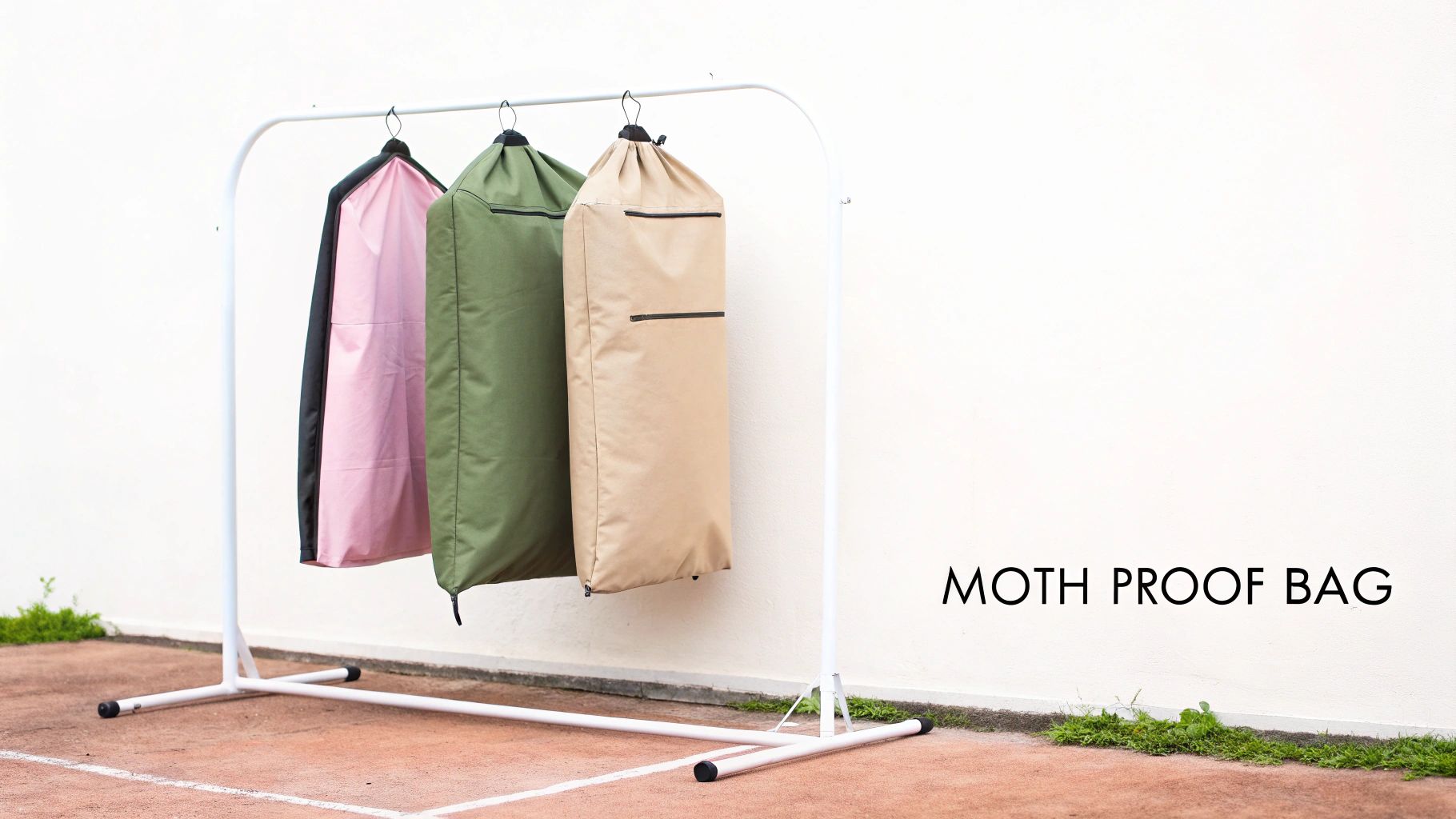
When you’re protecting valuable stock or a prized collection, choosing a garment bag isn't just about keeping the dust off a suit. It’s a crucial act of asset protection. That flimsy vinyl cover from the dry cleaner? It's simply not a garment bag moth proof solution. For any professional, understanding the difference between a simple dust cover and a genuine protective enclosure can mean saving a piece from irreversible damage.
The material of the bag is your first and most important line of defence. The options are varied, and frankly, each has its place. Your job is to match the material to both the garment and how long it's going into storage.
- Cotton Canvas: These bags are wonderfully breathable, which helps prevent moisture build-up and the dreaded yellowing of natural fibres. They're a solid choice for short-term storage or for items you need to access regularly. But be warned: a determined moth larva can eventually chew through cotton, so don't rely on them for foolproof long-term protection.
- PEVA/Vinyl: When you need a fortress, you turn to non-porous synthetics. For long-term or archival storage—think a vintage wool coat or a client's silk wedding dress—a garment bag moth proof system made from PEVA is non-negotiable. It creates an impenetrable physical barrier that completely blocks larvae from ever reaching the fabric.
But here’s the thing many people miss: it’s not just the material. A bag is only as secure as its weakest point. For true protection, the entire thing must be a sealed system, leaving absolutely no entry points for pests.
The Devil Is in the Details
Beyond the main fabric, three small construction features separate a high-quality protective bag from a basic dust cover. Moths only need the tiniest of openings to lay their eggs, and microscopic larvae can wriggle through surprisingly small gaps.
1. Fully Enclosed Zips
You need to look for zips that are completely enclosed or have a "zip lock" style closure at the top and bottom. A standard zip always leaves a small gap where the pull-tab rests—a massive vulnerability. The best bags I've seen even have a fabric flap covering the entire zip length for that extra layer of security.
2. Sealed Seams
Get up close and inspect the seams. Stitched seams, while strong, create thousands of tiny needle holes. For our purposes, heat-sealed or bonded seams are far superior because they leave zero perforations for larvae to exploit. This detail is absolutely critical for any archival-grade protection.
3. Hanger Opening
The most common point of failure is, without a doubt, the hanger opening. A simple slit is an open invitation for pests. A truly effective garment bag will have a tight, overlapping, or fully sealed closure around the hanger hook. No gaps, no exceptions.
Matching the Bag to the Garment
Think about the difference between storing a heavy, bespoke wool overcoat and a delicate silk gown. The overcoat needs a sturdy, gusseted bag that can handle its bulk without crushing the fibres. The silk gown, on the other hand, needs a longer bag that allows the hem to hang freely, preventing permanent creasing.
Whatever you do, resist the urge to store multiple items in a single large bag. It’s a false economy. It kills air circulation and dramatically increases the risk of cross-contamination if one piece has an issue.
For those of us managing an entire collection, combining individual moth-proof bags with a covered rail system offers a fantastic dual-layer defence. To get a better idea of how to set this up, you can explore our guide on selecting a professional garment rack with cover. Making the right choice from the very beginning is the key to ensuring your valuable garments remain in pristine condition for years to come.
Preparing Garments for Long-Term Storage
Putting a garment straight into a moth-proof bag without a bit of prep work first is a mistake I see all too often. Any lingering residue—from tiny food spills you can't even see to perspiration and body oils—acts like a dinner bell for moth larvae. Think of this stage as your pre-flight checklist; it's the single most important part of keeping valuable textiles safe from pests and other damage.
Your first job is to make absolutely certain every single item is spotlessly clean before it gets packed away.
For tougher materials like cotton or linen, a hot wash cycle will usually do the trick, killing off any potential eggs or larvae. It’s a simple fix that neutralises the threat before you’ve even sealed the bag.
Handling Delicate and Specialised Textiles
Of course, you can't throw everything in a hot wash. When you're dealing with delicate wools, cashmere, silks, and bespoke pieces, professional dry cleaning is your safest and most reliable option. The solvents used in the process are incredibly effective at eliminating moth larvae and eggs without harming those fragile fibres.
Once an item is clean, the next step is non-negotiable: it must be 100% dry. Even the tiniest bit of moisture trapped inside an airtight bag is a recipe for mildew, mould, and permanent fabric discolouration. I always recommend letting professionally cleaned items air out in a well-ventilated, pest-free room for at least 24 hours before bagging them. For anything you've laundered yourself, make sure it’s bone-dry, paying close attention to thick seams, collars, and cuffs where moisture loves to hide.
A crucial takeaway: Moths are drawn to the soiling on a garment, not just the fabric itself. A clean garment is a far less interesting meal. If you skip the cleaning, you're essentially baiting a trap and sealing your clothes in with the enemy.
Getting clothes thoroughly clean before they go into storage is a cornerstone of professional garment care. This is especially true here in the UK, where our climate can make homes and businesses prime targets for moth infestations. While airtight containers and properly sealed garment bags provide a vital physical barrier, that defence is only as strong as your preparation. UK entomology experts consistently find that it's the stains and sweat residues that first attract larvae, making cleaning an unavoidable first step.
Final Checks Before Sealing
Right, before you place that clean, dry garment into its protective bag, give it one last look over.
Empty all the pockets—a forgotten tissue or a few crumbs can be enough to attract pests. It's also a good idea to remove any heavy metal belts or chunky accessories that could put a strain on the fabric over a long period.
For tailored items with a lot of internal structure, knowing how to handle different fabric layers is key. If you're working with reinforced garments, you might find our guide on the role of interfacing in sewing useful for understanding their construction better.
By taking the time to methodically clean, dry, and inspect each piece, you turn a simple garment bag into a fortress—a genuinely effective, long-term solution for keeping moths at bay.
Building Your Moth-Proof Storage System
A high-quality moth-proof garment bag is the cornerstone of protecting your textiles, but it's really just the first line of defence. To truly safeguard your most valuable pieces, you need to think bigger and build a complete storage ecosystem. This means getting serious not just about what you store garments in, but also how and where you store them.
The process kicks off the moment you put a garment into its bag. A careless fold can lead to permanent creases, especially in delicate silks or structured items like a tailored jacket. For suits and coats, always use a broad, shaped hanger that properly supports the shoulders; this is non-negotiable for maintaining the garment's form. With long gowns, make sure the bag is long enough to stop the hem from bunching up at the bottom.
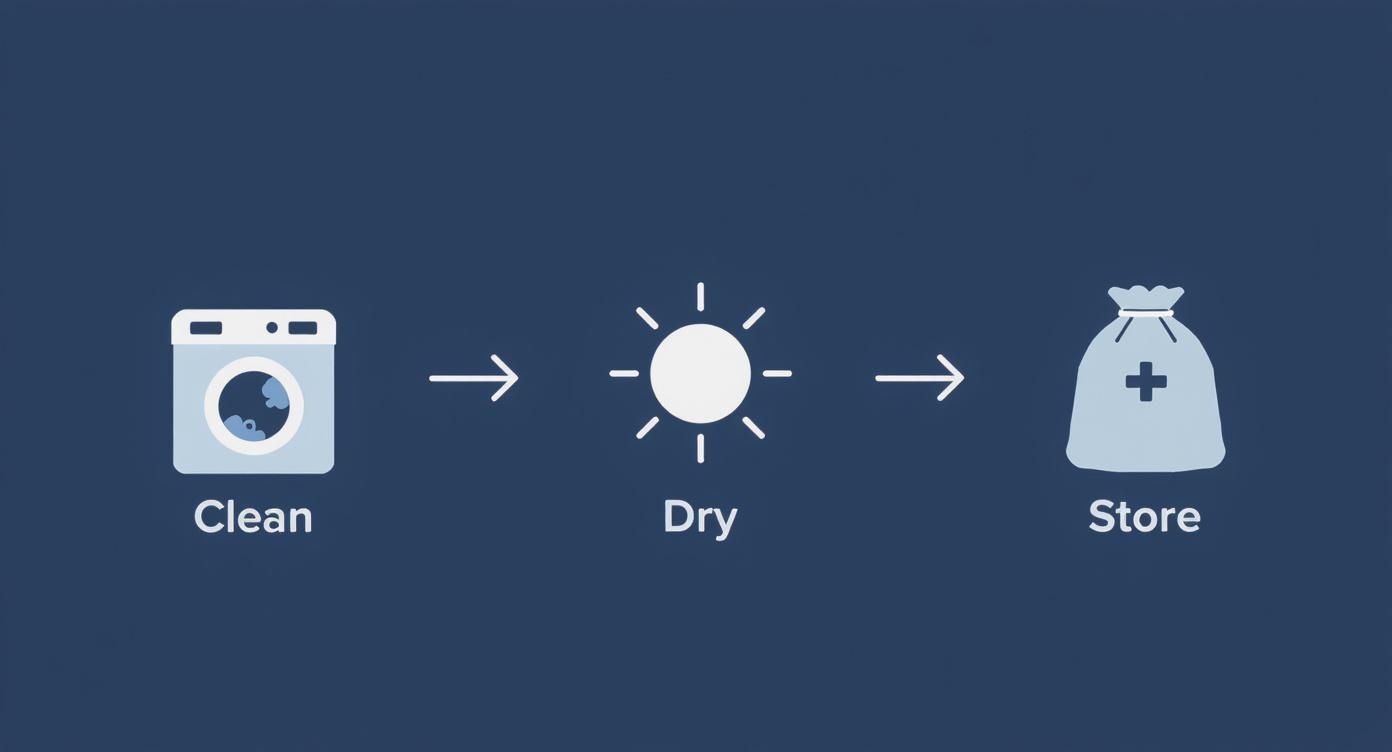
This simple flow—clean, dry, store—is the fundamental sequence for success. It creates a powerful barrier against infestation before the garment is even sealed away.
Achieving the Perfect Seal and Environment
Once your garment is correctly placed on its hanger, getting a perfect seal is paramount. Carefully run the zip from top to bottom, making sure no fabric gets caught in the teeth. Pay special attention to the hanger opening—this is the most common point of failure. You need to ensure the closure mechanism is completely engaged, leaving absolutely no gaps for a determined pest to sneak through.
Your storage location is just as crucial as the bag itself. Moths absolutely thrive in warm, humid, and dark conditions. This means you must store your protected garments somewhere that is cool, dark, and dry. Avoid attics, which are notorious for wild temperature swings, and damp basements that are a breeding ground for mould. A climate-controlled internal wardrobe or a dedicated storage room is the gold standard.
The goal is to create an environment that is actively hostile to pests. A cool, dry space not only deters moths but also preserves the integrity of the fabric itself, preventing yellowing and fibre degradation over time.
For larger collections, arranging your bagged garments on a purpose-built rack isn't just about organisation—it also vastly improves air circulation. You can explore options for a heavy duty clothing rack to build a truly professional-grade setup.
Adding Supplementary Deterrents and Monitoring
While a perfectly sealed bag is your primary defence, adding some supplementary deterrents to the surrounding area provides another valuable layer of protection. It's vital, however, to understand their specific roles and limitations.
Lots of options are out there, but they aren't all created equal. I've broken down the most common choices to help you decide what's right for your storage space.
Moth Deterrent Options Pros and Cons
| Deterrent Type | Mechanism of Action | Best Use Case | Limitations and Cautions |
|---|---|---|---|
| Cedar Blocks/Sachets | Aromatic oils repel adult moths, masking the scent of keratin. | In wardrobes and drawers, placed around (not inside) sealed garment bags. | Repels, but does not kill larvae. Potency fades and requires regular sanding or replacement. Oils can stain fabrics. |
| Lavender Sachets | Strong floral scent is unpleasant to adult moths. | A gentler-smelling alternative to cedar for general storage areas. | Purely a repellent. Loses scent over time and needs to be refreshed. Not a standalone solution. |
| Pheromone Traps | Sticky traps baited with female moth pheromones to attract and capture males. | A brilliant monitoring tool. Place in storage areas to detect an active infestation early. | Catches only males; will not stop an existing infestation. It's an early-warning system, not a control method. |
| Mothballs (Naphthalene) | Solid chemical that sublimates into a toxic gas, killing moths at all life stages. | In completely airtight containers where garments will be stored long-term and aired out thoroughly. | Highly toxic to humans and pets. Vapours are noxious and can damage plastics. Not recommended for most professional or home use. |
Ultimately, natural repellents and pheromone traps are the safest and most practical additions to your strategy. Mothballs are a relic of the past and come with too many risks for most situations.
- Natural Repellents: Cedar blocks and lavender sachets work because adult moths find their aromatic oils unpleasant. Remember, they are repellents, not killers, and they lose their punch over time. Place them in the wardrobe or storage room, but never inside a sealed bag where the oils could transfer to the fabric.
- Pheromone Traps: Think of these as your surveillance system, not an extermination solution. They use synthetic pheromones to attract and trap male moths, giving you a clear sign of trouble. Placing a couple in your storage area is the best early-warning system you can have. If you start catching moths, you know you have an active population that needs immediate attention.
To create a truly robust system, it’s worth adopting some Integrated Pest Management (IPM) principles. This professional approach prioritises prevention and monitoring, cutting down the need for reactive chemical treatments. By combining a sealed moth-proof garment bag system with an inhospitable environment and a smart monitoring strategy, you build a fortress that will keep your valuable garments safe year after year.
Maintaining and Inspecting Your Stored Garments
Properly storing a garment is only half the battle. Think of it as an ongoing commitment rather than a one-time task. While using a garment bag moth proof system is your best line of defence, regular checks are what keep that defence solid season after season. It’s preventative maintenance for your most valuable pieces, and a little time spent now can save you from discovering heartbreaking damage later on.
The trick is to build a simple, repeatable routine. For most collections, a biannual schedule works brilliantly—once in the spring as you pack away winter woollens, and again in the autumn when the heavy coats come back out. This rhythm lines up naturally with seasonal wardrobe changes and gives you two dedicated moments each year to catch a problem before it becomes an infestation.
Your Biannual Inspection Checklist
When you pull out a stored item, your inspection has two main goals: checking the integrity of the storage bag and the condition of the garment itself. Before you even unzip the bag, give it a once-over.
- Check the Seal: Run your fingers along the entire zip. Is it fully closed? Look closely at the hanger opening—is it snug and secure? These are the most common entry points.
- Inspect the Material: Look for any tiny punctures, rips, or areas where the material looks thin or stressed. Holding the bag up to a bright light is a great way to spot pinprick holes you might otherwise miss.
Once you're satisfied with the bag, take the garment out in a clean, well-lit space—ideally away from your main wardrobe or storage room. This simple quarantine step prevents any unwelcome hitchhikers from migrating to other clothes. Lay the item flat and look carefully.
You’re hunting for the subtle, early signs of moth activity. This isn’t just about finding obvious holes. Keep an eye out for fine, silky webbing on the fabric’s surface, tiny larval casings that resemble grains of rice, or the tell-tale "frass"—the sandy-looking waste pellets left behind by the larvae.
This kind of vigilance is more critical now than ever. Recent data suggests that the lockdown periods led to a significant boom in clothes moth populations across the UK. The National Trust's annual pest reports highlighted a noticeable spike in moth infestations, likely because reduced footfall and housekeeping in their properties gave pests the perfect quiet environment to multiply. You can discover more insights about this trend and how it’s affecting homes and businesses.
Creating an Inspection Log
For those of us managing large or valuable collections, a simple inspection log is a game-changer. It doesn’t need to be anything fancy; a basic spreadsheet or even a dedicated notebook works perfectly. For each key piece, you’ll want to track:
- Garment ID: A quick description (e.g., "Vintage Harris Tweed Overcoat" or "Client A - Silk Wedding Gown").
- Inspection Date: When you performed the check.
- Condition Notes: A brief summary of what you found (e.g., "Bag and garment pristine. No signs of pests.").
- Action Taken: Any steps you took, like replacing a cedar block or sending an item for a refresh clean.
This log builds up a valuable history for each garment, helping you stay on top of its condition and ensuring nothing gets missed. It’s a professional touch that brings real peace of mind.
Common Questions About Garment Bag Moth Proofing
Even the most seasoned professionals run into questions when setting up a serious moth-proofing system. Getting the right answers can make all the difference between a minor nuisance and a catastrophic loss. Let's tackle some of the queries I hear most often.
Are Breathable Cotton Garment Bags Truly Moth Proof?
This is a big one. While a high-quality, densely woven cotton bag is great for preventing dust and letting fabric breathe, it is not 100% moth proof for long-term storage. I've seen it happen: a determined moth larva can, and will, chew its way through natural fibres if given enough time.
For anything you're putting away for a season or longer, especially valuable wool or silk, you need a completely sealed, non-porous material. A PEVA bag with a proper zip closure creates a physical fortress that larvae simply can't penetrate. Think of it as the difference between a garden fence and a bank vault.
Can I Just Toss Some Cedar or Lavender in the Bag?
Cedar and lavender smell lovely and are popular for a reason, but they are repellents, not killers. Their aromatic oils make an area unpleasant for adult moths, which might discourage them from laying eggs nearby in the first place. But that's where their usefulness ends.
The key thing to remember is that these natural options do absolutely nothing to the larvae already present—the culprits doing the actual chewing. They should be seen as a pleasant, secondary deterrent for the wider wardrobe, not your primary line of defence inside a sealed bag. In fact, the oils can sometimes stain delicate fabrics over time.
How Often Should I Air Out Garments in Airtight Bags?
For any garment sealed in a non-breathable bag, I make it a rule to air it out at least once a year. It’s a simple but vital piece of maintenance.
This gives you a chance to inspect the item for any hidden issues, check that the bag's seal is still intact, and let the fabric relax for 24 hours in a clean, pest-free room. Doing this helps prevent permanent creasing and just keeps the textile in better condition for the long haul.
Beyond just one-off bags, getting a larger collection organised securely is crucial. For more on managing stock or an entire costume department, have a look at our guide on using plastic stacking storage boxes to build out a complete system.
What Should I Do If I Find an Infestation?
Finding moths is frustrating, but panic is your enemy. You need to act quickly and methodically. Here’s the professional protocol:
- Isolate Everything. The first step is to get everything out of the affected wardrobe or storage room. Don't leave a single item behind.
- Treat the Garments. Anything infested or even just suspicious needs to be dry-cleaned or laundered at a temperature above 55°C to kill moths at every life stage. For delicates that can't take the heat, seal them in a bag and freeze them for at least two weeks—it’s just as effective.
- Deep Clean the Space. Vacuum the empty wardrobe like you’ve never vacuumed before. Get into every crack, corner, and crevice. This is where eggs and larvae love to hide. Dispose of the vacuum bag immediately, and do it outside.
- Monitor Before Restocking. Before you even think about putting your clean garments back, set up some pheromone traps. They’ll catch any remaining adult moths and let you know if the coast is truly clear.
Tackling these common issues head-on with a professional mindset will ensure your moth-proofing strategy is solid, dependable, and ready to protect your collection for years to come.
At Display Guru, we provide the professional-grade garment rails and storage solutions you need to build a truly secure system for your valuable collections. Explore our range to find the perfect foundation for your moth-proofing strategy at https://www.displayguru.co.uk.