




Wall Rack for Clothes: The Ultimate Guide to Organizing Your Space
If you're battling an overflowing wardrobe and watching your floor space disappear, you're not alone. A wall rack for clothes is a brilliantly simple fix, turning unused vertical areas into a smart, stylish storage hub. It’s less about just organising your clothes and more about reclaiming your room.
Why a Wall Rack for Clothes Is Your Best Space-Saving Solution

Let's face it, the traditional bulky wardrobe feels increasingly out of place in modern homes. As our living spaces get tighter, especially in city centres, every square foot of floor is gold dust. This is where a wall rack for clothes really shines—it lifts your storage off the floor and onto the walls, instantly making the room feel more open and breathable.
This isn’t just a practical swap; it’s a whole new way of thinking about your space. By clearing away the physical and visual clutter of a big wardrobe, a wall-mounted rack can genuinely improve the flow and feel of your daily life.
Reclaim Your Vertical Real Estate
Instead of a solid, imposing piece of furniture that blocks light and gets in the way, a wall rack has a minimal footprint. It makes use of the largest blank canvas in most rooms—the walls—to create storage that's both efficient and easy to get to. This simple change can make even the tiniest bedroom or hallway feel significantly larger.
The benefits of going vertical are clear:
- Maximised Floor Space: You instantly free up the floor for other furniture, a clear walkway, or just to enjoy the sense of openness.
- Improved Accessibility: Your favourite outfits are right there in front of you, ready to grab. No more rummaging in a dark wardrobe first thing in the morning.
- Enhanced Room Aesthetics: Many wall racks are beautifully designed and act as a decorative feature, letting you turn your clothing into part of your room’s decor.
It’s no surprise that demand for these clever solutions is growing. In the UK, where over 83% of us live in cities, space is at a premium. With 28% of UK households pointing to clutter as a major source of stress, the humble wall rack offers a practical and affordable answer.
By converting unused wall space into a functional wardrobe, you're not just storing clothes—you're actively designing a more efficient, calming, and personalised living area. It's a small change that yields a large return in both practicality and style.
A Foundation for Better Organisation
A wall rack also encourages you to be more mindful about what you own. When your clothes are on display, you’re naturally more inclined to keep them tidy and curated. It becomes a system that works with you, not against you.
For a deeper dive into transforming your storage, it's worth exploring a complete ultimate guide to closet organization systems. At the end of the day, this simple fixture is an essential tool for anyone looking to create a more spacious, organised, and enjoyable home.
Exploring Different Types of Wall Mounted Clothes Racks
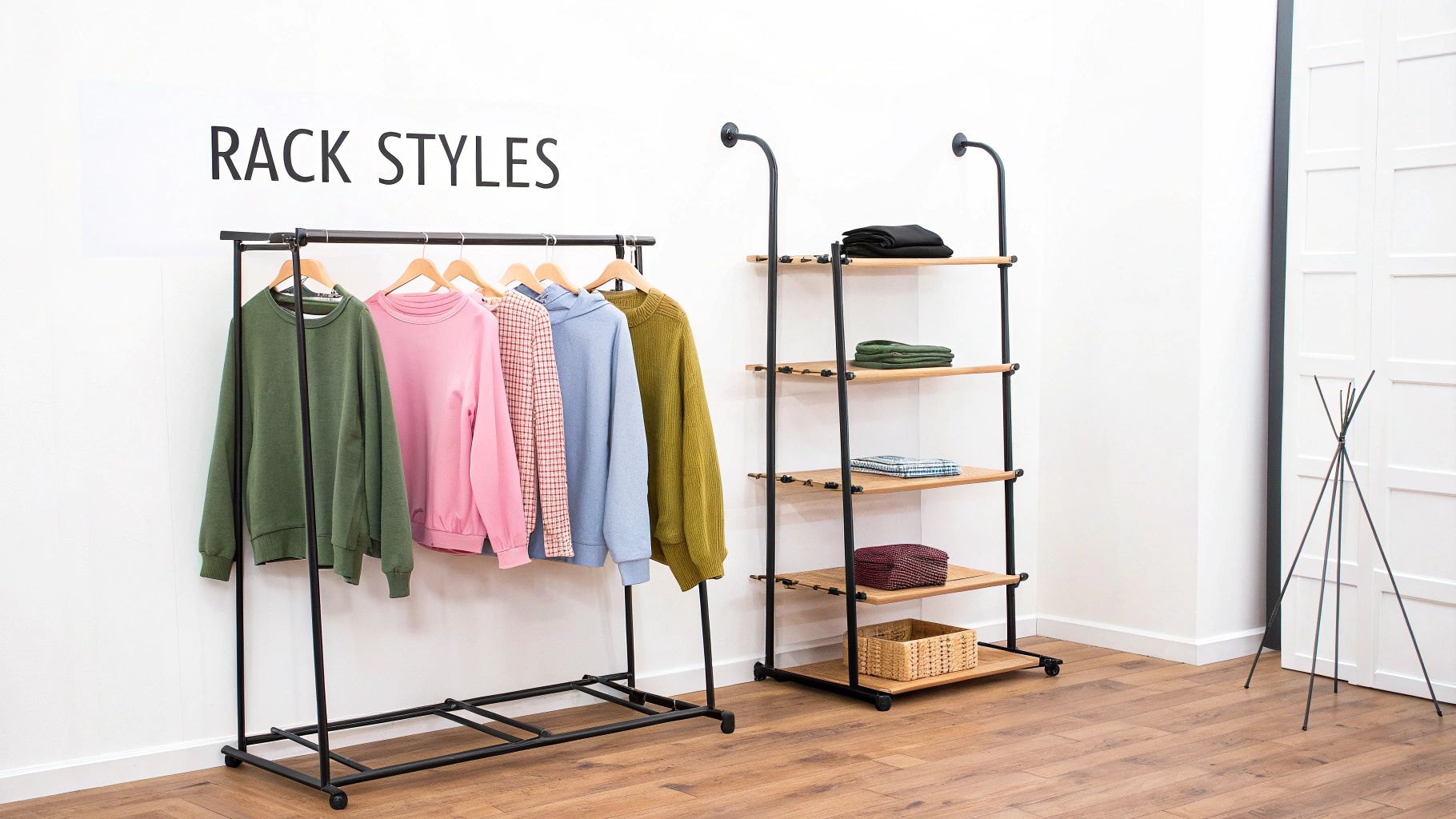
Choosing a wall-mounted clothes rack isn't a one-size-fits-all affair. The world of wall storage is surprisingly diverse, and each design brings its own unique blend of form and function to the table, suited for different spaces and needs. Getting to grips with these variations is the first step to finding a solution that not only organises your clothes but also elevates your room's character.
It's a bit like choosing a light fixture. A minimalist pendant serves a very different purpose to an ornate chandelier, even though they both give off light. In the same way, the right clothes rack depends entirely on what you need it to do—whether that's showing off your favourite jackets, managing the laundry, or creating a boutique feel at home. Let’s walk through the most common styles to help you picture the perfect fit.
The Single-Rail Rack
The single-rail rack is the quintessential wall rack for clothes. Its design couldn't be simpler: a horizontal bar held up by two brackets. This minimalist approach is incredibly versatile, making it a firm favourite for everything from industrial-chic bedrooms to sleek, modern hallways.
Its real strength is its simplicity. By keeping sightlines clear and uncluttered, it helps a room feel open and airy, which is a massive plus for smaller spaces.
- Ideal Use Case: Displaying a "capsule wardrobe" in the bedroom, adding some hanging space to a guest room, or as a neat solution for coats and scarves in the entryway.
- Core Benefit: Its clean, unobtrusive design works with almost any decor style without ever looking bulky.
- Potential Drawback: It only offers hanging space. You won't have room for folded items or accessories unless you decide to add separate shelving.
Racks with Integrated Shelving
For anyone needing more than just a rail, racks with integrated shelves offer a complete storage system in one. These designs usually have one or more shelves sitting above or below the hanging rail, giving you a dedicated spot for jumpers, shoes, hats, or storage boxes.
This all-in-one approach is the ultimate space-saver. It turns a single bit of wall into a multi-functional storage zone, essentially creating a compact, open-concept wardrobe that keeps everything organised and easy to grab.
This type of wall rack is a game-changer for anyone lacking traditional wardrobe space. It consolidates hanging and folded storage into one efficient unit, eliminating the need for a separate chest of drawers and saving valuable floor space.
If you're after a truly versatile storage solution, it pays to explore the different designs out there. For a closer look at your options, you can find a helpful guide on clothes rails for walls that covers various styles and their best uses.
Foldable and Retractable Racks
Foldable racks are the unsung heroes of utility spaces like laundry rooms, small guest rooms, or walk-in closets. These clever bits of kit have a hinged mechanism that lets the rack fold down flat against the wall when you're not using it.
This makes them perfect for temporary tasks, like air-drying delicate clothes, planning outfits for the week, or giving guests some extra hanging space. When you're done, it just tucks away, and you get your space back instantly. It’s the very definition of "there when you need it, gone when you don't."
Boutique and Display-Style Racks
Taking their cue from high-end retail spaces, boutique-style racks are designed to make a statement. You'll often see them with unique shapes, premium materials like brass or copper, and forward-facing hooks that turn each piece of clothing into a work of art. They're less about cramming in as much as possible and more about curating a visual experience.
While perfect for a walk-in wardrobe or a fashion-forward bedroom, they are also fantastic tools for small shops or theatre costume departments. They allow you to artfully display key pieces, guiding the eye and telling a story with what's on the rail. Choosing the right style really comes down to balancing your storage needs with your aesthetic vision.
Choosing the Right Material for Durability and Style
Picking the right material for your wall-mounted clothes rack is about so much more than just looks. This decision has a direct impact on its strength, how long it will last, and the level of upkeep it will need. It’s like choosing the foundation of a building – the material dictates not just the aesthetics, but its fundamental integrity and how well it does its job day in, day out.
A great choice will complement your room's décor while effortlessly handling the practical demands of your wardrobe. From the raw, urban edge of industrial pipes to the clean, gleaming finish of stainless steel, each option brings its own character. Let's walk through the most common materials to help you find that perfect sweet spot between lasting style and reliable function.
Industrial Metal and Pipe Racks
When you see a rack built from black or galvanised steel pipes, it immediately gives a space that industrial, rustic, or even steampunk vibe. These racks are absolute beasts, known for their incredible strength and rugged charm. They are the workhorses of the wall rack world, capable of holding a serious collection of heavy winter coats, piles of denim, and a full-to-bursting wardrobe without even flinching.
This robust build makes them a firm favourite not just for homes but for busy retail shops where durability is non-negotiable. The raw, unfinished look adds a dose of personality, and their inherent strength gives you complete peace of mind.
- Aesthetic: Industrial, rustic, urban, and minimalist.
- Durability: Extremely high. These are built to last a lifetime and can handle a massive amount of weight.
- Maintenance: Next to none. A quick wipe-down is all they ever need. The galvanised versions are brilliant at resisting rust, too.
If sheer strength is your top priority for a hefty wardrobe, it’s worth understanding the features of the strongest clothes rails available. You'll find their construction is often the secret to their impressive load-bearing muscle.
Sleek Stainless Steel and Chrome
For a more modern, clean, and polished look, you can’t go wrong with stainless steel or chrome. These materials have a bright, reflective surface that instantly makes a space feel lighter and more open. They slot perfectly into contemporary, minimalist, or even quite glamorous interiors.
But it’s not all about their sleek appearance; they’re highly practical, too. Stainless steel is famous for its resistance to rust and corrosion, making it a fantastic choice for bathrooms or laundry rooms where moisture is common. Chrome delivers a brilliant shine but does need a regular buff to keep smudges at bay and maintain that sparkle.
While they might look lighter than industrial pipe racks, don't underestimate them. A high-quality stainless steel rack still offers impressive strength. Its non-porous surface is also hygienic and a breeze to clean, making it a smart pick for both home and commercial settings.
Warm and Natural Solid Wood
There's a certain warmth and softness that a wooden rack brings to a room that metal simply can't match. Using woods like oak, pine, or walnut is perfect for creating a welcoming, natural feel that suits everything from Scandinavian and bohemian to classic and rustic styles. Wood adds an organic texture that can beautifully tie in with other furniture.
Of course, the durability of a wooden rack comes down to the type of wood. Hardwoods like oak are incredibly strong and resilient, while softer woods like pine are lighter on the wallet but can be more prone to dents and scratches over time.
- Aesthetic: Scandinavian, bohemian, rustic, traditional.
- Durability: Varies. Hardwoods offer excellent strength, often on par with some metals.
- Maintenance: May need an occasional polish or a fresh coat of sealer to protect the wood from moisture and keep it looking its best.
To help you weigh your options at a glance, here’s a quick comparison of the most common materials.
Material Comparison for Wall Clothes Racks
This table breaks down the key differences to help you match a material to your specific needs.
| Material | Aesthetic Style | Typical Load Capacity | Durability/Maintenance | Best For |
|---|---|---|---|---|
| Industrial Pipe | Rustic, Urban, Minimalist | Very High (often 50 kg+) | Extremely durable; low maintenance | Heavy-duty storage, large wardrobes, retail displays |
| Stainless Steel | Modern, Contemporary, Sleek | High (around 30-40 kg) | Excellent rust resistance; easy to clean | Bathrooms, modern boutiques, minimalist bedrooms |
| Chrome-Plated Steel | Polished, Glamorous, Clean | Medium-High (around 25-35 kg) | Good durability; requires polishing | Retail settings, walk-in wardrobes, stylish displays |
| Solid Wood (Hardwood) | Scandinavian, Rustic, Natural | Medium-High (around 20-30 kg) | Very durable; may need occasional sealing | Boutique displays, bedrooms, entryways for a warm feel |
| Solid Wood (Softwood) | Bohemian, Casual, DIY | Low-Medium (around 10-15 kg) | Less durable; prone to dents | Displaying light items, kids' rooms, accent pieces |
Ultimately, choosing the material is a personal decision that needs to balance your style with your practical storage demands. A heavy-duty industrial pipe rack is the obvious choice for a huge collection of outerwear, whereas an elegant wooden rack might be the perfect accent piece for showing off a few of your favourite outfits. By thinking through these trade-offs, you’ll find a wall rack you’ll be happy with for years to come.
How to Measure Your Space and Plan for Weight
Before you even think about picking up a drill, let’s get two things straight: your measurements and your weight expectations. Getting this right from the start is the difference between a perfectly functional rail and a disaster waiting to happen. A few minutes with a tape measure now will save you a world of frustration later.
Think of it like hanging a heavy picture frame. You wouldn't just bang a nail in anywhere and hope for the best, would you? The same principle applies here, but with much more at stake.
Sizing Up Your Wall Space
First things first, measure the horizontal space you’ve got to play with. A classic rookie error is to measure only for the length of the rail itself. You have to account for the clothes, too. Hangers stick out, and a rail crammed from end to end just looks messy and makes it impossible to find anything. Give your clothes some breathing room.
Next, look at the vertical drop. This is crucial if you plan on hanging longer items.
- For Long Garments: You’ll want to leave at least 150-165 cm (around 5 to 5.5 feet) of clear space for things like maxi dresses or long coats.
- For Shirts and Trousers: A drop of 90-120 cm (about 3 to 4 feet) is usually plenty for shirts, blouses, and trousers draped over a hanger.
Finally, don’t forget about projection—how far the rail juts out from the wall. Make sure you can still walk past comfortably without snagging a sleeve, especially if it’s in a hallway or a tight spot in a bedroom.
Estimating Your Wardrobe's Weight
Trying to weigh every single piece of clothing you own is a fool's errand. Instead, let's think about it in a more practical way.
Use a heavy winter coat as your benchmark. One big coat probably weighs about the same as five summer shirts, or maybe three pairs of jeans, or two chunky jumpers. Tallying up your wardrobe like this gives you a much better real-world estimate of the load your new rail needs to handle.
This simple comparison is far more useful than getting bogged down with exact kilograms. It helps you quickly gauge whether a standard rail will do the job or if you need to step things up. If you have a serious collection of heavy garments, it's worth reading a complete guide to heavy-duty hanging rails to explore more robust options.
And this planning is more important than ever. UK households are buying more clothes than ever before, with the average person in 2023 acquiring around 1.8 kg of new apparel each month. That adds up fast! You can see more on these UK apparel market trends on Statista.com.
Understanding Your Wall's Capacity
Here's the bottom line: your wall is the ultimate gatekeeper of how much weight your rack can hold. A rail rated for 50kg is useless if your wall can only support 10kg.
- Solid Walls (Brick, Concrete, Blockwork): This is the ideal scenario. These walls are your best friends and will happily support a rail's maximum stated weight, provided you use the right screws and wall plugs.
- Plasterboard (Drywall): This is a different beast entirely. Because it's a hollow wall, you must find the wooden studs behind the board and screw your rail directly into them. Special plasterboard fixings exist, but I wouldn't trust them with a rail full of clothes. They're fine for a small picture, not for your entire winter wardrobe.
Give your wall a quick knock. A solid wall makes a dull thud, while plasterboard sounds hollow. Figuring this out isn't just a suggestion—it's absolutely essential for a safe and secure installation.
A Step-by-Step Guide to Securely Installing Your Wall Rack
Your new wall-mounted clothes rack is only as good as its fitting. A secure installation is the difference between a stylish, reliable storage solution and a potential disaster waiting to happen. We'll walk you through the essential steps to make sure your rack is rock-solid, giving you complete peace of mind.
The process itself isn't difficult, but it does demand a bit of care and attention to detail. Think of it like putting together flat-pack furniture; skipping a step or using the wrong piece can compromise the whole thing. By following these instructions carefully, you can be confident your rack is safely and securely anchored.
Gathering Your Essential Tools
Before you even think about drilling, get all your equipment ready. Having everything to hand makes the process so much smoother and helps avoid simple mistakes. You don't need a professional workshop, just a few key items.
Here’s a quick checklist of what you'll almost certainly need:
- A spirit level: This is non-negotiable. It's the only way to get your rack perfectly horizontal.
- A tape measure: For accurate placement and height measurements.
- A pencil: To mark your drill points clearly on the wall.
- A drill with the right drill bits: The size of the bit needs to match the wall plugs you're using.
- A stud finder (for plasterboard walls): This is the most reliable way to locate the strong wooden supports hidden behind plasterboard.
- The correct screws and wall plugs: This is crucial. The fixings that come in the box might not be suitable for your specific wall type.
The Installation Process Step-by-Step
With your tools ready, it's time to get started. The key is to work methodically and double-check your measurements as you go.
-
Locate and Mark Your Position: First, decide on the ideal height for your rack. Use the tape measure and spirit level to draw a faint, perfectly straight pencil line where the top of your rack will sit. Hold the rack itself against this line and use your pencil to mark the exact spots for the screw holes through the brackets.
-
Check Your Wall Type and Find Studs: This is the most critical safety step. If you have plasterboard walls, use a stud finder to locate the vertical wooden beams. You must always aim to fix your rack into these studs for maximum strength. If you're working with solid brick or concrete, you can skip the stud finder.
-
Drill the Pilot Holes: Choose a drill bit that is slightly smaller than the diameter of your wall plugs. Drill clean, straight holes at the points you've marked. This creates a nice, snug fit for the plugs.
-
Insert Wall Plugs and Mount the Rack: Gently tap the wall plugs into the holes with a hammer until they are completely flush with the wall's surface. Now, you can position your clothes rack over the holes, insert the screws, and tighten them securely. Be careful not to overtighten, as this can damage the wall or the bracket itself.
This simple diagram breaks down the initial planning, which is the foundation of any successful installation.
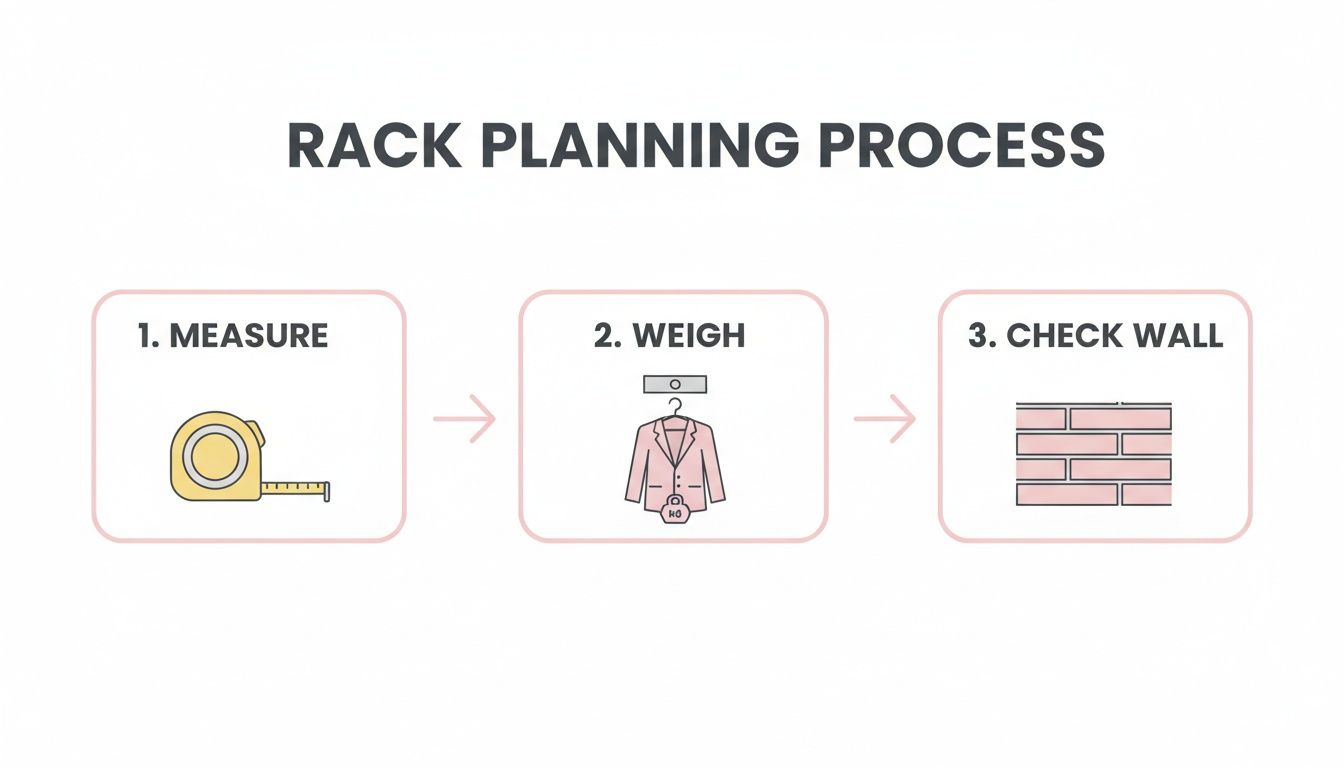
As you can see, measuring your space, estimating the weight of your clothes, and checking your wall's integrity are the three pillars of getting this right from the start.
Common Mistakes to Avoid
Even if you follow the steps, a few common pitfalls can trip up the unwary. Getting a truly secure fit for your wall rack means understanding your wall and your hardware, much like you would when following an ultimate guide to shelving brackets for a heavy-duty job.
A secure wall rack installation isn't just about hanging a rail; it's about creating a safe, permanent fixture. The most common failure point is using the wrong fixings for the wall type. Never assume the included screws are right for your situation.
Keep these points in mind to avoid trouble:
- Ignoring Wall Studs: On a plasterboard wall, fixing only into the board itself is a recipe for disaster. The weight of your clothes will eventually pull the rack clean out of the wall.
- Forgetting the Spirit Level: An uneven rack doesn't just look shoddy; it can cause all your hangers to slide to one end, creating a dangerous, uneven weight distribution.
- Using the Wrong Fixings: A plasterboard plug won't grip properly in a solid brick wall, and a standard plug offers no support in plasterboard. Always match your hardware to your wall material.
By following this advice, you can confidently install your rack and know it's there to stay. For more specific tips, you might find it useful to learn more about a wall mounted hanging rail and the unique considerations for different models.
Styling Your Wall Rack to Elevate Your Room
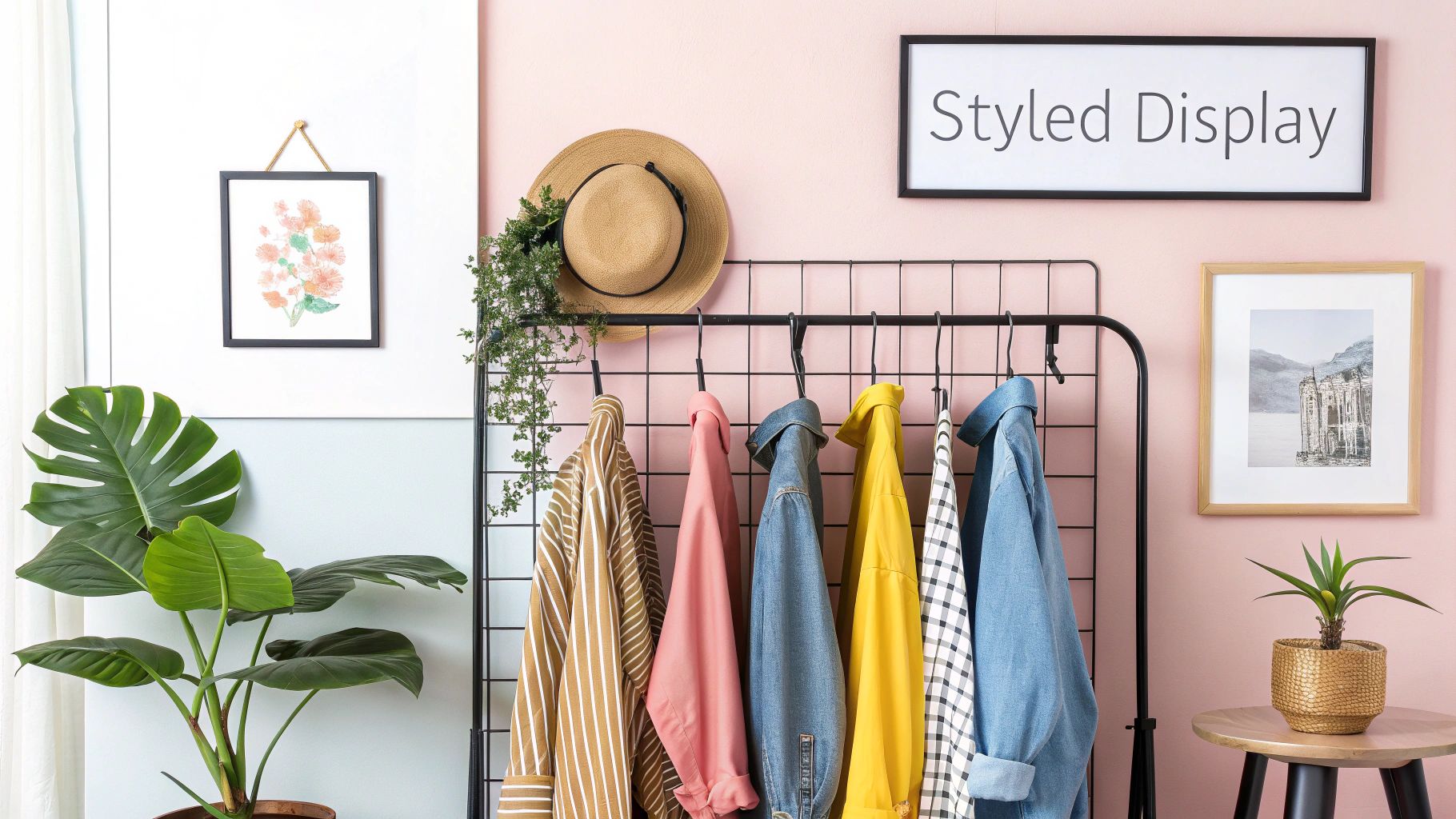
A wall rack for clothes is so much more than just a place to hang things. Think of it as a dynamic canvas, a chance to inject your own personality into a room's design. When you treat your rack as a decorative feature, it stops being purely functional and becomes a genuine focal point that enhances the entire space.
The trick is to see it not as storage overflow, but as a carefully curated gallery. Being intentional with what you choose to display is key. This approach proves that organisation can be both practical and beautiful, turning everyday items into an integral part of your home’s character.
Curate a Visual Story
One of the best ways to style your rack is to create a 'capsule collection' display. Instead of cramming every last item onto it, select a few of your favourite pieces that work well together. Maybe they share a complementary colour palette or fit a seasonal theme. This selective method creates a sense of visual harmony and stops the rack from looking messy.
It’s the small details that make the biggest difference. Using matching hangers—whether you prefer sleek black velvet, natural wood, or minimalist metal—instantly brings a sense of order and intention. It’s a simple swap, but it makes the whole arrangement look deliberate and high-end.
This trend of using open storage as décor has really taken hold in modern UK homes. The household segment now makes up 60-70% of sales in the clothing retail market, and 42% of UK millennials actually prefer open wall racks for their minimalist feel. It's all part of a move towards functional, stylish living spaces. You can find more detail on UK consumer trends on Grandviewresearch.com.
Accessorise and Personalise
To make the rack feel like a true part of the room, think beyond just clothes. Weaving in other decorative elements is what adds depth, texture, and a personal touch to your display.
Why not try adding:
- Greenery: A trailing plant like an ivy or pothos draped over one end brings a touch of life and softness.
- Accessories: Artfully hang a stylish hat, a beautiful scarf, or a tote bag to create layers and visual interest.
- Art and Objects: If your rack has an integrated shelf, place a small, framed print on it, or simply lean one against the wall behind.
By mixing clothing with personal objects, you transform your wall rack from a storage unit into a storytelling device. It reflects your personality and seamlessly blends with your home's overall design narrative.
For boutique owners or theatre costume departments, these principles are even more vital. A well-styled clothes rack for a wall can draw a customer's eye, showcase key pieces in a collection, or establish a character’s personality at a glance. You can learn more by exploring our guide on using a clothes rack for wall to create effective displays. Ultimately, it’s about creating an experience, not just showing off merchandise.
Frequently Asked Questions About Wall Racks
Even with all the details on styles, materials, and fitting, it's natural to have a few questions left over. We get asked a lot about the practical side of things, so we’ve put together some straightforward answers to the most common queries.
Think of this as your final checklist. It’s here to clear up any lingering doubts and help you feel completely confident in picking, fitting, and using your new wall rack.
How Much Weight Can a Typical Wall Rack Hold?
This is the big one, and the honest answer is: it really depends on the rack itself and, crucially, what your wall is made of. A heavy-duty industrial pipe rack, bolted properly into solid brick, could easily handle over 50 kg. On the other hand, a more decorative wooden rack might be better suited for a lighter load of around 15-20 kg.
But the rack’s rating is only part of the equation. Your wall is the real decider. A solid brick or concrete wall will let you use the rack to its full potential. If you're mounting onto plasterboard, however, the strength comes from the wooden studs behind it, not the plasterboard itself.
Always remember, a wall rack is only as strong as its weakest link. Double-check the manufacturer's guidelines and be realistic about what your wall can handle.
Can I Install a Clothes Rack on a Plasterboard Wall?
Yes, absolutely. But it has to be done right. Simply screwing into the plasterboard with standard wall plugs is a recipe for disaster; the weight will eventually just pull the whole thing out of the wall.
The only safe way to fit a wall rack for clothes to plasterboard is to find the wooden studs behind it. These are the vertical timbers that make up the wall's frame. You need to screw your rack directly into these studs to get a secure hold. The easiest way to do this is with a simple stud finder tool.
What Is the Best Way to Clean and Maintain My Rack?
Looking after your rack is pretty simple, but the method changes slightly depending on the material. A little bit of care will keep it looking great and working perfectly for years.
Here’s a quick guide for the most common types:
- Metal Racks (Steel, Pipe, Chrome): For dust, a quick wipe with a damp cloth is all you need. If you have a chrome rack, follow up with a dry microfibre cloth to buff out any fingerprints and bring back that brilliant shine.
- Wooden Racks: A regular dusting with a dry cloth is usually enough. If it needs a proper clean, use a gentle, wood-friendly cleaner. Try to avoid any harsh chemicals. For natural wood, a bit of furniture polish once or twice a year will stop it from drying out and keep it looking rich.
Hopefully, that clears things up! Now you should have all the information you need to get your new storage sorted and start transforming your space.
At Display Guru, we provide a wide range of durable and stylish garment rails designed for both home and retail use. Explore our collection and find the perfect wall rack to organise your space today. Learn more at https://www.displayguru.co.uk.