



A Professional Guide to Slat Wall Hooks for Retail Display
Slat wall hooks are the workhorses of any good display. At their core, they’re simple fixtures designed to fit snugly into the grooves of a slatwall panel. This creates an incredibly flexible, modular system for showing off your products. Think of them as the essential link between your wall and your merchandise, giving you the power to reorganise your entire display in minutes, no tools required.
The Foundation of Dynamic Retail Displays
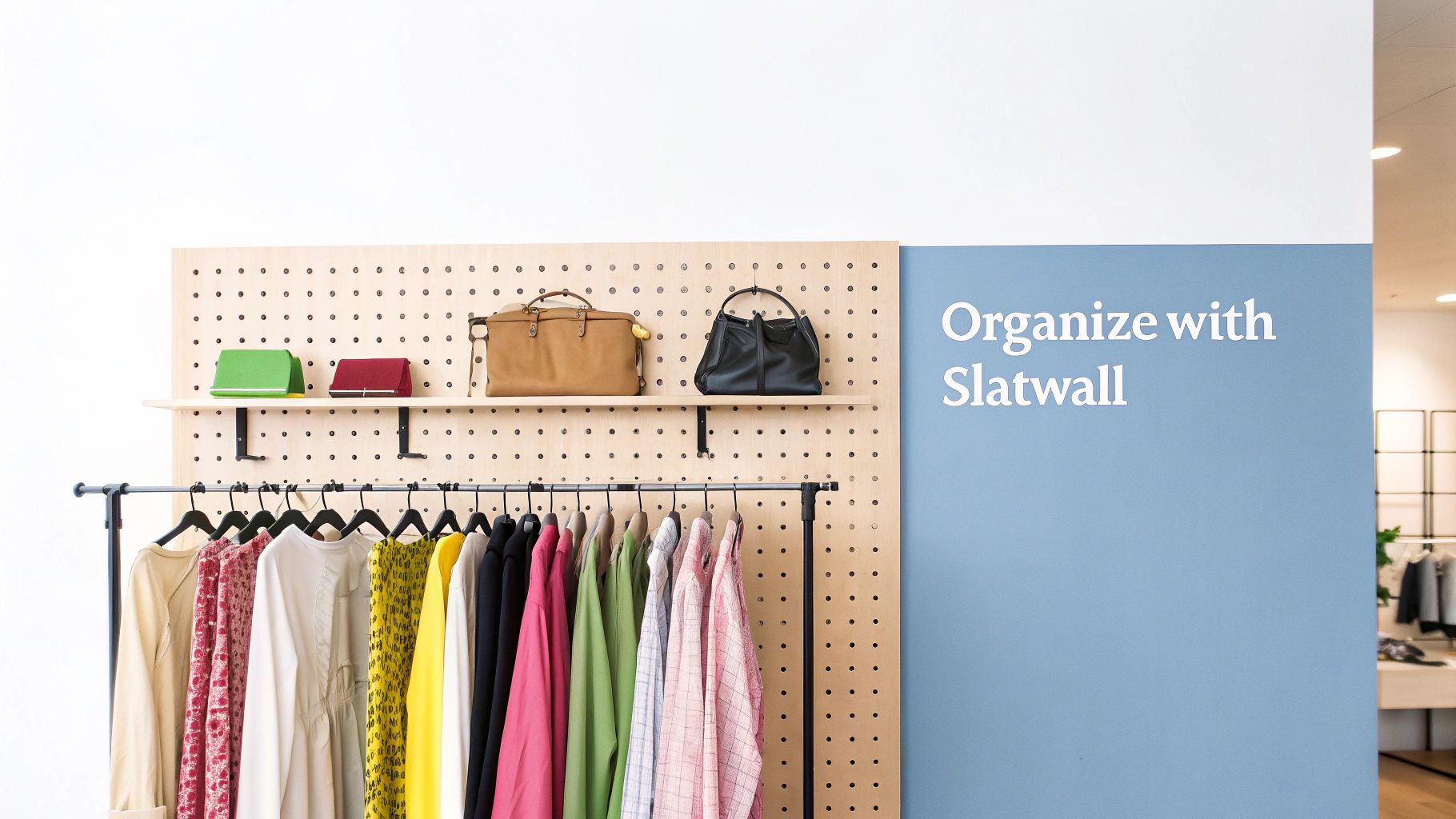
Picture your retail space or studio as a blank canvas. The slatwall panels are the backdrop, but the slat wall hooks are the brushstrokes that bring your merchandising vision to life. These humble components are the key to a powerful organisational system, turning static walls into dynamic, functional, and visually engaging showcases. They help professionals like you move beyond just storing things and start creating displays that tell a story.
For any tailor, designer, or merchandiser, getting to grips with this simple concept is the first step towards building a workspace that truly works. It’s not just about hanging items; it’s about creating an environment where products are the heroes and your workflow is seamless.
Why Slat Wall Hooks Are Essential
The real magic of slat wall hooks is their adaptability. A display you’ve set up for spring clothing can be completely overhauled for autumn accessories in the time it takes to make a cup of tea. In the fast-moving worlds of retail and design, that kind of agility is priceless.
By enabling quick changes and making smart use of vertical space, slat wall hooks directly support a core principle of modern visual merchandising: flexibility. A display that can evolve with your stock and seasonal trends is a display that keeps customers engaged and boosts sales.
This system's value really comes down to a few key benefits that make it a must-have for any professional:
- Maximised Space: They transform unused wall area into valuable display and storage real estate. This is a game-changer in smaller boutiques or cluttered studios.
- Unmatched Versatility: With hundreds of styles out there, you can hang everything from heavy coats and handbags to delicate jewellery and tools.
- Professional Presentation: A well-organised slatwall system instantly communicates quality and an eye for detail, which elevates how customers see your brand.
- Improved Workflow: In a workshop or design studio, having tools and materials neatly arranged and always within reach makes a huge difference to your efficiency.
Ultimately, mastering slat wall hooks is about taking full control of your environment. It’s the starting point for building the kind of powerful retail display stands that stop people in their tracks and make a lasting impression.
Selecting the Right Hook Material and Style
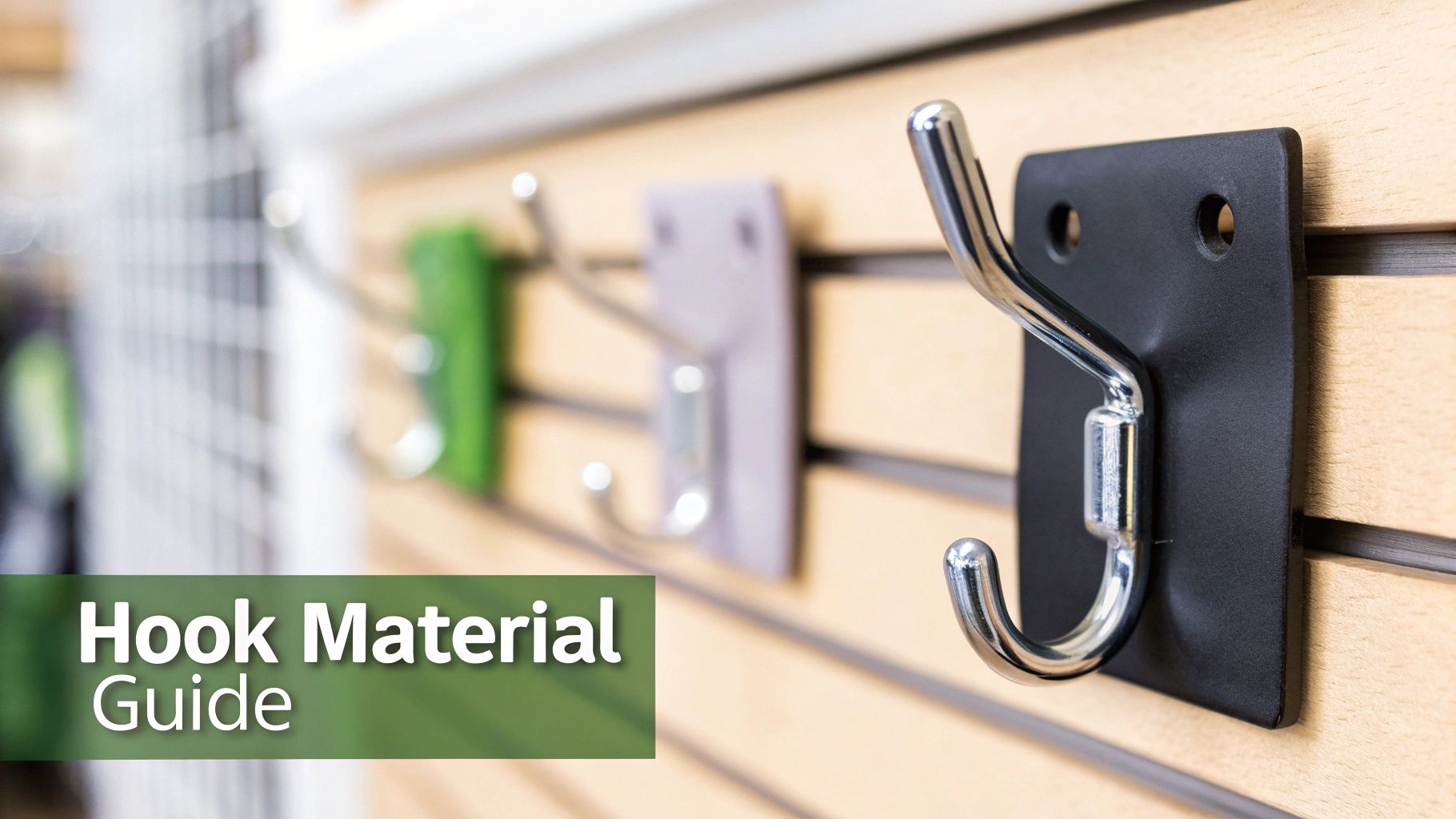
Choosing the right slat wall hook is about more than just finding something to hang products on; it’s a decision that shapes the look, feel, and function of your entire display. The material and style you pick need to work in harmony with your brand's aesthetic and, just as importantly, the physical demands of your merchandise.
Think of it like casting the right actor for a role. The hook not only has to look the part but must also be strong enough to perform flawlessly day in and day out. It all starts with understanding the core materials, as each offers distinct advantages for different environments. For any professional, matching the material to the job is the first step toward a reliable and visually stunning display.
Metal vs. Plastic: The Great Debate
The most common decision you'll face is whether to go with metal or plastic hooks. Metal hooks, usually made from steel with a chrome finish, are the industry workhorse for a reason: durability and sheer strength. Their robust build makes them the only real choice for busy retail spaces where they need to support heavier items without failing.
Imagine a high-street boutique hanging its winter coat collection. They’ll rely on chrome-finished metal hooks to hold heavy wool and leather goods without any risk of bending. The polished, professional look also adds a subtle touch of quality, reinforcing the value of the merchandise itself.
Plastic hooks, on the other hand, bring a different kind of value to the table. They’re lightweight, often more budget-friendly, and are available in a huge range of colours, making them perfect for precise brand matching. While they aren't built for heavy loads, they're fantastic for lighter items. A craft studio, for example, could use colourful plastic hooks to display skeins of yarn or fabric swatches, adding to the creative vibe without needing industrial-grade strength.
The choice of material is foundational. For long-term performance and security, especially with valuable stock, metal is almost always the superior investment. For temporary displays or lightweight goods where colour coordination is paramount, plastic offers brilliant versatility.
Across the UK retail sector, metal slat wall hooks are indispensable, holding a dominant 48% market share thanks to their reliability. This preference is even stronger in places like coastal shops, where a corrosion-resistant finish is a must. The right hook system allows retailers to maximise their floor space, with some able to display up to 30% more products vertically—a game-changer on a competitive high street.
Matching Hook Style to Your Merchandise
Once you’ve landed on a material, the next step is choosing the right hook style. Different designs are engineered for very specific jobs, and using the right one can make your products look incredible. Choose the wrong one, and you risk items slipping off or looking cluttered and messy.
To help you get it right, here’s a quick-reference table comparing the most common types.
Comparing Slat Wall Hook Types
| Hook Type | Primary Use | Typical Load Capacity | Best For |
|---|---|---|---|
| Single-Prong | Hanging single items, packaged goods | Low to Medium | Packaged goods, tools, single garments on hangers |
| Double-Prong (Euro Hook) | Products with Euro slot packaging | Medium | Accessories, hardware, blister packs |
| Waterfall Hook | Displaying multiple items front-facing | Medium to High | Handbags, garments, creating a layered look |
| Loop Hook | Securing items that might slip | Medium | Scarves, belts, sports equipment, ties |
As you can see, each style serves a distinct purpose, from the basic utility of a single-prong hook to the elegant presentation of a waterfall hook.
Here’s a closer look at the most common styles and where they shine:
- Single-Prong Hooks: These are the most basic and versatile option out there. They're perfect for hanging packaged goods, tools, or single garments on hangers. Think of them as the reliable workhorses of any slat wall setup.
- Double-Prong Hooks (Euro Hooks): With their two parallel prongs, these are specifically designed for products in Euro slot packaging. They keep every item facing forward perfectly, creating that neat, uniform look that’s ideal for accessories or hardware.
- Waterfall Hooks: These hooks have a cascading design with multiple knobs or balls, letting you display several items (like handbags or shirts on hangers) facing forward but at different heights. It’s a brilliant way to create a sense of depth and a more luxurious feel.
- Loop Hooks: Fantastic for displaying items that might otherwise slip right off a standard hook, such as scarves, belts, or even sports equipment like baseball bats. That enclosed loop provides a welcome bit of extra security.
For designers or tailors, having a mix of these styles on hand is a must. You might use single-prong hooks for patterns and tools, while a small retail section in your studio could use waterfall hooks to beautifully showcase a new capsule collection. And if clothing is your main focus, you may also find our guide on selecting the perfect wall-mounted clothes rail helpful for larger garments.
Getting Weight Limits and Compatibility Right
A secure display is a safe display. It's as simple as that. Getting the details of weight limits and slatwall compatibility right isn't just a good idea—it's non-negotiable for any professional setup.
Think of it like a lock and key. The backplate of your slat wall hooks has to fit the grooves of your panels perfectly to create a stable, reliable foundation. A hook that doesn't fit properly is just a weak point waiting to fail. This section will walk you through matching your hooks to your system and respecting what they can actually hold, so you can build a display with confidence.
Is Your Slatwall Standard? A Quick Compatibility Check
At first glance, most slatwall systems look identical. But tiny differences in the groove spacing can trip you up. The industry standard for slatwall panels has grooves spaced 3 inches on centre – meaning the distance from the middle of one groove to the middle of the next is exactly 3 inches.
Almost every slat wall hook you'll find today is made to fit this standard. That said, if you've inherited an older system or have something custom-built, it’s always worth checking before you buy a big batch of new hooks. It only takes a second.
- Grab a tape measure: Check the distance from the centre of one groove to the centre of the one above or below it.
- Confirm the 3-inch standard: If it’s 3 inches, you’re good to go with any standard slat wall hooks on the market.
- What if it's not? If you've got a different measurement, you'll need to source specialised hooks designed for that specific system. Don't try to force a standard hook to fit.
A mismatched hook and panel is one of the most common reasons for display failure. A hook that doesn't seat properly in the groove isn't just wobbly; it can chew up the edge of the panel, weakening the entire section over time.
Understanding Weight Limits and How Not to Overload Your Hooks
Every single slat wall hook has a weight limit – the absolute maximum load it can safely support. This isn't just an arbitrary number; it’s determined by the material (steel is always stronger than plastic), the hook's length (longer hooks often hold less weight), and its overall construction. Any decent manufacturer will make these specifications clear.
Ignoring these limits is asking for trouble. It's not just that the hook might bend or snap. An overloaded hook can rip a chunk right out of your slatwall panel, bringing a cascade of merchandise down with it. Always take a moment to add up the weight of what you're planning to hang.
For instance, if you’re a designer showcasing heavy winter coats, a single wool coat can easily weigh over 2 kg. Trying to hang five of them on a waterfall hook rated for only 7 kg is a disaster waiting to happen. For genuinely heavy items like that, you’d be far better off looking at a dedicated heavy-duty hanging rail as a safer, more robust solution.
Smart Merchandising: How to Distribute Weight
It's not just the individual hooks you need to worry about. The slatwall panel itself has a maximum load capacity. A classic mistake is clustering all the heavy items together in one small area, which puts an incredible amount of strain on that section of the panel.
The secret to a safe, long-lasting display is simple: spread the load.
- Spread heavy items out: Distribute your weightiest products across the full width and height of the wall.
- Mix it up: Avoid creating one "heavy zone." Instead, alternate heavier garments or tools with lighter accessories.
- Use the whole panel: Make use of the entire surface area. This ensures the total weight is supported by the whole structure, not just a few overloaded grooves.
This strategic approach to display is why organised storage is booming in commercial spaces. The UK, in particular, has been a major player in the European wall hooks market, driven by the demand for smarter merchandising. There's a clear trend towards multi-functional hooks for retail, positioning slatwall as the cornerstone of displays that are both functional and visually appealing. By distributing weight correctly, you're not just making your display look good—you're building it to last.
Getting Your Hooks Installed and Maintained Perfectly
Getting your display to look polished and professional really boils down to getting the installation right. Even the best slat wall hooks on the market won't do their job if they aren't properly secured. You risk damaging your products, or even the panels themselves. The good news is that the proper technique is incredibly simple and gives you a rock-solid foundation for your merchandising.
But a great display isn’t a one-and-done job. It’s about longevity. A bit of regular maintenance and a few safety checks are all it takes to keep your system looking sharp and functioning safely for years. If you skip this, you’ll find that gradual wear and tear can start to compromise the whole setup. Let's walk through how to install your hooks correctly and keep them in top shape.
The 'Insert and Angle Down' Technique
The secret to a secure fit is a simple two-step motion. A common mistake I see is people trying to force a hook straight into the groove. This can chip the panel edges and, ironically, stops the hook from locking in properly. The correct method uses the design of the hook’s backplate to create a tight, secure grip every single time.
Here's the simple process for a flawless installation:
- Angle Up and Insert: Hold the hook and tilt the backplate so the top is angled towards you. Now, slot the bottom lip of the backplate deep into the slatwall groove you've chosen.
- Angle Down to Lock: Push the hook flat against the wall and then apply gentle downward pressure. You'll feel the top of the backplate slide neatly behind the groove's top edge, locking it firmly into position.
That's it. Give the hook a little tug to be sure – it should feel completely solid with no wobble at all. If it moves, it’s not seated right. Just lift it out and repeat the steps. This simple trick is what separates a flimsy, amateur-looking display from a professional and reliable one.
Performing Routine Safety and Maintenance Checks
Think of your slatwall display as a long-term investment. Like any good tool, it needs a bit of care to perform at its best. Running regular checks keeps your display safe for everyone and helps you get the most life out of your hooks and panels. A consistent maintenance schedule is the best way to catch small issues before they snowball into big problems.
The infographic below lays out a simple, three-step routine for your slatwall safety checks.
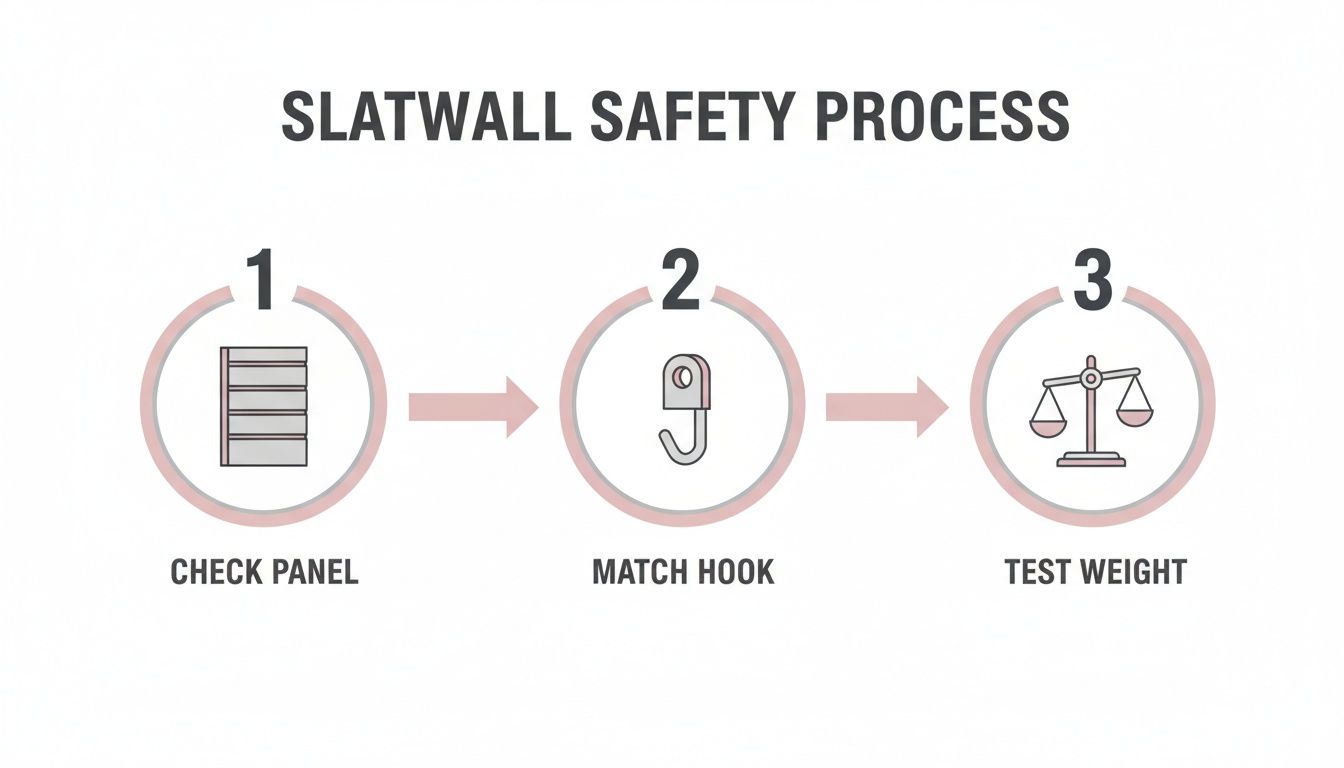
This visual guide is a great reminder of the core actions: inspecting the panel itself, ensuring you're using the right hook for the job, and testing the weight distribution. Following this process builds a systematic approach to keeping your display safe and sound.
Of course, beyond the safety aspect, you want everything to look good.
A clean, well-maintained display says a lot about the quality of your brand. Dust and grime can make even the most beautiful products look tired, so regular cleaning is a non-negotiable part of good visual merchandising.
Here’s a quick guide to caring for different hook materials:
- For Chrome Hooks: A soft, dry microfibre cloth is your best friend for wiping away dust and fingerprints. If you have any stubborn marks, a little glass cleaner sprayed onto the cloth will bring back that brilliant shine.
- For Powder-Coated Hooks (Black/White): A simple damp cloth is usually all you'll need. Just be sure to avoid abrasive cleaners or scouring pads, as they can easily scratch or chip the finish.
By making these quick checks and cleaning routines part of your regular schedule, you'll ensure your display remains a stunning—and safe—asset. And if you're looking to mix hooks with heavier-duty solutions, our guide on choosing a wall-mounted hanging rail has some great complementary advice.
Advanced Visual Merchandising Strategies
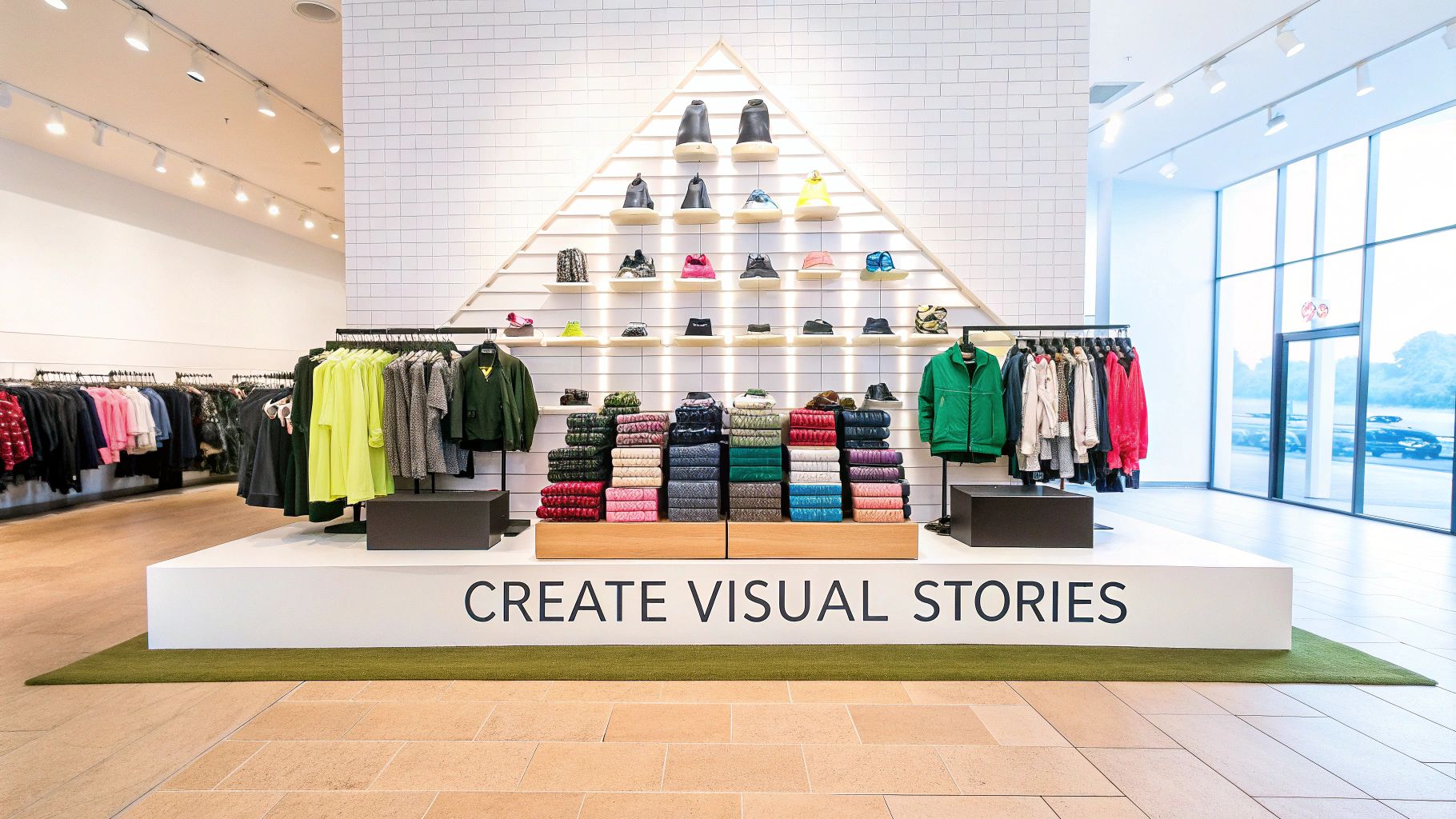
Once your slatwall is up and you've got the basics down, the real fun begins. It's time to stop thinking about simple storage and start using your wall as a powerful sales tool. This is where visual merchandising turns your display from functional to fantastic, creating a story that pulls customers in. For any designer or merchandiser, this is your chance to get truly creative.
Let's be clear: advanced merchandising isn't about jamming slat wall hooks into every single groove. It’s about being thoughtful and strategic. The aim is to build displays that don’t just show products, but grab attention and drive sales through clever design.
Guiding the Eye with the Pyramid Principle
One of the oldest and most effective tricks in the book is the Pyramid Principle. It’s a classic for a reason. This design rule is all about arranging products in a triangular shape to create a natural focal point that the human eye is instantly drawn to. Your most important item? It goes right at the top.
Think of your slatwall as a blank canvas. To build a pyramid, you’d place your star product on a central hook, positioned higher than everything else. Then, you arrange complementary items on either side, stepping them down to create that classic triangle shape. This simple structure brings a sense of balance and harmony, stopping your display from looking like a chaotic jumble.
A great example would be a boutique placing a hero handbag at the peak. Below it, on either side, they could arrange matching wallets and smaller accessories on hooks, forming that clean pyramid outline. This naturally leads the shopper's gaze from the main event downwards, encouraging them to see the whole collection.
Creating Depth with Waterfall Hooks
Your standard single-prong hooks are workhorses, no doubt. But when you want to inject a bit of luxury and depth into your display, waterfall hooks are your secret weapon. With their cascading, stepped design, they let you present multiple items facing forward, creating a layered, dynamic look that a flat wall just can't compete with.
This is especially powerful for clothing. By hanging several shirts or jackets on one waterfall hook, you can showcase different colours or styles in a tight, organised space. The staggered heights add real dimension, making the entire display feel more substantial and inviting.
A well-placed waterfall hook does more than just hold garments; it creates a visual rhythm. It breaks up the monotony of a flat wall, adding texture and a high-end feel that can significantly lift the perceived value of your products.
Use them for a collection of blouses, an array of scarves, or a set of handbags. You'll create a look that feels both abundant and perfectly organised, tempting customers to step closer and browse the options.
Telling a Story Through Product Grouping
The best displays always tell a story. Instead of just grouping items by type—all shirts in one spot, all trousers in another—start thinking about themes, occasions, or lifestyles. This is where the sheer flexibility of slat wall hooks comes into its own, allowing you to easily build little vignettes.
This technique, often called 'cross-merchandising', is about creating a "complete the look" setup that inspires your customers. Picture a display built around a weekend getaway. You could use a mix of hooks and fixtures to show off a stylish jacket, a versatile top, a coordinating scarf, and a travel bag, all together in one cohesive story.
Here are a few ideas to get you started:
- The Workwear Edit: Group a smart blazer, a crisp shirt, and a professional tote bag. Add smaller loop hooks for accessories like a silk scarf or a simple necklace.
- The Casual Weekend: Combine a cosy jumper with a pair of jeans (draped over a specialised rail), a beanie on a single hook, and a crossbody bag.
- A Colour Story: Dedicate a whole section of your wall to one colour palette. Mix different types of items—clothing, accessories, even footwear—all in complementary shades to make a bold, impactful statement.
When you tell a story, you’re not just selling products; you’re selling a vision. And that is a much more powerful way to connect with your customers. For a deeper dive, take a look at our comprehensive visual merchandising guidelines for more expert tips.
Ultimately, great merchandising turns your space into an active part of the sales process. And to complete that customer journey from browsing to buying, consider integrating the essential Shopify Point of Sale Hardware to fully equip your retail environment.
Your Essential Slat Wall Hook Buying Checklist
Getting your hook selection right the first time is one of those small things that makes a huge difference. It saves you money, avoids the hassle of returns, and sets your display up for success from the get-go.
Think of this section as your final sanity check. We’ve pulled together all the key points from this guide into a practical checklist. It's designed specifically for professionals like you to walk through before you click "buy" on a new set of slat wall hooks. Run through these questions, and you can be confident you’re getting the perfect hardware for the job.
System and Load Checks
First things first, let’s talk about the fundamentals. You need to know your slatwall system inside and out, along with the merchandise you plan to hang on it. Nailing this part down prevents those frustrating moments when new hooks don't fit or, worse, when a display fails.
- Panel Compatibility: Double-check your slatwall. Is it a standard system with grooves spaced 3 inches on centre? Don’t just guess—get a tape measure and be certain. This one measurement is crucial for a secure fit.
- Total Weight Calculation: Add up the weight of the products you intend to place on a single hook. Is it well within the hook's stated weight limit? Always leave a bit of a buffer, just in case.
- Panel Capacity: Take a step back and look at the whole panel. Are you spreading the load evenly, or are all your heavy hitters concentrated in one spot? A balanced display isn't just safer; it looks better too.
A quick piece of advice I always give: your display is only as strong as its weakest link. A heavy-duty hook means nothing if the slatwall panel itself is overloaded. Always consider the capacity of both the hook and the panel.
Material and Style Considerations
Once you've got the technical details sorted, it's time for the fun part—thinking about how the hooks will look and function in your space. This is where you blend practicality with presentation.
- What Material Makes Sense? Are you hanging hefty winter coats or heavy-duty tools? If so, durable metal is non-negotiable. For lighter, packaged items, a good quality plastic hook might be all you need and could save you some budget.
- Which Style Suits My Products? A simple single-prong hook is perfect for blister packs. But if you’re showcasing a collection of scarves or handbags, a waterfall or faceout hook will present them far more effectively. Don't be afraid to mix and match to create some visual interest.
- Does the Finish Match My Brand? The finish is a detail that speaks volumes. A polished chrome finish gives off a classic, professional vibe. On the other hand, a matte black or clean white hook can instantly make a space feel more modern and curated. It’s a small touch that helps tie your whole aesthetic together.
Before you finalise that order, use this table as a quick-reference tool. It’s a simple way to organise your thoughts and make sure you haven't missed a single important detail.
Pre-Purchase Checklist for Slat Wall Hooks
| Consideration | Your Requirement / Check | Notes |
|---|---|---|
| Panel Groove Spacing | Measured: ___ inches (Confirm 3" on centre) | Standard UK/US systems are almost always 3". Double-check if unsure. |
| Maximum Weight Per Hook | My heaviest item is: ___ kg | Find hooks rated well above this. Better safe than sorry! |
| Hook Material | Metal / Plastic / Other: _____________ | Metal for strength and longevity; plastic for light items and cost-effectiveness. |
| Hook Style(s) Needed | e.g., Single-prong, Loop, Waterfall | List all types needed. A mix creates a more dynamic display. |
| Required Length/Depth | Longest needed: ___ mm/cm | Ensure hooks are long enough for your products but don't create a hazard. |
| Finish/Colour | Chrome / Black / White / Other: ________ | Match this to your brand aesthetic and existing fixtures. |
| Quantity Required | Total hooks: ___ (per style) | Count your product facings and add 10-15% extra for future flexibility. |
| Safety Features | Tip needed? (e.g., upturned, ball end) | Crucial for high-traffic areas or delicate fabrics to prevent snags. |
Completing this checklist puts you in a great position. You're no longer just buying a piece of hardware; you're making a strategic investment in a display system that is safe, effective, and perfectly aligned with your professional needs.
Slat Wall Hooks: Your Questions Answered
Even the most carefully planned display can hit a snag or two in practice. When you're getting hands-on with a new system, questions are bound to pop up. Here, we tackle the most common queries we hear from retail and design professionals, offering clear, practical advice to help you get the most out of your slat wall.
Think of this as your personal troubleshooting guide. It’s designed to give you the confidence to solve any little issues and make your slat wall display a resounding success.
How Much Weight Can a Standard Slat Wall Hook Hold?
This is the big one, and the honest answer is: it depends. A hook’s strength comes down to its material, length, and design. For example, a simple 4-inch, light-duty prong hook might only be rated for around 5-7 kg. Step up to a heavy-duty steel hook, though, and you could be looking at a capacity of 15 kg or more.
It's absolutely vital to check the manufacturer's specs for every hook you buy. And remember, the hook is only part of the equation. Your slatwall panel has its own weight limit, so distributing the load evenly across the entire wall is just as crucial as not overloading a single hook.
The golden rule is to think of the whole system. A heavy-duty hook is useless if the panel can't support the weight. Your display is only as strong as its weakest link.
Can I Use Slat Wall Hooks on a Pegboard or Gridwall?
In a word, no. Slat wall hooks have a very specific backplate, engineered to slot perfectly into the grooves of a slatwall panel. This design simply won't work with other systems like pegboards or gridwalls, which need their own unique fittings.
Trying to jam a slat wall hook into the wrong type of panel is asking for trouble. You risk damaging the wall, creating a wobbly and unsafe display, and could end up with broken merchandise on the floor. Always use the right hook for the right system for a secure, professional finish.
Why Are My Slat Wall Hooks Leaning Forward?
If you notice your hooks are drooping instead of sitting straight, it’s almost always down to one of three culprits.
- Overloading: You're simply asking the hook to hold more than it was designed for. The first thing to try is lightening the load or swapping it out for a heavy-duty alternative.
- Improper Installation: The hook might not be sitting correctly in the groove. Make sure it's pushed all the way in and then angled down to lock it into place. A well-seated hook shouldn't have any wobble at all.
- Panel Issues: The problem might not be the hook, but the wall itself. If the slatwall panel is made from a lower-quality material, or if the edge of the groove has become worn or damaged, it won't provide a solid anchor.
How Do I Choose Between Chrome, Black, or White Hooks?
Your choice of finish is all about aesthetics. It should complement your brand, your space, and the products you’re showing off.
- Chrome Hooks: The classic choice. A polished, high-shine finish gives a professional look that’s durable and works in almost any setting.
- Black Hooks: Sleek, modern, and high-contrast. Black hooks are fantastic for making your products stand out, particularly against a light-coloured wall.
- White Hooks: Clean, bright, and minimalist. These are perfect for creating a seamless, almost invisible look, making them a favourite in boutiques and galleries where the product is the star.
Take a moment to consider the colour of your slatwall and your merchandise. The right hook finish can subtly reinforce your brand's style and make your products look their absolute best.
At Display Guru, we stock a huge range of high-quality hooks and display solutions to help bring your creative vision to life. Explore our collection and find the perfect fit for your professional needs.