




Modern spaces with clothes rack for wall: ideas & guide
A clothes rack for the wall is a brilliantly simple idea: a storage rail that fixes directly to your wall, designed to hold clothes on hangers or hooks. Think of it as a practical, space-saving alternative to a traditional wardrobe. It takes unused vertical space and transforms it into highly functional storage, perfect for decluttering floors and creating an open, airy feel in any room.
Why Wall-Mounted Racks Are Such a Smart Storage Solution
Space is a luxury. Whether you’re in a compact urban flat or a chic retail boutique, every square foot counts. The classic, bulky wardrobe often eats up valuable floor space, making a room feel smaller and more cluttered than it needs to be. This is exactly where the simple genius of a wall-mounted clothes rack proves its worth.
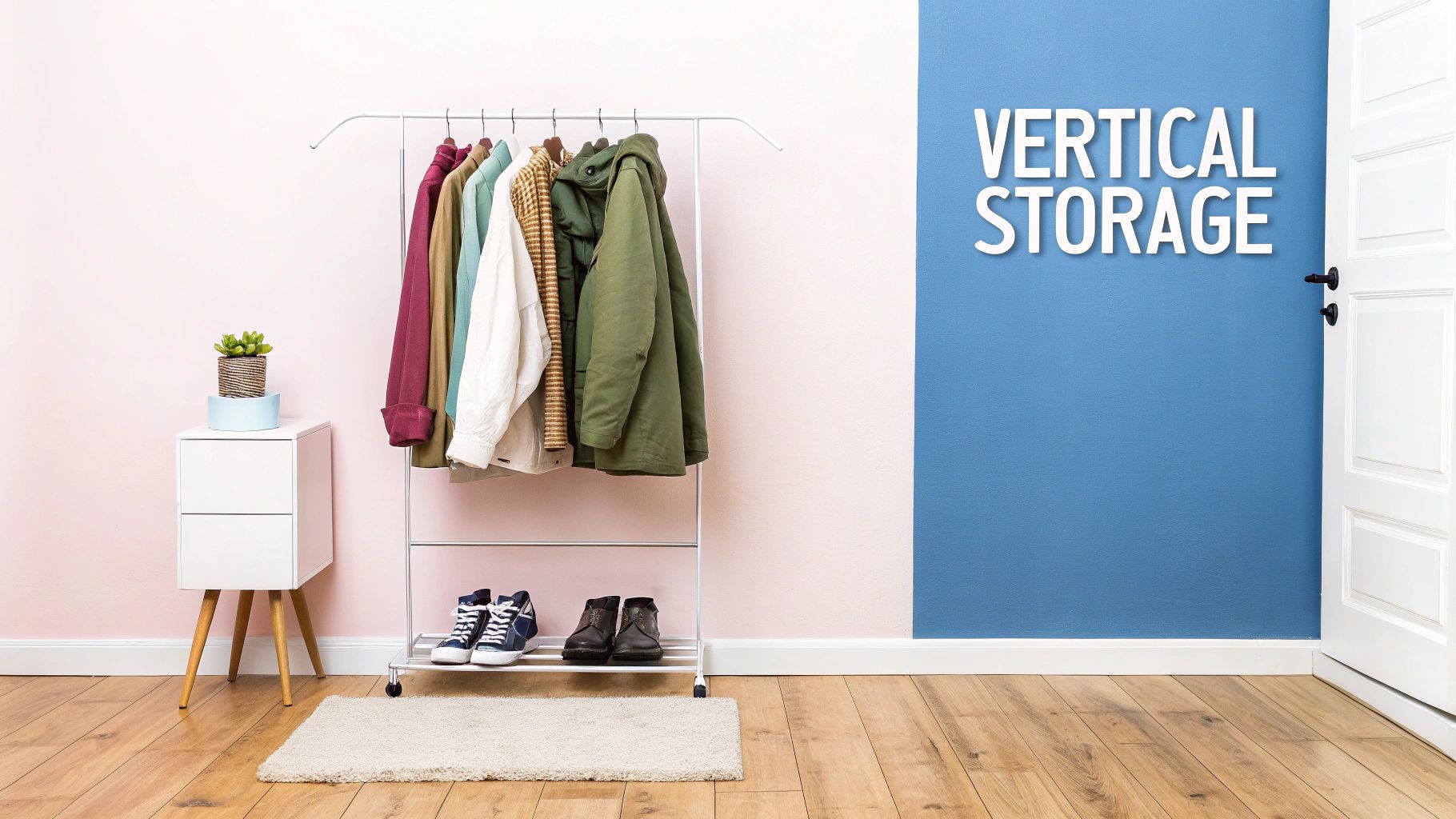
It's so much more than just a piece of hardware; it’s a versatile design trick that reclaims your floor and draws the eye upwards. By making use of vertical surfaces, you can create a sense of openness that freestanding furniture just can't match. This makes it an essential piece of kit for anyone looking to get the most out of their living or working area without compromising on style.
The Core Benefits of Going Vertical
The real appeal of a clothes rack for wall mounting is its blend of practicality and visual flexibility. It elegantly solves common storage headaches in a way that suits all sorts of different environments.
Here are the key advantages:
- Space Optimisation: The most obvious win is freeing up the floor. This makes even the smallest rooms feel larger and easier to move around in. It's a game-changer for narrow hallways, box rooms, or tight retail spaces.
- Easy Access and Visibility: Unlike clothes crammed into a dark wardrobe, a wall rack keeps your garments out in the open. You can see your collection at a glance, making it far easier to plan outfits and grab your favourite pieces.
- Aesthetic Appeal: These racks are a design feature in themselves. From rugged industrial pipe designs to sleek, minimalist wooden rails, they can add real character and a curated feel to a room.
- Versatile Functionality: They aren't just for the bedroom. They’re perfect for organising coats in an entryway, air-drying laundry, or creating a stylish merchandise display in a boutique.
This shift towards minimalist, space-saving furniture is clearly reflected in market trends. The global wall-mounted coat rack market, currently valued at around $500 million, is projected to grow to nearly $800 million over the next decade. Much of this growth is being driven by increasing urbanisation and the need for clever furniture in smaller UK homes.
Think of a wall-mounted rack as a floating wardrobe. It does the same essential job—organising your clothes—but with a minimal physical footprint, creating a lighter, more modern atmosphere.
For professionals like tailors and designers, a sturdy wall rack is a practical way to manage works-in-progress, keeping delicate fabrics organised and crease-free. In the same way, home sewing enthusiasts can carve out a dedicated project corner without giving up an entire room to storage.
Exploring the different types of clothing wall racks available will help you find the perfect match for your needs, whether they're professional or personal. At the end of the day, this simple fixture offers a powerful solution to modern storage challenges.
Matching Materials and Designs to Your Style
Choosing the perfect clothes rack for a wall isn't just about storage; it's like picking a piece of functional art. It’s a chance to complement your existing décor while adding a seriously practical feature. The material and design you land on will define not just how the rack looks, but its strength, how long it lasts, and the overall feel it brings to the room.
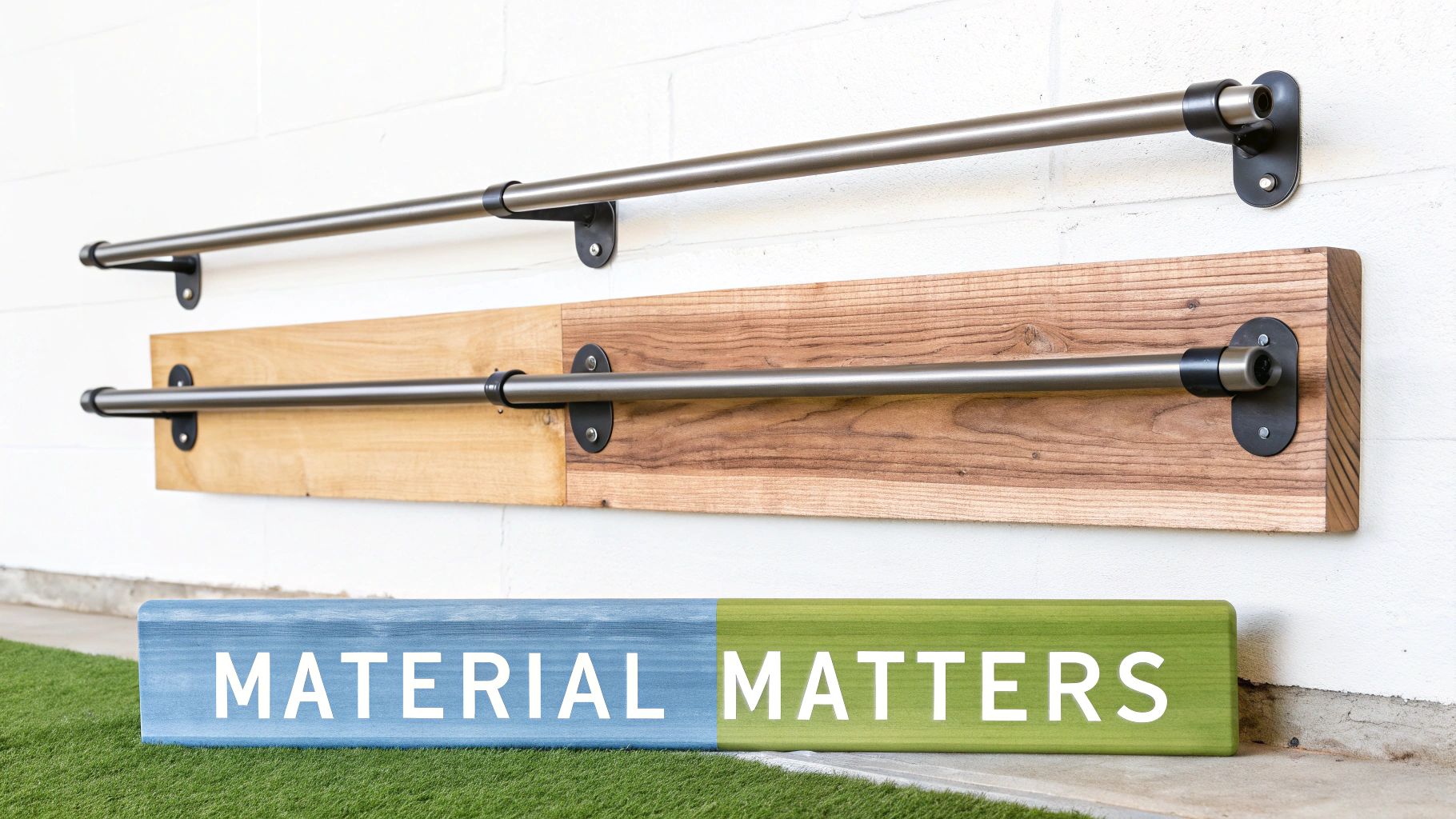
Think of the material as the rack’s personality. Is it rugged and raw, or sleek and sophisticated? Does it lend warmth to the space, or a cool, minimalist edge? Nailing this first step is key to creating a look that feels intentional and cohesive.
Finding the Right Material
The material you choose has a huge say in everything from durability to the atmosphere it creates. Industrial-style pipe racks, often crafted from black steel or galvanised iron, bring a raw, urban aesthetic and are incredibly strong—perfect for holding heavy garments without a second thought. On the other hand, stainless steel or chrome-plated racks deliver a clean, modern finish that fits right into minimalist homes or professional retail spaces.
Natural woods like oak, pine, or bamboo introduce a softer, warmer feel. These options can blend beautifully into Scandinavian, rustic, or bohemian interiors. While they look fantastic, it’s worth thinking about their load capacity; they might not be as robust as their metal cousins for truly heavy-duty use.
Choosing a material is as much a practical decision as an aesthetic one. A heavy-duty steel rack is perfect for a tailor's collection of winter coats, while a light bamboo rail might be better suited for displaying delicate blouses in a boutique.
To help you decide, here's a quick breakdown of the most common materials and what they bring to the table.
Comparing Materials for Your Wall Mounted Clothes Rack
| Material | Aesthetic | Durability | Typical Load Capacity | Best For |
|---|---|---|---|---|
| Black/Galvanised Steel | Industrial, rustic, urban | Very high | 50-90 kg+ | Heavy-duty retail, tailors, studios, modern homes |
| Stainless Steel/Chrome | Modern, minimalist, clean | High | 30-60 kg | Boutiques, contemporary homes, commercial showrooms |
| Solid Wood (Oak, Pine) | Warm, natural, Scandinavian | Moderate to high | 20-40 kg | Home use, lifestyle boutiques, eco-conscious brands |
| Bamboo | Eco-friendly, light, natural | Moderate | 15-25 kg | Lighter garments, children's rooms, pop-up shops |
| Copper/Brass | Boutique, vintage, chic | Moderate | 20-35 kg | High-end retail, statement pieces in bedrooms |
Ultimately, the best material is one that not only looks the part but can also handle the weight of what you plan to hang.
Exploring Popular Designs
Once you've settled on a material, it's time to think about the rack's form. The design should solve a specific problem, whether that's making the most of a tight corner or creating a show-stopping display wall.
Here are a few of the most popular designs you'll come across:
- Single-Rail Racks: This is the classic wall-mounted rack—a simple, horizontal bar. It's minimalist, does the job brilliantly, and is perfect for creating a clean line of hanging clothes in a bedroom or hallway.
- Foldable and Retractable Racks: These are fantastic space-savers. Ideal for laundry rooms or guest bedrooms, they fold away flat against the wall when you don't need them, offering storage on demand without the permanent clutter.
- Racks with Integrated Shelving: For a more complete storage solution, look for designs that combine a hanging rail with a shelf. This is incredibly handy for storing folded jumpers, shoes, or accessories, turning a simple rack into a multi-functional unit. For an even more detailed look at maximising your space, you can read our complete guide to wall racks for clothes and get inspired.
- Modular Systems: Offering the ultimate in flexibility, modular systems let you mix and match rails, shelves, and brackets to build a setup that's perfectly suited to your space and needs. This is a go-to choice for walk-in wardrobes and dynamic retail displays.
Combining Form and Function
The real magic happens when you pair the right material with the right design for your specific purpose. Picture a bespoke tailor's studio: a network of black steel pipe racks with reclaimed wood shelves offers both the strength for heavy bolts of fabric and a look that speaks of heritage and craftsmanship.
In contrast, a small city flat might be better served by a sleek, white-painted wooden rail with a single shelf above. It provides essential storage without visually overwhelming the space, adding a touch of Scandinavian simplicity. The key is to see your wall-mounted rack not as an afterthought, but as a deliberate choice that elevates both the function and the style of your room.
Choosing Racks for a Professional or Retail Space
Step into a bustling tailor’s shop, a chic boutique, or a busy design studio, and you'll quickly realise a clothes rack isn't just a clothes rack. It’s a core piece of equipment. In a professional environment, a clothes rack for wall mounting is a hard-working business tool that has a real impact on your workflow, your customer's experience, and even how people perceive your brand.
This is where a standard rack from a home goods store just won't cut it. The demands are simply on another level. You need a system that combines industrial-level strength with a design that complements your space—something that works as hard as you do.
First Things First: Durability and Load Capacity
The absolute first thing to consider is how much weight the rack can handle. Commercial stock is often heavy and dense, whether it’s a rail packed with winter woollens, bolts of fabric, or an entire collection of formalwear.
Pay close attention to the stated load capacity. You should be looking for heavy-duty materials like industrial-grade steel or iron, which can often support 50kg or more when installed correctly. This is vital for safely holding a large volume of garments without any risk of bowing, flexing, or pulling away from the wall—a genuine disaster waiting to happen in front of customers.
Think of your wall rack as an investment in your business’s infrastructure. A flimsy system doesn’t just risk damaging valuable stock; it’s a safety hazard. A robust, properly installed rack, on the other hand, gives you peace of mind and operational reliability, day in and day out.
Before you buy, do a quick calculation of the weight you'll be hanging. A single heavy winter coat can weigh up to 3kg, so a rail holding just 20 of them needs to support at least 60kg comfortably. The golden rule? Always choose a rack with a capacity that goes well beyond your estimated daily needs.
Stay Agile with Modular Systems
Retail and design are fast-moving fields. Displays change with the seasons, new collections arrive, and your workspace needs to adapt. A static, one-size-fits-all solution can quickly become a creative straitjacket. This is exactly why modular wall-mounted systems are almost always the best bet for professional spaces.
Modular racks give you incredible flexibility. These systems let you:
- Adjust heights and layouts to perfectly accommodate different garment lengths, from short jackets to floor-sweeping gowns.
- Add or remove rails and shelves as your stock levels change, ensuring your display always looks intentional and never sparse.
- Create completely custom configurations that fit your specific wall dimensions and merchandising goals.
This adaptability is the secret to effective visual merchandising. With a modular system, you can build a dynamic wall feature that tells a story, shines a spotlight on key pieces, and effortlessly guides a customer’s eye through your collection. For tailors and designers, it means creating a super-organised workspace that can be reconfigured for different projects, keeping current work handy and past projects safely stored. You can find more inspiration by exploring our detailed look at different wall clothes racks and their applications.
Elevate Your Brand and the Customer Experience
Beyond pure function, a well-chosen clothes rack is a powerful part of your brand's physical identity. The material, colour, and design should feel like a natural extension of your business aesthetic. A minimalist fashion boutique might go for sleek, chrome-plated rails, whereas a vintage shop could use rustic, reclaimed wood and black pipe to create a more nostalgic feel.
This kind of attention to detail massively improves the customer's journey. An organised, attractive display simply makes browsing more enjoyable and helps people find what they’re looking for. It’s no surprise that the global garment racks market, valued at around USD 5.2 billion in 2023, is on the rise. Businesses are realising just how crucial display fixtures are to the retail experience. Wall-mounted racks are a big part of this trend, especially in the UK where they help retailers make the most of smaller shop footprints. You can discover more insights about the expanding garment rack market on dataintelo.com.
Ultimately, the right rack does so much more than just hold clothes. It organises your workspace for peak efficiency, presents your products in their best light, and reinforces the quality and character of your brand.
Creative Placement Ideas for Your Home
While the bedroom is the go-to spot for a wall-mounted clothes rack, keeping it there means you're missing a trick. With a bit of creative thinking, you can use these simple rails to solve organisational headaches all over the house. The secret is to stop seeing them as just clothes storage and start thinking of them as versatile problem-solvers.
Think beyond the wardrobe. A well-placed rack can tame a chaotic entryway, revolutionise your laundry routine, or even support your creative projects. By exploring some unconventional spots, you'll unlock the full potential of this space-saving hero, adding function and a touch of style wherever you need it most.
The Entryway Command Centre
First impressions count, and your hallway is where it all begins. Too often, though, it becomes a dumping ground for coats, bags, and scarves. A wall-mounted rack is the perfect antidote, instantly transforming the space from cluttered to curated. It gives outerwear a proper home, stopping it from piling up on the nearest chair.
Pick a style that complements your home’s decor—a rustic wooden rail for a country cottage vibe or a sleek black metal bar for a more modern, industrial feel. A good height is around 150-170 cm, making it easy for adults and older kids to reach. Pop a small bench or shoe rack underneath, and you’ve created a complete, welcoming hub that brings order to the daily comings and goings.
The Laundry Room Lifesaver
If any room is crying out for a smart vertical storage solution, it’s the laundry room. A wall-mounted rack here is a total game-changer. It’s the perfect spot for air-drying delicates that can’t face the tumble dryer, which helps your clothes last longer and saves a bit on the energy bill.
This is a particularly popular solution here in the UK, where garden space is often at a premium. It’s no surprise that the global market for cloth drying racks was valued at roughly USD 1.37 billion and is expected to climb to USD 2.13 billion in the next six years. This trend is driven by people wanting compact, convenient drying solutions inside their homes. You can read more about the trends in the cloth drying rack market.
Use a wall-mounted rack in the laundry room as an "in-between" station. It's the ideal place to hang freshly ironed shirts before they go back into the wardrobe, preventing new creases from forming while they cool.
The Creative or Home Office Corner
For home sewers, designers, or anyone with a hands-on hobby, a dedicated wall rack is a must-have. It’s brilliant for organising works-in-progress, keeping fabrics and patterns off your work surface but still clearly in sight. It’s a simple addition that makes your creative process feel much more professional and streamlined.
It can even find a place in a home office. A minimalist rail is a great way to prep for the day ahead—hang your suit for tomorrow's big meeting or your gym kit for an early start. It’s a small trick that helps you mentally get organised. For more ideas on how to get the most out of your space, have a look at our guide on maximising clothes rail storage.
Beyond the Obvious Placements
Don't be afraid to think outside the box. A small, elegant rack in a guest room is a thoughtful touch, giving visitors somewhere to hang their clothes without taking up the space of a full wardrobe. In a walk-in pantry, a short rail is handy for hanging aprons, tea towels, and reusable shopping bags.
You could even install one in a larger bathroom for robes and towels to create a spa-like feel. If you're looking for fresh inspiration on how a rack could fit into your home, you could even leverage AI for interior design to see how different layouts might work. Really, the only limit is your imagination.
Getting Your Installation Spot On
A beautifully crafted wall-mounted clothes rack is only half the story. The real secret to its success lies in a rock-solid installation. Get it right, and you’ll have a secure, dependable rail that lasts for years. Get it wrong, and you risk a wobbly rack, damaged walls, or worse.
Let's walk through how to get it right from the start.
The single most important step happens before you even pick up a drill: figuring out what your wall is made of. The wall’s construction determines everything that follows, from the tools you need to the fixings that will hold your rack securely. It’s the number one place people go wrong.
What Kind of Wall Are You Working With?
Time to play detective. In most UK homes, you’ll be dealing with one of three common wall types: plasterboard (also called drywall), solid masonry (brick or block), or a stud wall, which is essentially plasterboard fixed over a timber frame.
A simple knock test is a surprisingly good place to start. Give the wall a rap with your knuckles. A hollow, drum-like sound usually means plasterboard. If you get a dull thud with no echo, you're likely dealing with solid masonry.
To be certain, especially with plasterboard, you need to find out if there are wooden studs behind it. For this, a stud finder is your best friend. This handy little gadget scans the wall and beeps when it locates the timber supports. For any rack that's going to hold a decent amount of weight, securing it directly into these studs is the gold standard.
This diagram helps visualise how a clothes rack fits into the bigger picture of your home’s organisation, guiding where you might place it for the most practical benefit.

Thinking about the journey your clothes take can make all the difference in choosing the perfect, most convenient spot for your new rail.
Choosing the Right Fixings for the Job
Once you've identified your wall, you can pick the correct hardware. This is not the place to skimp or make guesses. The right fixings are non-negotiable for a safe, sturdy mount that won’t let you down.
Here’s a quick rundown of what you’ll need:
- For Stud Walls: The aim here is to screw straight into the timber studs. You'll need strong, long wood screws that can go at least 2.5cm (1 inch) into the wood itself.
- For Plasterboard (Where No Studs Align): If you can't hit a stud, you need specialised plasterboard anchors. Things like spring toggles or heavy-duty self-drilling anchors are designed to expand behind the board, spreading the load. Your standard plastic wall plugs are not strong enough and should be avoided.
- For Solid Masonry Walls: You’ll need a hammer drill to make a pilot hole. A robust wall plug goes into the hole, and your screw then drives into the plug, expanding it to create an incredibly secure anchor.
A Step-by-Step Guide to a Flawless Fit
With your wall type confirmed and the right hardware in hand, you're ready to get started. A methodical, step-by-step approach is the key to a professional-looking result.
- Measure Twice, Drill Once: Decide on the perfect height and position for your rack. Use a spirit level to mark your drill points with a pencil. Don't eyeball it – make sure your marks are perfectly level!
- Drill Your Pilot Holes: Select the right size drill bit for your fixings and carefully drill at your marked spots. If you're going into masonry, switch your drill to the hammer setting.
- Insert the Fixings: For plasterboard or masonry, gently tap your plugs or anchors into the holes until they sit flush with the wall surface.
- Mount the Rack: Line up the rack’s mounting points with your prepared holes. Drive the screws in until they are snug and tight, but be careful not to over-tighten, which can damage the fixing or the wall.
- The Final Check: Once it’s up, give the rack a firm (but not aggressive!) tug. It should feel completely solid, with no give or wobble whatsoever.
The Bottom Line: A strong installation is like a chain—it's only as strong as its weakest link. Your wall type, your choice of fixings, and your careful mounting all have to be right. Get one part wrong, and the whole setup could be compromised.
For a more detailed look at specific mounting techniques, our guide on how to install a hanging rail wall mounted system is a great next step. And if you’re not confident doing it yourself, don't hesitate to call in a professional. Services that install closet shelves have exactly the right skills for this kind of job. Taking the time to do it properly ensures your rack will give you years of reliable, stylish service.
Long-Term Care and Maintenance Tips
A high-quality wall-mounted clothes rack is a real investment in your space, so a little bit of upkeep goes a long way in keeping it looking sharp and working safely. Just like any other piece of hardworking furniture, regular care will protect its finish, fend off wear and tear, and ensure it remains a sturdy, reliable feature for years to come.
This doesn't have to be a major chore. A few simple, material-specific tasks every few months can dramatically extend the life of your rack, protecting it from dust, moisture, and the general strain of daily use.
Caring for Different Materials
Every material needs a slightly different touch to keep it in prime condition. Using the wrong products or methods can easily damage the finish, so it’s vital to know what your rack is made of and clean it accordingly.
- Metal Racks (Steel, Iron, Chrome): Your main enemy here is moisture, which can quickly lead to rust or tarnishing. A regular wipe-down with a dry, soft cloth is usually all you need. For a deeper clean, use a damp cloth with a mild detergent, but always dry it thoroughly straight away.
- Wooden Racks (Oak, Pine, Bamboo): Wood is a natural material, so it's sensitive to both extreme dryness and too much moisture. Dust it regularly with a microfibre cloth. To keep its natural lustre and stop it from drying out, apply a good quality wood conditioner or polish every six months or so, buffing it to a gentle sheen.
- Painted or Powder-Coated Racks: These finishes are tough, but they aren't invincible—they can still be chipped or scratched. Clean them with a soft, damp cloth and never, ever use abrasive cleaners or scouring pads, as you’ll just scratch the surface.
Think of maintenance as a quick health check for your rack. A simple wipe-down stops grime from building up, while a seasonal check of the fixings ensures it remains as solid as the day you put it up.
Performing Regular Safety Checks
Beyond just cleaning, the single most important maintenance job is to check the wall fixings. Over time, the constant weight and movement from hanging clothes can cause screws to work themselves a little loose.
Every three to six months, give the rack a gentle wiggle. It should feel completely solid, with absolutely no movement. If you feel any give at all, grab a screwdriver and tighten the mounting screws until they are snug again. You don't want to overtighten them, but they must be secure. This simple check is especially important for racks holding heavy stock in a busy retail or studio setting, as it's your best defence against a potential disaster.
Answering Your Top Questions
Choosing the right wall-mounted rack can bring up a few practical questions. Let's tackle some of the most common queries I hear, drawing on years of experience to give you clear, straightforward answers.
How Much Weight Can a Wall Rack Actually Hold?
This is the big one, and the honest answer is: it depends. The capacity isn't just about the rack itself; it’s a three-part puzzle involving the rack's material, its design, and crucially, how well it’s fixed to the wall.
A heavy-duty industrial pipe rack, if you anchor it properly into solid wall studs, can easily handle 50kg or more. On the flip side, a more decorative, lighter-duty model secured to plasterboard with basic plugs might struggle with anything over 10-15kg.
Always, always check the manufacturer's stated capacity. But remember, hitting that number safely is entirely down to using the right fixings for your specific wall.
The key takeaway here is that your wall and fixings are just as critical as the rack. A brilliant, strong rack with weak fixings is an accident waiting to happen. Give the installation the same thought you gave the purchase.
Can I Mount a Rack on a Plasterboard Wall?
You certainly can, but you have to do it properly. For any rack that's going to carry a decent amount of clothing, the gold standard is to find the timber studs behind the plasterboard and drive your screws directly into them. That gives you the strongest possible anchor point.
What if the studs aren't where you need them? Your next best bet is to use heavy-duty plasterboard anchors designed for the job.
- Toggle bolts or spring toggles are great because they spread the load by opening up behind the board.
- Self-drilling metal anchors offer a much more secure grip than their plastic counterparts.
Whatever you do, don't use the standard plastic wall plugs that come with many kits. They simply aren’t up to the task of supporting a loaded clothes rack.
What's the Best Height to Mount a Clothes Rack?
There’s no single magic number here; the perfect height is all about what you’ll be hanging on it.
For general use – think shirts, jackets, and jumpers – positioning the rail somewhere between 165 cm and 180 cm from the floor usually works perfectly. This gives most garments plenty of room to hang without trailing on the ground.
If you’re planning to hang long dresses, trench coats, or other full-length items, you’ll need to go higher. Aim for around 180 cm to 200 cm to keep them clear of the floor. A simple tip: before you drill, think about who will be using it most often and make sure the height is comfortable and practical for them.
At Display Guru, we offer a wide range of robust and stylish garment rails, perfect for professional displays or a smart home setup. Explore our collection to find the ideal fit for your space.