



Your Guide to the Perfect Large Sewing Box
As your passion for sewing takes off, so does your collection of threads, tools, and fabrics. A large sewing box is far more than just storage; it’s a serious upgrade that protects your valuable tools and brings order to your creative space, saving you precious time. It’s the difference between a frantic search for a lost bobbin and a smooth, enjoyable creative flow.
Why a Large Sewing Box Is Your Best Investment
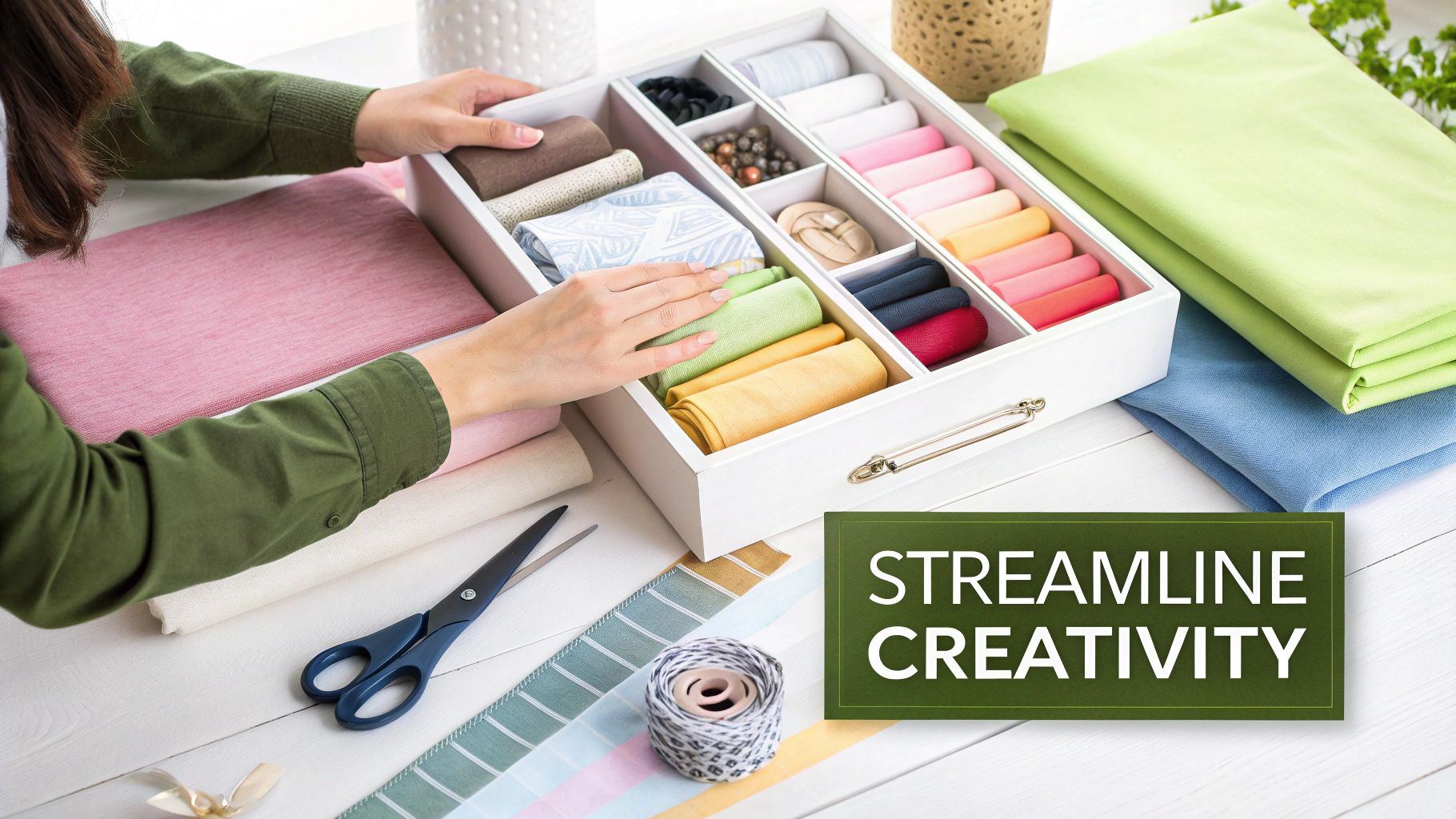
Moving up to a larger, more structured storage solution is a real milestone for any sewer. It’s that moment you decide to treat your craft with the seriousness it deserves, graduating from a jumble of old tins and bags to a proper command centre for all your projects. This shift isn't just about being tidy; it's about being efficient.
Think of it as the difference between a cluttered desk and a fully organised workshop. When every needle, thread, and pair of scissors has its own dedicated spot, you spend less time hunting and more time creating. A well-organised large sewing box is the foundation of a productive workspace. For more inspiration on setting up your space, explore our guide full of clever sewing room ideas.
Supporting a Growing Hobby
The love for home sewing is stronger than ever. In the UK, the sewing machine market brought in a massive USD 116.7 million and is set to keep growing, which shows just how many people are rediscovering crafting. With this boom comes the need for proper storage to house all the essential accessories that come with the hobby.
A quality box does more than just hold your supplies. It actively streamlines your workflow and protects the money you've invested in your tools.
An organised space is an organised mind. When your tools are neatly arranged, your creative process becomes smoother, allowing you to focus entirely on the project at hand instead of the clutter around you.
Ultimately, investing in the right storage is investing in your craft itself. It gives you:
- Protection for Tools: Your sharp scissors, delicate needles, and expensive marking pens are kept safe from damage and rust.
- Time-Saving Efficiency: Everything is visible and easy to grab, cutting down the prep time for every project.
- Space Optimisation: It consolidates dozens of small containers into one neat, often portable, unit.
From Simple Tins to Modern Craftsmanship
To really appreciate the cleverness of a modern large sewing box, it’s worth taking a quick look at where it came from. The journey from a basic tin to a sophisticated organiser is a story of practical ingenuity, mirroring how sewing itself has grown from a household necessity into a beloved craft.
In the beginning, sewing tools were stashed in whatever was handy—a simple tin box or a small wooden chest. The goal was purely functional: keep sharp needles and precious threads from getting lost or tangled. These early containers were humble and practical, a far cry from the intricate designs that were just around the corner.
The Victorian Revolution in Sewing
The 19th century was a real turning point. With the arrival of Isaac Singer’s sewing machine in 1851, making clothes at home became much faster and more common. A clear line was drawn between 'plain work' (mending and basic stitching) and 'fancy work' like beautiful embroidery, and both required an ever-growing collection of tools. Suddenly, a proper sewing box wasn't just helpful; it was essential. You can learn more about how home sewing transformed before 1900 and see just how central storage became.
It was during this period that sewing boxes transformed into genuine status symbols. They were often beautifully crafted from rich woods like mahogany or rosewood, sometimes decorated with elaborate inlays, secret drawers, and lined with plush silk or velvet.
These ornate boxes were much more than just storage. They were elegant pieces of furniture that spoke to a household's refinement and the skill of the woman who used it. Every little compartment was perfectly sized for something specific, from thimbles to skeins of silk.
This era of thoughtful, detailed craftsmanship really set the stage for the multi-layered designs we see today. If that classic style catches your eye, you can dive deeper into the timeless charm of the wooden sewing box in our dedicated guide.
Modern Innovations and Materials
As we moved into the 20th century, the pendulum swung from ornate decoration back towards practicality, but this time with a modern sensibility. Design movements like Arts and Crafts championed simplicity and quality, principles that still define great design.
The real game-changer, though, was the arrival of new materials. Lightweight plastics and durable, modern fabrics opened up a world of possibilities that heavy wood just couldn't offer. This led directly to some of the features we now consider standard:
- Cantilever Trays: Those clever tiered compartments that swing outwards, giving you a bird's-eye view of all your small bits and bobs at once. No more rummaging!
- Removable Dividers: Finally, a way to customise your space. You could create sections perfectly sized for your thread spools, bobbins, or that growing button collection.
- Enhanced Portability: Lighter materials and strong, comfortable handles made it so much easier for people to take their projects on the go, whether to a class or a friend's house.
Today’s large sewing box is the direct descendant of this rich history. It marries the Victorian love for meticulous organisation with the best of modern engineering, creating a tool that’s as functional as it is a pleasure to use.
Decoding the Features of a Great Sewing Box
Choosing the right large sewing box is about much more than just its colour or how it looks on a shelf. It’s about finding a functional partner for your craft, something that protects your valuable tools and makes your creative time flow smoothly. Think of it as an investment in your own efficiency and enjoyment.
When you start looking, you'll find the first major decision point is the material. This choice alone affects the box's durability, weight, and overall feel, shaping how you'll interact with it day in and day out.
Material Matters Most
The material is the very foundation of your sewing box. A classic wooden box, for instance, offers a timeless, sturdy charm that’s hard to beat. But they can be heavy, making them a better fit for a permanent spot in a craft room rather than for taking to classes.
On the other hand, modern plastic boxes are lightweight, a breeze to clean, and built for portability. Then there are fabric-covered options, which bring a softer, stylish touch, though they won’t offer the same level of protection for very sharp or delicate tools. It all comes down to where you sew and what your daily routine looks like.
The journey from simple wooden chests to today's clever designs is a fascinating story of innovation in itself.
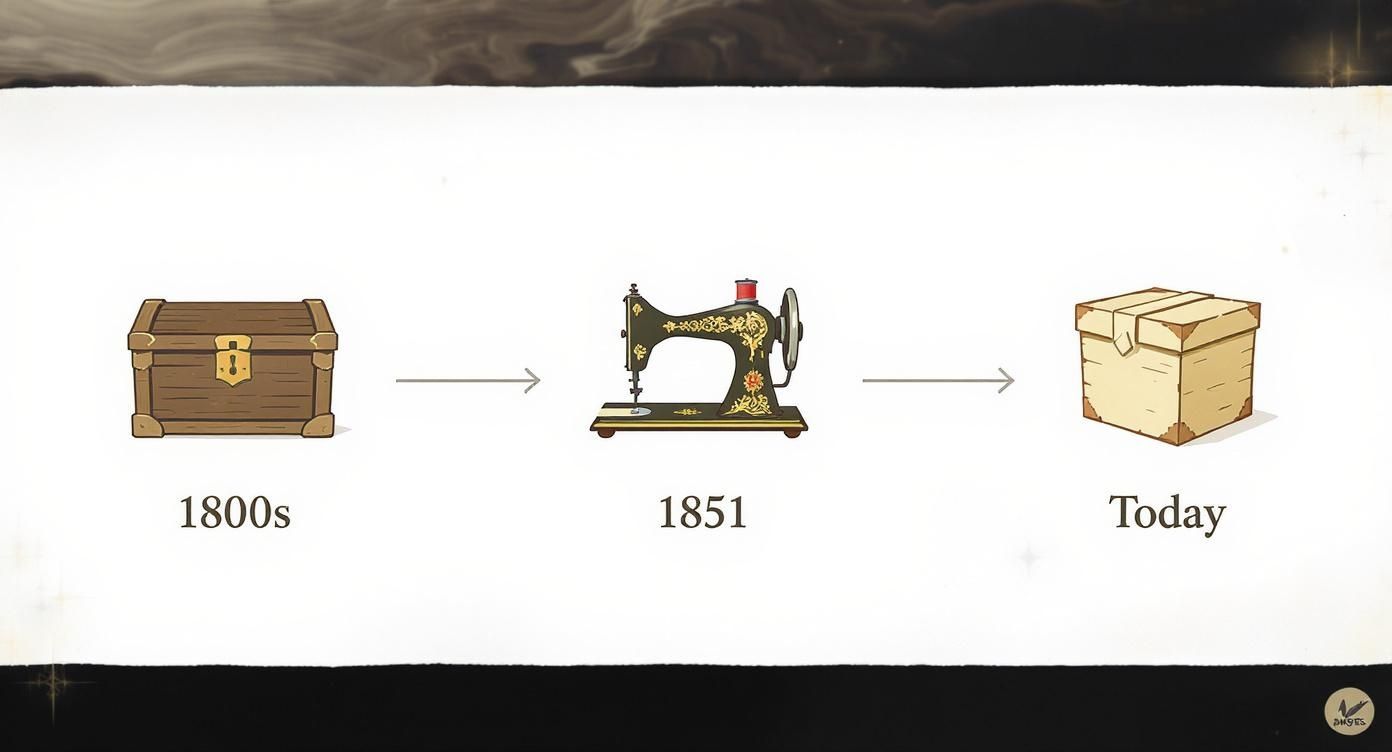
This evolution shows a clear shift towards organisation and mobility, reflecting the changing needs of sewists over the centuries.
To help you decide, let's break down the common materials you'll encounter.
Comparing Large Sewing Box Materials
| Material | Pros | Cons | Best For |
|---|---|---|---|
| Wood | Extremely durable, classic aesthetic, offers excellent protection. | Heavy, less portable, can be more expensive. | A dedicated sewing space or studio; heirloom-quality storage. |
| Plastic | Lightweight, easy to clean, affordable, often has moulded organisers. | Can become brittle over time, may not feel as premium. | Crafters on the go, workshops, and budget-conscious hobbyists. |
| Fabric/Wicker | Stylish and decorative, very lightweight, soft-sided. | Offers minimal protection for tools, can be harder to clean. | Light use, storing yarns and soft supplies, or as a decorative piece. |
| Metal | Very robust and secure, offers superior protection from damage. | Can be heavy, susceptible to dents and scratches. | Professionals or those needing to transport valuable equipment securely. |
Ultimately, the best material is the one that aligns with your specific craft, your workspace, and how often you need to move your supplies.
Smart Internal Organisation
The real genius of a good sewing box is revealed when you open it up. A thoughtfully designed interior is the difference between a jumbled mess and having every single tool right at your fingertips when you need it.
Keep an eye out for these game-changing features:
- Cantilever Trays: These are the tiered, concertina-style compartments that swing outwards, giving you a bird's-eye view of all your small notions like pins, buttons, and bobbins. No more digging around!
- Removable Dividers: Your needs change from one project to the next. Adjustable dividers give you the freedom to create custom-sized sections for different thread spools or oddly shaped tools.
- Deep Storage Bins: The bottom of the box needs to be a workhorse. It should have enough clear space for your larger essentials—fabric scissors, rotary cutters, and maybe even a few fat quarters.
A great box has room for everything you might need for more advanced techniques. For instance, if you're tackling a project like the one in a designer's guide to piping on cushions, you'll want a place for your piping foot, cord, and other specialist bits and bobs.
A box with a thoughtful layout isn't just storage; it’s an active tool. It anticipates your needs, presenting your supplies in a logical way that speeds up your process and reduces frustration.
Exploring different sewing organiser boxes will give you a better sense of how different layouts can cater to a specific collection of supplies.
Overlooked Yet Essential Details
Finally, it’s the little things that often make the biggest difference. These are the details that separate a merely good box from a truly great one.
First, a sturdy latch is non-negotiable. It has to close securely every time to prevent a catastrophic spill, especially if you plan on taking your box anywhere. A comfortable, ergonomic handle is just as important. A large box, fully stocked, can get surprisingly heavy, and a flimsy or poorly designed handle will make carrying it a real chore.
Also, take a moment to inspect the hinges. They are a common weak point on cheaper models. Solid, well-made hinges are a sign of quality and will ensure your box serves you well for years to come.
Finding the Right Box for Your Sewing Style
Every sewer has their own way of working, and the right large sewing box should feel like a natural extension of that creative process. This isn't a one-size-fits-all situation; it’s about matching the box’s design to how you organise, create, and manage your projects.
To find your perfect match, it helps to figure out what kind of sewer you are. Are you a weekend hobbyist who loves diving into big, sprawling projects? Or are you a professional who needs tools organised and ready to go at a moment’s notice? Pinpointing your habits is the first real step toward choosing a box that will truly work for you.
The Dedicated Hobbyist
If you're a hobbyist, you probably love collecting beautiful fabrics, threads in every imaginable colour, and all the latest tools for techniques you're excited to try. Your collection is always growing, fuelled by pure inspiration and the joy of making. For you, storage capacity is everything.
You’ll want a box with a deep, open well at the bottom for bulky items like fabric remnants, quilting rulers, and those extra pairs of scissors. Look for designs with generous cantilever trays that fan out, revealing dozens of little sections perfect for buttons, bobbins, and beads. It’s the best way to keep things from getting lost in the creative whirlwind.
A hobbyist's sewing box is their treasure chest. It needs to be spacious and forgiving, with room to grow alongside their skills and ever-expanding collection of supplies.
This kind of setup keeps your main workspace clear while making sure all your materials are in one place, ready for when inspiration strikes. For those smaller bits and bobs, you might find our guide to choosing the perfect sewing accessory box a useful read.
The Professional Tailor
For a professional tailor or dressmaker, a sewing box is a portable workstation. It has to be tough, reliable, and meticulously organised for efficiency, especially during client fittings or when working on-site. Here, durability and portability are the top priorities.
A professional’s ideal large sewing box will have:
- Secure Latches: Strong, dependable clasps are absolutely essential. The last thing you want is a spill on your way to a client.
- Robust Construction: Look for high-grade plastics or even metal-reinforced cases. These offer far better protection for your valuable, precision tools.
- Logical Compartments: A layout that lets you group tools by function—cutting, marking, measuring—is key to working quickly and looking professional.
The Craft Educator or Minimalist
A craft educator needs a box that’s as much a teaching aid as a storage solution. Clear lids and trays that are easy to get into are vital for demonstrating techniques and showing students the different tools available. Everything needs to be visible and within easy reach.
On the other hand, the minimalist crafter might have a large collection but wants a clean, uncluttered look. They need a large sewing box that doesn’t scream "bulky." This means seeking out designs with clean lines, integrated handles, and a clever, compact footprint that hides a surprisingly roomy interior. For them, the goal is maximum storage with minimum visual noise.
How to Organise Your Sewing Box Like a Pro
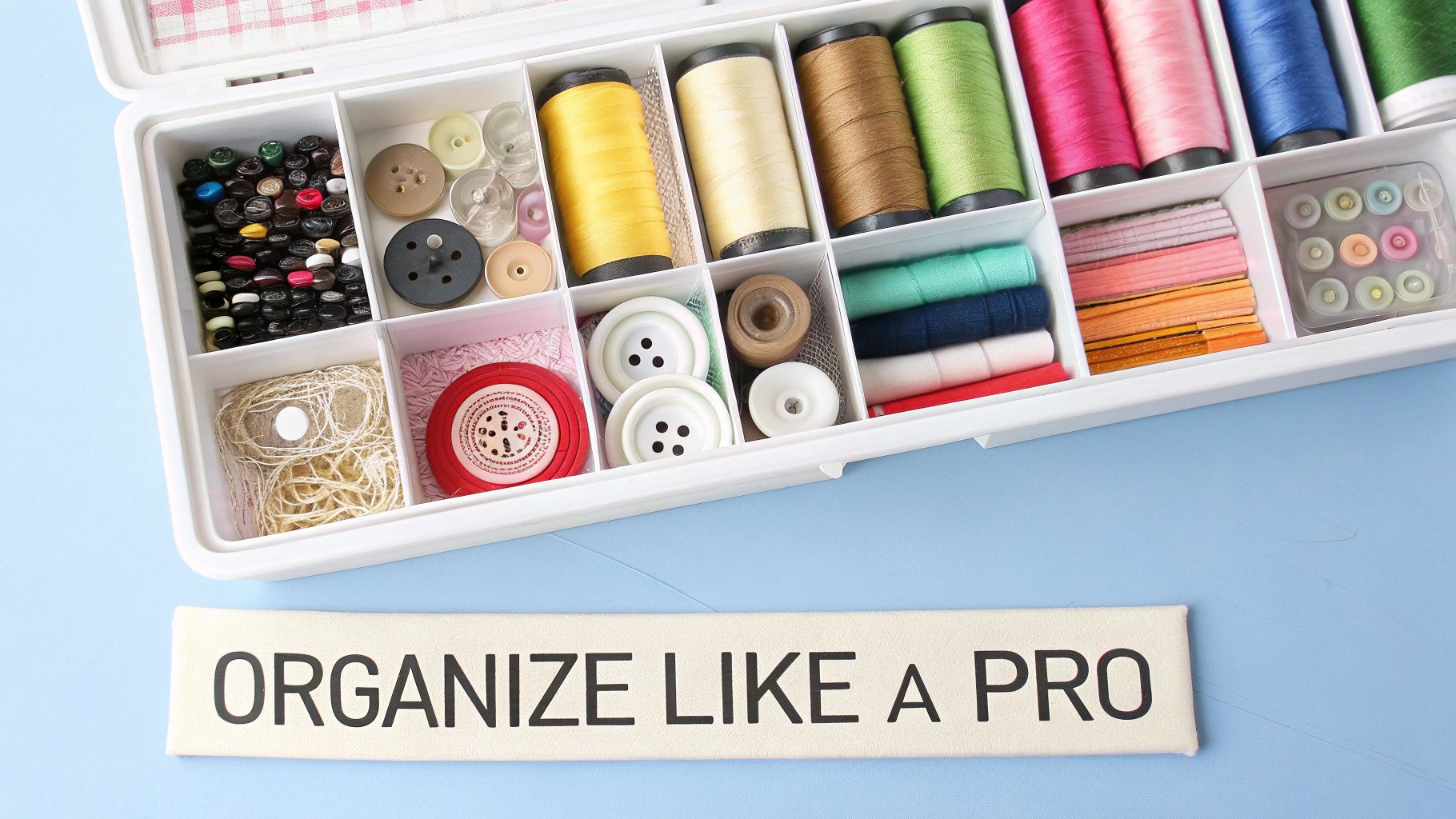
Simply owning a large sewing box is one thing, but turning it into a well-oiled machine for your craft is where the real magic happens. A properly organised system can completely change your creative process. No more frustrating searches for a missing seam ripper or that one specific shade of thread. The aim is to create a setup so intuitive you can reach for what you need without breaking your focus.
The best way to start is by grouping everything by its function. Think of your box as a mini-workshop with dedicated stations. Keep all your cutting tools—scissors, rotary cutters, and snips—in one area. Your marking tools, like chalk, fabric pens, and tracing wheels, should all live together in another compartment. This "task-based" approach means you only need to go to one section to find every tool for a specific job.
Creating Order from Chaos
Once you’ve grouped your supplies, the next step is containing them smartly. Small, loose items are usually the main culprits behind a messy box. The key is to find solutions that keep these little bits and bobs secure and, most importantly, visible. Otherwise, you’ll just end up with a jumbled mess at the bottom of a tray.
Here are a few practical tips to get you started:
- Tame Pins and Needles: A small magnetic strip stuck to the inside of a lid or a magnetic pin bowl placed in a tray is a game-changer. It keeps sharp items safely in one spot and makes them incredibly easy to grab.
- Contain Small Notions: Use tiny, clear containers for things like buttons, hooks, and snaps. Small bead organisers or even mini food pots work brilliantly. This stops them from getting mixed up and lets you see your stock at a glance.
- Organise Your Threads: Arrange spools by colour. A dedicated thread rack or even simple dividers in a drawer will stop them from unravelling and tangling into a frustrating knot. The result is a satisfying and functional rainbow of colour.
A truly organised sewing box isn't just about being tidy; it's a direct reflection of your workflow. When you arrange tools based on how you actually use them, you cut out wasted time and keep your creative momentum flowing.
Maintaining Your System for Long-Term Success
Getting organised is a great start, but staying organised is a habit. It’s worth taking ten minutes every couple of months to give your sewing box a quick sort-out. This is the perfect time to restock essentials like machine needles and your most-used thread colours, and to clear out any supplies you no longer need.
This little bit of regular maintenance ensures your creative toolkit is always ready for action, fully stocked and free of clutter. And this principle doesn't just apply to your box. Taking these ideas further is a key part of effective sewing room organization. If you're ready to tackle your whole creative space, check out these top sewing room organization ideas for even more inspiration.
Your Large Sewing Box Questions Answered
Choosing the right large sewing box often comes with a few final questions. I get it – you want to be completely sure before you commit. To help you feel confident in your decision, I’ve put together some clear, no-nonsense answers to the questions I hear most often from fellow sewers.
Think of this as the final check before you invest in a piece of kit that’s going to be with you for years. Getting it right means your new box won’t just be a purchase; it’ll be a proper partner for all your creative work.
What Is the Best Material for a Large Sewing Box?
Honestly, there’s no single ‘best’ material. The right one really depends on what you do, where you work, and your personal taste.
- Traditional Wood: A classic for a reason. Wooden boxes look beautiful, they’re incredibly sturdy, and they can become a real centrepiece in a sewing room. The downside? They’re heavy, so they’re not great if you need to be on the move.
- Modern Plastic: This is your workhorse option. Plastic boxes are light, affordable, and often come with those brilliant cantilever trays that make everything easy to find. Plus, they’re a doddle to clean.
- Stylish Fabric: If aesthetics are high on your list, a fabric basket or fabric-covered box can look lovely. Just remember, they offer less protection for sharp tools like scissors or delicate equipment, so they’re better suited for stashing yarn and softer supplies.
- Robust Metal: For any professional who takes their tools on the road, a tough metal case is the way to go. It offers maximum protection, ensuring your valuable gear arrives in one piece, every time.
It's all about finding that sweet spot between durability, portability, and the look you want for your space.
How Do I Keep My Large Sewing Box Organised?
The secret to an organised box isn't a one-off tidy-up; it's about creating a system that works for you. The key is to group things logically, based on how you actually use them.
Start by sorting everything by its job. All your cutting tools go in one spot, your measuring tapes and rulers in another, and your marking chalks and pens somewhere else. From there, use smaller containers inside the main trays to corral all those tiny bits and bobs—buttons, beads, bobbins. Small, clear pots are fantastic for this, as you can see what’s inside without tipping everything out. Lastly, make the most of any adjustable dividers to create custom-sized slots for things like thread spools.
Are Expensive Sewing Boxes a Good Investment?
A pricier sewing box can absolutely be a brilliant investment, but only if its features genuinely match your needs and your commitment to the craft. It’s not about the price tag itself, but the long-term value you get from it.
Premium models are usually built from better materials—think solid hardwoods or high-grade, tough plastics—and are designed to last a lifetime. They also tend to have much better hardware, like sturdy hinges and secure latches, which are often the first things to fail on cheaper boxes.
If you’re a serious hobbyist or a professional, investing in a well-made box is almost always cheaper in the long run than replacing a flimsy one every couple of years.
Think of it like any other tool in your workshop; your best equipment deserves proper protection.
Can a Large Sewing Box Be Used for Other Hobbies?
Definitely! That's one of their biggest strengths. The very things that make them perfect for sewing—all those clever compartments and trays—make them fantastic for all sorts of other crafts.
For example, they’re ideal for jewellery-making, giving you a place for every bead, wire, and pair of pliers. Artists find them perfect for organising small paint tubes, brushes, and palette knives. Even scrapbookers can use them to keep stamps, ink pads, and fiddly embellishments sorted and ready to go. Essentially, if your hobby involves lots of small components that are easy to lose, a sewing box can be a game-changer.
At Display Guru, we provide the professional-grade tools you need to bring your creative and retail visions to life, from tailor’s dummies to garment rails that perfectly complement your organised workspace. Explore our full collection at https://www.displayguru.co.uk.