



Wood Sewing Box: The Ultimate Guide to Choosing Yours (wood sewing box)
A proper wood sewing box isn't just a place to stash your supplies; it's a dedicated, portable workspace for the tools you rely on most. Crafted from beautiful woods like oak, pine, or walnut, these boxes are designed to blend classic good looks with smart, practical organisation, ensuring everything from your tiniest needles to your biggest shears has its own perfect spot.
The Enduring Appeal of the Wood Sewing Box
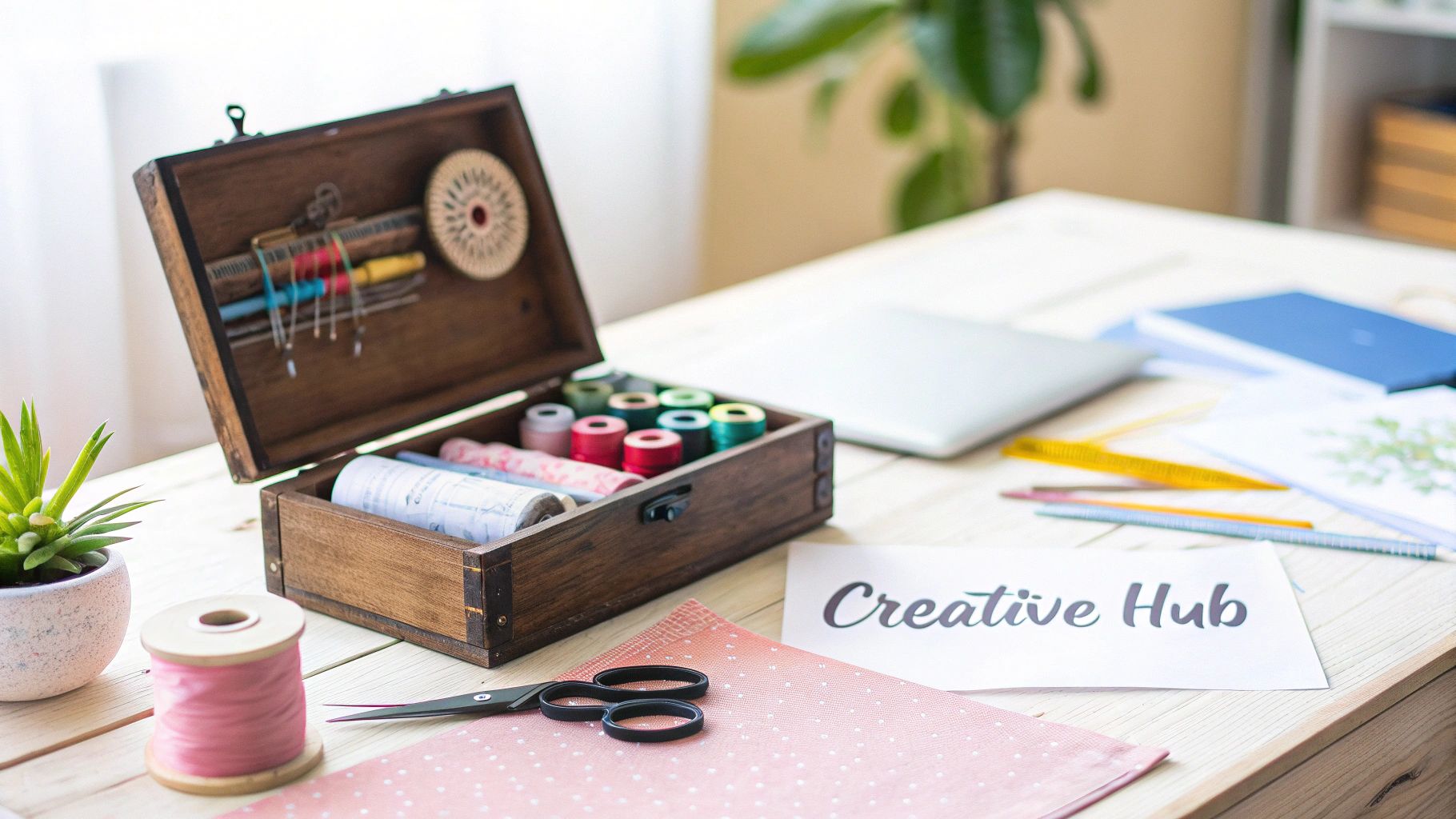
In an age of cheap plastic tubs, a wooden sewing box has a charm that's hard to beat. It feels connected to a long heritage of craftsmanship, bringing to mind treasured heirlooms passed down from one generation to the next. But its appeal goes far beyond sentimentality—it’s all about fantastic practicality.
Think of it as the ultimate toolkit for anyone who works with fabric. Just as a chef has their knives perfectly arranged for an effortless workflow, a sewer needs their tools right where they can find them. A classic wood sewing box is built for exactly that, turning a potential tangle of creative chaos into calm, structured order.
Why Organisation Is Key
If you're a professional—a tailor, a designer, or an artisan—efficiency is everything. Time is money, and a well-organised workspace directly impacts your productivity and the quality of your finished work. The right storage stops you from wasting precious minutes hunting for a specific bobbin and protects your delicate tools from damage.
A great sewing box delivers on all fronts:
- Dedicated Compartments: It's all about having a place for everything. Small trays keep bobbins from rolling away, long sections are perfect for scissors, and many even feature built-in pincushions.
- Protection for Tools: Wood is tough. It provides a solid barrier against dust, moisture, and knocks, extending the life of your shears, needles, and threads.
- An Inspiring Workspace: There's something about a beautiful, tidy environment that just gets the creative juices flowing. For more inspiration, have a look at our guide filled with clever sewing room ideas.
A well-organised sewing box is not just a container; it is the heart of a productive creative space, transforming the act of sewing from a hobby into a refined craft.
Whether you're a seasoned pro who needs peak efficiency or a passionate hobbyist wanting to take your craft more seriously, the right wood sewing box is a worthwhile investment. It’s a partner that respects your tools, simplifies your process, and adds a touch of timeless elegance to your creative space.
From Heirloom Treasure to Modern Workhorse
The humble wood sewing box is so much more than a simple storage container; it's a direct link to a rich history of craftsmanship and dedication. For centuries, these boxes have been the silent partners to dressmakers, tailors, and home sewers, evolving from a practical necessity into a cherished symbol of the craft itself. Their story is one of artistry meeting function, a narrative that continues in today’s creative studios.
The journey of the wood sewing box from a basic tool to a status symbol really took off during the Georgian and Victorian eras here in the UK. This was a time when sewing wasn't just a chore but an essential skill, and the tools of the trade were treated with immense respect. A well-made box was a sign of a serious commitment to sewing, organised to perfection for maximum efficiency.
An Emblem of Quality and Precision
Early artisans didn’t just build boxes; they crafted pieces of furniture in miniature. They carefully selected premium woods that were as beautiful as they were durable, making sure each box could withstand constant use while looking elegant.
- Mahogany: Prized for its deep, reddish-brown colour and exceptional durability, it was a popular choice for high-quality pieces.
- Rosewood: Known for its striking grain patterns and rich hues, rosewood was often used for decorative and luxury boxes.
- Walnut: This wood offered a beautiful, dark finish and a robust structure, making it another favourite among craftsmen.
This legacy of quality materials is a key reason so many antique examples survive today. In late 18th-century Britain, the wooden sewing box became a staple for dressmakers, quickly replacing earlier textile and leather containers. In fact, historical records show that by 1800, these durable boxes, crafted from woods like mahogany and walnut, made up about 70% of surviving sewing storage artefacts from the era, as softer materials simply didn't last.
The wood sewing box was never just about storage. It was about creating an organised system where every tool had its place, a principle that today’s professionals still value for achieving a seamless workflow.
The exterior was often just as impressive as the interior. Techniques like Tunbridge Ware, a type of decorative wood mosaic from Kent, and intricate mother-of-pearl inlays transformed these functional items into true works of art. If you happen to find a vintage piece that needs some love, learning how to upcycle furniture can offer excellent ideas for bringing it back to life. This historical pursuit of combining beauty with flawless organisation is what makes the wood sewing box a timeless icon, connecting today’s creative professionals to a long line of skilled artisans who valued precision and order above all else.
2. Getting to Grips with Wood Types and Construction
Picking out a wooden sewing box is a lot like a tailor choosing the perfect fabric. The material itself dictates everything—its character, how long it will last, and its overall beauty. The type of wood is the very foundation of its quality, influencing its weight, its resilience, and how gracefully it will age.
You'll often find boxes made from woods like pine, which have a lovely rustic, lightweight charm. They're usually more budget-friendly, making them a great starting point. But if you're looking for real longevity, you need to turn to hardwoods. Oak is famously strong with a beautiful, pronounced grain, building a box that can take the knocks of daily use. For a touch of real luxury, woods like walnut and mahogany offer that rich, dark elegance and a smooth finish that feels incredible.
How to Spot Quality Construction
Beyond the type of wood, it’s how the box is put together that really tells you about its quality. You can spot superb craftsmanship in the little details, especially in the joints. This is what separates a temporary storage fix from a piece you could one day pass down.
Take a close look at the joinery; it’s the best clue to the box's structural integrity.
- Dovetail Joints: Seeing these interlocking joints is a sure sign of high-quality work. They create an exceptionally strong bond that resists being pulled apart, ensuring the box can handle the weight of your supplies for years to come.
- Box Joints: Sometimes called finger joints, these are a bit simpler than dovetails but still offer excellent strength. They show that the maker cared about building something sturdy.
- Butt Joints: This is the most basic joint, where two pieces of wood are simply glued or nailed together. You'll find this on cheaper items, and it's by far the least durable option.
The joinery is the skeleton of a sewing box. Strong joints, like dovetails, are a promise of precision and strength, telling you that a box made for delicate tools has been built to last a lifetime.
Solid Wood vs. Veneers: What's the Difference?
Another vital point to check is whether the box is made from solid wood or uses a wood veneer. A solid wood box is just that—every part is made from a single, solid piece of timber. This gives you maximum durability. If it gets a scratch or a dent, it can be sanded and refinished, and it will develop a beautiful, rich patina over time.
A veneer, on the other hand, is a very thin layer of attractive wood glued onto a less expensive core, like plywood or MDF. High-quality veneers can look stunning, but they're much more prone to chipping and peeling, and you can't really repair them like you can with solid wood. If you want to dive deeper into identifying wood, especially in older pieces, it's worth learning what antique owners should know about various types of wood and their tell-tale signs.
Knowing these differences will help you find the perfect sewing organiser box that ticks all your boxes for both looks and lasting function.
Finding the Right Style for Your Workflow
Choosing a wooden sewing box isn't just about finding a container; it's about finding a partner for your creative process. Think of it like a chef choosing their knives—there’s a specific tool for every job, and in sewing, there's a particular style of box designed to match different workflows, spaces, and habits. Your choice has a real impact on how smoothly you can work, which shapes your entire making experience.
The aim is to match the box's design to your own practical needs. Do you need something you can grab and take to a class, or a permanent piece that feels more like studio furniture? The perfect design should feel like a natural extension of your workspace, almost knowing what you need before you even reach for it.
Wood Sewing Box Style Comparison
To help you navigate the options, here’s a quick look at the most common styles. Each one offers a different blend of storage, portability, and aesthetic appeal, catering to various types of crafters.
| Style | Key Features | Best For | Typical Size |
|---|---|---|---|
| Cantilever | Tiered trays swing outwards, revealing all compartments at once. Excellent overview. | Hobbyists with lots of small notions like buttons, bobbins, and pins. | Medium, portable with a handle. |
| Tabletop Chest | Resembles a miniature chest of drawers. Great for categorising. | Specialists (e.g., embroiderers, quilters) with a curated toolset and limited space. | Small to medium, sits on a desk. |
| Cabinet | A substantial piece of furniture with deep drawers and large compartments. | Serious professionals or dedicated hobbyists with a large studio and extensive supplies. | Large, stationary piece of furniture. |
Ultimately, the best choice is the one that removes friction from your creative flow, making your tools and supplies effortlessly accessible when inspiration strikes.
The Classic Cantilever Design
The cantilever sewing box is what most people picture, and for good reason. Its clever concertina design features tiered trays that swing outwards, laying out all your compartments at once. This gives you an unmatched, immediate overview of your entire collection of small bits and bobs, from bobbins and buttons to pins and needles.
This style is a lifesaver for crafters who have a mountain of small, easily lost items. The segmented trays bring instant order, stopping tiny tools from disappearing into a jumble at the bottom of a deep box. Its all-in-one unfolding action is perfect for anyone who likes to see all their options at a glance without having to dig through layers.
Compact and Elegant Tabletop Chests
For those with less space or a more carefully selected collection of tools, a tabletop chest is a wonderfully sophisticated and practical choice. These often look like miniature chests of drawers, with multiple small drawers that are perfect for sorting different types of threads, beads, or machine feet. Their small footprint makes them ideal for a cosy sewing nook or for keeping on a larger cutting table.
These chests are less about portability and more about creating a permanent, organised hub for your essentials. They're particularly well-suited for specialists, like embroiderers or quilters, who use a specific set of tools over and over again. A beautiful wood chest also adds a touch of class to any workspace, keeping key items within easy reach while maintaining a tidy look. As your craft grows, you might consider pairing it with a full sewing table with storage for a complete setup.
Your wood sewing box should reduce friction in your creative process. The right style makes finding the right tool effortless, allowing you to stay focused on your project, not on searching for supplies.
Cabinet and Furniture Styles
For the dedicated professional or the serious hobbyist with a proper studio space, a cabinet-style sewing box is the ultimate organisational statement. These are substantial pieces of furniture, often built with numerous drawers, large compartments for fabric scraps, and sometimes even built-in spool racks. They are designed to be a permanent fixture in a sewing room, acting as a command centre for all your supplies.
This style is really for those who have an extensive collection of tools and materials and need a seriously robust, high-capacity system. Because they’re meant to stay put, they can be built from heavier, more beautiful woods, becoming a functional and eye-catching part of your studio’s décor. It's a real investment in your craft, providing a comprehensive solution that can grow with your skills and collection for years to come.
This flowchart can help you judge the build quality when you're looking at different options.
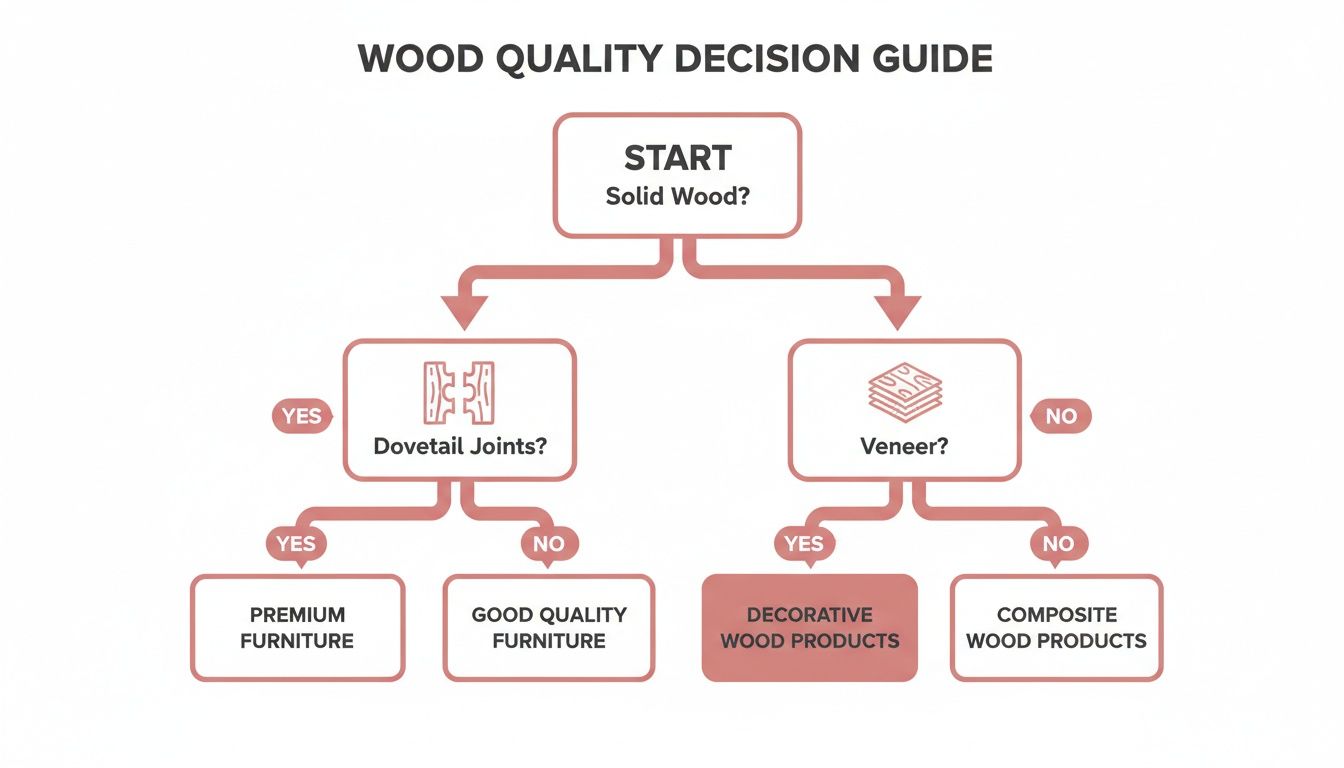
It really drives home the point that while solid wood is a great start, it's the presence of strong joinery like dovetails that truly signals lasting quality and craftsmanship.
How to Select the Perfect Sewing Box for You
Choosing the right wood sewing box is a surprisingly personal journey. It’s not just about finding a home for your needles and thread; it's about finding a partner that fits your creative rhythm and keeps your space organised and inspiring. The ideal box for a busy tailor is going to look very different from the one a hobbyist might choose for quiet weekend projects.
The Professional vs. The Hobbyist
For a professional, a sewing box is a workhorse. It needs to be tough, spacious, and above all, efficient. You’re looking for something that can handle the daily grind, with plenty of room for specialised gear like pattern notchers or awls, all laid out for quick, easy access. Think of it as a mechanic's toolbox – everything has its place so you can grab what you need without a second thought. A large cantilever box with deep trays or even a cabinet-style unit often fits the bill perfectly.
If sewing is your passion rather than your profession, you have the luxury of blending function with beauty. The right box for you will depend entirely on what you love to create. A quilter, for example, will need longer compartments for rotary cutters and rulers. An embroiderer, on the other hand, will want lots of small, shallow trays to keep their vibrant collection of floss neatly separated. A gorgeous tabletop chest could be just the ticket, providing ample storage without taking over your crafting corner.
Key Questions to Ask Before You Buy
To find a box that feels like it was made just for you, it pays to think through a few key points first. A little reflection now can save you from an impulse buy that doesn't quite work, ensuring your new sewing box is a joy to use for years to come.
- What are my main crafts? Jot down the top three things you spend your time making. This simple list will tell you exactly what kind of compartments and storage you’ll need most.
- How much space do I really need? Take an honest look at your current stash of supplies, but leave a bit of room for it to grow. A box that's too big can quickly become heavy and awkward to handle.
- Will I be taking it anywhere? If you go to sewing classes or craft meetups, portability is huge. A sturdy, comfortable handle and a clasp that shuts securely are absolute must-haves.
- Where will it live? Get out the tape measure and check the spot you have in mind for your box. That stunning floor-standing cabinet might be wonderful, but not if it completely cramps your workspace.
A great sewing box shouldn't just hold your tools—it should anticipate your needs. Its layout should make your workflow smoother, turning the search for a tool into a seamless, thoughtless action so you can stay focused on your creative vision.
At the end of the day, you want to find a wood sewing box that feels like an extension of your own hands. By matching its features to the way you work, you’re not just buying a storage solution; you’re making a smart investment in your own creativity and enjoyment. For more ideas on getting your supplies in order, take a look at our guide to choosing a sewing organiser box that works in harmony with your space. This careful approach will ensure your box becomes a treasured companion on all your creative adventures.
Caring for Your Wood Sewing Box
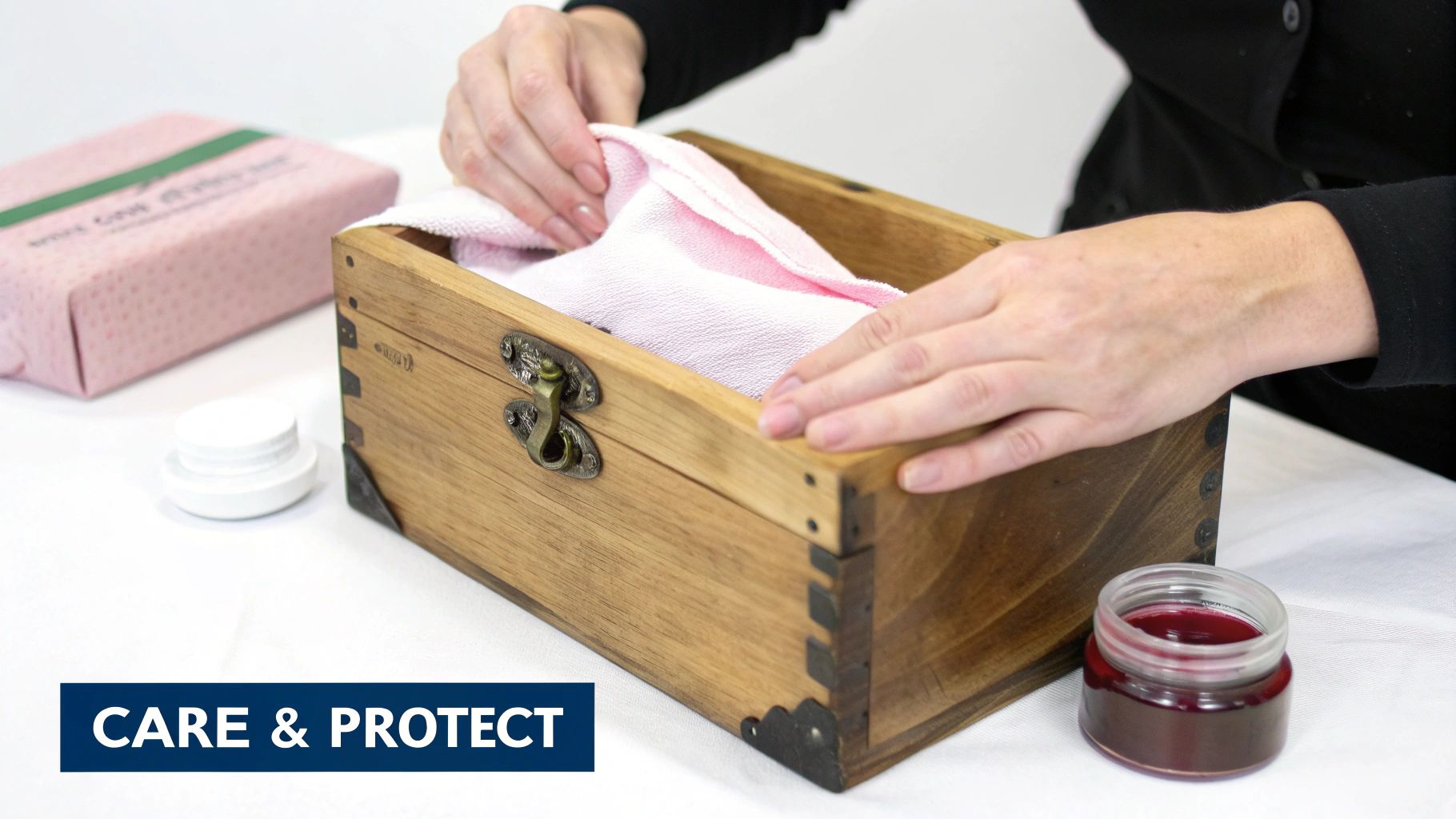
A well-made wood sewing box isn't just a place to stash your threads; it's a real investment in your craft. With a little bit of care, it can become a treasured piece that lasts for generations, looking just as beautiful as the day you got it.
The real enemies of wood are the elements. Direct sunlight, for instance, can bleach the finish and change the colour of the wood, leaving it looking patchy. Just as damaging are big swings in humidity, which can make the wood swell and shrink. That’s what leads to warped lids that won’t close properly or drawers that stick.
A well-cared-for sewing box becomes more than just storage; it’s an heirloom. You're not just preserving a piece of wood, you're looking after the very heart of your craft.
The best thing you can do for your box is to give it a good home. Keep it away from sunny windows and radiators, where the temperature and light are most extreme. Finding a spot with a stable, temperate climate is the single easiest way to add decades to its life.
Simple Cleaning and Maintenance
Keeping your box in top shape doesn't require a lot of fuss. A few simple, regular habits will ensure it functions smoothly and looks stunning for years to come. Think of it as a little ritual to protect the wood's finish and character.
Here are a few straightforward tips to get you started:
- Dust it Down: A quick wipe with a soft, dry microfibre cloth is all you need to do regularly. This simple act stops dust from settling in and dulling the wood’s beautiful grain.
- A Gentle Clean: If you notice fingerprints or small smudges, just dampen a cloth very slightly with water. Make sure to wipe along the grain, not against it, and then immediately dry the spot with another soft cloth.
- Steer Clear of Harsh Chemicals: This is a big one. Never reach for abrasive cleaners or furniture polishes that contain silicone. They can strip the protective finish right off and cause permanent damage to the wood.
It’s also wise to protect the contents from pests. For some great advice on keeping your fabrics safe, our article on finding a reliable moth-proof garment bag has some excellent tips that apply here, too.
Frequently Asked Questions
Even after exploring all the options, you might still have a few questions lingering. That's perfectly normal. This final section tackles some of the most common queries we hear, giving you clear, practical answers to help you feel confident in your choice, whether you're buying new or giving an antique a new lease of life.
Practical Tips and Common Concerns
Let's get into the nitty-gritty. From dealing with older pieces to keeping your supplies in perfect order, here are some answers to those practical questions that pop up.
Are Vintage Wood Sewing Boxes Practical for Modern Use?
Without a doubt. In fact, many were built with a level of craftsmanship that's hard to find today, making them perfectly capable of holding modern tools. The key is to give it a thorough once-over before you buy. Look closely for any signs of woodworm, warping, or wobbly joints that might make it unstable.
Some of the compartments might feel a bit odd-sized for today’s sleeker tools, but that's an easy fix with a few custom inserts. A vintage box adds so much character to a sewing room, but just make sure it’s solid enough to be a safe home for your supplies.
A well-preserved vintage sewing box isn’t just storage. It’s a piece of history, bringing its own story and timeless craftsmanship into your creative space. It’s a beautiful reminder that great design never goes out of fashion.
What Is the Best Way to Organise Threads in a Box?
The ideal setup is a box with long, shallow trays that have built-in dowels or spindles. They’re designed specifically to hold spools securely, stopping them from unravelling into a tangled mess.
If your box just has open compartments, don't worry. You can easily pop in separate foam or plastic spool holders to get everything in line. Taking a few minutes to arrange your threads by colour will also save you loads of time and frustration when you're in the middle of a project.
How Can I Protect the Interior from Sharp Tools?
Lining the compartments is your best bet for preventing scratches and dings from scissors, seam rippers, or awls. A thin layer of felt or velvet works wonders. Not only does it protect the wood, but it also cushions your tools and stops them from sliding about.
For pins and needles, a small, custom-fit pincushion tucked into a tray is a classic solution. Another great trick is to place a small magnetic dish in one of the compartments—it’ll keep all your sharp bits safely contained and away from the wood.
At Display Guru, we know that an organised workspace is the foundation of great creative work. Take a look at our selection of professional mannequins, garment rails, and display solutions designed to support your craft.