




Finding Your Perfect Sewing Organiser Box
Let's be honest, a quality sewing organiser box is so much more than just a place to stash your bits and bobs. It’s a purpose-built storage solution that brings order to your threads, needles, bobbins, scissors, and all those other notions that seem to have a life of their own. It’s what transforms a cluttered desk into a truly efficient creative hub, saving you time and protecting your valuable supplies from getting lost or damaged.
From Chaos To Creativity With The Right Organiser

Staring down a tangled web of thread or endlessly rummaging for that one specific seam ripper can kill your creative spark before a project even gets started. The right sewing organiser box doesn’t just tidy up your space; it completely reshapes your crafting process. Think of it as the very foundation of an efficient and inspiring sewing sanctuary.
A well-organised system gives you back precious time, letting you focus on your craft instead of hunting for tools. It also protects your supplies—needles stay sharp and rust-free, delicate threads remain untangled, and your best scissors are kept safe from accidental drops. This creates a smooth workflow where every item has its designated spot, allowing your creativity to flow without interruption.
Building Your Ideal Workspace
This guide will walk you through the essential concepts for picking the perfect storage solution. We'll explore how different designs and materials are suited to specific needs, helping you find a box that really clicks with your unique crafting style. After all, a thoughtfully chosen organiser is a cornerstone of a productive workspace.
To get the most out of your creative area, consider the real-world benefits of a dedicated storage system:
- Time Efficiency: Stop searching for tools. Everything you need is exactly where you expect it to be, letting you move seamlessly from one task to the next.
- Supply Protection: Proper storage prevents damage to expensive tools and materials, protecting the investment you've made in your hobby or profession.
- Reduced Stress: A tidy, logical workspace promotes a calm and focused mindset, which is crucial for detailed, creative work.
By establishing a system where every tool has a home, you’re not just organising supplies; you're creating an environment where inspiration can strike and projects can come to life effortlessly.
For more ideas on creating a functional and inspiring craft area, our complete guide to sewing room organization offers plenty of practical strategies and tips.
A Look At Different Types of Sewing Boxes
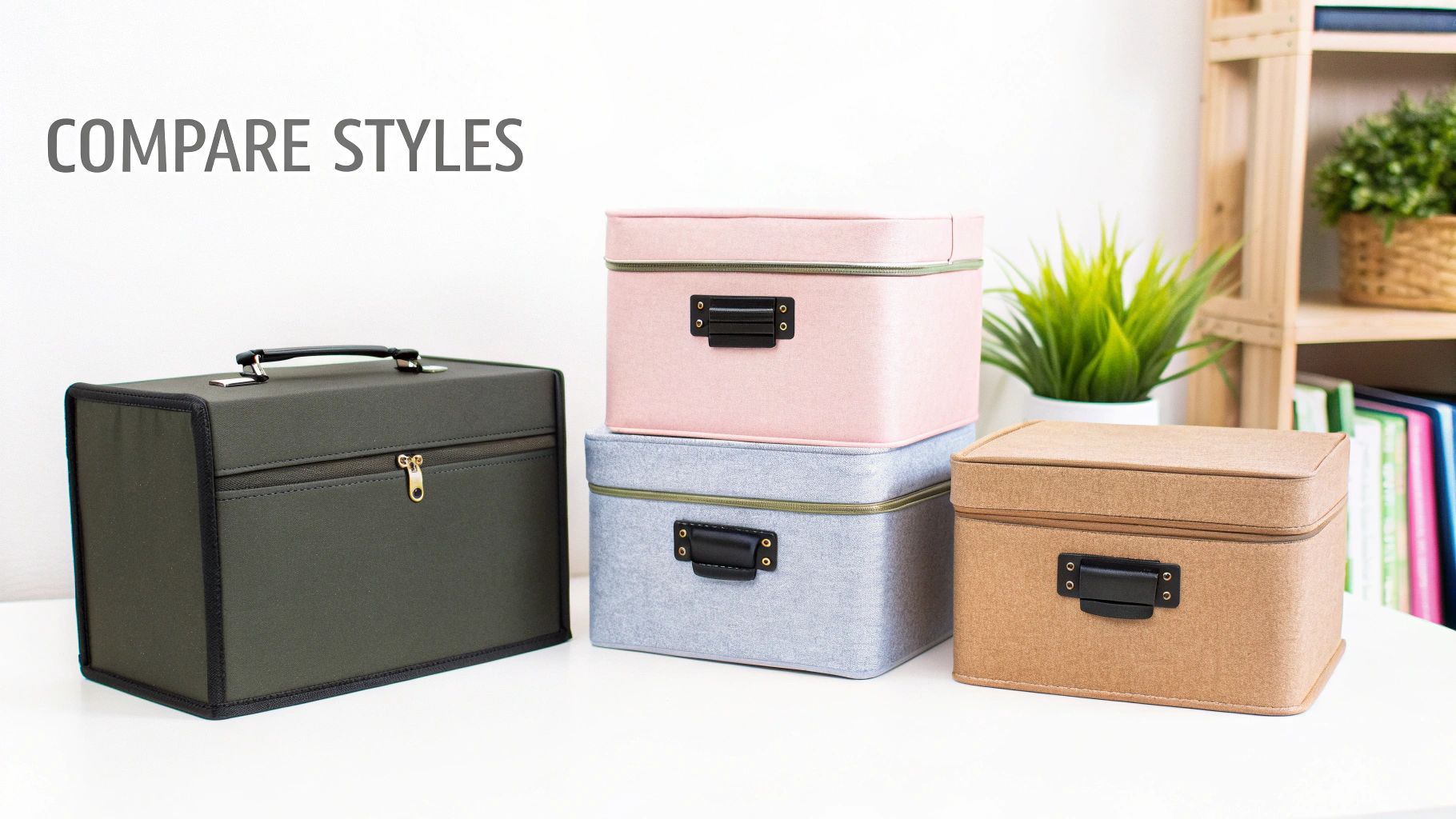
Not all storage is created equal, and finding the right sewing organiser box is a bit like choosing the perfect fabric for a project—it has to suit your specific needs. Let's walk through the most popular styles to help you find your ideal match.
The classic cantilever box is probably what most people picture. It’s an iconic design for good reason. When you open it, the tiered trays fold out in an accordion-style reveal, laying all your tools and notions out at a glance. It’s perfect if you value seeing everything at once, saving you from rummaging around for that one specific bobbin.
Modern and Specialised Designs
For those whose collections are always growing, modern modular systems offer fantastic flexibility. Think of them as building blocks for your craft supplies. You can stack, connect, and add new units as your stash of threads and tools expands, creating a completely custom setup that grows with you.
Then there are portable soft cases, the go-to for any sewer on the move. Usually made from durable fabric, they’re kitted out with plenty of zippered pockets and elastic loops to keep everything secure. They’re lightweight and ideal for taking to a class, a workshop, or even just from the spare room to the living room.
A great sewing box does more than just hold things; it streamlines your workflow. Whether you need instant access, room to grow, or portability, there’s a design out there built to support your creative process.
In the UK, the sheer variety of sewing boxes reflects just how popular the craft is. You can find everything from basic organisers for a few pounds on Amazon UK to premium models costing over £100. Specialists like Sew Essential and Sewing Online offer a wide range of competitively priced plastic boxes. Meanwhile, Home-Crafts focuses on beautiful wooden chests, which typically range from £20 to £70.
Elegant and Timeless Choices
Finally, let's not forget the elegant wooden sewing chest. These are more than just storage; they’re often beautiful pieces of furniture. Many feature intricate joinery, multiple drawers, and a rich finish that adds a touch of classic charm to any sewing room. While they are heavier, they’re incredibly durable and can easily become cherished heirlooms. If you appreciate this traditional style, it's worth exploring the different types of wooden sewing box to find one that blends timeless aesthetics with practical organisation.
By weighing up the all-at-once visibility of a cantilever, the adaptability of a modular system, the grab-and-go convenience of a soft case, or the classic charm of a wooden chest, you can really start to pinpoint which type of sewing organiser box is the perfect partner for your craft.
Essential Features Every Good Sewing Box Needs
The real magic of a sewing box isn't just how it looks; it's in the clever details that make your life easier. When you're choosing one, moving past the colour and size to look at these core features will be the difference between a simple tub and a truly indispensable crafting partner.
First up, let’s talk about adjustable dividers. Your sewing collection is a mix of all shapes and sizes, from tiny buttons and beads to long scissors and rotary cutters. Fixed compartments often just don’t cut it. Adjustable dividers, on the other hand, let you create bespoke slots for everything, ensuring a perfect fit and meaning your box can grow and change right along with your supplies.
Security and Accessibility
If you ever plan on taking your kit to a class, or if you've got curious kids or pets at home, then secure latches and a sturdy handle are absolute must-haves. There’s nothing worse than a flimsy clasp giving way, sending a cascade of pins and needles all over the floor. A solid handle gives you the confidence to move your supplies around without a second thought.
Another game-changer is a transparent lid. Being able to see what's inside at a glance saves so much time and frustration. Instead of rummaging through every section for that one spool of thread, a clear top gives you an instant inventory check. It’s a small touch that makes a massive difference to your workflow.
A truly effective sewing organiser anticipates your needs. Features like clear lids and removable trays aren't just conveniences; they are thoughtful design elements that respect your time and support your creative process.
Smart Design Additions
Many of the best organisers today come with features that solve those classic sewing annoyances. One of my favourites is removable trays. They are brilliant for project-specific work. You can just lift out a tray with the bobbins, threads, and notions for the task at hand and take it over to your machine, keeping your main workspace clear and focused.
To really level up your organisation, keep an eye out for these clever additions:
- Built-in Spool Spindles: These little pegs are fantastic. They hold your thread spools firmly in place, stopping them from unravelling and creating a tangled bird's nest.
- Integrated Pin Cushions: A pin cushion built right into the box means your sharpest tools are always safely stowed but ready to grab in a heartbeat.
- Small, Lidded Compartments: These are perfect for those fiddly little items that always seem to go missing, like seam rippers, machine needles, and stray buttons.
These thoughtful features are what turn a basic container into a high-performance organisational tool. To see how these elements look in practice, exploring a quality sewing accessory box can give you some great real-world examples. Once you know what to look for, you can choose a box that will serve you brilliantly for years to come.
Choosing The Right Size For Your Craft Collection
Picking the right size for your sewing organiser box is probably the most important decision you'll make. It’s a classic Goldilocks problem; go too small, and you’ll outgrow it in months, leading to a frustrating re-shuffle. But go too large, and it just becomes a cavern where tools rattle around and tiny notions get lost forever.
The trick is finding a box that feels just right, not only for what you own today but for all the projects you're planning for tomorrow. This means taking an honest look at your current stash and, crucially, thinking realistically about how it's likely to grow.
Assess Your Current Sewing Identity
Every sewer's needs are different. Are you a weekend hobbyist who just needs a home for the essentials to do a bit of mending? Or are you a professional tailor juggling a massive inventory of threads, buttons, and specialist equipment?
Thinking about where you fit can help narrow down the options:
- The Casual Hobbyist: You probably stick to the basics—needles, a few spools of thread, scissors, and a tape measure. A neat, compact box with a single tray will likely do the job perfectly.
- The Avid Quilter: You’ve got bulkier kit, like rotary cutters, long rulers, and various fabric markers. You'll need deeper compartments and larger trays to keep everything in its place.
- The Professional Tailor: Your inventory is vast, from zips and interfacing to hundreds of thread colours. A multi-layered, perhaps even modular, system is the only way to stay sane.
Figuring this out is the first step to finding a size that actually helps your creative process instead of getting in the way. If you fall into that last category, our guide on choosing a large sewing box has some great advice on handling bigger, more demanding collections.
Planning for Future Growth
A truly great sewing box has room for what you have and what you'll buy next. Let's be honest, new tools and materials are always tempting us. This is even more true with the popularity of craft subscription services, which bring new supplies right to our doorsteps.
The UK subscription box market was projected to be worth a staggering £1.8 billion, which tells you a lot about how our hobbies are growing. We’re all constantly adding to our toolkits, making it more important than ever to have storage that can keep up. You can read more about it in the 2021 report from the International Logistics Group.
As a rule of thumb, always leave yourself about 20-30% extra space for new acquisitions. This little buffer means you won't immediately run out of room the next time you buy a new set of threads or find a gadget you can't live without. Another smart move is to look at modular or stackable systems. They let you add more storage as you need it, making your organiser a long-term investment that grows right alongside your passion.
Smart Strategies For Organising Your Supplies
A great sewing box is a fantastic starting point, but its real value comes from how you organise it. Turning that potential jumble of supplies into a logical, efficient system is where the magic really happens. The most effective approach I've found is to categorise everything before it even goes near the box.
Think of your supplies in terms of their job. Grouping tools together based on what they do—cutting, measuring, marking, or finishing—creates a really intuitive workflow. When you do it this way, all your scissors, snips, and rotary cutters are in one place when you need to trim a seam. No more rummaging around.
Categorising Your Collection
Another way to approach it is by organising by project. If you find yourself frequently switching between, say, quilting and dressmaking, creating small, dedicated kits within your main sewing organiser box can be a massive time-saver. Just use smaller containers or pouches for project-specific notions, so you can simply grab the right kit and get started.
To really get a handle on your organisation, try one of these popular sorting methods:
- By Function: All cutting tools (scissors, rotary cutters) go together. Same for marking tools (chalk, pens) and measuring tools (tapes, rulers). Simple and effective.
- By Project Type: Create mini-kits for quilting, embroidery, or garment sewing that you can pull out in one go.
- By Material: Keep all your zips, buttons, and elastics in their own designated sections. It makes finding the right bit of hardware so much quicker.
This little decision tree can help you choose a box size based on what you primarily sew, giving you the right foundation to build your organisational system on.
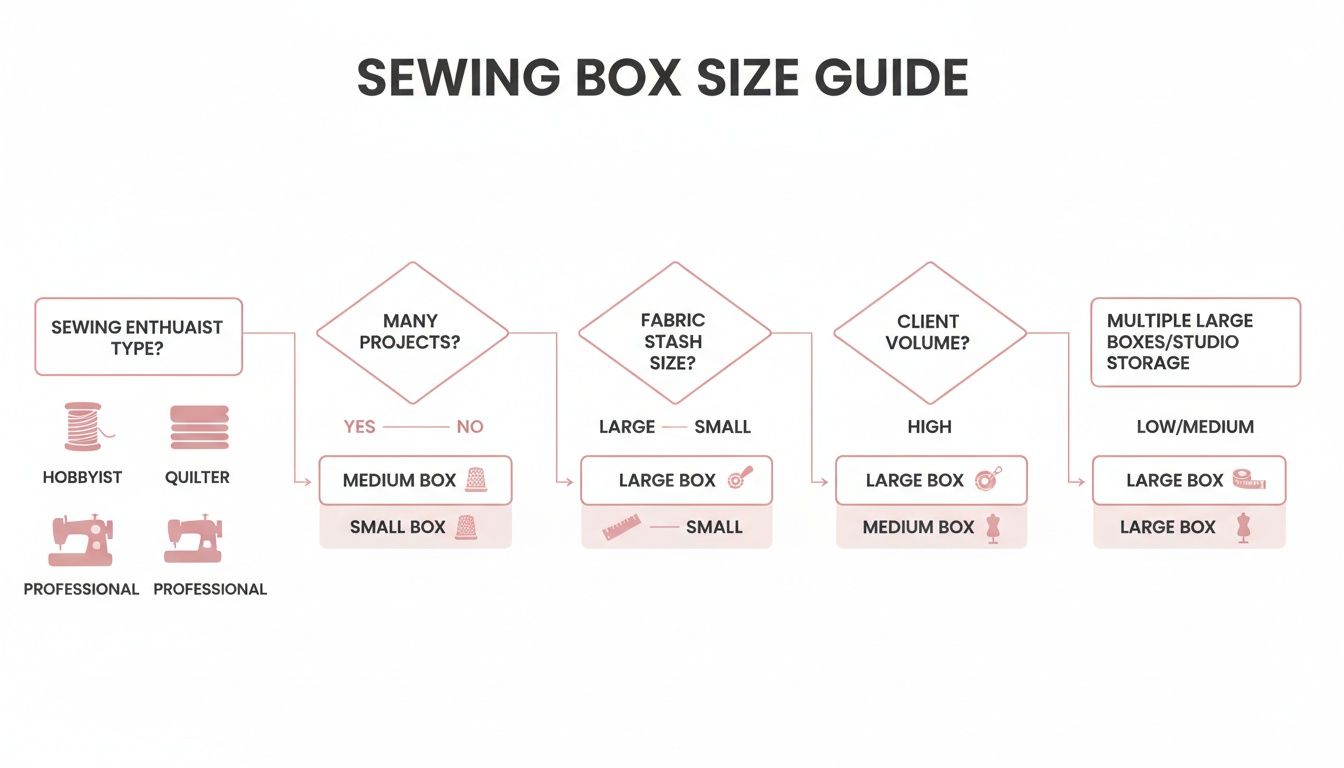
As you can see, what you make—from a hobbyist's small projects to professional work—directly influences the kind of storage capacity you’re going to need.
Maintenance and Upkeep
Once your system is in place, a little bit of maintenance is all it takes to keep it working for you. It’s the simple habits that stop your sewing organiser box from becoming another clutter-trap. One of the best hacks is using mini containers inside larger compartments to wrangle tiny items like beads, bobbins, and machine needles.
Your sewing box is a dynamic tool, not a static cupboard. A periodic declutter, perhaps twice a year, is essential to clear out old supplies, reorganise sections, and make space for new creative endeavours.
Regular cleaning is important, too. For plastic boxes, a quick wipe with a damp cloth usually does the trick. If you have a wooden organiser, use a dry microfibre cloth for dusting and a good wood cleaner to maintain its finish and protect it from moisture.
By looking after your box, you not only prolong its life but also ensure it remains an inspiring and functional part of your creative process for years to come. This commitment to order transforms your organiser from just storage into a powerful creative asset.
Creating A Seamless Sewing Workspace
Think of your sewing organiser box as less of a storage container and more of a mission control for your creative space. To really get into a productive rhythm, where you put it matters more than you might think.
The best spot is always within arm's reach of your main workspace, whether that's right next to your sewing machine or beside your cutting mat. The aim is to cut out wasted motion, letting you grab what you need without breaking your concentration. It's a small change that makes a huge difference.
This kind of ergonomic thinking is what turns a room with a sewing machine into a proper, functioning studio. It's all about how your organiser works in harmony with everything else to make your process smoother.
Integrating Storage and Display
When your storage works in tandem with your other professional equipment, you create a natural, logical path for every project. This is where a good setup really starts to shine.
- Garment Rails: A nearby garment rail is perfect for hanging works-in-progress. Not only does it keep delicate fabrics from getting creased, but it also lets you step back and see how a piece is coming together.
- Display Mannequins: Keep a mannequin close at hand for draping, fitting, and checking your design as you go. Having your tools and mannequin in the same zone makes those tiny, crucial adjustments quick and almost effortless.
By thoughtfully placing your sewing organiser box, you create a triangle of efficiency between your tools, your machine, and your project. This setup minimises disruption and keeps your creative momentum high.
Ultimately, the goal is to build an environment where your tools, materials, and projects flow together intuitively. For more ideas on getting the heart of your creative area just right, have a look at our detailed guide on choosing the perfect sewing table with storage.
A Few Common Questions About Sewing Organiser Boxes
Choosing the right storage can feel like a project in itself, and it's natural to have a few questions. Getting the right answers helps you pick a sewing organiser box that genuinely works for you, turning it from just a box into an essential part of your creative space. We get asked a lot about this, so let's tackle some of the most common queries.
These are the real-world challenges we all face, from tangled threads to choosing the right materials. Here’s some practical advice to get you sorted.
What’s the Best Way to Organise Sewing Thread to Prevent Tangling?
Ah, the dreaded "thread nest." To avoid it, look for an organiser with features designed specifically for spools, like built-in spindles or small, individual compartments. These are brilliant because they hold each spool firmly in place, stopping them from unravelling and tangling with their neighbours.
If your box has larger, open trays, don't worry—you can easily customise them. A piece of foam cut to size with little slits works wonders for gripping spools. For bobbins, I swear by those small, clear bobbin cases; they keep everything tidy and let you see at a glance which ones match your main thread colours.
Are Wooden Sewing Boxes Better Than Plastic Ones?
This is a classic debate, and honestly, there's no single "better" option. It all comes down to what you value most. A traditional wooden sewing box is beautiful, with a timeless appeal that can last for generations. They're incredibly sturdy, but they are also heavy and can be sensitive to moisture.
Plastic boxes, on the other hand, are the workhorses of the sewing world. They're lightweight, affordable, and incredibly practical. You’ll often find them with see-through lids and adjustable dividers, plus they're a breeze to clean. If you need to move your kit around, plastic is usually the way to go. Wood is fantastic for a permanent, stylish feature in your main sewing room.
The ideal material for your sewing organiser box is one that aligns with your workflow. Prioritise portability and visibility with plastic, or choose wood for its durability and classic style in a dedicated sewing space.
How Can I Stop My Needles and Pins From Rusting Inside the Box?
Rust is the enemy, and it's almost always caused by moisture. The trick is to keep everything bone dry. Always make sure your needles and pins are completely dry before you put them away. A great little hack is to pop a small sachet of silica gel (you know, the ones that come in new shoe boxes) into a compartment to absorb any stray humidity.
Using a magnetic pin dish or a pin cushion inside your box also helps. It keeps your pins secure, organised, and lifted off any surfaces where moisture might collect. And, of course, try to store your box somewhere dry—avoiding damp basements or garages is a must.
Ready to find the perfect tools to complement your organised workspace? Display Guru offers a professional range of mannequins, garment rails, and display solutions to create the ultimate sewing studio.
Explore our collection at https://www.displayguru.co.uk