



A Guide to Shoe Display Racks for Retail Success
Shoe display racks are so much more than just a place to put your stock. Think of them as fundamental tools of your trade, fixtures that don't just organise inventory but actively drive sales. The right rack can completely transform a simple product showcase into a curated experience, shaping how customers see your products and defining your brand's identity from the moment they step inside.
Why Your Shoe Display Racks Are a Critical Sales Tool
It helps to see your shoe display racks as your silent, hardest-working sales team. A gallery curator doesn't just hang pictures on a wall; they arrange art to tell a compelling story. In the same way, a savvy retailer or designer uses racks to position footwear in a way that sparks desire and makes the path to purchase feel effortless.
An effective display doesn't just hold shoes—it presents them. It might frame them as the solution to a problem, a source of inspiration, or simply a must-have item. This strategic presentation is what separates a passive, stockroom-like space from a dynamic and profitable retail floor.
The impact here goes far beyond simple aesthetics. Your choice of display directly influences customer behaviour, making a collection feel either premium and exclusive or accessible and a great value. This psychological framing is a cornerstone of smart brand positioning.
The Foundation of Visual Merchandising
At its heart, visual merchandising is the art of creating a shop environment that people want to spend time—and money—in. Your racks are the very foundation of this. They are the first and most crucial step in building a cohesive, attractive product story.
For example, a sleek, minimalist metal rack can signal modernity and high fashion. A rustic wooden unit, on the other hand, might communicate comfort, heritage, and craftsmanship. These subtle cues work to attract your target customer before they’ve even picked up a shoe.
The right display turns passive browsing into active engagement. It’s the visual handshake that invites a customer to explore your collection, making them feel understood and catered to.
Turning Browsers into Buyers
A well-organised and visually appealing layout naturally encourages customers to linger longer. When you get your shoe displays right, you’re making this happen by:
- Improving Accessibility: Customers can easily see and interact with your products without needing to ask for help.
- Highlighting Key Products: You can effortlessly draw the eye to new arrivals, bestsellers, or items on promotion.
- Creating a Logical Flow: The layout can guide shoppers through different styles and collections in an intuitive, natural way.
This strategic thinking is a huge part of successful retail, something we explore in our guide to retail display stands. Ultimately, when you invest in the right fixtures, you’re really investing in a better customer experience and a healthier bottom line.
Choosing the Right Type of Shoe Display Rack
Picking the right shoe display rack is far more than just filling a gap on your shop floor; it's about choosing the right tool for the job. Every rack type presents footwear differently, shaping everything from how customers navigate your space to the very feel of your brand.
Think of it like a chef selecting a knife. A big, sturdy chef’s knife is your all-rounder, but it can’t do the delicate work of a paring knife. Each has its place. In the same way, the best display for your business comes down to your space, the kind of shoes you sell, and the experience you want to give your customers.
Let's walk through the main options to find the perfect fit for you. This decision is critical—it’s the difference between treating your displays as passive storage or as an active sales tool.
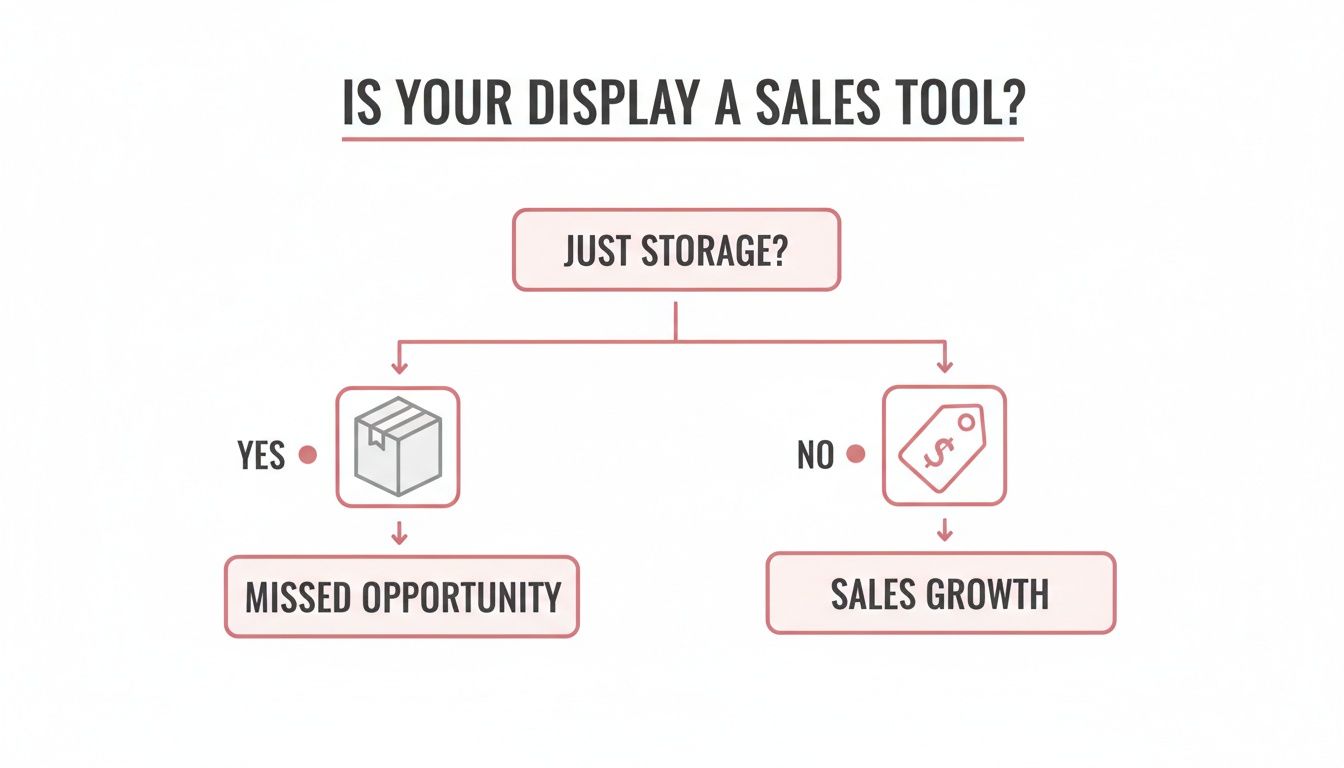
Simply using your racks for storage is a huge missed opportunity. When you see them as a strategic part of your sales process, that’s when you start to see real growth.
Wall-Mounted Shoe Displays
Wall-mounted racks are the ultimate space-savers. By getting your stock up off the floor, you immediately create more room for people to browse, making the whole shop feel more open and welcoming. They’re a fantastic choice for narrower spaces or if you’re aiming for a clean, minimalist aesthetic.
These displays are also perfect for creating eye-level "hero" spots to feature your bestsellers or latest arrivals. They naturally draw the eye upwards, turning a plain wall into a powerful merchandising feature.
A well-placed wall display acts like a gallery exhibit. It elevates individual pairs of shoes, presenting them as curated pieces rather than just stock.
Try using a series of single-shoe shelves to create an artistic, uncluttered look that puts the spotlight on the craftsmanship of each shoe. This approach is especially effective for high-end trainers, statement heels, or beautiful leather boots.
Freestanding and Tiered Racks
Freestanding racks are the true workhorses of any retail floor plan. Their biggest advantage is sheer versatility. You can pop them anywhere you need to define an aisle, create a focal point in the middle of the room, or group products together into a cohesive story.
Tiered racks, a common style of freestanding unit, are brilliant for showing off a whole range of sizes or colours without taking up a massive amount of space. They let customers scan multiple options at a glance, making them ideal for your most popular, high-volume styles.
- Central Placement: Put a tiered rack right in the centre of your store to launch a new collection.
- Aisle Formation: Use several freestanding racks to guide shoppers on a specific path through your space.
- Cross-Merchandising: Place footwear next to complementary items like handbags or shoe care products.
Where you place these racks can have a massive impact on shopper behaviour. This same thinking applies when choosing clothing display racks to complement your footwear, helping you build a consistent look across the entire store.
Shoe Display Rack Type Comparison
To help you decide at a glance, here’s a quick comparison of the main display types. Think about what you need to achieve in your space and which option aligns best with your goals.
| Rack Type | Best For | Key Advantage | Consideration |
|---|---|---|---|
| Wall-Mounted | Small shops, minimalist design, feature walls | Maximises floor space and creates an open feel | Less flexible placement; requires wall installation |
| Freestanding | Defining store layout, versatile merchandising | Can be moved easily to refresh the floor plan | Can feel cluttered if too many are used in a small space |
| Tiered | High-volume styles, displaying full-size runs | High capacity in a compact footprint | Can look messy if not regularly maintained |
| Carousel | Boutiques, tight corners, interactive displays | Very high density, engaging for customers | Can be difficult for customers to see all shoes at once |
| Slatwall/Pegwall | Dynamic merchandising, mixed product displays | Unbeatable flexibility and customisation | Higher initial setup cost for panels and fixtures |
| Cubby/Shelving | In-box displays, stockroom-style aesthetic | Organised, high-density storage | Can hide the product; less visually appealing |
Ultimately, the best choice often involves mixing and matching a few different types to create a varied and engaging shopping environment.
Carousel and Slatwall Systems
When you need maximum impact in a minimal area, carousel racks are a brilliant choice. These rotating displays let you show off a huge number of shoes in a tiny footprint, making them perfect for boutiques or pop-up events. They’re also inherently interactive—customers have to spin them to see everything, which is a great way to get them engaged.
For complete adaptability, nothing beats slatwall systems. You fit panels to a wall and then add a huge variety of shelves, hooks, and specialised holders. This means you can completely reinvent your shoe display in a matter of minutes to react to new stock or seasonal promotions. For dynamic retail environments, that flexibility is priceless.
The financial upside of getting this right is huge. UK retailers who use effective shoe displays have reported a sales uplift of around 25-35%. This mirrors a global trend where open-style shoe racks hold a 37.9% market share, largely because they work so well in busy stores. With UK footwear spending hitting £13.5 billion, making every square foot count has never been more important.
Selecting Materials That Enhance Your Brand
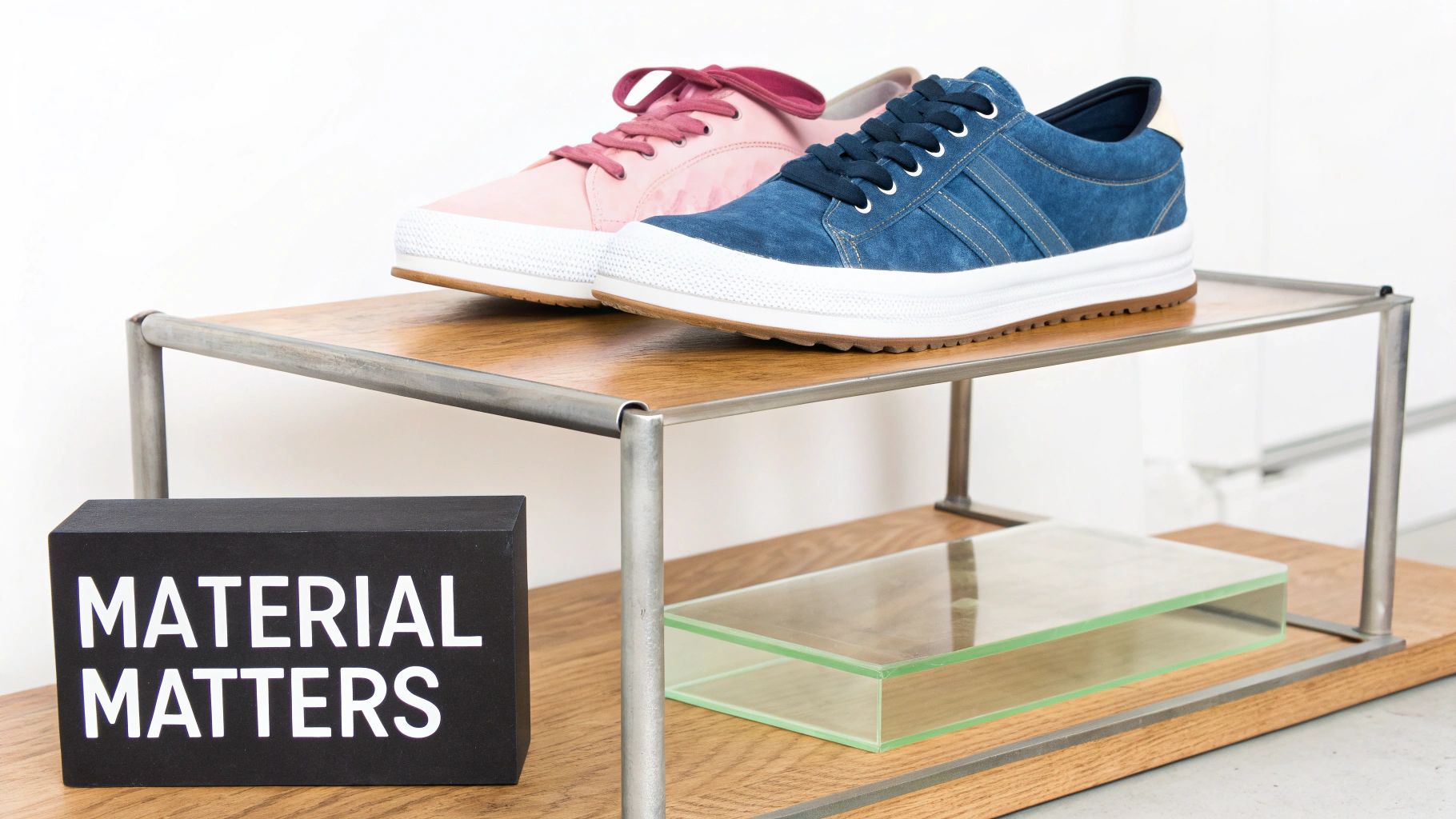
The material of your shoe display racks has a silent conversation with your customer. Long before they touch a single shoe, the displays have already spoken volumes about your brand's values, quality, and overall vibe. Think of it like a designer choosing fabric for a bespoke suit; it has to look the part, but it also needs to be durable and fit for purpose.
This choice is a cornerstone of your branding. A luxury boutique aiming for an air of exclusivity might go for brushed chrome or polished brass to signal elegance. On the other hand, a busy, high-traffic trainer shop needs something that can take a beating, making robust, powder-coated steel a much more sensible pick.
The right material doesn't just hold shoes—it elevates them. It frames each pair as a must-have item within a carefully curated space.
Metal Racks for Durability and Modern Appeal
Metal is a go-to for shoe displays, and for good reason—it’s strong and incredibly versatile. It gives off a clean, modern aesthetic that’s a perfect match for sportswear, contemporary fashion, and minimalist retail setups. The finish you choose can completely change the look.
- Chrome Finish: Bright, reflective, and impossible to ignore. A chrome finish brings a high-end feel that’s perfect for showing off premium footwear.
- Powder-Coated Steel: This is the workhorse of retail. It’s extremely durable, resists chips and scratches, and comes in a huge range of colours, so you can match it perfectly to your brand.
- Brushed Metal: For a softer, more subtle effect, brushed metal suggests a sophisticated, understated quality that polished chrome can’t quite capture.
Metal’s inherent strength also means it can easily support heavier footwear like boots without any risk of warping. It’s a solid, long-term investment.
Wood Displays for Warmth and Timeless Quality
Wood brings a natural warmth and an organic feel to a retail space that metal simply can't replicate. It’s a brilliant choice for brands that want to communicate a sense of craftsmanship, heritage, or an eco-conscious ethos.
Picture a shop selling classic leather brogues or handcrafted sandals. Lighter woods like pine or birch can create a fresh, Scandi-inspired look, while darker woods such as walnut or oak convey a sense of tradition and luxury. The tactile nature of wood practically invites customers to reach out and engage with the display.
The material you choose sets the stage for your products. A beautiful wooden shoe display rack tells a story of quality and care, helping to justify a premium price point for the items it holds.
Acrylic Racks for a Minimalist, Modern Edge
If you’re after a truly modern and almost invisible display, acrylic is an outstanding choice. Its crystal-clear transparency puts all the focus on the shoes, creating a ‘floating’ effect that is both striking and minimalist. This material is perfect for highlighting colourful trainers or intricate designer heels where the product is the undisputed star of the show.
Acrylic racks are also lightweight and can be moulded into all sorts of sleek, futuristic designs. For more ideas on using this versatile material, have a look at our guide on the benefits of an acrylic display shelf for creating clean, impactful presentations.
Making the right choice of material has a proven impact on customer spending. In fact, the strategic use of premium shoe display racks has helped drive a 28% increase in average transaction values in UK footwear retail since 2020. While affordable plastic holds a 41.3% global market share, premium UK outlets consistently choose durable metal and wood to align with their brand and ensure longevity. You can dig deeper into these trends and the UK footwear industry on Statista.com.
Planning Your Layout for Better Customer Flow
A great retail layout does more than just show off your products. It subtly guides every customer on a journey, from the moment they step through your door. Where you place your shoe display racks is probably the single biggest decision you'll make in creating an intuitive and profitable customer flow. It’s the difference between a shop that feels cluttered and confusing, and one that feels inviting and encourages people to explore.
Think of your floor plan as a map you’re drawing for your shoppers. The goal is to create a clear, logical path that takes them past your star products and entices them to browse everything you have. Get it wrong, and you’ll create dead zones where great stock goes completely unnoticed. Get it right, and you'll see people stay longer and, ultimately, buy more.
Start with Accurate Measurements
Before you even think about ordering a single rack, get out the tape measure. Meticulously measure your entire space. You need the total square footage, of course, but don't forget to note the exact locations of windows, doors, any structural columns, and other fixed elements. This becomes the blueprint for the entire customer experience you're about to build.
With your dimensions in hand, start thinking about traffic flow. Where do people naturally enter? Where do you want them to go next? The main path through your shop, often leading towards the "power wall" on the right, needs to be obvious and welcoming. This is the prime real estate for your most exciting displays.
And don't forget accessibility. Make sure your aisles are wide enough for comfortable browsing, easily accommodating pushchairs or wheelchairs. As a rule of thumb, aim for at least 90 to 120 centimetres of clear space in your main walkways.
Create Breathing Room and Focal Points
One of the most common mistakes I see in merchandising is simple clutter. Trying to cram too many shoe display racks into a space just overwhelms customers and makes your products look cheap. The idea of ‘breathing room’ is so important—giving your displays some space allows each style to stand out and feel more premium.
This is where freestanding racks are brilliant. You can use them to create distinct zones or focal points around your shop. A single, well-lit freestanding unit right near the entrance can work wonders for highlighting new arrivals or a seasonal collection. It acts as a visual anchor, grabbing attention the second someone walks in and setting the tone for their entire visit.
Your layout should tell a story. Use focal points to create chapters—a 'New Arrivals' section, a 'Bestsellers' wall, or a 'Sale' area—that guide customers through a cohesive narrative.
Strategies for Different Footprints
The perfect layout is entirely dependent on the space you have. What works for a huge showroom would be a disaster in a small boutique, but the right rack placement can make any footprint work harder for you.
- For Smaller Spaces: Think vertically. Wall-mounted shelves and tall, tiered shoe display racks draw the eye upward, freeing up precious floor space. It’s a simple trick that makes a room feel bigger and less hemmed in.
- For Medium Spaces: Create a defined path. Arranging freestanding racks in a loop or a gentle serpentine pattern guides customers on a journey through different collections, encouraging them to see more of what you offer.
- For Larger Spaces: Break up the area. Use groups of racks to create "shop-in-shop" zones. You could have one area for trainers, another for formal shoes, and a third for boots, each with its own distinct feel.
For example, a long, narrow boutique could use sleek, wall-mounted displays down one side to create a clean, gallery-like vibe. A larger store, on the other hand, might use low, tiered racks in the centre of the floor. This maintains clear sightlines across the entire space, stopping it from feeling cavernous or intimidating. This kind of thoughtful planning turns your layout from something purely functional into a powerful sales tool.
Turning Displays into Sales Engines with Visual Merchandising
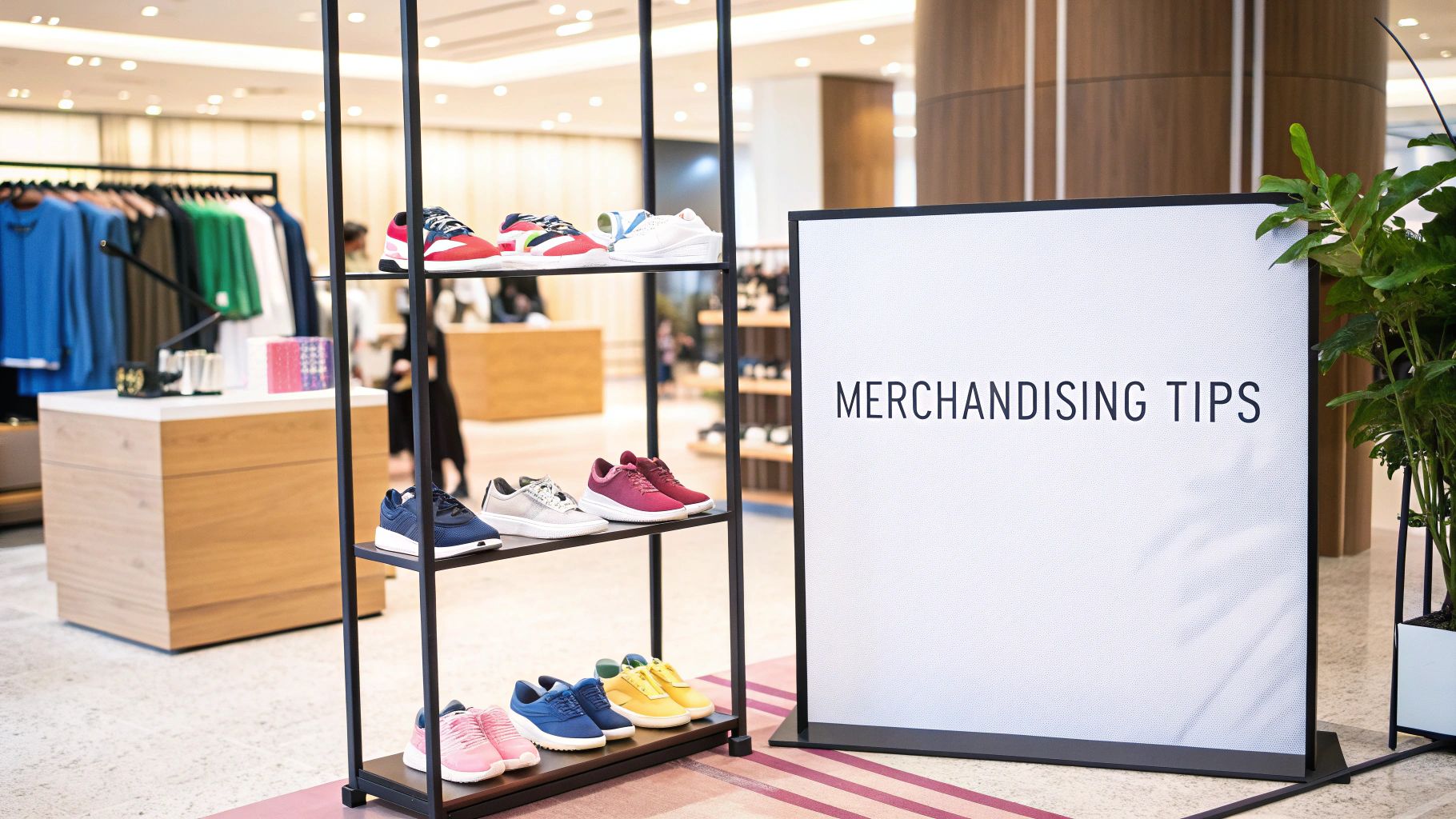
Once your layout is sorted, your shoe display racks stop being just furniture and start working for you. They become powerful tools for conversion. This is where the art of visual merchandising comes in—using smart presentation to turn a casual browser into a committed buyer. It's about using a bit of psychology to tell stories with your products, create a sense of desire, and guide the customer’s eye exactly where you want it.
Think of each display as a mini-storyboard. Instead of just lining up shoes in a row, why not group them thematically? You could pull together a "Weekend Getaway" collection featuring comfy trainers and stylish sandals, or maybe an "Office Essentials" display with classic brogues and smart loafers. This simple shift helps customers picture the shoes in their own lives, making the idea of a purchase feel much more natural and compelling.
The Power of Colour and Placement
Colour blocking is a simple trick, but it's incredibly effective. Grouping shoes by colour creates a strong visual punch that looks organised and just plain good. A wall of trainers arranged in a rainbow gradient, for instance, is far more eye-catching than a random jumble of styles. That kind of visual harmony draws people in from across the room.
Placement is just as crucial. Your most valuable retail real estate is at eye level—roughly between a customer's waist and their eyes. This prime spot is where your bestsellers, new arrivals, and high-margin products should be. Putting your star players here ensures they get the attention they deserve.
The human eye is naturally drawn to things that are well-lit, organised, and thoughtfully placed. Use your shoe display racks to create a clear visual hierarchy that puts your most important products front and centre.
Creating an Engaging Experience
To really elevate the shopping experience, you need to think beyond just the shoes. Cross-merchandising is a classic strategy that works wonders for a reason. By placing complementary products next to your footwear, you can gently nudge customers towards a bigger purchase.
- Pair with Accessories: Display high-quality socks right next to your running trainers.
- Showcase Care Products: Position shoe polish and brushes beside your leather boots.
- Suggest an Outfit: Use a nearby mannequin or garment rail to show how a pair of heels perfectly completes a look.
These subtle suggestions make the shopping process easier for your customer and can significantly bump up your average sale value. With the UK footwear market projected to hit a staggering USD 11,380.98 million by 2032, there's a huge opportunity. Data shows that well-displayed products can lift sales by as much as 30%, so mastering these techniques is a smart move.
Using Lighting to Guide the Eye
Never, ever underestimate the impact of good lighting. A few well-placed spotlights can make a feature shoe pop on a wall display. In a boutique, warm, ambient lighting can create a cosy, inviting atmosphere that encourages people to linger. Lighting is your silent salesperson, directing focus and making your products look their absolute best. For a deeper dive, check out our complete visual merchandising guidelines.
By pulling all these strategies together, your shoe displays become an active part of the sales process. And if you're looking for inspiration to draw customers in from the street, exploring some captivating shop window display ideas can spark some fantastic concepts. It’s all about creating a dynamic and engaging environment that not only looks professional but actively encourages customers to buy.
Getting it Right: Installation and Maintenance for Lasting Value
Think of a quality shoe display rack as more than just another piece of shop furniture; it’s a genuine business asset. Like any good tool, its performance and lifespan hinge on proper setup and a bit of ongoing care. Taking the time to install it correctly and follow a simple maintenance routine will keep your displays looking sharp, safe, and effective for years.
This isn't just about protecting your initial investment and avoiding costly replacements. A pristine, well-maintained display sends a powerful message to your customers. It says you care about quality and detail, reinforcing your brand's standards. On the flip side, a wobbly or dusty rack can instantly cheapen the look of the very products you're trying to sell.
Secure Installation: The Foundation of Safety and Stability
The journey to long-term value starts with a solid installation. A poorly assembled rack doesn't just look unprofessional; it’s a real safety hazard for your team and your customers.
Before you even start, take a minute to clear your workspace and lay out all the parts. A quick check against the instruction manual to make sure you have every screw and bracket will save you a world of frustration later on.
A stable display is a safe display. Rushing the assembly can lead to wobbly fixtures that might damage your stock or, even worse, cause an accident on the shop floor.
Getting a secure fit is absolutely non-negotiable for wall-mounted units.
- Find the Studs: Your first choice should always be to fix brackets directly into the wall studs. This gives you the strongest possible hold. A cheap stud finder from any hardware shop makes this job quick and accurate.
- Use the Right Fixings: If you can't hit a stud and have to mount into plasterboard, you'll need heavy-duty wall anchors. Make sure they're rated to handle the combined weight of the rack and a full load of shoes.
- Keep it Level: Grab a spirit level to ensure your shelves are perfectly horizontal. An uneven display looks sloppy and can cause your shoes to slide right off.
Simple Maintenance for a Professional Finish
Once your racks are securely in place, keeping them in prime condition is surprisingly easy. A little bit of regular attention prevents the build-up of dust and scuffs that can make a display look tired and worn.
- For Metal Racks: A quick wipe with a soft, damp cloth is usually all it takes. If you’ve got stubborn marks on powder-coated steel, a mild, non-abrasive cleaner will do the trick. Just steer clear of harsh chemicals that could strip the finish.
- For Wooden Racks: Dust them regularly with a microfibre cloth. For a deeper clean, use a proper wood cleaner and maybe a touch of polish every so often to protect the surface and keep it looking rich.
- For Acrylic Racks: These can scratch easily, so stick to a microfibre cloth. You can also get specialised acrylic cleaners that work wonders on fingerprints and static, keeping them perfectly clear.
It’s the same proactive mindset you’d apply to any other essential piece of equipment in your business. These principles of durability apply to all your fixtures; for more on investing in robust retail solutions, check out our guide on choosing a heavy-duty hanging rail.
Your Essential Buying Checklist
Making the right investment in shoe displays comes down to having a clear plan. Before you pull the trigger, run through this final checklist. It’s designed to make sure the solution you choose is a perfect fit for your business, turning all the advice we’ve covered into simple, actionable steps.
Think of it less as a test and more as a blueprint for success. Asking yourself these questions now will help you dodge common mistakes and ensure your new displays are valuable assets right from the start.
First, Assess Your Foundations
- Measure Your Space: What are the exact dimensions – height, width, and depth – of the area you’re working with? It's crucial not to forget about customer flow and leaving enough aisle space for a comfortable shopping experience.
- Count Your Inventory: Realistically, how many pairs of shoes do you need on display at any one time? It’s always smart to plan for your current stock while leaving a little room for future growth.
- Define the Primary Goal: What’s the main purpose of the display? Is it for a busy retail floor, a carefully curated boutique, or a private design studio? The function will always dictate the form.
The right shoe display rack isn't just about what looks good—it's about what works best for your specific space, stock, and sales strategy. A five-minute check now can save hours of hassle later.
Then, Refine Your Choices
- Select Your Materials: What material aligns with your brand’s feel? Are you going for sleek, modern metal, the warmth of natural wood, or the clean look of minimalist acrylic?
- Confirm Your Budget: What’s your total spend, and have you factored in potential delivery or installation costs? Be honest with yourself about the long-term value versus the initial price tag.
Once you’ve nailed down these points, you’ll be in a much better position to choose shoe display racks that don't just organise your collection, but actively elevate your brand and help drive sales.
Frequently Asked Questions
When you're fine-tuning your retail space, a few questions always pop up. It's completely normal to get stuck on the details – that’s often what separates a good display from a great one. Here are some of the most common queries we hear from retailers and designers about getting the most out of their shoe display racks.
How Can I Best Display Shoes in a Very Small Space?
If you're working with a compact footprint, the golden rule is to go vertical. Wall-mounted shoe display racks are an absolute lifesaver here, as they get your product off the floor and open up the room, making it feel less cramped. Think about using single-shoe shelves to create a sleek, gallery-style feature wall that looks premium without taking over.
Another great trick is to use tall, slender tiered racks. They pack a lot of display power into a very small patch of floor space, letting you show off a decent range of sizes or colours without blocking walkways. Ultimately, you want to draw the customer's eye upwards and make every square inch count.
What Is the Best Material for Heavy Footwear Like Boots?
For heavier items like chunky walking boots or well-made leather shoes, you can't compromise on strength. Metal shoe display racks, especially those made from powder-coated steel, are hands down the best choice for the job. Steel has the rigidity needed to handle the weight without any risk of bending or buckling over time.
A solid metal frame gives you the stability to keep bulky stock safely in place, which prevents accidents and keeps your displays looking sharp. While some woods are strong, steel offers far better resilience against the constant pressure of heavy footwear, making it the most dependable option.
How Can I Make My Displays Look High-End on a Budget?
You don't need a massive budget to create a premium atmosphere; it’s more about being clever with your choices.
A high-end look comes from thoughtful curation and consistency, not just from spending a fortune on fixtures. The goal is to create a clean, organised, and beautifully lit space.
Here are a few tips that won't break the bank:
- Embrace Minimalism: Less really is more. Instead of cramming your racks full, give each pair of shoes a little breathing room. This simple change instantly makes each item feel more special and valuable.
- Focus on Lighting: A few well-placed, inexpensive LED spotlights can work wonders. Use them to highlight hero products on your shoe displays. Good lighting adds drama and makes even simple setups look far more sophisticated.
- Keep it Consistent: Pick one or two complementary colours for your racks and stick to that theme throughout the store. A cohesive visual identity always looks more professional and intentionally designed.
At Display Guru, we stock a huge range of durable and stylish display solutions designed to help you build the perfect retail environment. Take a look through our collection to find the ideal fixtures for your space.
Find your perfect display solution at https://www.displayguru.co.uk.