

A Complete Guide to Hooks for Slatwall Displays
Slatwall hooks are the workhorses of any good display. These simple metal or plastic fittings slide right into the grooves of a slatwall panel, giving you an instant way to hang and showcase products. They are the fundamental tools for maximising your vertical space, and they come in all sorts of shapes and sizes—from basic single prongs to specialised arms perfect for hanging garments. The real beauty of them is their flexibility; you can reinvent your merchandising layout in minutes without committing to permanent fixtures.
Your Essential Introduction to Slatwall Hooks
Think of slatwall hooks as the unsung heroes of effective retail, studio, and workshop displays. They're much more than just simple bits of metal; they are the key to turning a blank wall into your most valuable merchandising asset. With them, you can build displays that aren’t just organised, but are also visually striking and completely adaptable. That kind of flexibility is crucial for any dynamic space, whether it’s a busy shop floor or a tailor’s studio where everything needs its place.
To really get a feel for what they can do, think about them in the context of broader hardware organization ideas that bring order to chaos. Their job goes beyond just holding things. They are strategic tools that directly shape:
- Product Visibility: Getting items up to eye level where they can grab a customer's attention.
- Space Optimisation: Making every square inch of vertical wall space count, which is a lifesaver in smaller shops.
- Brand Presentation: Crafting a clean, professional look that reinforces your brand’s identity.
A Growing Trend in Modern Retail
The shift towards slatwall systems isn't just about convenience—it's a major trend in commercial fit-outs. Across the UK, hooks for slatwall have quietly become an essential piece of modern retail hardware, especially in fashion and clothing. Investing in these systems isn't a short-term fad; it's part of a bigger structural shift in how retailers think about their spaces. In fact, research puts the UK wall panels market at £238 million in 2024 and forecasts it to grow to £324 million by 2029, showing just how much momentum this area has. You can learn more about the future of the UK wall panels market.
The right hook does more than just hold an item; it presents it. It controls the spacing, the angle, and how easily a customer can grab something, turning passive stock into an active, engaging display that drives sales and improves your workflow.
This guide is designed as a practical resource for retailers, designers, and merchandisers. It’ll walk you through how the choices you make on hook type, material, and weight capacity directly influence your professional goals.
Choosing the Right Type of Slatwall Hook
Think of choosing a slatwall hook like picking the right tool for a job. You wouldn't use a screwdriver to hammer a nail, right? The same logic applies here. A simple single-prong hook might get the job done for many items, but the right specialised hook can completely transform your display's function and aesthetics. It’s all about matching the hook's design to the product it’s holding to get that perfect blend of security and visual punch.
Let's start with the basics. The most common hooks you'll see are the single-prong and double-prong types. A single-prong hook is your universal, go-to solution for lightweight, packaged goods with a standard hanging tab. For anything a bit wider or heavier that might tilt or spin, the double-prong hook steps in to provide much-needed stability.
The Foundational Hooks
Single-Prong Hooks
These are the straightforward workhorses of any slatwall system. They’re perfect for hanging items like mobile phone accessories, small packets of hardware, or jewellery cards. Their simplicity is their strength—they're incredibly quick to install and rearrange as your stock changes.
Double-Prong Hooks
When stability is the name of the game, these are your answer. They excel at holding larger packaged goods, handheld tools, or even some styles of bags where a single point of contact just wouldn’t be secure enough.
This visual guide can help you think through which hook to choose based on your display goals, the space you have, and what you’re selling.
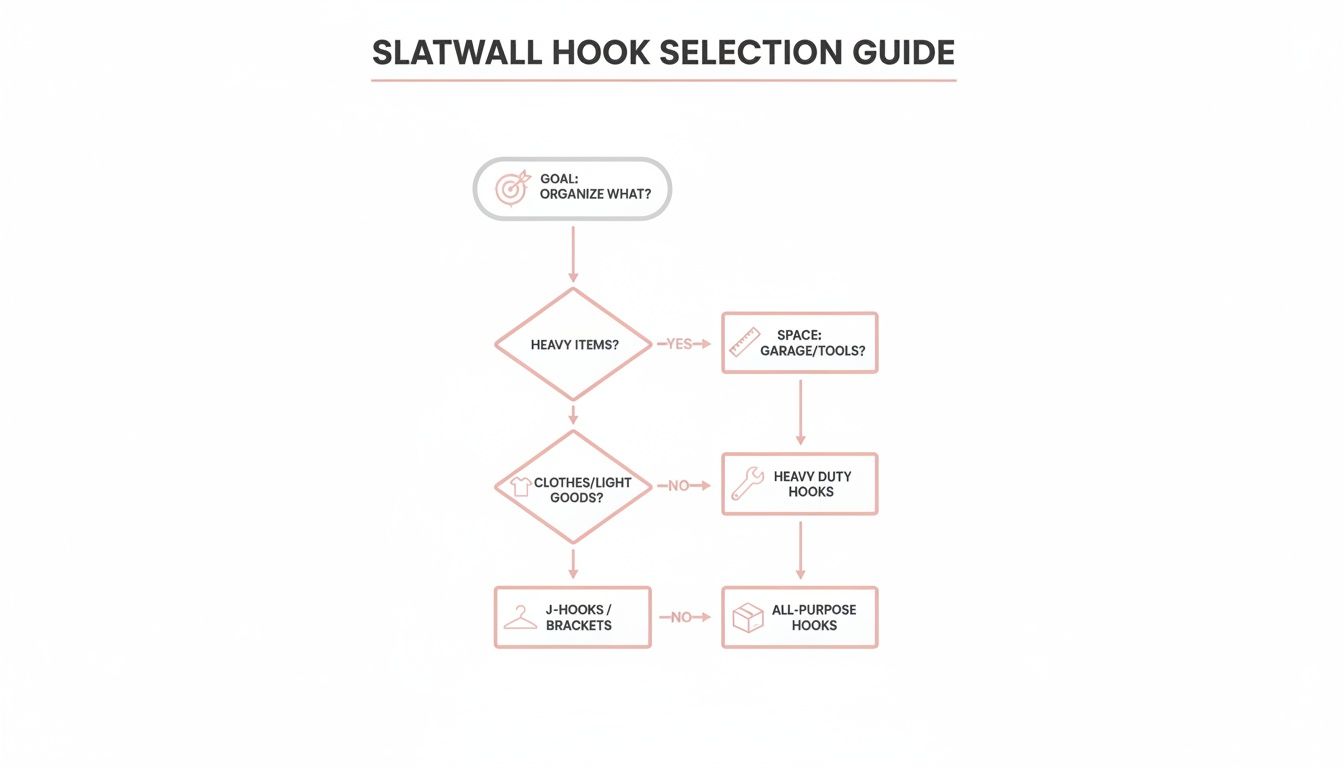
As you can see, your merchandising strategy really drives the decision, directly influencing which hook will best showcase your products.
Slatwall Hook Type Selector
To make things even clearer, here’s a quick-reference table matching common hook types with their best applications.
| Hook Type | Primary Use Case | Best For... | Typical Weight Capacity |
|---|---|---|---|
| Single-Prong | General-purpose hanging | Lightweight packaged goods, accessories, small items | Low to Medium |
| Double-Prong | Stable hanging | Wider packaged goods, tools, blister packs | Medium |
| Faceout Arm | Front-facing garment display | Hero products, new arrivals, jackets, shirts | Medium to High |
| Waterfall Hook | Tiered garment display | Displaying multiple sizes/colours of one style | Medium to High |
| Loop Hook (U-Hook) | Versatile hanging | Scarves, belts, handbags, tailor's tools | Low to Medium |
This table should give you a solid starting point for planning your layout, whether you're setting up a new retail space or reorganising a busy workshop.
Specialised Hooks for Garments and Apparel
When it comes to displaying clothing, standard prongs simply won't cut it. This is where specialised garment hooks come into their own, each designed for a different kind of presentation.
-
Faceout Arms: These straight arms extend directly from the wall, allowing you to showcase the full front of a single garment. They are brilliant for putting a spotlight on new arrivals or a key piece in a collection.
-
Waterfall Hooks: Often called 'sloping arms,' these hooks feature several notches or pins cascading downwards. Think of them as a staircase for your apparel. They let you display multiple garments of the same style in different sizes, all facing forward, creating a visually appealing, tiered effect that really encourages customers to browse.
-
Loop Hooks (U-Hooks): With their distinctive U-shape, these are incredibly versatile. In a tailor's studio, they are fantastic for organising tools like scissors or patterns. In a shop, they can hold anything from scarves and belts to handbags.
By moving beyond basic prongs to more specialised options like waterfall hooks and faceouts, you change the dynamic of your wall. You are no longer just storing items; you are actively merchandising and telling a story with your products.
For very heavy collections or larger displays, you might also want to explore options beyond individual hooks. To learn more about robust solutions, check out our guide on heavy-duty hanging rails that can complement your slatwall system. Each type of hook serves a distinct purpose, and combining them allows you to create a dynamic, layered, and effective display that captures customer attention and drives sales.
Matching Hook Material and Finish to Your Brand
Don’t overlook your hook material and finish; they’re far more than just a practical detail. Think of them as the final, crucial punctuation mark on your visual merchandising sentence. The right choice makes your products shine and reinforces the exact customer experience you’re aiming for. Get it wrong, and the whole display can feel disjointed or, worse, cheapen your brand.
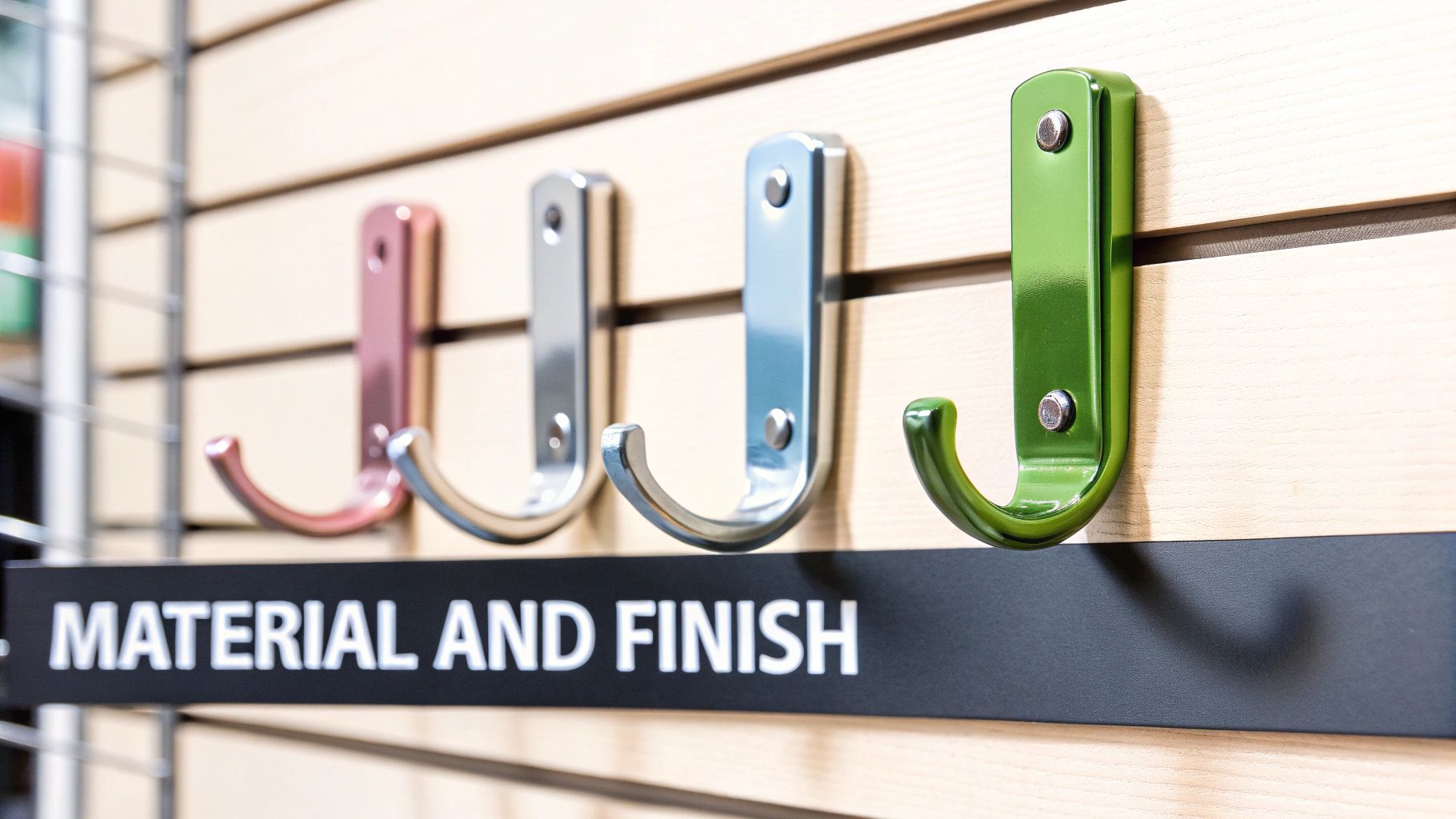
It’s all about striking a balance between aesthetics and durability. A bridal boutique, for instance, would probably lean towards elegant, polished chrome hooks to mirror the luxury of its gowns. On the other hand, a streetwear store going for an edgier vibe might choose matte black or raw zinc finishes for a more industrial feel. If you're struggling to visualise the options, it can be helpful to borrow techniques from the pros by creating a material board for interior design.
Exploring Common Finishes
The finish of a slatwall hook dictates its look, its feel, and even its resistance to daily wear and tear. Let's walk through the most popular options you’ll encounter.
-
Polished Chrome: This is the timeless, high-shine classic. It catches the light beautifully, creating a bright and premium atmosphere that’s perfect for high-end fashion, jewellery, or any boutique wanting that extra touch of class.
-
Matte Black Powder Coat: For a modern, sophisticated look, matte black is a fantastic choice. It provides a sharp contrast, especially against lighter slatwall panels, making products pop. The powder-coated finish is also incredibly durable and resists scratches and chips well.
-
Zinc Finish: This one gives off a more industrial, utilitarian vibe. It's a hardworking finish, often seen in workshops or retail spaces with a raw, urban aesthetic. It’s tough and functional, prioritising performance over polish.
The Impact of Material on Durability
Underneath that finish, you'll almost always find steel. The real difference-maker here is the wire gauge—in simple terms, the thickness of the steel. A thicker gauge means a stronger, more rigid hook that can handle heavier items without bowing under the pressure.
For lightweight accessories, a standard gauge will do the job just fine. But if you’re hanging heavy coats, power tools, or anything with significant weight, investing in a heavy-duty gauge is non-negotiable for both safety and longevity. Getting this right is key to creating effective display stands for clothing and other merchandise.
Choosing a finish isn't just a detail; it's a strategic branding decision. The texture and colour of your hooks subtly communicate your brand's values, whether they are luxury, modernity, or rugged dependability.
This strategic choice also has a commercial side. The global market for slatwall systems, valued at a hefty USD 310.5 million in 2024, counts on accessories like hooks for a huge part of its value. Since businesses reorder these items constantly as their product lines change, the finish you choose today often sets the standard for years. You can explore more data about the global slat wall accessory market.
Getting the Size and Weight Capacity Right
Choosing the right hook isn't just about looks; it's fundamental to the safety and longevity of your entire display. Get it wrong, and you're risking damaged stock, a broken slatwall panel, or even an accident in your shop. It’s all about matching the hook to the product.
Think of it like putting up shelves at home. You wouldn't use a lightweight picture shelf to hold a stack of heavy hardback books, would you? The same logic applies here. The size and weight of what you're hanging should always be the starting point for picking your hooks.
Wire Gauge and Hook Length: What You Need to Know
Two key factors come into play here: wire gauge and hook length. The wire gauge is simply how thick the metal is. It can seem a bit backwards at first, but with wire, the lower the gauge number, the thicker and stronger the wire.
- Standard Gauge Hooks: These are your everyday workhorses, perfect for lightweight items like packaged accessories, scarves, or small haberdashery bits. They’re more than strong enough for most general retail goods.
- Heavy-Duty Gauge Hooks: When you're hanging something with a bit of heft—think winter coats, stacks of jeans, or bolts of fabric—you absolutely need a thicker, lower-gauge hook. These are built to resist bending under serious weight.
Hook length is the other half of the equation. A simple rule of thumb is that the longer a hook gets, the less weight it can safely hold, especially at the very tip. That’s just basic physics and leverage. A short, thick hook will always be your strongest option.
A classic mistake we see is people using a long hook for a single heavy item dangled right at the end. That puts immense strain on both the hook and the slatwall panel itself. For heavier pieces, always choose shorter, sturdier hooks or look at specialised arms designed to spread the load.
Checking the Maximum Weight Rating
Any good supplier will tell you the maximum weight capacity for their hooks. Always look for this information before you buy. If you plan on hanging several items on a single hook, like with a waterfall arm, make sure the total weight doesn't creep over that recommended limit.
For really heavy collections, sometimes slatwall alone isn't the answer. You might need to bring in other fixtures to share the load. Our guide on choosing strong clothing rails has some great advice on managing bulky garment displays, which can work brilliantly alongside your slatwall setup. By keeping these details in mind, you can build a display that’s not only professional but safe and perfectly suited to your products.
Best Practices for Safe Installation and Use
Getting the installation right is the absolute foundation of a secure and professional-looking slatwall display. It’s what prevents damage to your panels and merchandise, and ultimately, keeps your space safe. Think of it as setting a stage – a wobbly hook can easily ruin the entire show.
The process itself is quite simple, but it does require a specific touch. You can't just force a hook straight in, as this can easily damage the groove in the panel and weaken its grip over time. The correct way is to angle the hook’s backplate upwards, slot the top lip into the groove, and then pivot it downwards until the bottom lip clicks firmly into place. You should feel it lock in.
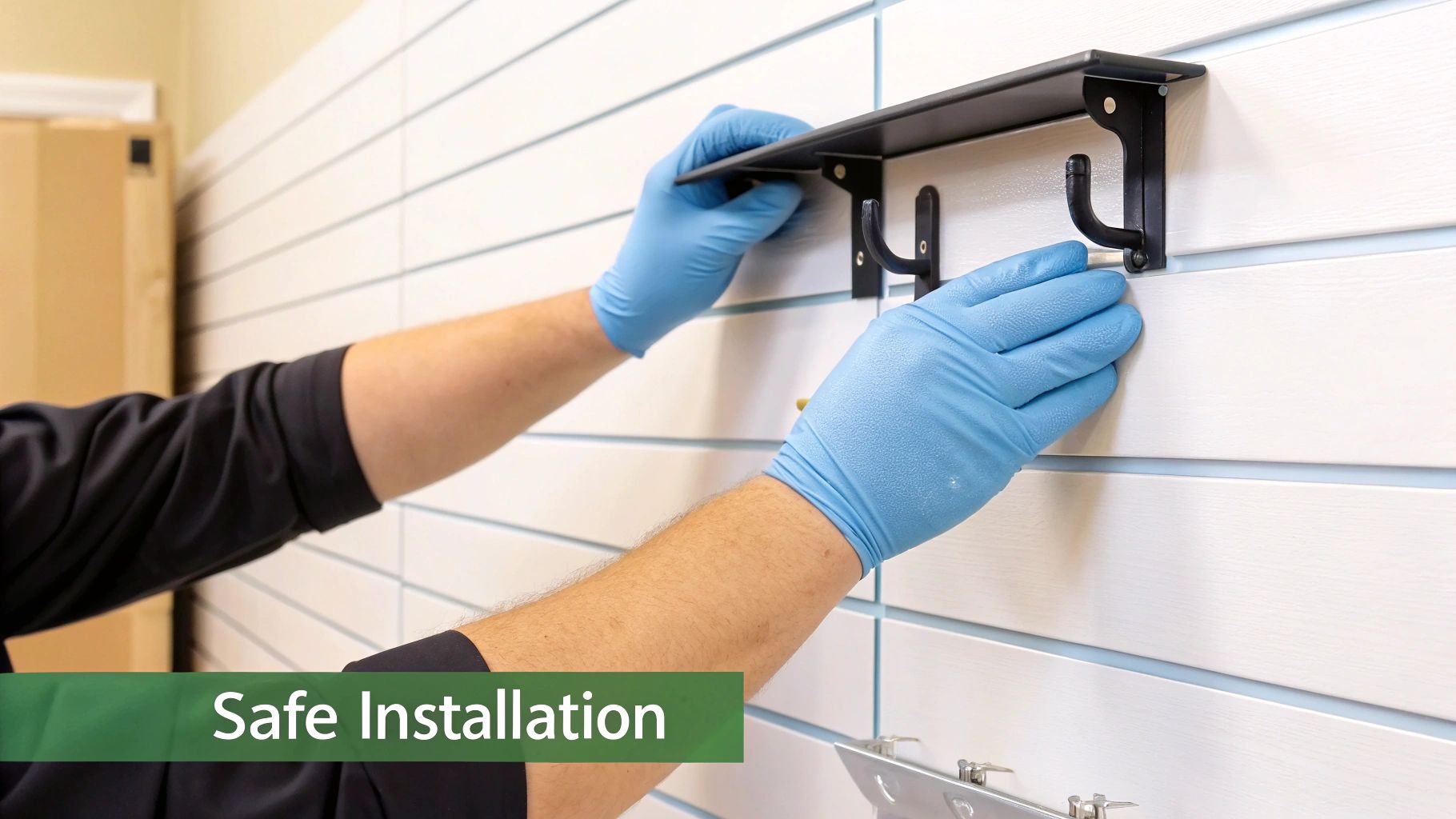
Removing a hook is just as easy – simply reverse the process. Lift the hook from the bottom to free the lower lip, then pull it out and away from the panel.
Distributing Weight for Stability
One of the most common mistakes I see is people overloading one small area of their slatwall. It helps to imagine the panel is a bridge; you need to spread the load evenly to prevent any single point from taking too much strain. For this reason, spreading your hooks for slatwall out across the panel is crucial for stability, especially when you’re hanging heavier items.
Never pile all your heaviest products into one small section. This can cause the panel to bow or even fail over time. A well-balanced display isn’t just good merchandising, it’s a safe display.
Routine Safety Inspections
In any busy retail environment, regular safety checks are simply non-negotiable. Wear and tear is a given, but spotting it early is what prevents accidents down the line. A quick but thorough inspection is all it takes.
- Check for Bending: Look for any hooks that are starting to sag or bend. That’s a dead giveaway that they’re overloaded or fatigued and need replacing immediately.
- Inspect the Finish: On chrome or powder-coated hooks, check for any chips or rust. A damaged finish can snag delicate fabrics and compromises the hook’s strength.
- Confirm a Secure Fit: Give each hook a gentle tug to make sure it's still locked securely in its groove. It's not uncommon for hooks in high-traffic areas to get knocked about and become dislodged.
Putting these simple practices into place will protect your investment and keep your displays looking professional. For bigger structural needs, it’s worth exploring how a hanging rail wall mounted system can work alongside your slatwall, especially for heavier garment collections where weight needs to be distributed even more effectively.
Creative Merchandising Strategies for Professionals
Once you’ve got a handle on the technical side of your hooks for slatwall, you can start treating your wall space like a canvas. This is where the real magic happens. The true value of a slatwall system isn't just about neat organisation; it’s about its power to adapt, tell stories, and ultimately, get customers interested and boost sales. It’s a shift from just storing stock to actively presenting it.
For professionals like tailors and designers, this means turning a plain wall into a hyper-efficient ‘tool wall’. Picture it: every pair of scissors, every pattern, every roll of thread organised perfectly on loop and single-prong hooks. This kind of setup puts essential tools right at your fingertips, creating a seamless workflow where you're never hunting for a misplaced bit of kit.
Building Dynamic Feature Walls
For retailers, the creative possibilities are even broader. A slatwall is the perfect backdrop for a dynamic feature wall, ideal for shining a spotlight on new collections or seasonal promotions. Instead of a flat, boring display, you can create a real sense of visual rhythm by mixing and matching different hook types.
- Faceout Arms: Use these to present a single, high-impact "hero" product, like a statement jacket for the new season. It’s the first thing that will catch a customer’s eye.
- Waterfall Hooks: Position these on either side of your hero item. They’re perfect for showing the same garment in different sizes or displaying coordinating pieces, encouraging people to explore the full range.
- Single-Prong Hooks: Dot these around the main display to hang complementary accessories like scarves, hats, or belts. This helps you merchandise a complete look, not just a single item.
This layered approach breaks up the visual monotony you often see with flat displays. It adds depth and helps guide the customer's eye through your collection. For more ideas on this, take a look at our guide on visual merchandising guidelines.
The Power of Adaptability
Being able to change these displays quickly is a massive commercial advantage. Many independent retailers and creative studios are moving away from fixed shelving for this very reason. Slatwall with its easily swappable hooks lets you update your displays for new seasons of garments, costumes, and haberdashery in a flash. The impact can be huge; even converting a single 3-metre wall bay from freestanding rails to slatwall can increase your visible stock count by 20–40%.
Think of your slatwall not as a permanent fixture, but as a stage that you can reset in minutes. This responsiveness lets you react to sales trends, clear old stock, or launch new products without any heavy lifting.
By combining different hooks, you’re not just hanging products—you’re creating an engaging, multi-dimensional display that feels fresh and curated. It transforms your wall from a simple storage area into one of your most powerful and responsive sales tools, perfectly suited to the fast-paced demands of modern retail and creative work.
Your Slatwall Hook Questions Answered
When you're fitting out a retail space or a workshop, you're bound to have some practical questions about the details. Getting the right answers upfront means you can invest with confidence, knowing your displays will be safe, effective, and built to last. Let's tackle some of the most common queries we hear from professionals about slatwall hooks.
Are Slatwall Hooks a Universal Fit?
This is easily the most common question we get. The short answer? Mostly, yes... but with a crucial "but". The good news is that the vast majority of slatwall panels and hooks are made to a standard industry specification. This means you can usually mix and match hooks and panels from different suppliers without any trouble.
However, be aware of proprietary or custom-made systems that sometimes feature non-standard groove dimensions. To avoid a costly mistake, it's always wise to double-check compatibility, especially if you're buying components from different places. A quick measurement of your panel's groove or ordering a small sample hook can save a lot of headaches down the line.
The industry standard for slatwall is a groove every 3 inches on centre, but it's the specific shape and depth of the hook's backplate that truly determines a perfect, secure fit. Always check before you commit to a large order.
How Should I Clean and Maintain My Hooks?
Keeping your hooks looking sharp is simple but makes a big difference to the overall professionalism of your display. For most finishes like chrome, zinc, or powder-coating, a regular dusting with a soft, dry cloth is all you'll need to keep them looking their best.
If they need a bit more attention, a damp cloth with a mild, non-abrasive cleaner will do the trick. The key is to dry the hook thoroughly afterwards, as this prevents any chance of rust forming, particularly on chrome hooks. Steer clear of harsh chemical cleaners, as they can strip the protective coating over time and dull the finish.
Can I Get Custom Hooks Made for My Brand?
Absolutely. While standard chrome and black are popular for a reason—they go with everything—many suppliers offer fantastic customisation options to make your display uniquely yours.
This can include things like:
- Custom Colours: Powder-coating hooks in your specific brand colours creates a completely cohesive and high-end look.
- Unique Shapes: Need to display an awkward or unusually shaped product? Bespoke hooks can be designed to hold it perfectly and securely.
- Branded Elements: Some brands even add small, branded tabs or other features directly onto the hooks for that extra touch of detail.
Going down the custom route is a powerful way to create a retail environment that stands out and truly reflects your brand's identity.
Ready to build a display that works as hard as you do? Explore the full range of professional-grade slatwall hooks and accessories at Display Guru. Find the perfect solution for your retail space or studio today.