



A Guide to Selecting the Perfect Handbag Display Stand
A good handbag display stand does more than just hold a bag up; it’s your best silent salesperson. It elevates a simple accessory into something covetable, making it the star of the show in your retail space, design studio, or even at a craft fair. The right stand can single-handedly turn a passing glance into a definite sale.
More Than Just a Hook: The Real Job of a Display Stand
Think of your stand as a miniature stage for your product. It’s what separates a handbag that gets lost in a jumble from one that’s presented like a work of art. Its primary role is to tell a story—of impeccable craftsmanship, unique style, and aspiration—all before a customer even lays a hand on it. For anyone in retail, merchandising, or design, getting this right can make a huge difference to how customers see your products and, ultimately, whether they buy.
This guide is your complete walkthrough for choosing and using these vital fixtures. We'll cover everything from picking the right materials to mastering the kind of styling tricks the pros use.
What This Guide Will Cover
Whether you're a visual merchandiser for a big brand, a boutique owner curating your space, or a designer getting ready to launch a new collection, you'll find practical advice here to make your handbags stand out.
You'll learn how to:
- Pick the perfect stand: We’ll look at how materials like acrylic, metal, and wood can complement your brand’s aesthetic.
- Make the most of your space: We'll dive into choosing the right size and scale, whether you have a large shop floor or a small studio corner.
- Style like an expert: Discover merchandising techniques that create compelling visual stories.
- Keep it professional: Get tips on setup, stability, and maintenance for a display that always looks its best.
The handbag market is booming, which means retailers have to be smarter about how they present their products. In the UK alone, this market pulled in around USD 2,022.6 million in 2021 and is expected to hit nearly USD 3,399.5 million by 2030. That kind of growth highlights just how important effective merchandising is, and the humble display stand is a key player.
To properly showcase your products, it helps to understand the sheer variety out there. You can explore different bag styles to get a feel for what you might be working with. Ultimately, your choice of fixture is part of a bigger retail picture, which you can read more about in our guide to display stands for retail.
Choosing Your Stand Material and Design
Think of choosing a handbag display stand like an artist choosing the right frame for a masterpiece. It's not just about holding the bag up; the material and design have to complement the piece, elevating it without stealing the show. Your choice here is a silent narrator, telling customers a story about the value, style, and quality of your handbags before they even touch them.
What's Your Stand's Vibe? Material Matters
The material you pick sets the entire mood. It’s a fundamental part of your brand's visual language.
A sleek, clear acrylic stand, for example, whispers modern and minimalist. It makes the handbag the undeniable star, almost as if it's floating in mid-air. This approach is brilliant for contemporary brands or when you want the vibrant colours and intricate details of a collection to do all the talking. If you're curious about creating that clean, high-end feel, our guide on the benefits of an acrylic display shelf explores this further.
Metal, on the other hand, offers a completely different personality. Polished chrome or brushed steel gives off an industrial-chic, robust vibe that’s perfect for busy retail spaces. Fancy a touch of opulence? A gold-tone or brass finish brings warmth and a sense of luxury, pairing beautifully with high-end leather goods. And don't underestimate the power of black metal; it creates a bold, graphic silhouette that makes lighter-coloured bags truly pop.
Then there's wood. Nothing says natural, rustic, or artisanal quite like it. A light pine or birch stand fits perfectly with an eco-conscious or Scandinavian aesthetic. If you're aiming for a more traditional, heritage feel, a darker walnut or rich oak lends a timeless sense of quality.
Comparing Handbag Display Stand Materials
To make the decision a bit easier, here’s a quick-reference table breaking down the most common materials.
| Material | Primary Aesthetic | Best For | Key Consideration |
|---|---|---|---|
| Acrylic | Modern, Minimalist, Clean | Contemporary boutiques, colourful collections, putting focus solely on the product. | Can show scratches over time if not handled with care. |
| Metal | Industrial, Luxurious, Bold | High-traffic retail, luxury goods, creating a strong graphic statement. | The finish (e.g., chrome vs. brass) dramatically changes the feel. |
| Wood | Natural, Rustic, Artisanal | Eco-conscious brands, heritage collections, creating a warm and inviting atmosphere. | Grain and colour can vary, adding character but requiring consistency. |
Ultimately, the best material is the one that aligns seamlessly with your brand's story and the specific handbag you're showcasing.
Before you make a final call, ask yourself one simple question: is this stand a sales tool or a storytelling prop? The answer will guide your entire display strategy.

This decision tree helps clarify whether your priority is driving immediate sales or building a broader brand narrative, which naturally influences the stands you'll need.
Finding the Right Design Type
Once you’ve settled on a material, the next piece of the puzzle is the stand's physical design. Each shape serves a unique merchandising purpose, whether you're spotlighting a single showstopper or displaying a full collection.
There are really two main camps to consider:
-
Single-Hook Stands: These are the minimalists of the display world. With just a single, often adjustable hook, they're perfect for putting a "hero" product in the limelight. Use them on countertops or shelves to draw the eye to a new arrival, a special edition, or a bestseller. Their beautiful simplicity means there's nothing to distract from the bag itself.
-
Multi-Arm or Tiered Stands: You might know them as "tree" stands. These are the real workhorses, letting you show off several bags in one small footprint. They’re fantastic for telling a visual story by grouping different colours, sizes, or styles from the same collection together. This design naturally encourages customers to browse, compare, and discover.
The secret to a truly compelling display often lies in using a mix of both types. A multi-arm stand can showcase the breadth of a collection, while a single-hook stand nearby elevates the most aspirational piece. This creates a clear visual hierarchy that guides the customer's eye exactly where you want it to go.
By thoughtfully pairing the right material with the right design, your handbag display stand becomes more than just a piece of hardware. It transforms into an active partner in your sales process, ensuring every single bag is presented in its best possible light.
Matching Stand Size and Scale to Your Space
Choosing the right handbag stand is a lot like styling an outfit – proportion is everything. A stand that’s too big for your boutique will make the space feel cluttered and cramped, overwhelming your beautiful products. On the other hand, a stand that’s too small will simply get lost in a larger retail environment, failing to give your handbags the spotlight they deserve.
The secret is finding that perfect balance where the stand feels like a natural part of the space, effortlessly supports your collection, and draws the customer's eye. Think of it as choosing furniture for a room. You wouldn’t cram a massive sofa into a tiny flat, and you wouldn't put a single armchair in the middle of a grand hall. The very same logic applies to your display fixtures.
Measure Your Merchandising Footprint
Before you even start looking at stands, grab a tape measure. The first step is always to understand the ground you're working with. Take a hard look at your key display zones – is it the checkout counter, a dedicated feature wall, or a prime spot on the shop floor?
- For Countertops: Get the exact depth and width you have to play with. A tall, slim stand can be a brilliant way to add height and drama without sacrificing precious counter space.
- For Floor Space: Map out the natural flow of foot traffic. A large, multi-arm floor stand can make a stunning centrepiece, but it absolutely cannot block the customer's journey through your store.
Getting these numbers down first gives you a practical filter. It saves you from falling in love with a stand that, in reality, just won't work in your space.
Aligning Capacity with Your Collection
Next, think about what you’re actually selling. Are you a designer looking to showcase a single, masterpiece creation, or a retailer with a whole new seasonal collection to display? Your answer will point you directly to the kind of capacity you need.
A busy retailer will likely need sturdy, high-capacity floor stands that can comfortably hold a dozen bags without looking messy. But for a luxury boutique or a designer's studio, a single, elegant countertop stand holding one "hero" bag tells a much stronger story about quality and exclusivity.
One of the most common mistakes I see is overloading a display. When a stand is crammed with too many bags, it just creates visual chaos and cheapens every single item. Great merchandising is often about giving each piece room to breathe.
It’s also worth thinking about the types of bags in your collection. For example, market data shows that while tote bags make up the largest chunk of the UK market, it's actually satchels that are the fastest-growing segment. This shift towards more structured, professional bags often means you need different hanging heights and spacing than you would for softer, slouchy totes. You can find more fascinating details in these UK handbag market trends from Technavio.
Ultimately, the right stand helps you present your products in a way that feels deliberate and curated. If you’re displaying more than just handbags, you'll need to think about how larger fixtures fit into your overall plan. Our guide on choosing a display cabinet for your shop has some great advice on integrating bigger storage and display units. By getting the size and capacity right from the start, you create a display that’s not just practical, but powerful.
Styling Your Handbags to Tell a Story
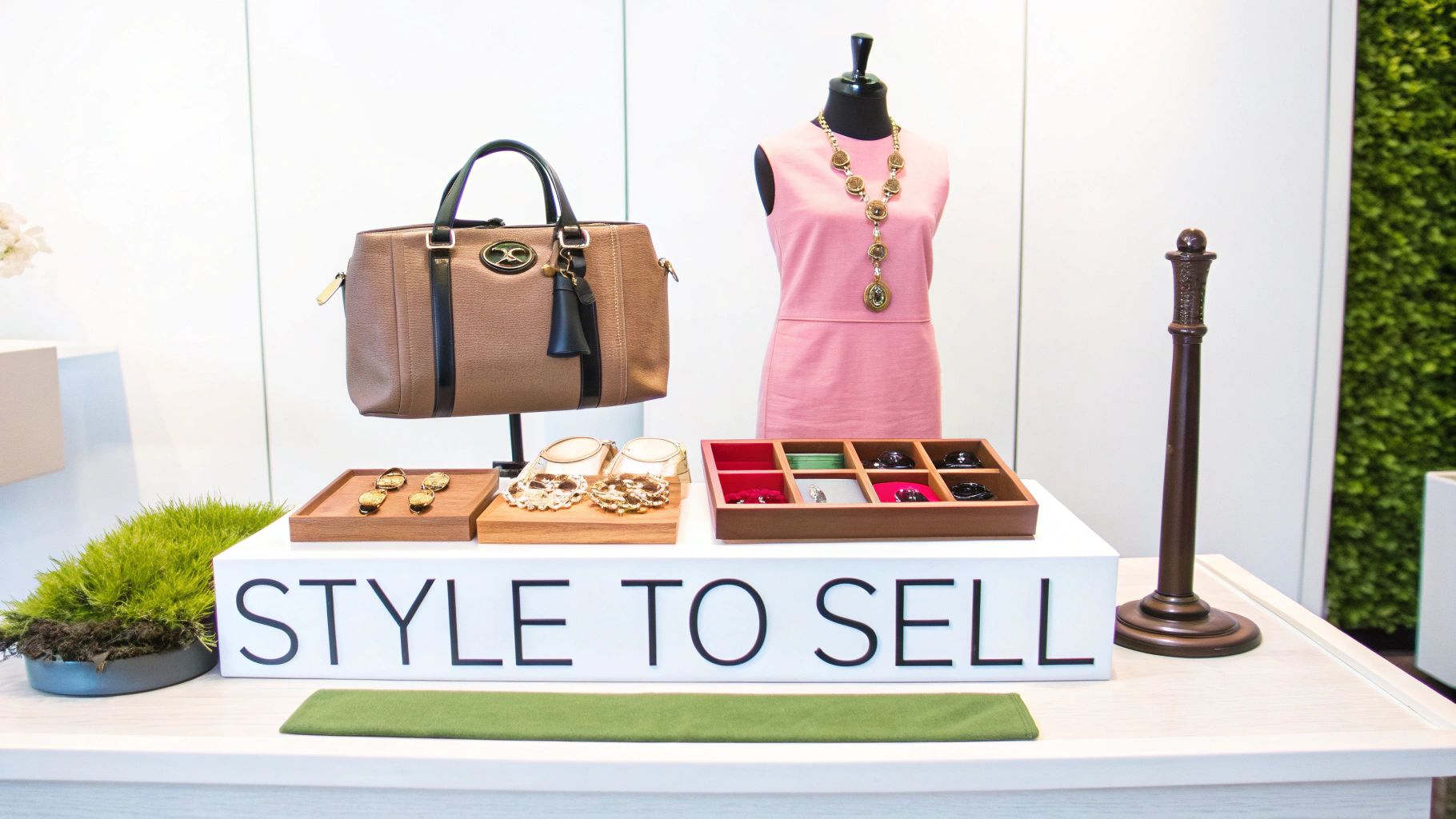
Getting the right handbag display stand is only half the battle; the real magic begins with the styling. This is where you graduate from simply presenting a product to creating a genuine experience for your customer. Good styling transforms your display into a silent salesperson, telling a story about your brand, hinting at a certain lifestyle, and making each handbag utterly irresistible.
Think of every display as its own little scene or vignette. Your job is to build a narrative that helps a customer answer the crucial question they’re asking themselves: "How would this bag fit into my life?"
Building a Visual Hierarchy
In any good display, some handbags need to be the stars of the show. This is where visual hierarchy comes in—it’s the art of arranging your items to draw the eye to the most important pieces first. An easy win here is to place your "hero" bag on a taller, single-hook stand, making it the most prominent point in the arrangement.
You can then position complementary bags on lower or multi-arm stands around this focal point. This simple technique creates a natural flow, stops the display from feeling cluttered, and makes sure your key products get the spotlight they deserve. It's a cornerstone of visual merchandising and can have a massive impact on customer engagement.
Creating Cohesive Thematic Groups
One of the most effective ways to tell a story is by grouping bags thematically. Instead of just sorting by colour or size, think about the occasion or purpose of each bag. This approach is far more powerful because it helps customers picture themselves using the product in a real-world setting.
Here are a few ideas to get the ball rolling:
- The 'Office Essentials' Edit: Pull together your structured totes, smart satchels, and professional laptop bags in classic shades like black, navy, and tan. A pair of stylish reading glasses or a leather-bound notebook make for perfect props.
- The 'Weekend Getaway' Collection: This is the place for crossbody bags, chic backpacks, and roomy holdalls. Complete the picture with props like a neatly folded scarf, a pair of sunglasses, or a travel guide.
- The 'Evening Elegance' Display: Arrange your clutches and small, decorative shoulder bags on more delicate, single-hook stands. A bit of sparkle from some nearby costume jewellery can really set the scene.
Creating these little stories makes browsing a much more intuitive and inspiring process for your customers.
“The best displays don’t just show products; they sell a feeling. When a customer can imagine the occasion, they're one step closer to making the purchase. Your handbag display stand is the stage for that moment of inspiration.”
To really make your collection pop, it's worth digging into the broader principles for displaying items beautifully, which will help you tell a more cohesive story.
Integrating with Other Fixtures
A handbag display rarely stands alone. To create a truly compelling visual, you need to integrate it with other fixtures to build a layered, complete look. Try placing a stand next to a mannequin dressed in a coordinating outfit—it’s an instant style suggestion.
You can also use smaller accessory trays at the base of the stand to show off matching wallets, keyrings, or purses. Not only does this create a richer display, but it also opens up fantastic opportunities for cross-selling and upselling. For a deeper dive into crafting these retail scenes, these excellent visual merchandising guidelines offer brilliant tips. By pulling all these techniques together, your displays will do far more than just hold bags—they’ll tell stories that sell.
Getting the Setup Right: Stability is Everything

You can have the most beautifully styled display in the world, but if the stand itself is unstable, the whole effect is ruined. A wobbly fixture doesn't just look unprofessional; it's a real safety risk to your products and your customers, especially in a busy shop. Nailing the setup isn't just a suggestion—it's essential for a polished and secure presentation.
Thankfully, most handbag display stands are designed for quick and easy assembly. You're usually looking at simple screw-in bases or parts that slot together in minutes. But the real skill isn't just putting it together; it's making sure it’s absolutely rock-solid from the ground up.
Building a Balanced Foundation
Your first port of call, especially for any floor-standing model, is the base. It has to be solid. Look for a stand with a heavy, substantial base that’s properly proportioned for its height and how many bags it will hold.
When you start adding handbags to a multi-arm "tree" stand, you need to think like you're balancing a set of old-fashioned scales. Distribute the weight evenly around the central pole. If you hang a heavy leather tote on one side, put a bag of similar weight on the opposite side to counterbalance it. This simple habit prevents the stand from leaning or becoming top-heavy, which is the number one reason they tip over.
A secure display gives you peace of mind. Your goal is a presentation so stable it can take an accidental knock from a shopping trolley or a curious customer without even a wobble.
This principle of stability is universal across all display types. We dive deeper into the importance of a solid footing in our guide on choosing the right stand for a mannequin, where a firm base is just as crucial.
Anchoring for Extra Security
While large floor stands often rely on their own weight to stay put, smaller countertop models can sometimes use a bit of extra help. This is especially true for displays near a busy till or in high-traffic areas where they might get nudged.
A brilliant and discreet solution is to use removable museum putty or even clear, double-sided adhesive dots. Tucked under the corners of the stand's base, these give a surprisingly strong grip on surfaces like glass, wood, or stone, and they won't leave a mark. It's a simple little trick that ensures your elegant single-hook stand stays precisely where you want it.
Keeping Your Stands in Showroom Condition
You’ve invested in quality stands to make your handbags look their best, so it’s worth a little effort to keep them looking pristine. Proper care isn’t complicated, but it's the key to preventing the dust, fingerprints, and minor scuffs that can make a display feel tired and unloved.
Honestly, a quick, regular clean is your best defence. A simple weekly dusting with a microfibre cloth is usually all it takes to stop dust from settling in and causing tiny scratches over time. It's a small habit, but one that makes a huge difference to the longevity and appearance of your setup.
How to Clean Different Materials
Of course, not all stands are made equal, and using the wrong cleaning product can ruin a finish in seconds. Each material needs a slightly different touch.
- Acrylic Stands: These need a gentle hand. Use a soft, damp cloth with a tiny drop of mild soap. Whatever you do, never use glass cleaner or anything with ammonia. These chemicals can make the acrylic cloudy and brittle over time, completely ruining that crystal-clear look.
- Metal Stands: For those lovely chrome, gold, or black powder-coated finishes, a dry microfibre cloth is your best friend for buffing away smudges. If it needs a bit more, a slightly damp cloth is fine. Just stay away from abrasive pads or harsh cleaners that could easily scratch the coating.
- Wooden Stands: A regular dusting is a must. Every now and then, treat them with a good quality wood polish. This feeds the wood and keeps its natural lustre, stopping it from looking dry and dull.
Think of maintenance as just another part of your merchandising. A sparkling clean, well-cared-for display speaks volumes about your own attention to detail and the quality of the products you're selling.
If you’re a professional on the move—heading to trade shows, markets, or photoshoots—getting your stands there in one piece is critical. A dented or scratched stand can throw off your entire aesthetic. The best practice is to disassemble them whenever you can, wrapping each part individually in bubble wrap or soft fabric. Pack everything snugly into a sturdy, clearly labelled box. This stops the pieces from knocking against each other in transit, ensuring they arrive ready to impress.
Got a Question? We've Got Answers
Picking the right handbag display stand often brings up a few common questions. Getting these sorted helps you find a fixture that doesn't just look the part, but truly works for your space—whether that’s a busy shop floor or your personal design studio.
Here are the answers to the queries we hear most often.
What’s the Best Display Stand for a Small Boutique?
In a smaller retail space, it’s all about making a big impact without creating clutter.
Your best bets are often countertop stands or the multi-arm 'tree' style stands. A simple single-hook stand is brilliant for making a hero out of a premium bag on a shelf or by the till. For showing off a collection, a tree stand is a game-changer; it lets you display several styles vertically, using a tiny amount of floor or counter space.
A great tip for boutiques is to use clear acrylic stands. Because they're see-through, they make the space feel bigger and keep the customer's eye exactly where you want it: on your handbags. The display itself never looks heavy or crowded.
How Do I Stop My Display Stand from Falling Over?
Stability is everything, especially where customers are browsing. If you're looking at a floor-standing model, make sure it has a heavy, weighted base. That's your foundation for a sturdy, reliable display.
If you’re using a multi-arm stand, the trick is to balance the load. Distribute the weight of the handbags evenly on all sides to keep it from leaning. For smaller countertop stands in high-traffic spots, a bit of removable museum putty or a few clear, double-sided sticky dots on the base can add that extra security without marking your surfaces.
Can I Use These Stands for Anything Besides Handbags?
You absolutely can. The versatility of a good handbag display stand is a massive plus, turning it into a really useful piece of your merchandising kit.
T-bar and multi-arm stands are fantastic for draping necklaces, bracelets, and scarves, letting you create a whole coordinated accessory story. Just one thing to watch out for: if you're displaying delicate items like silk scarves or fine chains, choose a stand with a perfectly smooth, polished finish—like chrome or a high-grade acrylic—to avoid any snags.
Ready to take your presentation to the next level? Find the perfect display solutions for your collection at Display Guru. Explore our full range of stands, rails, and mannequins at https://www.displayguru.co.uk.