



Hook and Eye Tapes: A Guide for UK Tailors
Hook and eye tapes commonly range from 19mm to 40mm, with corsetry-grade spacing around 2.0cm centre-to-centre, so the right choice depends on fabric weight, garment stress and the finish you need. Soft cotton or jersey tapes suit lingerie and costumes, while stronger corset tapes are better for structural closures.
You're halfway through a satin bodice when the fastening starts dictating the whole garment. The tape feels too stiff against the body, the hooks sit proud of the seam, or the closure pulls open whenever the wearer moves. A fastening that looked interchangeable on a product page has suddenly become the difference between a polished finish and a disappointing fitting.
Hook and eye tapes are essential fabric fastenings for securing garments such as bras, corsets, bustiers and eveningwear. UK suppliers offer several widths, materials, colours, rows and hook spacings, but listings often show these as catalogue variations rather than explaining which one works for a particular garment. The practical decision is simple: match the tape's softness, strength and profile to the job.
Why Hook and Eye Tapes Matter in Your Sewing Projects
A fastening can be small, but it carries a surprisingly important part of the garment's engineering. On a fitted evening dress, it helps keep the edges aligned and can support the top of another closure. On lingerie, it must sit comfortably against the body while tolerating repeated opening, closing and washing. On a corset, it may form part of a structural closure that experiences sustained tension.
The common mistake is choosing by colour alone. A black tape might look right beside a dark fabric, but a wide, rigid construction can create a visible ridge under a close-fitting bodice. A soft tape may disappear beautifully into a lingerie seam, yet stretch or distort when used where the garment needs firm support.
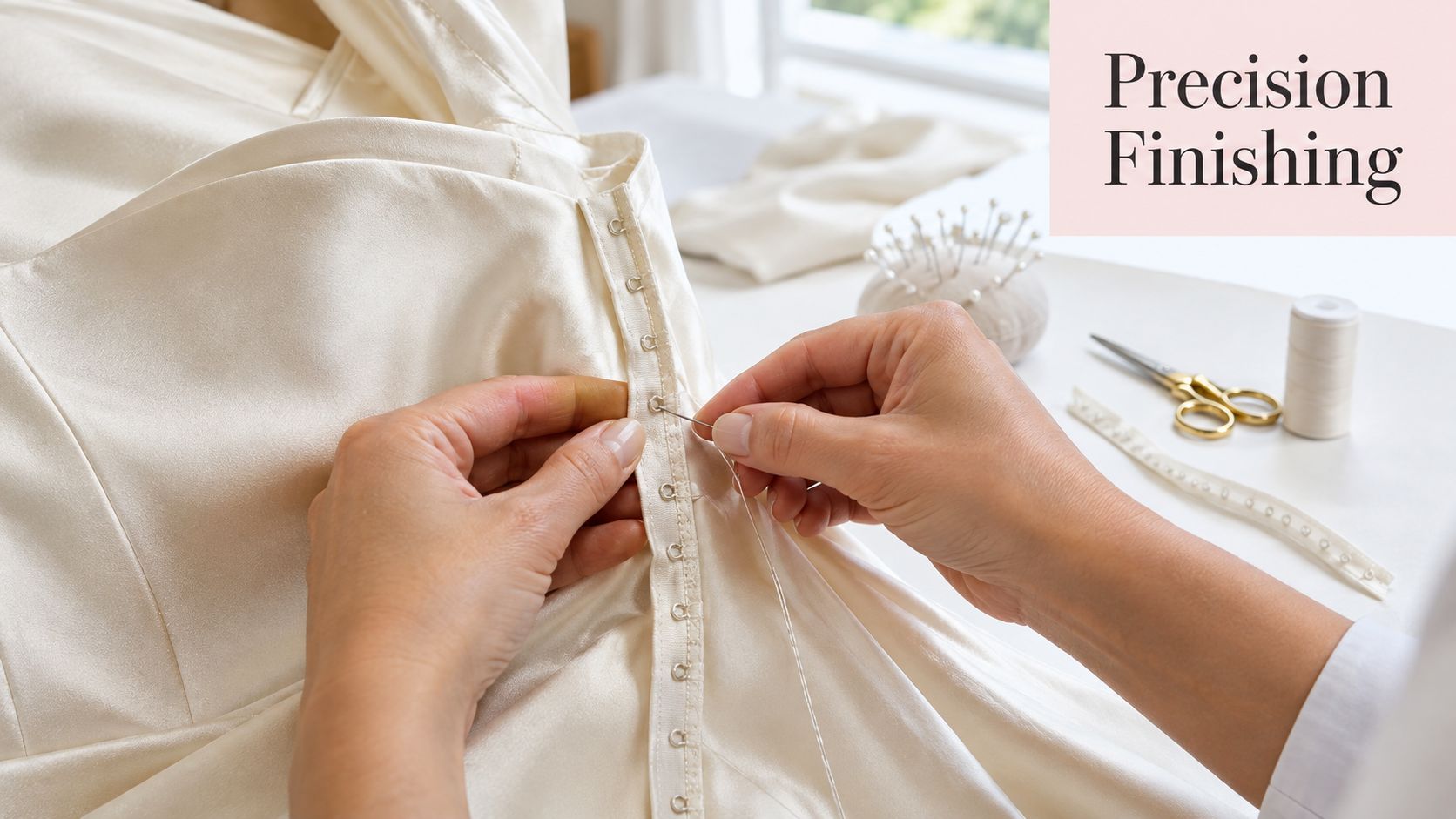
The fastening affects the whole finish
UK haberdashery retailers actively sell hook-and-eye products for trousers, skirts, dresses, corsets, bustiers, fur coats and general clothing. Hobbycraft's hooks and fastenings range also includes pre-made hook-and-eye tape intended for securely closing lingerie and bustiers. That range reflects how widely the fastening is used, not that every version suits every garment.
A closure works well when four things agree:
- Profile: The tape should sit neatly within the seam rather than creating unwanted bulk.
- Flexibility: The base should follow the curve of the garment without fighting it.
- Load handling: Hooks and stitching must resist the force placed on the opening.
- Appearance: The colour, row arrangement and edge finish should support the design.
A wedding bodice illustrates the point. Satin shows ridges readily, so a narrow, flatter tape may be preferable where the closure sits close to the body. A corset needs a different assessment. The tape must be anchored through suitable support layers, and a stronger construction may be more appropriate than a soft lingerie tape.
Practical rule: A fastening shouldn't be asked to provide structure that belongs in the garment's interfacing, boning or seam construction.
Test before committing to the final fabric
For an expensive or closely fitted piece, baste a short length of the proposed tape into a toile or spare fabric. Check the closure while the garment is worn, not only while it lies flat. Look for gaping, pinching, twisting, visible ridges and difficulty engaging the hooks.
That test belongs alongside careful fitting and construction methods such as those described in this guide to sewing techniques. The point isn't to make the mock-up beautiful. It's to discover whether the fastening behaves correctly before the final fabric makes changes expensive.
Understanding the Different Types of Hook and Eye Tapes
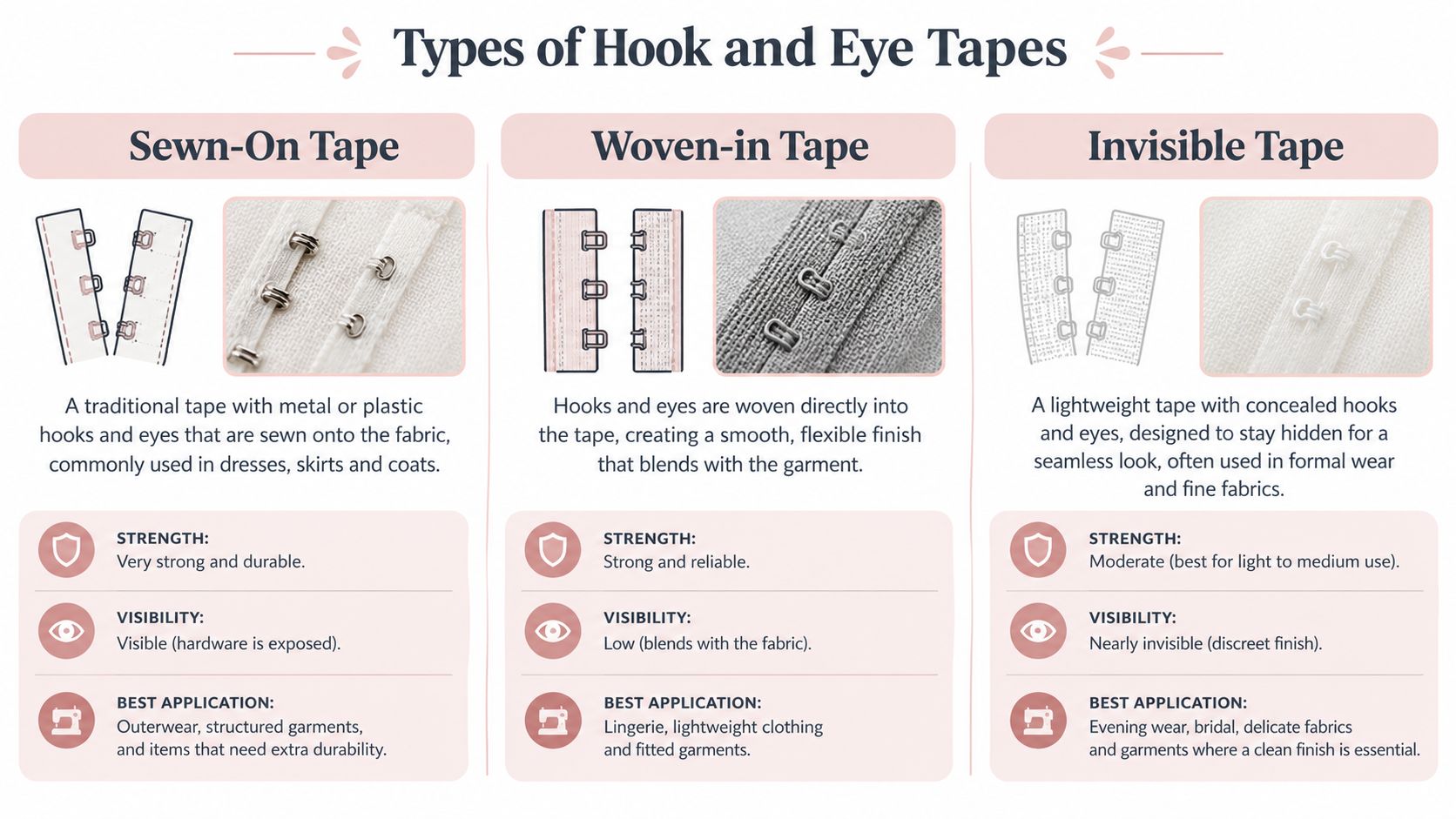
Hook and eye tape is a family of closures, not a single specification. The UK market includes cotton, nylon, black, white, beige, single-row, double-row and corset-grade versions, with differences in band width, hook spacing, metal and flexibility. Product names can be inconsistent, so read the construction details rather than relying on the title.
Band materials and construction
Cotton tape has a familiar, stable hand and works well when comfort and sewability matter. It's a sensible choice for lingerie, light costumes and garments where the tape will sit against a lining or skin-friendly layer. Cotton can feel less technical than nylon, but that softness is useful when a rigid edge would irritate the wearer.
Nylon and synthetic bands can offer a smoother, cleaner appearance and may resist moisture differently from cotton. They're useful when the tape needs a neat, consistent edge, although a very smooth band can be less forgiving under the presser foot. Test your needle, thread tension and stitch length on a sample.
Jersey bands bring more give to the closure line. That can help a curved lingerie edge or a costume that needs some movement, but stretch isn't automatically beneficial. If the opening must hold a fixed measurement, a stretchy tape can allow the edges to drift.
The metal also matters. Suppliers describe hooks made from lightweight or stainless metal in narrow dressmaking and lingerie tapes. Lightweight hardware reduces bulk, while stainless metal is a more considered option where corrosion resistance and repeated handling matter. Neither choice compensates for weak attachment stitches or unsuitable garment support.
Single-row, double-row and structural tape
A single-row tape gives the cleanest, least bulky closure and is often suitable where the garment is light or the seam must remain discreet. A double-row tape provides more fastening positions and can offer useful adjustability, but it occupies more space and may be more visible through a thin outer layer.
Corsetry-grade tape is built for a different job. UK trade listings describe configurations with hook and eye spacing around 2.0cm centre-to-centre, a spacing that can distribute tension along the closure and allow fine fitting. It's not a substitute for a zip, lacing or boning, but it can be appropriate when the closure line itself needs repeated adjustment and firmer support.
A useful comparison is:
| Tape type | Main advantage | Main limitation | Suitable use |
|---|---|---|---|
| Soft cotton | Comfortable and easy to handle | May lack structural firmness | Lingerie and light costumes |
| Nylon or synthetic | Smooth, tidy appearance | Can be less forgiving while sewing | Fine dressmaking and linings |
| Jersey band | Follows curves | May introduce unwanted stretch | Flexible lingerie edges |
| Strong corset tape | Better suited to tension | More visible and less soft | Structural corsetry |
Use the same care when selecting related trims. This overview of elastic for sewing is useful when a project combines a fastening with stretch components, because the elastic and hook-and-eye tape must work together rather than pull against each other.
Measuring and Sizing Your Hook and Eye Tape Correctly
Measure the garment opening first, then choose the tape. Don't start with a convenient reel length and force the pattern to fit it. The fastening should follow the finished seam, not determine it accidentally.
A reliable measuring sequence
- Finish the fitting area. Measure the opening on the toile or completed garment structure, including the seam allowance and any overlap the design requires.
- Decide the closure position. Mark where the first hook will sit, then mark the final hook position. Keep the tape clear of the garment edge if the design needs an overlap.
- Measure the usable length. Follow the curve of the opening with a flexible tape. Avoid measuring across a straightened garment if the seam is shaped.
- Check the band width. Compare the tape width with the seam allowance, lining and outer fabric. A tape that's wider than the available support may need a different application or a wider seam finish.
- Confirm the spacing. Count the fastening positions needed and compare the supplier's hook-and-eye spacing. Spacing affects how finely you can adjust fit and how evenly the closure shares tension.
UK listings show considerable variation. Hook-and-eye tape is commonly supplied in widths such as 19mm, 25mm, 30mm and 40mm, while one trade source describes 25mm to 30mm closed widths for lingerie and dressmaking and a 40mm roll configuration for trade use. Supply Division's tape listings also show practical supply formats ranging from 3m to 6m lengths at 25mm width and 10m rolls at 40mm width.
Match width to fabric and stress
A narrow tape keeps a light garment discreet, but it offers less area for distributing force. A wider tape gives more support and sewing room, yet can feel bulky in a delicate seam. For a lingerie piece, begin with the softest construction that can hold the intended fit. For a corset, assess the entire closure system and use a stronger tape where the garment's structure calls for it.
Body measurements also need consistency. Take them with the same posture and undergarment conditions used for the fitting, following a reliable guide to taking body measurements for clothes. Before cutting the final tape, pin or baste it in place and test the wearer's movement.
Best Uses for Hook and Eye Tapes in Garments and Costumes
The best application depends on whether the tape is primarily discreet, adjustable or structural. Lingerie usually prioritises comfort and a low profile. Corsetry prioritises control and resistance to tension. Costume work adds another concern, the speed and reliability of changes during fittings or performances.
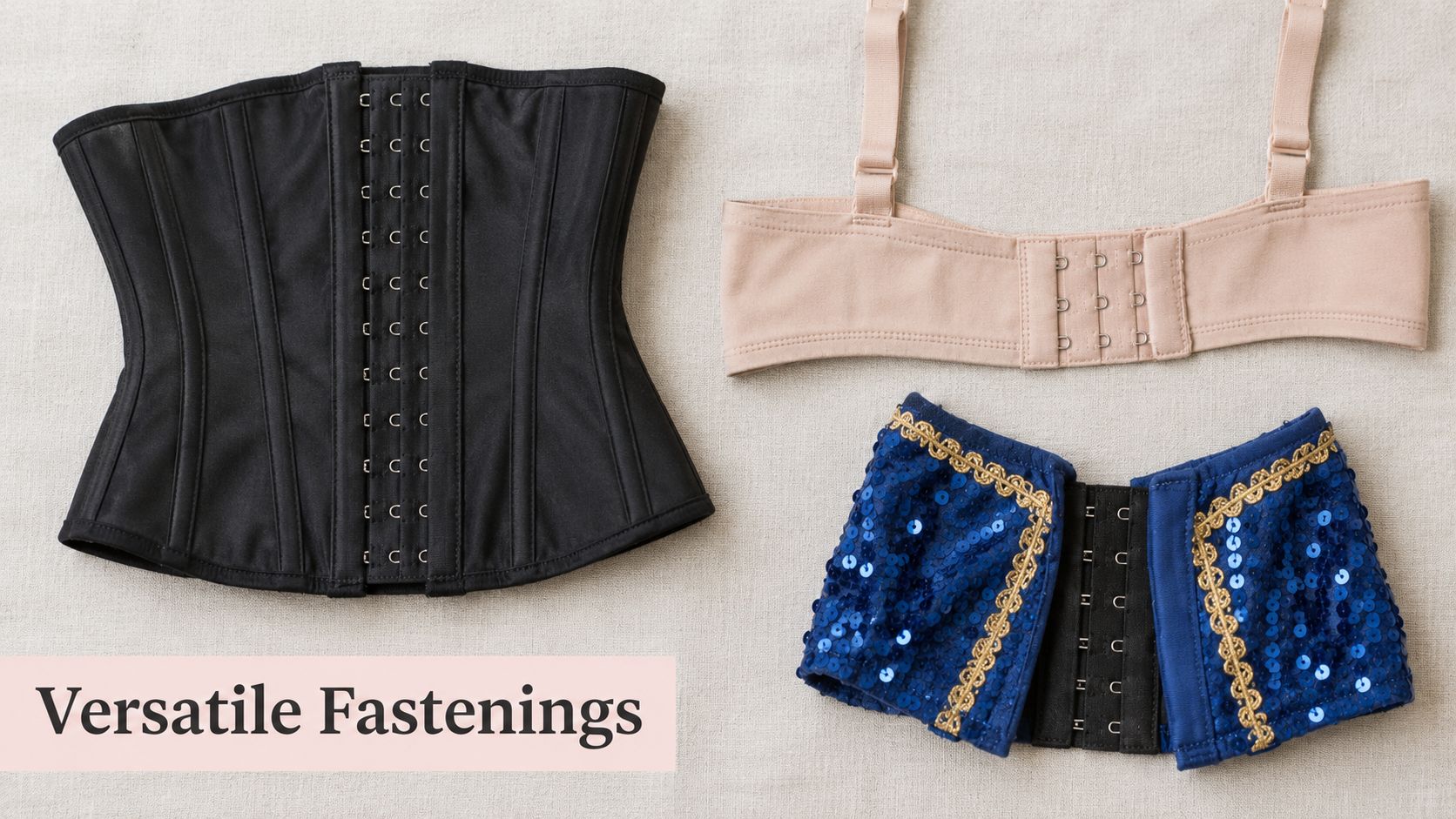
Lingerie and bustiers
For a bra, bralette or soft bustier, a cotton or jersey-backed tape usually makes more sense than a rigid corset construction. The softer base reduces harshness at the body and follows a curved seam more naturally. The trade-off is that it may not provide enough resistance for a garment that relies on the fastening to hold significant shaping force.
Hook-and-eye tape is particularly useful where many individual fasteners would be time-consuming to position. Pre-spaced hooks keep the closure aligned and give a consistent result across repeated garments. Still, the tape must be supported by the garment. Stitching it only to a delicate fashion layer invites distortion.
For a comparison of drape, movement and fabric behaviour, a resource such as Design (OCAD) study drape and folds online can help students and developing designers think about how a closure changes the way fabric falls.
Corsets and waist cinchers
A corset asks more of its fastening than lingerie does. Choose a tape with sufficient firmness, anchor it through the appropriate strengthened layers and avoid treating the tape as an isolated trim. A wider or stronger corset tape can distribute the load along the opening, while a soft cotton lingerie tape may stretch, crease or pull away under repeated tension.
Corset-grade tape isn't automatically the right answer for every fitted bodice. If the garment is lightly structured, its bulk may show through the outer fabric and make the closure uncomfortable. The correct choice is the least bulky tape that still suits the garment's load and construction.
Eveningwear and bridal garments
Eveningwear often benefits from a low-profile fastening. Hook and eye tape can close an edge discreetly, secure the top of a zip or provide an adjustment point behind a fitted bodice. Satin, velvet and fine crepe reveal unevenness, so baste the tape carefully and distribute the stitching rather than relying on a few tight anchor points.
A narrow tape can disappear more easily, but colour matching remains important. Black, white and beige options cover many applications, while a custom-coloured garment may need the tape concealed beneath a facing or lining.
Theatre, film and costume work
Costume departments need closures that survive frequent handling and quick changes. Hook and eye tape offers speed because multiple fastening points arrive aligned on one band. It can also be easier to replace as a complete section than a long series of individually sewn hooks and eyes.
The limitation is visibility and interchangeability. A tape with the wrong width or spacing may not fit an existing costume system, even if the product name sounds similar. Label spare pieces by width, row arrangement and application, not only by colour. For finishing and presentation ideas, this guide to sew-on trim is a useful companion.
The video below demonstrates the general handling of hook-and-eye closures and can be useful when training less experienced makers.
Upholstery and craft applications
In upholstery, hook and eye tape is more specialised. It can secure removable decorative elements, conceal a join or help position a textile panel, but it shouldn't be assumed to replace purpose-made upholstery hardware where the load is substantial. Furniture textiles are often heavier and subjected to different forces from garments.
For professional purchasing, compare the tape's width, substrate, hook spacing, roll length and delivery terms. UK listings show reels and rolls from short lengths through trade formats, with some suppliers also advertising free or next-day UK delivery conditions. That makes it important to calculate the complete requirement before ordering, especially for repeated costume or production work.
Maintaining and Caring for Your Hook and Eye Tapes
Care begins with the original sewing. Secure the tape at the beginning and end of the seam, support the fabric behind it and avoid pulling the thread so tightly that the band puckers. On a structured garment, spread the load through the facing, interfacing or lining rather than asking the outer fabric to carry every stitch.
Washing and everyday wear
Always follow the garment's care instructions first. If the tape is attached to lingerie or a washable costume, fasten the hooks before washing so they can't catch on lace, mesh or another garment. A protective wash bag can reduce snagging, but it won't correct a tape that was poorly supported during construction.
Cotton, nylon and jersey tapes behave differently when wet and when dried. Test a scrap or sample closure if the garment will be washed regularly. Inspect the band after laundering for curling, stretching, loose stitching or displaced hooks. If the tape has moved, repair it before the next wear rather than tightening the existing stitches until the fabric puckers.
Storage and repairs
Store garments with hooks closed, particularly pieces with delicate linings. Fold or roll the closure without crushing it under heavy items, and keep metal components dry. If tarnishing appears, don't apply an aggressive cleaner directly to a fine garment. Remove surface dirt gently and consider replacing affected hardware when appearance or skin contact matters.
A small repair kit should contain a fine hand-sewing needle, matching thread, sharp embroidery scissors and spare tape labelled by type. An organised sewing organiser box prevents spare fastenings from becoming mixed together, which matters when a replacement must match the original width and spacing.
Maintenance check: Examine the first and last attachment points, because those areas often receive the most concentrated pull.
For trade users, maintenance also means recording the specification. Keep the supplier name, tape width, row count, colour, material and roll format with the garment or production notes. UK suppliers use overlapping terms such as fastening tape, hook and eye tape, hook and loop, and hook and bar, so a clear internal description prevents the wrong replacement from being ordered.
Choosing the Right Hook and Eye Tape for Your Needs
Choose the tape according to where the garment takes strain. For soft lingerie, bras and light costumes, select cotton, nylon or jersey-backed tape that feels comfortable against the body and adds little bulk. For corsets and structural bodices, use stronger corset-grade tape with enough band area to spread tension. Eveningwear usually needs a flat finish, close colour match and reliable support behind the tape.
Apply this decision test before ordering:
- Light fabric and skin contact: prioritise softness and a low profile.
- Curved or flexible edges: choose tape that follows the shape without unwanted stretch.
- Frequent adjustment: check hook spacing and the number of fastening positions.
- High garment tension: choose structural support and stronger tape, rather than relying on a wider decorative band.
- Repeat production: record the full specification and buy by metre or roll when suitable.
UK haberdashery listings show hook-and-eye sizes from size 0 upward, so state the size and intended application clearly when ordering replacements. Hardware listings, such as the Screwfix hooks and eyes listing, concern screw fittings and are not interchangeable with garment tape. The comparison matters because a lingerie closure needs softness, while a corset closure must resist sustained tension.
Make a toile with the actual garment structure and test the tape before cutting the final fabric. Record its width, material and spacing, especially for repeat work.
Display Guru supplies tailor dummies, body forms and garment rails for fitting, costume preparation and studio organisation. Visit Display Guru to review the available tools, then assess the fastening on the intended form before committing to production.