

A Guide to Hats Display Stands for Modern Retail Success
Hat display stands are far more than just bits of furniture; they're your silent salespeople, working tirelessly to turn a simple accessory into an object of desire. A good stand doesn't just hold a hat—it frames it, gives it a personality, and shapes how a customer sees it from the moment they step into your space.
Why a Perfect Hat Display Matters
Imagine your best hat sitting on a cluttered shelf versus being presented on a dedicated stand. The stand acts like a spotlight on a stage, cutting through the visual noise of a shop or studio. It’s this strategic presentation that isolates an item, elevates its perceived value, and starts telling its story before you’ve said a word. It's a simple but powerful tool for nudging a casual browser towards making a purchase.
For boutique owners, milliners, and costume designers, this isn't just theory; it's a core part of the business. The way you display your work directly impacts how people interact with it. A thoughtfully arranged collection feels curated and professional, while a messy pile can cheapen even the most exquisite pieces. This is the essence of visual merchandising, and when done right, it's a massive driver of sales. You can get a fuller picture by reading our detailed guide on what is visual merchandising in retail.
From Storage to Storytelling
The real job of a display stand is to shift a hat from being stored to being showcased. A box is for storage; a stand is for storytelling. This shift is vital for a few key reasons:
- It Creates Context: A minimalist mannequin head might whisper of chic, urban sophistication. A rustic wooden pedestal, on the other hand, could speak to heritage and handcrafted quality.
- It Improves Visibility: Hats displayed properly are simply easier for customers to spot, touch, and try on. This direct engagement is a crucial step towards a sale.
- It Builds Your Brand Image: The style and quality of your displays send a clear message about the style and quality of your brand. Consistency is everything.
This is especially critical in the UK’s fierce headwear market. In 2024, UK consumption reached a staggering 69 million units, but with domestic production at just 3 million units, the market is flooded with imports. To stand out and command a fair price, your presentation has to be second to none.
In essence, a hat display stand is your first handshake with a customer. It frames the product, hints at its purpose, and ultimately, helps make it feel completely irresistible.
To really get the most out of your shop or studio, it’s worth exploring the principles behind effective display strategies. Understanding these fundamentals can help you turn a simple room into a compelling gallery for your work.
Choosing the Right Type of Hat Display Stand
Picking the perfect hat display isn't just about finding something that looks nice; it’s a strategic choice that completely shapes how customers see your products. The right stand can turn a simple hat into a 'hero' item, drawing the eye and sparking interest. The wrong one? It can leave your best pieces completely overlooked.
Ultimately, the choice you make is about telling a story. Are you aiming for a relatable, human connection, or an artistic, high-fashion statement? Your display stand is the primary tool for setting that scene.
Mannequin Heads for Human Connection
Mannequin heads are probably the most intuitive way to show off a hat. Their real power is in providing immediate, effortless context. When a customer sees a hat on a form that looks like a human head, they can instantly picture how it might look on them.
That sense of relatability is invaluable in a shop. It answers the silent question, "Would that suit my head shape?" before the customer even has to think it. For milliners and designers, polystyrene mannequin heads are especially useful because they're often pin-friendly, making it easy to style veils, pins, or other delicate embellishments with precision.
These displays are perfect for:
- Boutique window displays where you want to create a human-centric, lifestyle scene.
- In-store tables to showcase how a hat pairs with accessories like scarves or glasses.
- Photography studios to create professional, consistent product shots for your online store.
By giving a hat a "face," you turn it from a mere object into a personal style choice.
Pedestal Stands to Elevate Key Pieces
Got a single, show-stopping hat that deserves the spotlight? A pedestal stand is your best friend. Think of it like placing a sculpture on a plinth in a gallery. Its job is simple: to elevate and isolate an item, signalling its importance and craftsmanship.
Pedestal stands, usually with a simple base and an upright holder, strip away all distractions. This minimalist approach forces the viewer's eye straight to the hat itself, highlighting its unique texture, shape, and design details. They're brilliant for creating focal points. You could, for instance, surround a central pedestal with lower-profile displays to build a clear visual hierarchy.
A pedestal stand effectively says, "Look at this piece first." It's a powerful way to guide a customer's attention and highlight premium or one-of-a-kind items that define your collection.
The flowchart below shows how the right display is directly linked to customer perception and, in the end, sales.
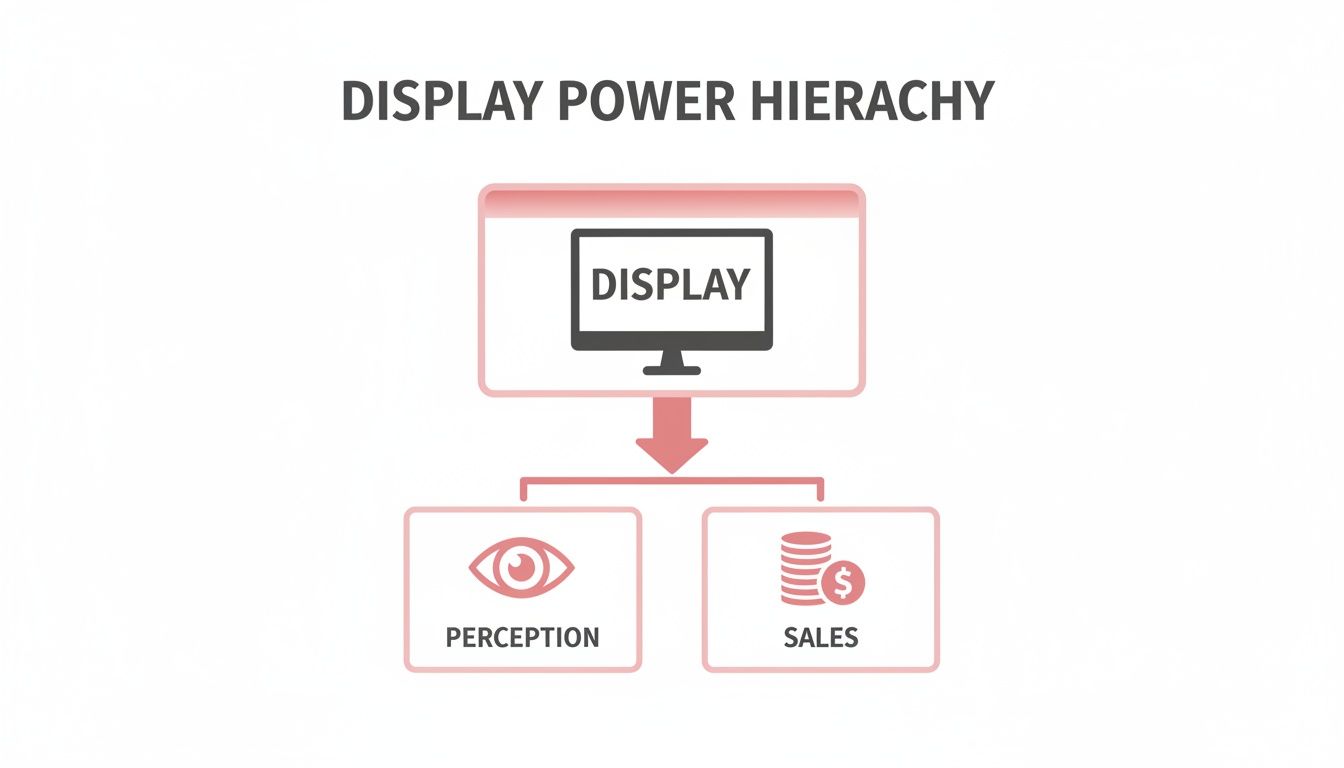
This hierarchy makes it clear: a physical stand is the foundation upon which positive customer perception and successful sales are built.
Wall-Mounted Displays for Space and Scale
For shops with limited floor space or anyone wanting to create a dramatic visual backdrop, wall-mounted displays are a fantastic solution. By taking your collection vertical, you free up valuable room for customers to browse while turning an entire wall into a dynamic feature.
You can arrange wall displays in artistic patterns—neat grids, staggered lines, or even organic clusters—to make a powerful merchandising statement. This approach works exceptionally well for showcasing a wide range of styles or colours, letting customers scan the entire collection at a glance. It's a go-to choice for streetwear shops displaying baseball caps or boutiques with a large fedora collection.
This method cleverly transforms your stock into interior décor, making the products themselves part of the shop's aesthetic. The principles here are similar to those for other garments; for more ideas, check out our guide on effective display stands for clothing.
Multi-Tier Racks for Maximum Visibility
When the goal is to show as much stock as possible in an organised, easy-to-browse way, multi-tier racks are the real workhorses of hat display. These stands, which often feature several arms or levels, are designed for pure efficiency and density.
They are indispensable for market stalls, busy retail floors, or any situation where you need to present a large volume of hats without them ending up in a jumbled mess. A rotating rack, for instance, lets a customer browse dozens of options while taking up minimal floor space.
The UK’s bustling hat market really brings home the need for such efficient solutions. With a commanding 14.50% market share in Europe, the demand here for effective hat displays is soaring. The bucket hat market alone is projected to be worth USD 14.68 billion in the UK by 2025, a figure that highlights the sheer volume of products that need showcasing. This growth only reinforces why choosing the right display is so critical for grabbing consumer interest.
Hat Display Stand Selector Guide
Choosing between these options can feel overwhelming, but it really comes down to your space, your stock, and the story you want to tell. To make it simpler, we've put together a quick guide to help you match the right stand to your needs.
| Display Type | Best For | Key Advantage | Display Guru Solution |
|---|---|---|---|
| Mannequin Heads | Boutique windows, studio photography, detailed styling | Provides human context and relatability | Classic Polystyrene Heads |
| Pedestal Stands | Showcasing hero pieces, creating focal points, minimalist displays | Elevates a single item, drawing maximum attention | Adjustable Metal Pedestals |
| Wall Mounts | Saving floor space, creating feature walls, displaying large collections | Turns inventory into a visual art installation | Sleek Minimalist Wall Hooks |
| Multi-Tier Racks | High-volume retail, market stalls, maximising stock visibility | High density and easy browsing in a small footprint | Revolving Multi-Arm Racks |
This table should act as a starting point. Often, the best retail environments use a mix of these types to create a dynamic and engaging experience for customers, guiding their journey through your collection.
Understanding Materials and Build Quality
The material you choose for your hat display stands does so much more than just hold a product. It's a silent communicator, telling your customers about your brand's values, shaping the atmosphere of your shop, and ultimately, determining how long your fixtures will last. Think of it like a picture frame: it has to complement the art without stealing the show. This single decision influences everything from the visual appeal of your displays to their practical stability in a busy retail space.
A stand isn't just a functional piece of kit; it's a core part of your visual merchandising. Its texture, weight, and overall finish all contribute to a customer's subconscious perception of quality. A flimsy, poorly made stand can make a premium hat feel cheap, whereas a solid, well-crafted one can elevate it, subtly justifying a higher price tag.
Comparing Common Display Materials
Every material brings its own character and practical advantages to the floor. Getting to grips with these differences is the key to making a smart investment that aligns with both your brand identity and your day-to-day needs.
-
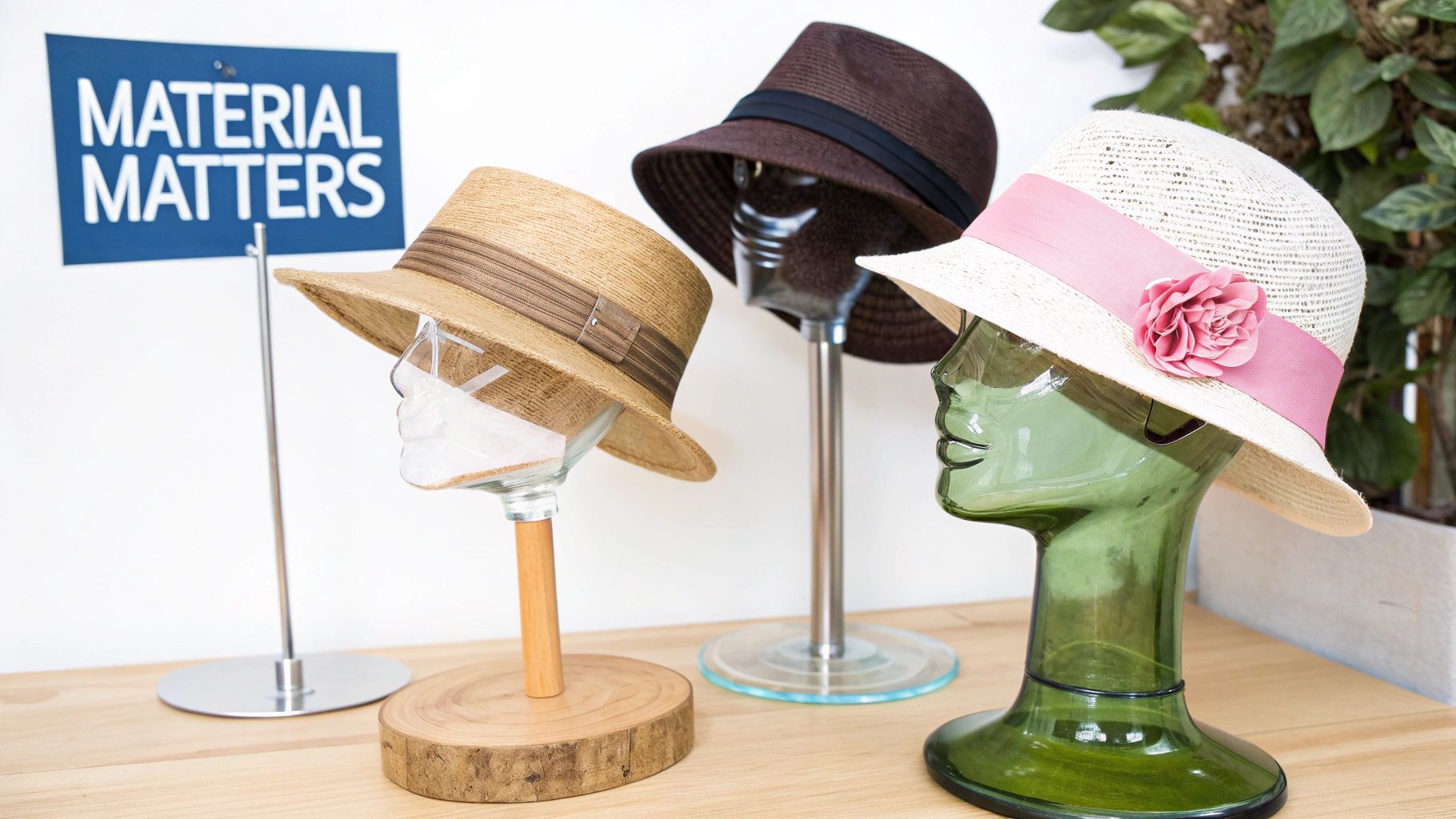
Polystyrene: This is the workhorse for milliners and costume designers. It's lightweight, versatile, and—most importantly—pin-friendly. The ability to easily secure hats, veils, or accessories with pins for precise styling makes it an indispensable tool for any creative professional needing a functional, adaptable form.
-
Wood: Nothing says classic and authentic quite like wood. It brings a natural warmth to a display, making it perfect for brands that want to communicate craftsmanship or an eco-conscious vibe. From the rustic charm of pine in a country-inspired boutique to the sophistication of polished walnut for a luxury men's outfitter, wood’s versatility is second to none.
-
Metal: If you need something sleek, modern, and built to last, metal is your answer. It's exceptionally durable, making it ideal for high-traffic environments. Finishes like polished chrome or matte black lend a contemporary, industrial-chic look that works brilliantly with urban fashion and minimalist aesthetics. Metal's inherent strength also makes it a great choice for heavier or more structured headwear.
-
Acrylic: For a clean, modern look that puts the product front and centre, you can't beat acrylic. Its transparent nature means it doesn't add any visual clutter to your display, creating a light, airy, and sophisticated feel. It lets the hat's true colour and texture be the hero. You can dive deeper into using this material in our guide to the acrylic display shelf.
The material you choose is a silent narrator of your brand's story. A polished chrome stand speaks of modern luxury, while a pin-friendly polystyrene head whispers of bespoke craftsmanship.
Why a Stable Base Is Non-Negotiable
Beyond the look and feel of the material, the actual build quality—especially the base of the stand—is absolutely critical. An unstable hat display is more than just an annoyance; it’s a liability. A wobbly stand can quickly lead to damaged stock, a messy shop floor, and a frustrating experience for your customers.
Always look for stands with a weighted or wide-diameter base. This is especially important for pedestal stands or taller mannequin forms, which can easily become top-heavy. A solid foundation ensures your display can withstand the inevitable accidental bumps from shoppers and staff, keeping everything looking professional and tidy.
When you're checking for stability, ask yourself these questions:
- Base Weight: Does it feel substantial enough to properly anchor the stand?
- Base Diameter: Is the footprint wide enough to stop it from tipping over?
- Connection Point: Is the joint where the base meets the upright pole strong and rigid, with no wobble?
Investing in a stand with excellent build quality means you’re buying a long-term asset, not just a temporary prop. It reflects the care you put into your business and ensures your displays remain pristine, professional, and safe day in, day out. That little bit of extra attention to detail is what separates a good display from a truly great one.
Styling Your Displays for Maximum Impact
A great stand is just the starting point. The real magic begins when you stop simply placing hats and start styling them. This is the very essence of visual merchandising—turning a group of products into a compelling story that grabs attention, creates desire, and invites customers to connect.
Think of your display area as a miniature stage. Your hat stands are the actors, and you're the director, setting the scene for the best possible performance. A beautifully styled display does far more than just look nice; it guides the customer's eye, telegraphs your brand's personality, and can seriously boost the perceived value of your hats. It's the difference between someone walking straight past and someone stopping for a closer look.
Create Cohesive Themes and Stories
The most powerful displays are always built around a theme. It gives your collection a clear, unified message that customers instantly get. Instead of presenting a random jumble of hats, you’re creating a curated experience that makes sense.
This storytelling approach turns your display into a destination. It pulls the customer into a world you've built, making your products feel more relevant and aspirational.
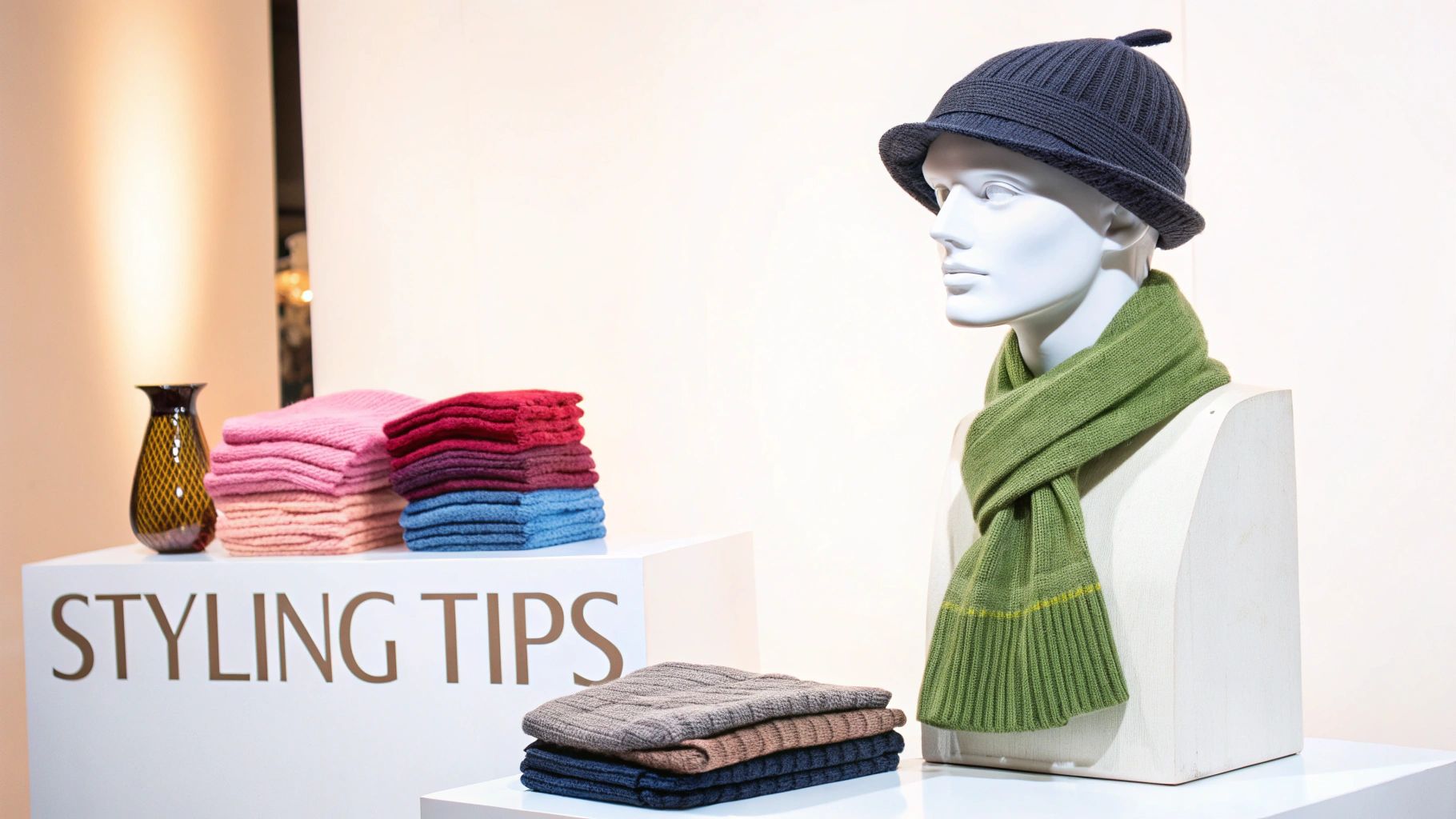
- Seasonal Stories: In autumn, group woolly beanies with cosy scarves and gloves for a ‘Winter Warmers’ theme. Come summer, pair wide-brimmed sun hats with sunglasses and beach totes to create a ‘Holiday Getaway’ vibe.
- Colour Blocking: Make a bold visual statement by grouping hats in complementary or monochromatic colour palettes. Imagine an entire display of black, white, and grey headwear on sleek metal stands—it instantly says minimalist and high-fashion.
- Event-Based Collections: Style fascinators and formal hats on elegant mannequin heads for a ‘Wedding Guest’ or ‘Race Day’ collection. This is brilliant because it helps customers picture themselves wearing the hat at that specific event.
When you organise your hat stands around a narrative, you're not just selling a product; you're selling an idea. This context and inspiration make the buying decision so much easier. If you’re looking for more inspiration, you can find a wealth of practical store display ideas in our other guides.
Use Lighting and Props to Build Atmosphere
Never underestimate the power of lighting. It's one of the most effective tools in a merchandiser's kit, yet it's often overlooked. The right light can bring out the texture in a tweed flat cap, enrich the colour of a velvet fedora, or create a specific mood. A soft, warm spotlight gives a sense of luxury, while bright, cool lighting can make a collection of baseball caps feel crisp and modern.
Props, then, are the supporting cast in your display's story. They add depth, context, and a touch of personality that makes the scene feel complete and authentic.
Think of props as narrative clues. A vintage camera sitting next to a trilby suggests adventure and travel. A stack of classic books beside a tweed cap evokes a scholarly, heritage feel. These small details enrich the story you are telling.
Just remember to choose props that complement the hats without overwhelming them. The hat should always be the star of the show. The goal is to build an environment, not create a cluttered mess. To see just how much of a difference this makes, it’s worth looking at some dramatic staging before and after transformations to understand the power of effective presentation.
Mastering Hierarchy and Flow
A truly successful display guides the customer's eye on a deliberate journey. By using stands of varying heights and creating clear focal points, you can control where they look first and what they see next. This visual hierarchy is what stops a display from feeling flat or boring.
Start by placing your most important 'hero' piece—perhaps a new arrival or a bestseller—on a taller pedestal stand at eye level. Then, arrange complementary styles around it on lower stands or mannequin heads. This creates a natural flow that encourages the shopper to explore the whole collection.
This principle is absolutely vital in the UK's point-of-purchase (POP) display market. Floor units command a massive 43.15% market share, and well-placed hat stands are a key part of turning simple clothing rails into high-impact merchandising zones. With UK hat consumption hitting 69 million units in 2024 and supermarkets accounting for 46.55% of POP sales, a well-styled stand that can cut through the noise is more important than ever.
By applying these principles—thematic storytelling, strategic lighting and props, and a clear visual hierarchy—you can turn your hat display stands from simple fixtures into powerful sales tools. This thoughtful approach to presentation doesn’t just make your products look their best; it creates a memorable and engaging experience for every customer who walks through your door.
Your Smart Buyer’s Checklist for Hat Displays
Choosing the right hat display stand is a genuine investment in your brand's presentation. It's easy to get this wrong, and a poor choice can lead to wobbly displays, damaged stock, and a look that just doesn't feel like you. To avoid these headaches, it pays to approach the buying process with a clear, strategic checklist.
This guide walks you through the key questions you need to ask before you buy. By thinking through these points, you can be confident that the stands you select are not just functional, but true assets that will elevate your space from the moment they arrive.
Size And Proportion Really Matter
First things first: will the stand actually fit your hats? This is the most fundamental check, and getting it wrong can make even the most beautiful hat look awkward and unappealing.
Before you even start browsing, take a moment to measure the average circumference and height of the headwear you plan to display. A mannequin head that's too small will make a hat look comically oversized and sloppy. One that's too large could permanently stretch and damage the fabric. For pedestal stands, make sure the crown support is wide enough to hold the hat securely without warping its shape.
A perfectly proportioned stand presents a hat exactly as it's meant to be worn. It’s a subtle but powerful detail that builds customer confidence and shows you care about quality.
This principle of scale is a cornerstone of effective visual merchandising. To see how these ideas play out across different product types, you can explore our in-depth guide to choosing the right display stands for retail.
Stability In A Busy Environment
Picture a busy Saturday afternoon in your shop. Can your chosen display stand handle the inevitable bumps from shopping bags and curious customers? Stability isn't a luxury; it's an absolute must-have for any retail or studio space.
When you're looking at a stand, pay close attention to the base. You're looking for a few key features:
- A Weighted Base: A heavier foundation creates a low centre of gravity, making the stand much harder to knock over.
- A Wide Footprint: A broader base offers far greater stability, which is especially important for taller stands or those holding heavier headwear.
- Solid Construction: Check the point where the upright meets the base. It needs to feel firm, with absolutely no wobble or give.
A stable stand protects your inventory, prevents accidents, and helps maintain a professional, tidy look on your sales floor. It's a hallmark of quality that reflects well on your entire business.
Adaptability For Future Collections
Your stock will change with the seasons, and your displays need to keep up. A stand that's only good for one type of hat can quickly become useless. Try to find options that offer flexibility for whatever your future merchandising plans hold.
Adjustability is a huge plus here. Can the height of the stand be easily changed? This feature allows you to create dynamic, multi-level displays and accommodate everything from a small cloche to a dramatic, tall top hat. For mannequin heads, see if they can be tilted to create more engaging, life-like poses. Choosing versatile hats display stands ensures your investment keeps delivering value as your collections evolve.
Material, Finish And Brand Alignment
Finally, does the material and finish of the stand actually match your brand's aesthetic? This is the element that ties your whole visual identity together. The material speaks its own language and should be in perfect harmony with the story you’re telling.
Think about these pairings:
- Sleek Metal: Perfect for a modern, urban, or industrial vibe.
- Natural Wood: Suggests heritage, craftsmanship, and authenticity.
- Clean Acrylic: Creates a minimalist, sophisticated, and contemporary feel.
- Fabric-Covered Polystyrene: Offers a soft, bespoke touch ideal for high-end millinery.
The finish is just as important. A matte black metal stand has a completely different feel to a polished chrome one. By carefully selecting a material that complements your brand, you create a cohesive and immersive customer experience that strengthens your identity and elevates your products.
Pre-Purchase Evaluation Checklist
Before you finalise your purchase, run through this quick checklist. It brings together all the key points to ensure you're making a smart, long-lasting investment.
| Consideration | Key Question to Ask | Why It Matters |
|---|---|---|
| Size & Fit | Have I measured my hats? Will the stand's dimensions support them without distortion? | Prevents damage to your stock and ensures an accurate, appealing presentation. |
| Stability | Does the stand have a wide, weighted base and solid construction? | Protects your products and customers in a busy environment, maintaining a professional look. |
| Adaptability | Is the height or angle adjustable? Can it hold different styles of hats? | Guarantees the stand remains useful as your collections change over time. |
| Material & Aesthetic | Does the material and finish align with my brand identity and shop décor? | Creates a cohesive, immersive customer experience and reinforces your brand story. |
| Assembly & Maintenance | How easy is it to put together and keep clean? | Saves you time and effort, ensuring your displays always look their best. |
Taking a few extra moments to consider these factors upfront can save you a world of trouble later on. A great hat display isn't just a prop; it's a silent salesperson, working hard to show your products in their absolute best light.
Looking After Your Displays for Lasting Value
Think of your hat display stands as a long-term investment in your brand's image. Just like any quality tool in your business, a little bit of care will go a long way in keeping them looking professional and working perfectly. Proper maintenance isn't just about cleaning; it’s about protecting that investment so your displays continue to showcase your hats beautifully for years.
The foundation for a long-lasting display starts with getting the assembly right. Always follow the manufacturer’s instructions to the letter, making sure every screw and bolt is securely tightened. A quick check prevents that dreaded wobble, which not only looks sloppy but could be a hazard to your customers and your hats.
How to Clean Different Materials the Right Way
You wouldn't use the same cleaner on a wooden table as you would on a glass window, and the same logic applies here. Each material has its own needs, and using the wrong product can cause anything from scratches to discolouration. Keeping your stands spotless is a small detail that makes a huge difference in creating a polished, inviting space.
Here’s a quick guide to keeping common materials in top shape:
- Polystyrene: For everyday dust, a soft, dry cloth or a feather duster is all you need. If you’ve got a stubborn mark, use a cloth that’s just slightly damp with a tiny bit of mild soap, but make sure the head is completely dry before putting a hat back on it.
- Metal: A simple microfibre cloth is your best friend for wiping away fingerprints and dust from metal stands. If you have a polished chrome finish that’s lost its sparkle, a proper metal cleaner can bring it back to life—just remember to test it on a hidden spot first.
- Wood: Regular dusting with a dry cloth is key. Steer clear of harsh chemical sprays, as they can ruin the finish. To give it a bit of extra TLC, a good-quality wood polish will nourish the material and add a layer of protection.
Your display stands are a silent part of your sales team. When they're clean and well-maintained, they communicate a message of quality and professionalism before a customer even touches a product.
Smart Storage and Easy Fixes
When your displays aren't in use, how you store them is just as important as how you clean them. Mannequin heads should be stored upright and covered with a soft cloth to keep them free from dust and scratches. Whatever you do, don't stack them—it’s a sure-fire way to cause dents or damage.
If you’re packing away larger items like multi-tier racks or pedestals, it’s worth taking them apart to store them flat. It saves a surprising amount of space and dramatically reduces the risk of anything getting bent or broken in storage.
Every now and then, you might run into small issues, but most are a quick fix. If a stand starts to wobble, it’s usually just a case of re-tightening the bolt at the base. Minor scuffs on polystyrene can often be gently buffed out. Catching these little things early stops them from turning into bigger problems and adds years to the life of your display gear.
Common Questions About Hat Display Stands
Even with the best-laid plans, a few questions always pop up when you're on the hunt for the perfect hats display stands. I'll walk you through some of the most common queries we get from retailers, designers, and collectors to help you nail down your final choice with confidence.
Getting these little details right from the outset makes all the difference.
What Is the Best Stand for Delicate or Vintage Hats?
When you're dealing with delicate, vintage, or truly valuable hats, a mannequin head is almost always your best bet. I’d recommend looking for one with a smooth, neutral fabric covering or a high-quality polystyrene form, like the ones we offer at Display Guru. These materials give full support to the hat's crown, so you don't have to worry about the shape getting distorted or the fabric being stressed.
Pairing it with a pedestal base adds a touch of class and keeps it stable, which is crucial for preventing accidental knocks in a busy shop or studio. It's all about providing gentle, all-over support.
How Do I Choose the Right Size Mannequin Head?
Getting the size right is absolutely vital for a professional look. Start by measuring the average circumference of the hats you’ll be showing off. For reference, most adult heads fall somewhere between 21 and 23 inches.
If the head is too small, the hat will look comically oversized and sloppy. Too large, and you risk stretching or even damaging the hat. You're aiming for a snug, realistic fit that shows the headwear exactly as it’s meant to be worn.
The key to a professional display is a realistic fit. A hat should sit on a mannequin head just as it would on a customer, creating an authentic and appealing presentation that helps drive sales.
Can I Use Pins on All Types of Hat Display Heads?
Definitely not, and it’s really important to check the material first. You should only ever use pins on heads specifically made for them, which are typically ethafoam or high-density polystyrene. Our pin-friendly polystyrene mannequins are perfect for this.
This is a must-have feature for tailors, milliners, and costume designers who need to secure hats, veils, or other accessories for styling and fitting. Trying to stick pins into fibreglass, plastic, or wooden heads will just end up damaging both the pin and the stand itself.
How Can I Make My Hat Displays More Dynamic?
The trick to creating a dynamic display is to play with different heights and stand types. Try combining single pedestal stands for your hero pieces with multi-tier racks to showcase a wider variety. Adjustable stands are brilliant for creating different levels on a single tabletop.
Think about grouping hats by colour or theme, and don't be afraid to angle the mannequin heads slightly—it creates a sense of movement and makes the display feel more alive. You can also bring in complementary items, like a garment rail with matching scarves, to add layers and tell a richer story.
At Display Guru, we provide a comprehensive range of professional display solutions to meet your needs. Explore our collection today at https://www.displayguru.co.uk.