



Guide to hanging wardrobe rail: Choose the Right System for Your Closet
At its heart, a hanging wardrobe rail is the fundamental building block of any organised closet or retail display. It’s the simple, essential structure that supports your garments, keeping them accessible, presentable, and free from wrinkles. But to think of it as just a metal bar is to miss the point entirely.
Why Your Hanging Wardrobe Rail Matters
Think of your wardrobe rail as the unsung hero of your storage space. It’s the single component that brings order to chaos, transforming a cluttered pile into a functional, beautifully organised collection. Whether you're curating a fashion line, managing stock in a retail storeroom, or organising a creative home studio, the right rail is a genuine asset.
For professionals like tailors, designers, and shop owners, a reliable rail system is the backbone of day-to-day operations. It can turn a frantic workspace into an efficient production line where every garment is exactly where it needs to be. This is a big deal in the booming home furnishing sector. The UK market alone, which includes these essential wardrobe components, pulled in a massive USD 55,011.6 million in revenue, proving just how much we value smart storage. With projections showing continued growth, it’s clear we’re all looking for ways to make the most of every square inch. You can read more about the growth of the home furnishing market on grandviewresearch.com.
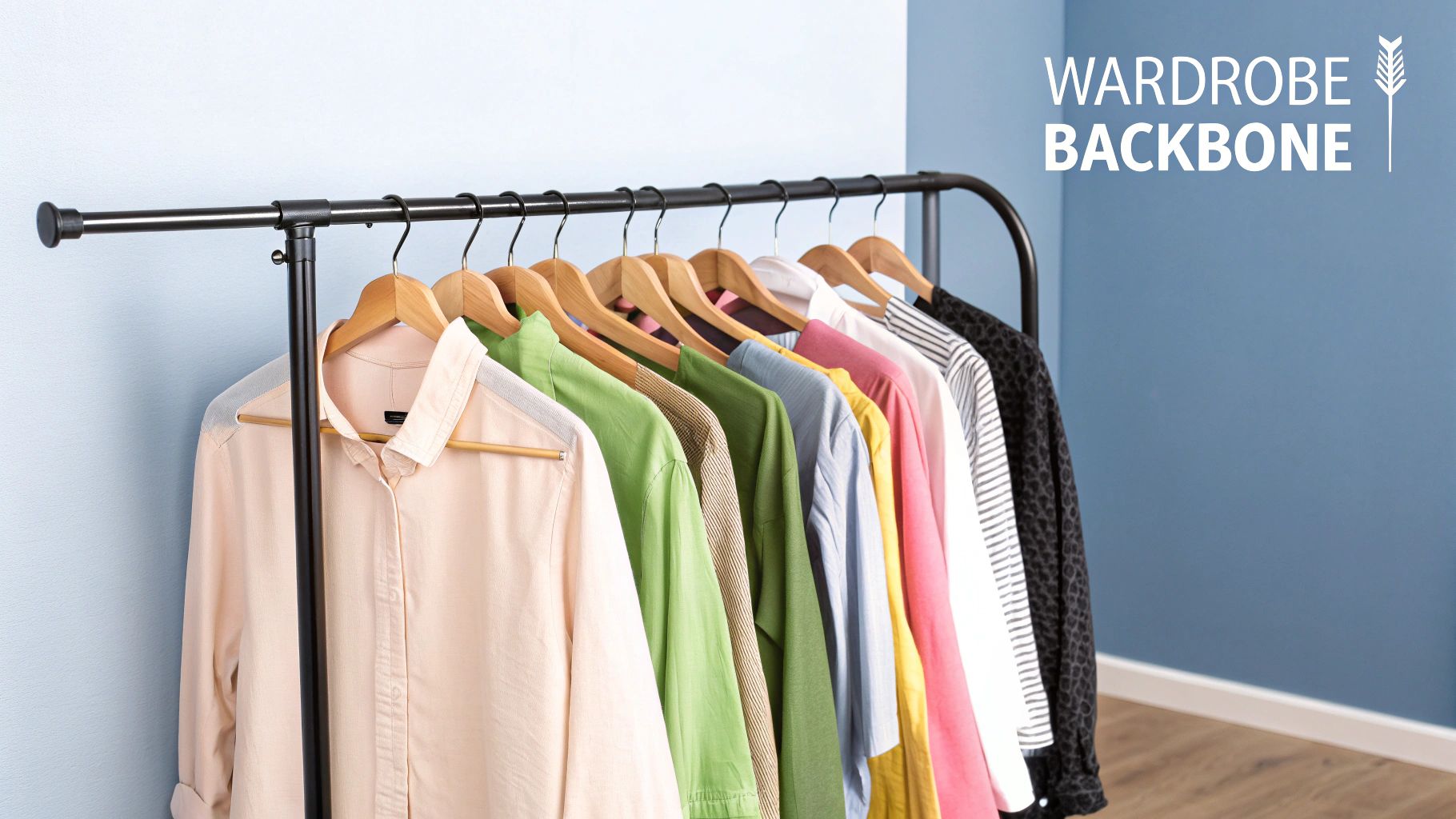
Beyond the Bedroom Wardrobe
Back at home, a well-chosen hanging rail is your best defence against crushed, creased, and damaged clothes. It’s the key to maximising limited space while ensuring your favourite pieces stay in pristine condition. This guide is here to walk you through everything, from understanding the different types of rails available to installing one like a seasoned pro.
Choosing the right rail isn't just a practical tick-box exercise. It's a strategic decision that elevates the look and feel of your space, all while improving your daily workflow.
We'll be diving into all the details you need to make an informed choice.
- Different Rail Types: We'll explore fixed, adjustable, and heavy-duty options to suit every need.
- Materials and Finishes: From classic chrome to modern powder-coated styles, we'll cover the pros and cons.
- Sizing and Capacity: Learn how to measure your space accurately and figure out how much weight your rail can handle.
- Installation: We’ll share best practices for a safe, secure, and long-lasting setup.
By the end, you'll have all the knowledge you need to pick a system that’s a perfect fit for you.
Understanding the Different Types of Hanging Rails
Choosing the right hanging wardrobe rail is a bit like picking the right tool for a job.## A Guide to the Different Types of Hanging Wardrobe Rails
Choosing the right hanging wardrobe rail is a bit like picking the perfect tool for a job. Each type is designed with a specific purpose in mind, and what works for a home closet might be a disaster in a busy stockroom. It's about more than just a metal bar; it's about finding a system built for the right load, space, and daily demands.
Getting this choice right from the start will save you a lot of headaches down the line. A flimsy rail will buckle under pressure, while an over-engineered one might be overkill for a simple project. Let's break down the main options so you can see exactly what you need.
Fixed Hanging Rails
Fixed rails are the workhorses of the storage world. These are the classic, no-fuss rails you see installed directly into wardrobe carcasses or between two solid walls. They provide a sturdy, permanent solution for built-in wardrobes, airing cupboards, and retail displays where the layout is set in stone.
Their strength comes from their simplicity. Securely anchored at both ends, they offer fantastic stability. If you're building a permanent closet or fitting out a storeroom from scratch, a fixed hanging wardrobe rail is almost always the most practical and cost-effective way to go.
Adjustable and Extendable Rails
Adjustable rails, on the other hand, are the problem-solvers. Their genius lies in their ability to change length, which makes them absolutely perfect for fitting into those awkward, non-standard spaces like alcoves or under the stairs. This clever adaptability means you don't need a custom-cut solution.
An extendable rail lets you squeeze the most out of every available centimetre. This is a game-changer in dynamic environments like a growing sewing studio or a pop-up shop where your needs might change from one month to the next. If you want a solution that can adapt as you do, this is the one. For a closer look at how these are installed, our guide on wall hanging rail options is a great resource.
Heavy-Duty Garment Rails
Finally, we get to the heavy-duty rails—the undisputed champions of strength. Built from thicker, more robust materials, these are engineered to handle serious weight without a hint of sagging. For any commercial or professional setting, they are simply non-negotiable.
A heavy-duty rail is essential for storing dense collections like winter coats, multiple wedding dresses, theatrical costumes, or a tailor's entire stock of suiting fabrics. Attempting to use a standard rail for such items will inevitably lead to bending and potential collapse.
We're seeing a huge demand for these robust systems, and for good reason. The garment rail market is expanding globally, especially as retailers use them to achieve up to 40% faster stock rotation. This trend really underscores the need to match the rail to its purpose. Their superior construction means they can take the knocks of constant use, making them a very wise long-term investment.
To make it easier to see which rail fits your project, here’s a quick comparison of the main types.
Hanging Wardrobe Rail Type Comparison
This table compares the primary types of hanging wardrobe rails, highlighting their ideal uses, typical load capacity, and key features to help you make an informed choice.
| Rail Type | Best For | Typical Load Capacity | Key Feature |
|---|---|---|---|
| Fixed Rail | Permanent installations like built-in wardrobes and stockrooms. | Moderate to High | Maximum stability and cost-effective. |
| Adjustable Rail | Non-standard spaces, alcoves, and evolving storage needs. | Low to Moderate | Telescopic design for a customisable fit. |
| Heavy-Duty Rail | Commercial retail, theatrical wardrobes, and storing bulky, heavy items. | Very High | Superior strength and sag-free performance. |
Ultimately, understanding these differences ensures you’re not just buying a rail, but investing in a reliable storage solution that’s built to last.
Selecting the Right Material and Finish
Choosing the material for your hanging wardrobe rail is a bit like picking the right fabric for a bespoke suit. It needs to be practical, durable, and look the part. The material and its finish don't just set the style; they determine the rail's strength, how long it will last, and how well it stands up to daily use. Getting this right is key to making sure your rail performs beautifully for years to come.
The demands on a rail in a bustling retail stockroom are worlds apart from those in a quiet home studio. Likewise, a humid utility room calls for better rust resistance than a dry bedroom wardrobe. Let's look at the most popular options to help you decide.
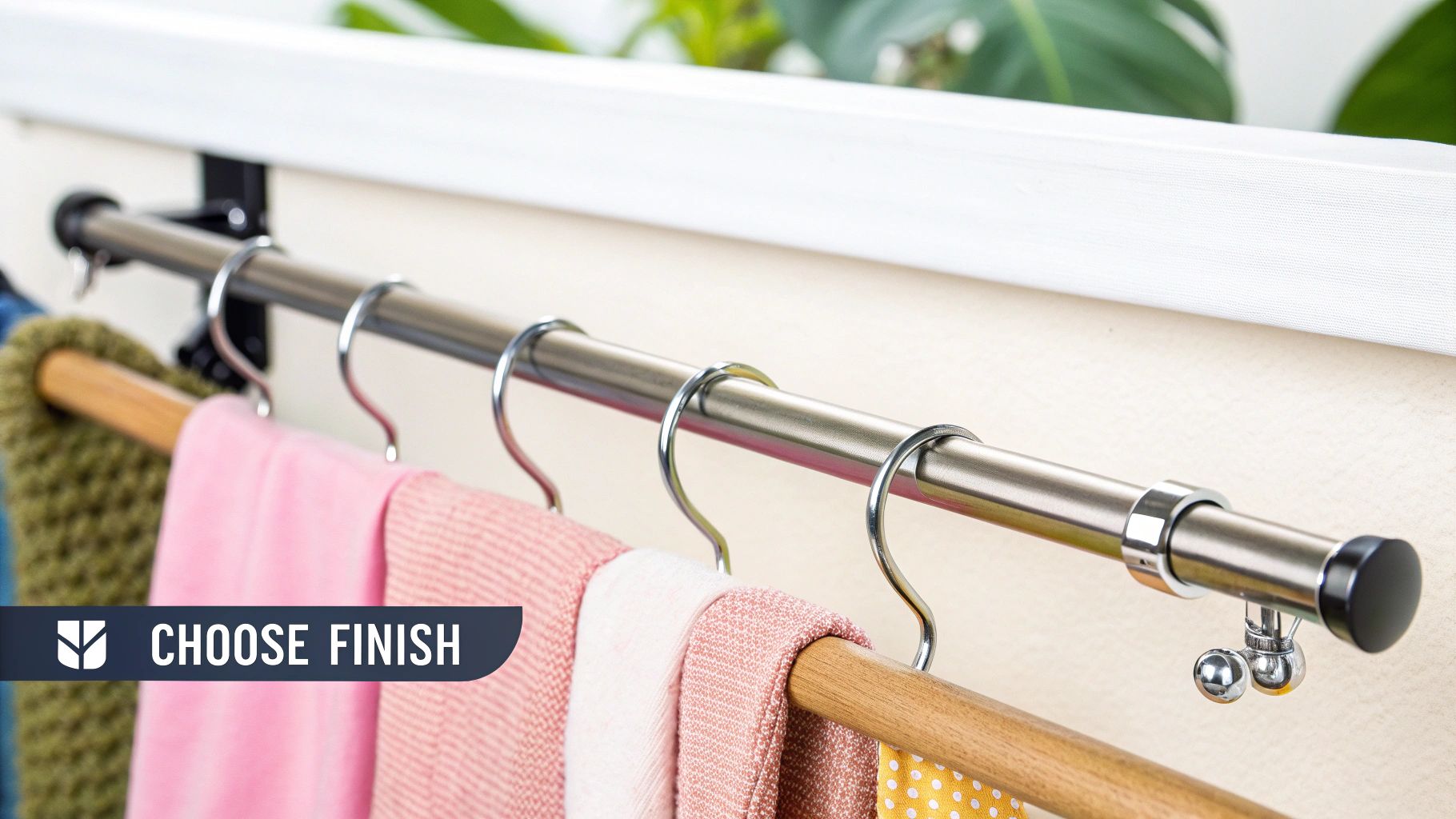
Steel: The Strong and Classic Choice
There’s a good reason steel is the industry standard. It strikes that perfect balance between strength and cost, making it the workhorse material for most hanging rails. But "steel" is just the beginning—it’s the finish that gives the rail its true character and resilience.
Chrome-plated steel is a timeless classic. It delivers a bright, mirror-like finish that works just as well in a modern flat as it does in a traditional shop. The surface is incredibly hard-wearing, fending off scuffs and scratches from hangers sliding back and forth all day, which makes it perfect for busy retail displays. It gives any space a clean, professional edge. You can see how different finishes compare in our guide on the essential clothes pole rail.
Powder-Coated Finishes for Modern Durability
If you’re after a more contemporary or industrial vibe, powder-coated finishes are a fantastic choice. The process involves applying a dry powder to the steel using an electrostatic charge and then baking it. This creates a finish that’s much tougher than conventional paint.
Think of a powder-coated finish as a suit of armour for the steel. It’s incredibly resistant to chipping, scratching, and fading, so the rail looks great even under constant, heavy use.
This tough coating also provides excellent protection against rust, making it a savvy pick for spaces where humidity levels might change. Usually found in sleek black or crisp white, a powder-coated rail makes a bold style statement while offering truly robust performance.
Here are a few things to keep in mind when making your choice:
- Environment: Will the rail be somewhere damp? If so, prioritise rust-resistant finishes like powder-coating.
- Usage: How often will you be moving clothes around? For high-traffic areas, chrome’s scratch resistance is hard to beat.
- Aesthetic: Are you aiming for a classic, reflective look or a modern, matte finish? Chrome brings the shine, while powder-coating offers a clean, contemporary feel.
Getting Your Measurements Right: Space and Strength
Picking the right hanging rail isn't just about how it looks; it's about making sure it can handle the job and fits perfectly in your space. Thinking about load capacity isn't some boring technical step—it's what stops you from coming home to a pile of clothes on the floor. Likewise, getting your measurements spot-on from the start ensures your rail is a help, not a hindrance.
Let's break down these two crucial elements. We'll skip the jargon and focus on what these numbers actually mean for your clothes and your room, so you can choose a rail that’s up to the task and fits like a glove.
What Does "Load Capacity" Really Mean?
Manufacturers throw around kilogram ratings, but what does that look like in your wardrobe? A much better way to grasp this is to picture the number and type of clothes a rail can actually support. This simple switch in thinking makes choosing the right rail so much easier.
A standard rail might be rated for 25 kg. That’s perfect for your lighter stuff.
- What it holds: Think about 50 lightweight blouses or maybe 30-40 shirts.
- Best for: Everyday tops, kids' clothes, or your summer collection.
Then you have the real workhorses: heavy-duty rails rated for 75 kg or more. This is where you get some serious storage muscle. If you’re dealing with anything bulky, it’s worth looking into a proper hanging rail for heavy duty use.
- What it holds: We're talking around 30 heavy winter coats, a bunch of leather jackets, or a full collection of suits.
- Best for: Retail stockrooms, theatre costume departments, or just getting all your bulky winter gear out of the way.
Here's a pro tip: always play it safe. If you think your collection is pushing the weight limit, either upgrade to a stronger rail or add a central support bracket. It’s a small step that prevents that dreaded sag over time.
A Quick Guide to Measuring Your Space
A few minutes with a tape measure now will save you a world of frustration later. Follow these simple steps to make sure everything fits perfectly.
-
Measure the Width: Grab a tape measure and get the exact distance between the two walls or panels where you plan to mount the rail. If you're fitting it into an alcove, measure at the top, middle, and bottom—walls are almost never perfectly straight. Always use the shortest of the three measurements to be safe.
-
Find the Wall Studs: This is absolutely vital for wall-mounted rails. Use a stud finder to locate the timber supports behind your plasterboard. Your brackets need to be screwed directly into these studs to create a secure anchor that can safely take the weight.
-
Check Your Depth and Clearance: Make sure you leave enough room for hangers to hang properly without being squashed. A good rule of thumb is a minimum depth of 55-60 cm from the back wall to the front of the hangers. Don't forget to check the drop, too. You'll want about 105 cm for shirts and folded trousers, and up to 165 cm for long coats and dresses.
A Professional Guide to Safe Installation
Any successful installation, whether it's for a hanging wardrobe rail or a kitchen cabinet, comes down to one thing: a solid foundation. You simply can't build a house on sand, and you can't expect a rail to hold a heavy collection of clothes if it isn't anchored to something solid.
This is where your wall's structure comes into play. For a rail to perform safely and reliably for years, its mounting brackets must be fixed directly into solid masonry (like brick) or the timber wall studs hidden behind your plasterboard.
Plasterboard on its own just isn't strong enough to take the strain. Trying to mount a loaded rail directly to it is a recipe for disaster – the fixings will inevitably pull out, damaging your wall and everything on the rail. A good stud finder is your best friend here; it's an essential bit of kit for locating those crucial structural supports.
Choosing Your Mounting Method
The best way to mount your rail depends on two things: the type of wall you have and the style of rail system you've picked out. For instance, standard brackets are perfect for fitting a rail neatly inside a wardrobe carcass, but you'll need something more substantial for an open-wall display.
- Wall Mounts: This is the go-to method for most installations. Brackets are fixed straight onto the wall, but it's absolutely vital that you hit the wall studs for a secure hold.
- Ceiling Mounts: A great choice if you're going for a 'floating' rail look or want to create a room divider. These brackets attach to the ceiling joists, offering a clean, modern aesthetic.
- Combination Mounts: For the heaviest loads, some systems use a combination of wall and ceiling mounts, or even floor-to-ceiling supports. This approach spreads the weight across multiple points, providing maximum strength and making it ideal for busy retail environments.
Before you even think about drilling, get your tools ready. You'll need a spirit level, a drill, a tape measure, and the right screws for your specific wall type. That means heavy-gauge wood screws for timber studs or masonry plugs and screws for brickwork. For a deeper dive into the hardware, take a look at our guide on choosing the right wardrobe rail and fixings.
To get you started, the diagram below walks you through the essential measurement steps.
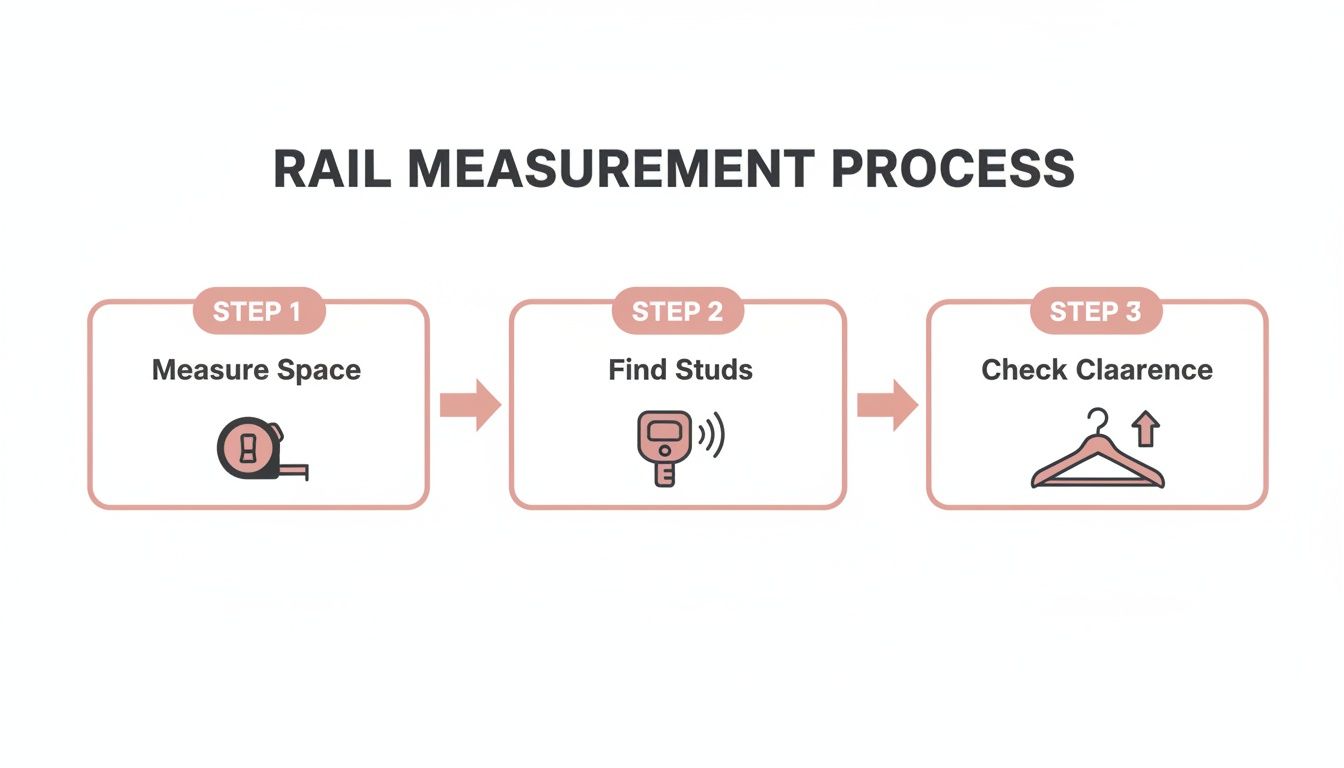
Following this process ensures your rail not only fits the space perfectly but is also positioned for the best possible stability and ease of use.
A final pro tip: always double-check your measurements before drilling. Once the rail is up, but before you load it with clothes, give the brackets a firm tug. This simple test confirms your fixings are solid and ready for the weight, preventing any nasty surprises down the line. Whether you're a DIY enthusiast or bringing in a professional, getting these fundamentals right is what separates a good job from a great one.
Advanced Applications for Creative and Retail Spaces
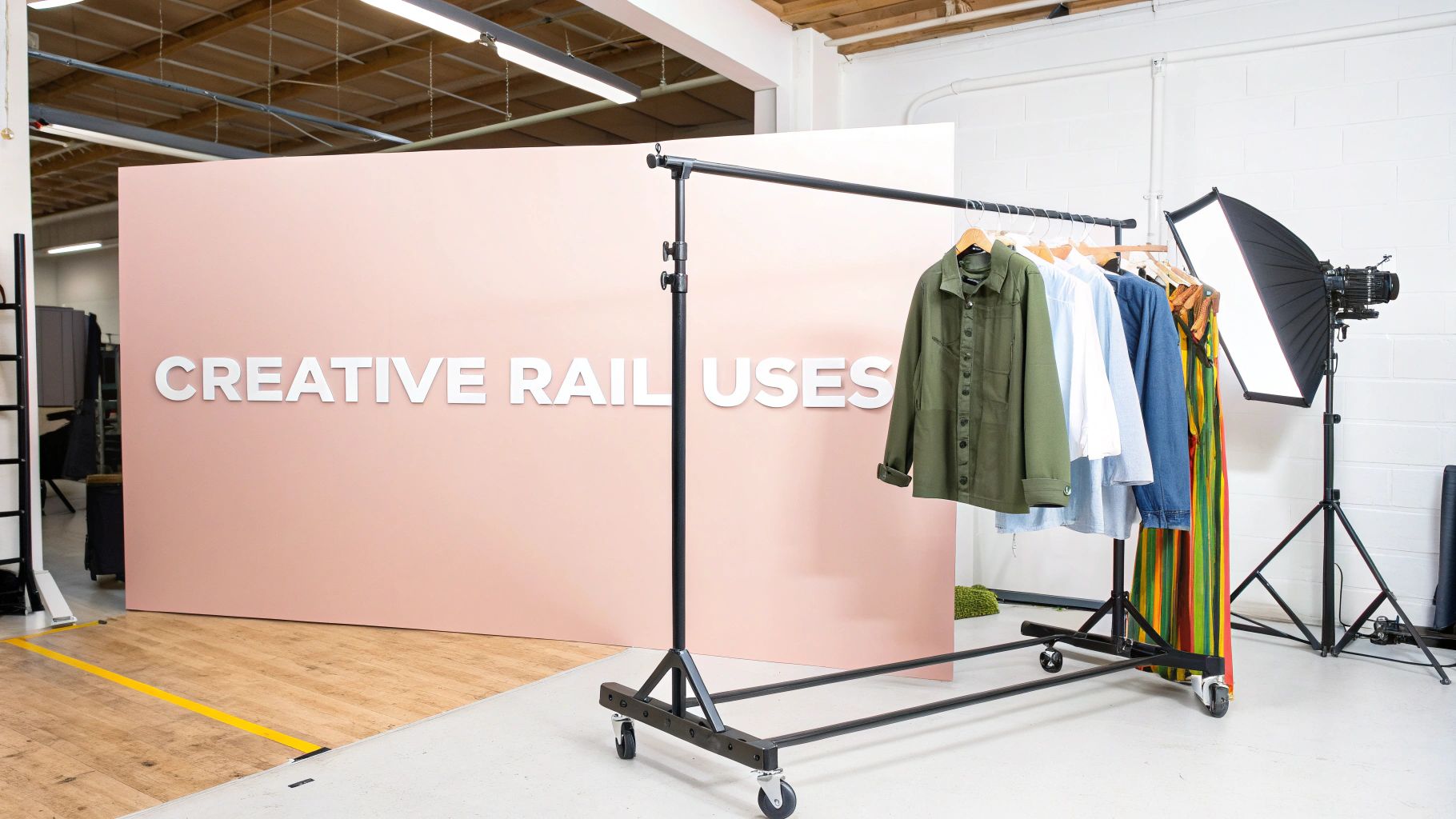
You might think of a hanging wardrobe rail as something just for the bedroom, but its quiet versatility makes it a powerhouse in professional settings. For creatives and retailers, the right rail system isn't just about storage; it's a fundamental part of the business, boosting organisation, presentation, and workflow.
This is particularly true in the world of visual merchandising. Retail experts know that tiered or layered rail systems can create dynamic, eye-catching displays that guide a customer’s journey through a collection. By playing with different heights and depths, they can spotlight hero pieces and tell a visual story that static shelving just can’t compete with. It’s how a simple garment display becomes an engaging—and profitable—space.
From Backstage to Bespoke Tailoring
Step into the fast-paced world of theatre, and you'll see that costume designers rely on heavy-duty mobile rails to manage vast and often heavy collections. Being able to wheel an entire scene's worth of costumes from the wardrobe department to the wings is absolutely essential. For these pros, a robust hanging wardrobe rail on wheels is an indispensable tool that keeps the show running smoothly. To get a better sense of the specific demands of theatrical garment management, it's worth exploring the different types of costume rails and their unique features.
It’s a similar story in a tailor’s workshop, where rails often double as a project management system. Garments can be organised by client or stage of production, moving methodically from the cutting table to the sewing station and finally to the collection area.
A well-organised rail system allows a tailor to see their entire workload at a glance, preventing confusion and ensuring every bespoke piece receives the focused attention it deserves.
This clear, linear workflow is vital for upholding the high standards of bespoke craftsmanship. These examples really show how a humble rail can be adapted to solve complex logistical problems, proving its worth in any creative or commercial environment.
Got a Question? We’ve Got Answers
Even after doing all the research, a few questions can pop up when you're about to make your final choice. It’s completely normal. This section is all about tackling those common queries we hear all the time, giving you clear, straightforward answers to help you feel confident in your decision.
Think of this as a final checklist to make sure you’ve covered all the bases for a solid installation and a rail that lasts for years.
How Do I Stop My Hanging Wardrobe Rail From Sagging?
A sagging rail is a classic problem, and it almost always comes down to one of two things: it’s either carrying too much weight, or the rail is too long for its own good without a bit of help. First things first, double-check that you’re not overloading it. It’s amazing how quickly heavy winter coats and denim can add up.
If your rail spans more than 120cm (around 4 feet), a centre support bracket isn't just a good idea—it's essential. This simple piece of hardware attaches to a shelf above or the wall behind, splitting the load and stopping the rail from bowing in the middle.
What Is the Best Height to Install a Wardrobe Rail?
There’s no magic number here; the perfect height really depends on what you plan to hang. The goal is to make the most of your space without your clothes dragging on the floor.
Here are a few trusted guidelines to get you started:
- For long items like dresses, trench coats, or jumpsuits, a single rail set at 150-165cm from the floor works beautifully.
- For a double-hang setup, place the top rail (for shirts and blouses) at 200-210cm and the bottom rail (for folded trousers and skirts) at about 100-105cm.
A great tip is to take your longest garment, measure it, and then add at least 10cm of clearance from the bottom.
Can I Install a Hanging Rail Directly into Plasterboard?
In a word: no. You should never mount a hanging rail directly into plasterboard on its own. It simply can’t handle the weight. Over time, the fixings will work their way loose and pull right out of the wall, bringing your clothes and a chunk of plaster down with them.
You need to find the timber studs behind the plasterboard using a stud finder and screw your brackets securely into them. If the studs aren’t in the right spot for your design, the best solution is to fix a sturdy wooden batten horizontally across the studs first. Then, you can mount your rail brackets anywhere you like along that batten, giving you a rock-solid foundation.
For durable, professional-grade garment rails and display solutions perfect for any project, explore the collection at Display Guru. Find the ideal hanging wardrobe rail for your space at https://www.displayguru.co.uk.