

What Is Merchandising in Fashion a Guide for Modern Brands
At its core, fashion merchandising is the strategic art of presenting products to customers in a way that makes them want to buy. It’s everything that happens behind the scenes to select, price, display, and market clothing and accessories to drive sales and boost profitability.
What is Merchandising in Fashion, Really?
Think of merchandising as your brand’s silent salesperson. It’s the entire ecosystem of decisions that turns a simple piece of clothing into a must-have item within a compelling brand story. This is so much more than just putting things on a shelf; it’s about directing a carefully choreographed performance where your products are the stars.
Every single element, from a mannequin in the window to the layout of a product page online, is a deliberate choice. The whole point is to create an experience that clicks with your target customer, making them feel like you ‘get’ them and nudging them towards a purchase. Merchandising is the crucial link between a designer's creative vision and the commercial reality of the shop floor.
It's Both Art and Science
Merchandising is a fascinating mix of creative flair and hard data. The "art" is in creating visually stunning displays that evoke a mood and tell a story. This is where a solid grasp of colour theory, composition, and your brand’s unique aesthetic comes into play. To dig deeper into this, it’s worth exploring what visual merchandising in retail involves.
Then there’s the "science"—the analytical side of things. This is all about:
- Sales Data: Digging into the numbers to see which products are flying off the shelves, at what price, and during which seasons.
- Inventory Management: Making sure you have the right amount of stock at the right time. Enough to meet demand, but not so much that you're left with a surplus.
- Market Trends: Keeping an ear to the ground to forecast upcoming styles and consumer tastes, so you can plan your collections accordingly.
- Customer Behaviour: Watching how shoppers navigate your space—whether it’s a physical boutique or an e-commerce site—to optimise the layout and guide them to the checkout.
Merchandising is what translates your brand's identity into a real, shoppable experience. It’s not just about what you sell, but how you sell it. It’s the magic that turns casual window-shoppers into loyal customers.
More Than Just Arranging Clothes
Ultimately, merchandising is a holistic role that touches almost every part of the retail journey. To get the full picture, it's helpful to look at related strategies like what is brand activation, which often relies on great merchandising to create those memorable customer moments. For any designer, tailor, or shop owner, getting these principles right is absolutely fundamental to building a strong and profitable brand.
Exploring the Three Pillars of Fashion Merchandising
So, what exactly is fashion merchandising? The best way to get your head around it is to break it down into its three core disciplines. While each one has a distinct job, they all work together seamlessly, like the different sections of an orchestra, to create a successful brand performance. Think of them as the creative artist, the strategic planner, and the on-the-ground director of the retail world.
These three pillars are the engine of the UK clothing industry, a sector currently valued at around £50.0 billion. With over 10,000 businesses all vying for customer attention, getting these areas right isn’t just good practice—it's essential for staying in the game.
This diagram helps to show how the three core concepts of fashion merchandising fit together.
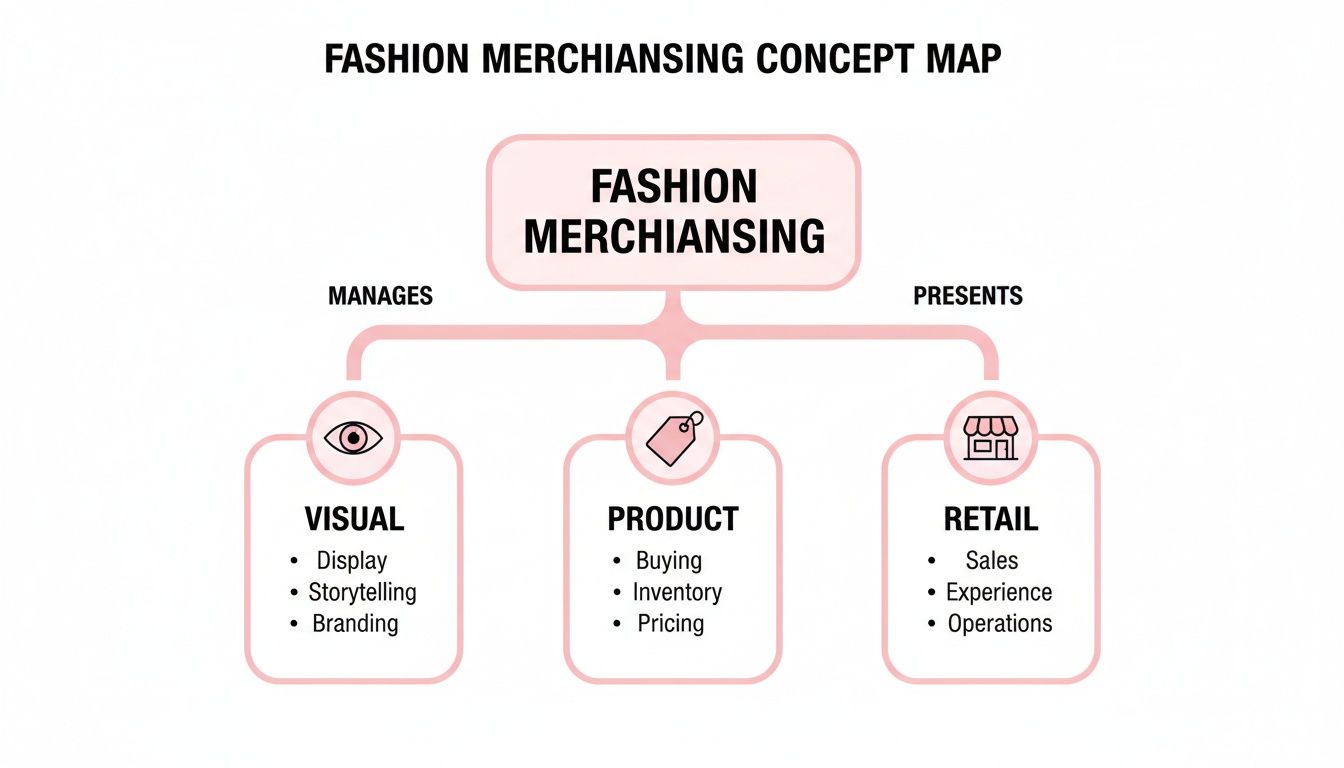
As you can see, visual, product, and retail merchandising aren't separate silos. They are overlapping fields that, when combined, create a powerful customer experience and ultimately drive sales.
To really understand how this works in practice, let's take a closer look at each discipline. The following table gives a quick overview of what sets them apart.
A Breakdown of Merchandising Disciplines
| Merchandising Type | Primary Goal | Key Activities | Who It Involves |
|---|---|---|---|
| Visual Merchandising | To attract, engage, and inspire customers through aesthetics and storytelling. | Designing window displays, creating in-store layouts, styling mannequins, selecting lighting and colour schemes. | Visual Merchandisers, Window Dressers, In-Store Stylists |
| Product Merchandising | To plan, select, and price the right products to meet market demand and hit sales targets. | Trend forecasting, assortment planning, setting prices, managing inventory levels, analysing sales data. | Product Merchandisers, Buyers, Planners, Data Analysts |
| Retail Merchandising | To manage the day-to-day execution of the merchandising plan on the shop floor to maximise sales. | Restocking shelves, implementing planograms, managing stockroom, executing promotions, ensuring store standards. | Retail Managers, Shop Assistants, Stockroom Staff |
Each type of merchandising plays a critical role. Without compelling visuals, great products go unnoticed. Without the right products, even the most beautiful shop will fail. And without solid on-the-ground execution, the whole strategy falls apart. Now, let’s dig into the specifics of each one.
Visual Merchandising: The Art of Attraction
Visual merchandising is where the magic happens. It’s the most creative and visible side of the business, focused entirely on how products look and feel in a space to create an irresistible brand atmosphere. This is pure storytelling, using everything from the shop layout and lighting to the colour palettes and displays. The goal is simple: to attract people, draw them in, and make them feel something.
This could be a show-stopping window display that makes someone cross the street for a closer look, or it might be as subtle as arranging garment rails to tell a story about a new seasonal collection. For a tailor, it could be a single, perfectly styled body form showcasing the craftsmanship of a bespoke suit. The right mannequin in shops can be a silent but incredibly persuasive salesperson.
Visual merchandising is your brand’s first impression. It sets the mood and communicates your identity in seconds, answering the unspoken question in a customer's mind: "Is this place for me?"
In short, great visual merchandising ensures that from the moment a customer lays eyes on your shop—or your website's homepage—they instantly get who you are and feel like they belong.
Product Merchandising: The Science of Selection
If visual merchandising is the art, then product merchandising is the science behind it. This discipline is all about strategy and analysis. It’s the careful process of planning, selecting, and pricing the right products to meet customer demand and smash sales targets. Put simply, it’s about having the right stuff, in the right amount, at the right price.
Product merchandisers are part trend forecaster, part data wizard. They dive deep into last season’s sales figures, keep a close eye on what competitors are doing, and analyse market trends to make sharp, informed decisions about what goes into a collection. Their work is the foundation of a store's profitability.
Key activities include:
- Assortment Planning: Deciding the perfect mix of products, styles, sizes, and colours.
- Pricing Strategy: Setting prices that are both competitive and profitable, including when to run promotions or make markdowns.
- Inventory Allocation: Figuring out how much stock should go to each shop versus what’s kept for online sales.
This is the crucial work that ensures the beautiful displays created by the visual team are stocked with items that customers are actually excited to buy.
Retail Merchandising: The Logic of Logistics
Finally, we have retail merchandising. This is the operational backbone that holds everything together. It’s all about the day-to-day running of the shop floor, making sure inventory is managed efficiently and the overall vision is executed perfectly to maximise sales. This is where the grand strategy meets the shop-floor reality.
Retail merchandising is concerned with ensuring products aren’t just sitting in a stockroom but are out where customers can see them—well-organised, easy to find, and correctly presented at all times. It covers everything from keeping the stockroom tidy to implementing the planograms (those detailed store layout guides) sent down from the visual and product teams.
For a small boutique owner, this is the hands-on work of making sure best-sellers are always replenished and that those promotional items in the dump bins are kept looking full and appealing. It’s the constant, practical effort that keeps the store running like a well-oiled machine, ensuring the merchandising vision is brought to life every single day.
Choosing the Right Tools for Your Merchandising Strategy
An ambitious fashion merchandising strategy is nothing without the right tools on the shop floor. Think of your physical fixtures as the silent partners in your sales process—they’re what transform abstract ideas like ‘brand identity’ and ‘customer journey’ into a tangible, shoppable reality. This isn't just about finding a place to hang your clothes; it’s about choosing equipment that tells your story, guides your customer, and ultimately, closes the sale.
When you're mapping out your strategy, it's also worth keeping an eye on how technology is shaping the industry. Exploring tools like AI in fashion, for instance, can offer a powerful competitive edge by helping you analyse trends and customer behaviour more deeply.
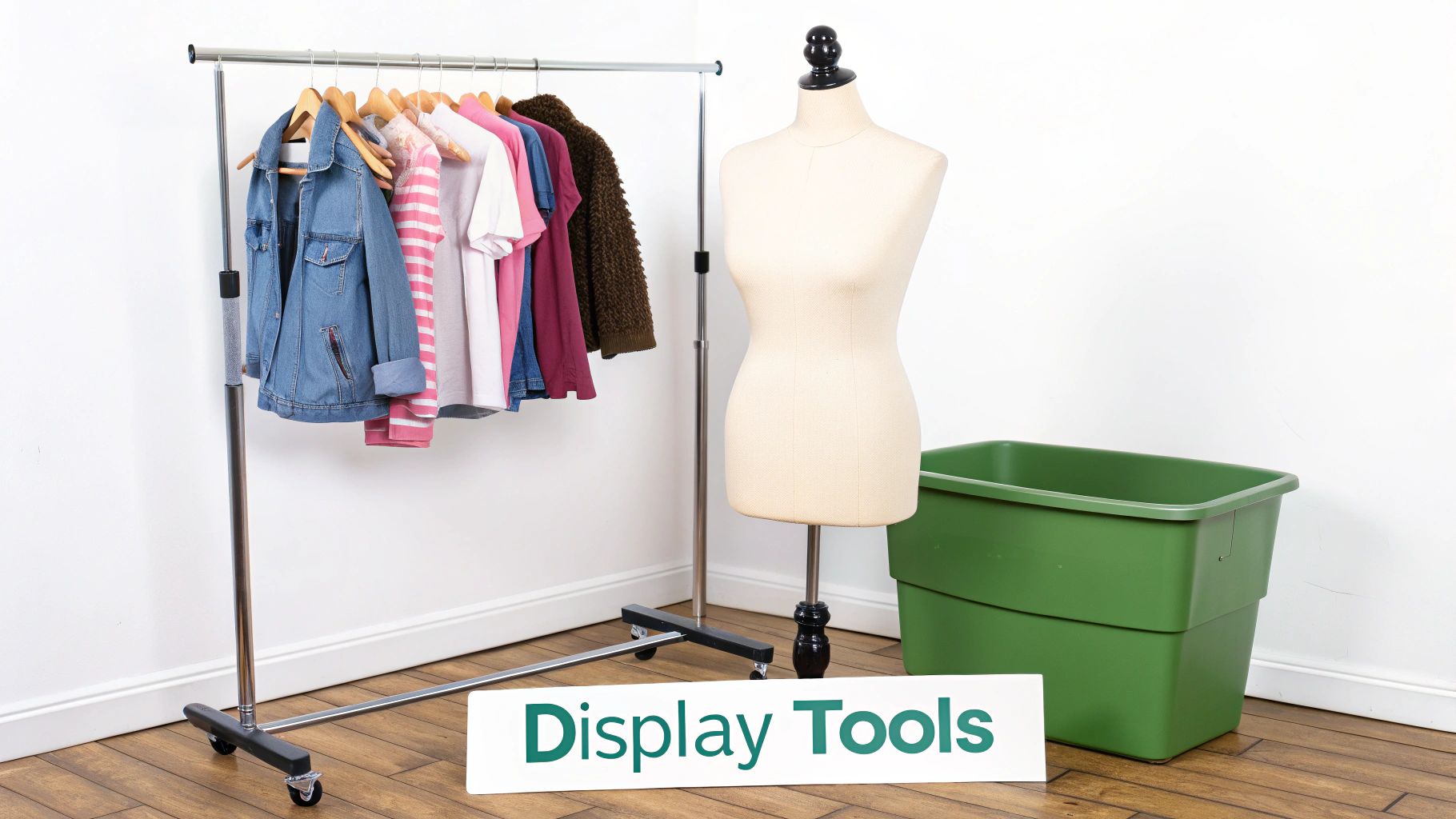
From mannequins that bring a look to life to garment rails that create a natural rhythm, every single tool has a vital role to play.
Mannequins and Body Forms: Your Silent Salespeople
Without a doubt, mannequins and body forms are the most powerful tools in any visual merchandiser’s kit. They succeed where flat lays and hangers fail by giving garments shape, context, and life. By showing how a piece actually drapes and fits a three-dimensional form, they bridge the gap for customers, helping them instantly visualise themselves wearing it.
Imagine a bespoke tailor showcasing a handcrafted gown. On a simple hanger, it’s beautiful fabric. But displayed on an adjustable polystyrene body form, the expert construction, elegant silhouette, and intricate details all come to the forefront. The item is instantly transformed from a product into an aspiration.
A well-styled mannequin doesn’t just display an outfit; it sells a complete look and an identity. It’s the closest you can get to a personal styling suggestion without saying a word.
For boutique owners and designers, different forms serve very different purposes:
- Full-Body Mannequins: These are your head-turners. Use them to create complete, head-to-toe looks for window displays or as striking focal points inside the store.
- Adjustable Body Forms: Absolutely essential for tailors and dressmakers. They allow for precise fitting and the perfect display of custom-sized or bespoke garments.
- Torsos and Bust Forms: Perfect for getting specific. Use them to display items like blouses, jackets, or necklaces on countertops and shelves without eating up valuable floor space.
By carefully selecting the right form, you can communicate everything from high-fashion elegance to relaxed, everyday style, making your merchandise far more compelling.
Garment Rails: Organising the Customer Journey
Garment rails are the workhorses of any retail space, but their job goes far beyond simple storage. The way you position them dictates the flow of traffic, creates visual rhythm, and helps you tell a cohesive story with your collections. A cluttered, overstuffed rail is overwhelming and kills curiosity; a well-spaced one invites customers to explore each and every piece.
Try mixing up your rail styles to add visual interest. A sleek black rail can create a modern, minimalist vibe, while a classic chrome rail often suits a more traditional boutique. By arranging them strategically, you can create distinct zones within your shop—for new arrivals, seasonal collections, or sale items. You can learn more about optimising your space with effective retail display stands to create a truly engaging environment.
Dump Bins: The Impulse Buy Powerhouse
Often overlooked, the humble dump bin is a surprisingly effective tool for boosting sales, especially for smaller, lower-priced items. The name might not be glamorous, but its purpose is highly strategic: to spark impulse buys. Positioned near the checkout counter, dump bins are the perfect home for accessories like scarves, hats, or socks that complement larger purchases.
The secret to using dump bins effectively is curation. They should never become a jumbled mess of unwanted stock. Instead, fill them with a single, compelling product or a cohesive theme—for example, a collection of colourful winter hats. This simple act turns a basic bin into a promotional focal point, driving add-on sales and increasing your average transaction value without cheapening your brand’s aesthetic.
Mastering the Principles and KPIs of Merchandising
So, we’ve covered what fashion merchandising is. Now, let's get into the how and the why. A brilliant merchandising strategy is a blend of art and science—it needs timeless creative principles to draw people in and solid business metrics to prove it's actually working.
Ultimately, it’s about creating an experience that feels completely natural to the customer while delivering real results on the balance sheet.
This holds true whether you’re running a physical shop or an online store. With online sales making up a huge slice of the retail pie, merchandising is a cornerstone of any successful omnichannel approach. This new reality, mixing in-store experiences with digital convenience, shows just how vital versatile display solutions are for everyone from high street retailers to home-based designers. If you're curious about the latest retail shifts, the Office for National Statistics offers some great insights.
Core Creative Principles of Merchandising
To create displays that don't just sit there but actively connect with customers, seasoned merchandisers turn to a handful of core artistic guidelines. Think of them less as rigid rules and more as proven concepts that help tell a brand’s story in a way that’s both beautiful and commercially smart.
-
Establish a Clear Focal Point: Every display needs a hero. This is the first place your customer's eye should land, whether it's a shop window or a website homepage. It could be a mannequin dressed in a show-stopping new season piece or a brightly lit table piled high with cosy jumpers. The focal point is your anchor; it’s what pulls shoppers in for a closer look.
-
Embrace the Rule of Three: There's a reason designers love odd numbers. Items grouped in threes are just more visually appealing and memorable than even-numbered groups. A cluster of three mannequins, a display with three folded shirts, or a trio of shelves on a wall creates a sense of harmony that the human eye finds naturally satisfying.
-
Leverage Colour Theory: Colour is a powerful tool for silent communication. A monochromatic display, using different tones of a single colour, can feel sophisticated and high-end. On the other hand, using complementary colours—those opposite each other on the colour wheel—creates a bold, energetic look that demands attention.
Designing an Intuitive Customer Journey
Great merchandising guides shoppers effortlessly from the moment they walk in to the point of purchase. In a physical shop, this means arranging garment rails and fixtures to create a clear, logical path. This "customer journey" should feel completely natural, leading them from the exciting new arrivals at the front, through the core collections, and finally towards the fitting rooms and till.
Online, the same principle applies, but it's called user experience design. The journey might start with an Instagram post, click through to a product page with a "Shop the Look" feature, and finish with a simple, quick checkout. The goal is identical: remove any friction and make shopping a genuine pleasure.
An effective customer journey makes shoppers feel understood. It anticipates their needs and presents solutions before they even have to ask, building trust and encouraging them to explore further.
Key Performance Indicators (KPIs) for Merchandising
While creativity gets the customer's attention, merchandising is a commercial game at its heart. To measure its impact, you need to track specific Key Performance Indicators (KPIs). These metrics translate your creative efforts into hard data, showing you exactly what’s working and what’s falling flat.
1. Sales per Square Foot This is a classic retail metric that reveals how productive your selling space is. It’s fantastic for identifying which areas of your shop are goldmines, allowing you to optimise your layout and put your best products in the best spots.
- Formula: Total Net Sales / Total Square Footage of Selling Space
2. Stock Turn (or Inventory Turn) This KPI measures how quickly you’re selling through your inventory. A high stock turn is a great sign—it means your products are in demand and you aren’t tying up precious capital in items that just aren't moving. It’s absolutely fundamental for healthy cash flow.
- Formula: Cost of Goods Sold / Average Inventory Value
3. Gross Margin Return on Investment (GMROI) GMROI tells you how much profit you’re making for every pound you invest in stock. It’s a crucial indicator of profitability, showing whether your product selection and pricing strategies are actually paying off. If your GMROI is above 1.0, you're making a profit on your investment.
- Formula: Gross Margin / Average Inventory Cost
4. Sell-Through Rate This percentage shows how much of a particular item you’ve sold in a set period compared to the amount you initially received from your supplier. It’s perfect for evaluating the performance of individual products or entire collections and is vital for making smarter buying decisions next season.
- Formula: (Units Sold / Units Received) x 100
By keeping a close eye on these KPIs, you can move from guesswork to informed, data-driven decisions. Solid inventory management is the engine that powers these metrics; you can learn more by reading our guide on the best practices for inventory management. This is how you connect the art of visual display directly to the science of profitability.
Common Merchandising Mistakes You Need to Avoid
Even the most stunning collection and a solid strategy can be completely undone by a few classic merchandising blunders. These slip-ups don't just confuse customers; they can tarnish your brand's image and, ultimately, send sales plummeting. Knowing what not to do is every bit as crucial as knowing what you should.
Getting merchandising right often comes down to sidestepping the simple errors that turn a welcoming space into a chaotic or uninspiring one. By spotting and fixing these issues, you create a shopping experience that’s clear, engaging, and profitable. Let's walk through some of the most frequent fumbles and how to steer clear of them.
Cluttered Displays and Overstuffed Rails
Probably the most common mistake is the temptation to put everything out at once. When a display is cluttered or a garment rail is crammed so tightly you can’t squeeze another hanger on, customers feel overwhelmed. They can't focus on any single item, and what should be a pleasant browse becomes a frustrating chore.
This kind of visual noise screams disorganisation. Worse, it can cheapen your products, making even premium pieces look like they’re part of a jumble sale.
Problem: A garment rail is so jam-packed that shoppers can’t see the details of an item, let alone pull it out to have a proper look.
Solution: Give your clothes some breathing room. Space hangers generously so each garment hangs properly. This simple tweak invites customers to touch the fabric, appreciate the cut, and actually interact with the clothing.
Poor and Inconsistent Lighting
Lighting is one of the most powerful—and most frequently overlooked—tools in fashion merchandising. The wrong lighting can completely alter the colour and texture of fabrics. This creates a jarring disconnect when a customer takes an item outside and realises it looks nothing like it did in the shop.
Patchy, inconsistent lighting also creates dark, gloomy corners. These uninviting areas become dead zones that shoppers instinctively avoid, wasting valuable retail space.
- Mistake: Relying on harsh, overhead fluorescent lights that wash out colours and cast unflattering shadows on both the clothes and your customers.
- Fix: Use layered lighting instead. Start with good ambient lighting for overall brightness, then add accent lights (like spotlights) to highlight key pieces on mannequins. Finally, make sure you have clear, functional task lighting in the fitting rooms.
Forgetting to Tell a Story
Another major oversight is simply failing to build a cohesive narrative. Your displays should never be just a random assortment of products. They need to tell a story—about a new season, a specific trend, or a particular lifestyle. When items are placed without a clear theme, customers are left guessing what your brand is all about.
This lack of a story makes it incredibly difficult for shoppers to connect emotionally with your brand or imagine how your pieces could fit into their own lives. You can find excellent advice on crafting a compelling visual narrative in various visual merchandising guidelines.
Letting Displays Become Stale
Finally, the "set it and forget it" mentality is a death knell for customer engagement. A display that hasn’t changed in months becomes part of the furniture. Regular shoppers stop seeing it, and it gives the impression that your shop is static and there’s nothing new to see.
Your space needs to feel dynamic and alive. Regularly updating your displays—even with small tweaks—signals to customers that there are always new treasures to discover. This encourages repeat visits and keeps your brand feeling fresh and exciting. Sometimes, just rotating the mannequins in the window can make all the difference.
Putting Merchandising Theory into Practice: Real-World Scenarios
It's one thing to understand the principles of merchandising, but it's another to see them in action. The real magic happens when you see how theory translates into tangible results. Let’s look at a few common scenarios to see how different fashion businesses use merchandising to solve problems and drive sales.
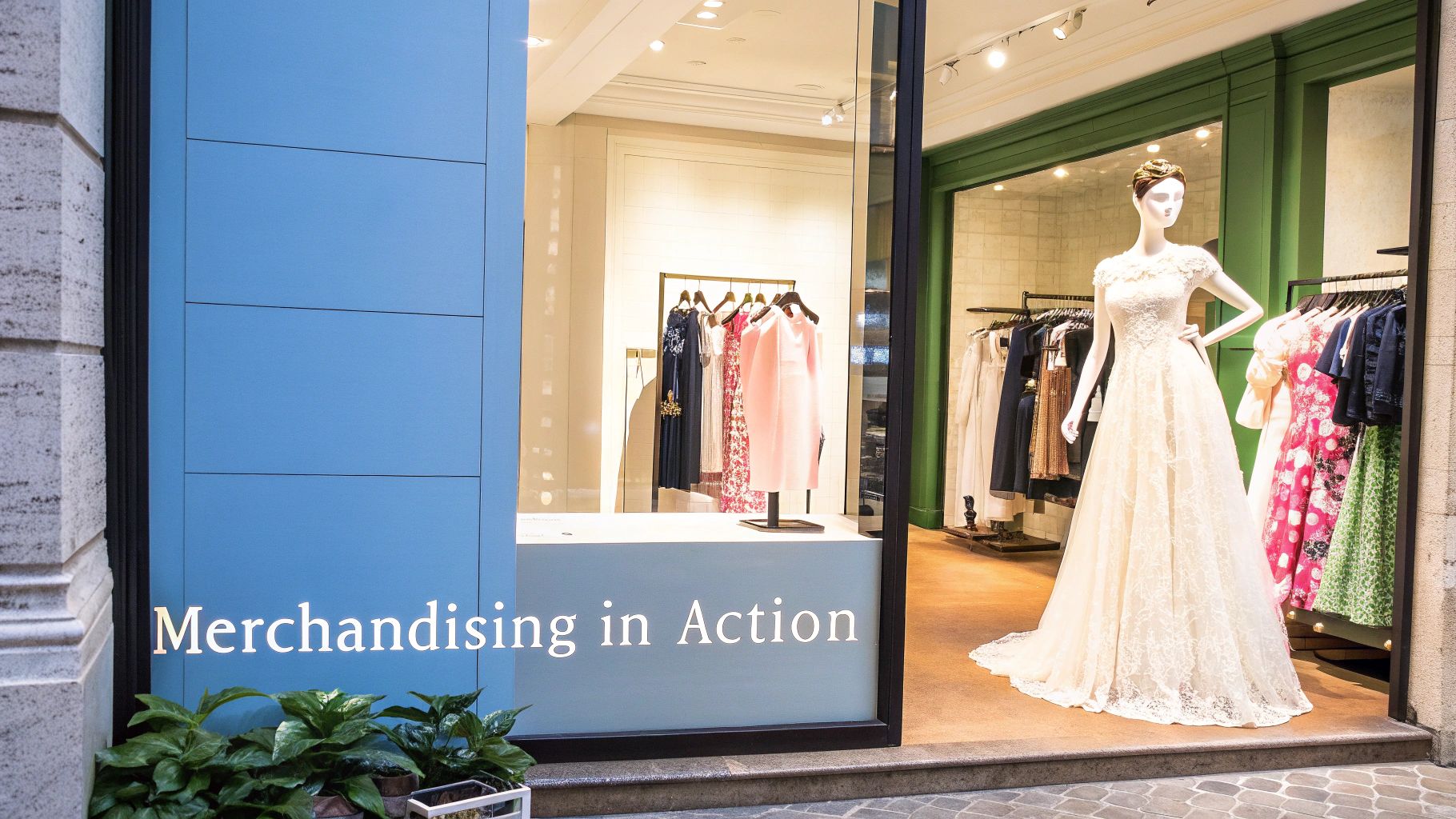
These examples show that whether your shop is on the high street, purely online, or a mix of both, the core goals are universal: attract, engage, and ultimately, convert shoppers into loyal customers.
The Independent Boutique
Imagine an independent boutique on a bustling high street. The biggest challenge? Standing out from the crowd and convincing passers-by to step inside. The owner needs a window display that not only shows off the new seasonal collection but also tells a story about the boutique's unique personality.
Here’s how they make it work using a few key tools:
- A Hero Mannequin: Placed near the entrance, a single mannequin is styled in a complete, eye-catching outfit. It acts as the undeniable focal point of the display.
- Curated Garment Rails: Instead of cramming the rails full, they create a beautiful colour-blocked story, arranging pieces from light to dark to naturally guide the customer's eye through the collection.
- Strategic Lighting: A few well-placed spotlights highlight the rich textures of key fabrics, making them feel more luxurious and inviting to the touch.
The result? A shop that looks organised, appealing, and intriguing. This simple but thoughtful layout led to a 15% increase in foot traffic in the first month and a significant boost in sales for the featured collection.
The Bespoke Tailor
A bespoke tailor isn't selling off-the-rack clothes; they're selling unparalleled craftsmanship and exclusivity. Their challenge is to stop potential clients in their tracks with a single window display that screams quality, all without a large inventory.
The solution is all about minimalist impact. The tailor uses a single, premium body form to showcase a breathtaking custom-made gown. The display is clean and uncluttered, with focused lighting that accentuates every intricate detail, from the delicate lacework to the hand-sewn beading.
This approach elevates a garment from a mere product to a piece of art. It builds a powerful sense of aspiration and authority, immediately positioning the tailor as a master of their craft and generating high-quality enquiries for custom commissions.
The E-commerce Brand
An online fashion brand faces a unique hurdle: creating a compelling shopping experience without any physical interaction. They have to translate the tactile, sensory appeal of a brick-and-mortar store into a digital format that builds trust and encourages customers to buy more than one item.
They do this by applying visual merchandising principles directly to their website and social media channels. In the UK fashion scene, this is non-negotiable. With e-commerce projected to capture an ever-growing share of total fashion sales, a brand’s online presentation can make or break its success. You can explore more data on this trend and its impact on UK fashion.
The brand puts these ideas into practice:
- Themed Grids: Their Instagram feed is meticulously organised into cohesive colour stories and themes, creating a beautiful and instantly shoppable narrative.
- "Shop the Look" Features: Product pages don't just show the main item on a model. They include interactive carousels demonstrating how to style it with other complementary pieces from their collection.
This digital-first strategy directly leads to a higher average order value. Customers are inspired to purchase complete outfits rather than single items, proving that merchandising is just as crucial in the digital world as it is on the high street.
Your Fashion Merchandising Questions, Answered
Getting the theory is one thing, but putting it into practice is where the real questions start to surface. Whether you're a designer, tailor, or shop owner, you've likely had these queries cross your mind. Let's tackle some of the most common ones.
How Often Should I Change My Window Display?
There's no magic number here, but a good rule of thumb is to refresh your main window display at least once a month. If your shop is on a busy high street, you might even consider a change every two to three weeks. This keeps your storefront dynamic and gives regulars a fresh reason to stop and look.
Remember, a refresh doesn't have to mean a complete overhaul every single time. Small tweaks can make a big impact.
- Swap the outfits on your mannequins to feature new arrivals.
- Introduce a new colour palette for an upcoming season or holiday.
- Change the props and adjust the lighting to shift the mood.
The goal is to strike a balance between creating novelty and managing your time and budget. Consistency is far more important than constant, resource-draining transformations.
What Is the Difference Between a Buyer and a Merchandiser?
It's easy to see why these roles get confused—they work hand-in-glove. But they have very different, though complementary, responsibilities. Think of it this way: the buyer writes the story, and the merchandiser tells it to the world.
A buyer selects the products. Their job is to source and purchase the actual inventory you'll be selling. They decide what goes on the rails.
A merchandiser plans how to sell those products. They take the inventory the buyer has chosen and figure out the best way to price, display, and promote it to hit sales targets. They decide how it gets sold.
In a smaller independent shop, you might find yourself wearing both hats. Even so, recognising the distinction is vital. It helps you separate the two crucial parts of the puzzle: getting the right stock in, and then selling it brilliantly.
How Can I Apply Merchandising to an Online Store?
The core principles absolutely translate to the digital space. We often call it digital merchandising, and it’s all about guiding your customer through a smooth and inspiring online journey.
Here are a few key tactics that work wonders online:
- Top-Notch Imagery: Your photos and videos are your virtual mannequins. Use professional shots showing garments from all angles, on real people.
- "Shop the Look" Features: Don't just sell a jacket; sell the entire outfit. Show customers how to style pieces together and make it easy for them to add all the items to their basket.
- Thoughtful Collections: Group products into curated edits like "Wedding Guest Outfits" or "Autumn Weekend Wardrobe." This helps shoppers discover products they might not have found otherwise.
- Intuitive Navigation: Your website's layout is your store plan. Organise it with clear categories and smart filters so finding the perfect item is effortless, not a chore.
How Do I Use Promotional Bins Without Looking Cheap?
Ah, the dump bin. It can be a fantastic tool for driving impulse buys, but it can just as easily cheapen your brand's image if you're not careful. The trick is to avoid that jumbled, "rummage sale" vibe.
Instead, think curation and presentation. Use a bin to showcase a single, high-impact item—like a vibrant collection of woolly scarves or a single style of sunglasses in a dozen different colours. Keep it well-stocked but tidy. This simple shift turns it from a messy discount pile into an attractive, well-organised promotional feature.
Ready to bring your merchandising vision to life? Display Guru offers a complete range of professional-grade mannequins, garment rails, and display tools to help your collections shine. Explore our catalogue and find the perfect equipment for your boutique, studio, or workshop at https://www.displayguru.co.uk.