

Choosing a Full Body Female Mannequin A Complete Guide
Think of a full body female mannequin as less of a shop fitting and more of a silent salesperson. It's not just a plastic form; it's a strategic tool that showcases entire outfits, embodies your brand's personality, and quietly connects with the customers walking past your window or browsing your website.
From high-fashion retail displays to the behind-the-scenes work in an e-commerce studio, these figures are essential for presenting clothing, shoes, and accessories as a complete, desirable look.
Your Guide to Choosing the Right Mannequin
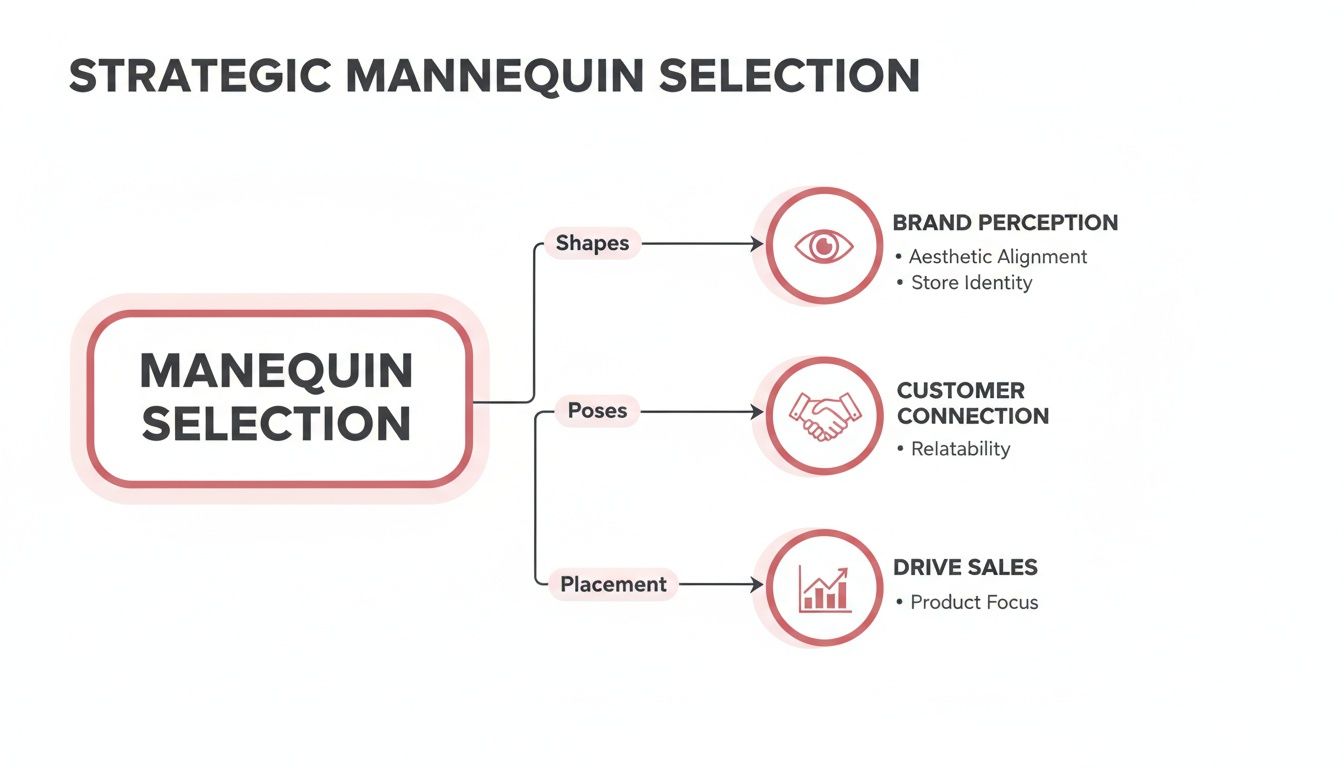
Let's move past the idea of a mannequin as just another piece of equipment. The right one is a crucial business asset, capable of shaping how people see your brand, resonating with your ideal customer, and ultimately, encouraging them to buy. This guide is about treating that choice as the strategic investment it is.
We'll dig into what separates a truly effective mannequin from a run-of-the-mill display form. This means looking at everything from the practical side of things—like materials and durability—to the more subtle art of choosing the right pose and body shape. The goal is to find a mannequin that doesn't just hold clothes, but actually tells your brand’s story.
Whether you're a designer, a retailer, or a photographer, getting this right is key. A well-chosen mannequin is there to:
- Create Aspirational Displays: It shows customers exactly how different pieces can come together to create a stunning, complete look, helping them see the potential in your collection.
- Communicate Brand Identity: The style, posture, and even the physical form of a mannequin instantly signals your brand's vibe—be it edgy, classic, luxurious, or inclusive.
- Improve Product Presentation: Garments simply look better on the right form. A good mannequin ensures clothes hang correctly, showing off their intended fit, drape, and design details perfectly.
The demand for better visual merchandising is only getting stronger. The UK mannequin market was valued at a huge USD 278.2 million in 2023 and is expected to climb to USD 649.7 million by 2030. This growth is all about retailers looking for more powerful ways to engage with their customers.
This guide is your roadmap. We’ll provide clear, actionable advice to help you choose a model that does more than just display your apparel—it will amplify your unique brand narrative. For a deeper dive, our complete guide on using mannequins for shops offers even more valuable insights.
Understanding Mannequin Materials and Finishes
Choosing the material for your mannequin is a lot like picking the right canvas for a painting. It’s the foundation that dictates everything else – how it looks, how long it lasts, and where it will feel most at home. This isn't just a trivial detail; it’s a decision that will directly shape how your garments are presented, whether on a busy shop floor or in a quiet designer’s studio.
Think of it this way: a classic fibreglass mannequin is like fine china. It’s elegant, capable of holding incredibly sharp, detailed features, and has a premium, smooth finish. But, just like china, it needs a delicate touch to avoid chips and cracks. In contrast, a modern plastic mannequin is more like high-performance sportswear—incredibly resilient, lightweight, and built to handle the hustle and bustle of a high-traffic environment.
Getting this choice right is a cornerstone of your visual merchandising strategy. It's not just about a pretty figure; it's about connecting with customers and reflecting your brand's quality.
A Closer Look at Mannequin Materials
While there are a few options out there, the mannequin world is largely dominated by two key players: fibreglass and plastic. Each has its own personality and set of strengths, so understanding the difference is crucial for making a smart investment that fits both your brand and your budget.
Fibreglass Mannequins
For years, fibreglass has been the go-to for high-end retail displays, and for good reason. Its ability to capture crisp, lifelike details is second to none, giving it a substantial, weighty presence that silently communicates quality before a customer even touches the clothes.
The numbers back this up. In 2023, fibreglass was the undisputed leader in the UK, capturing an impressive 68.51% of the market revenue. Its continued popularity shows that retailers still place immense value on its blend of durability, cost-effectiveness, and superior aesthetic.
Plastic (PE/ABS) Mannequins
When it comes to sheer toughness, plastic is the champion. Mannequins made from polyethylene (PE) or acrylonitrile butadiene styrene (ABS) are virtually indestructible. This makes them the perfect workhorse for busy stores, pop-up events, or any situation where they’ll be moved around frequently.
While they historically couldn't match the fine detail of fibreglass, modern manufacturing has closed that gap significantly, producing plastic forms that are both durable and stylish.
Mannequin Material Comparison
To help you visualise the trade-offs, here’s a quick comparison of the most common materials you'll encounter. This table breaks down what makes each one unique, where it shines, and what you can expect to invest.
| Material | Key Characteristics | Best For | Average Cost |
|---|---|---|---|
| Fibreglass | Heavy, realistic details, smooth finish. Can be prone to chipping or cracking if mishandled. | High-end retail, boutiques, window displays, photography studios. | ££ - £££ |
| Plastic (PE/ABS) | Lightweight, highly durable, and virtually unbreakable. Details are less sharp than fibreglass. | High-traffic retail, pop-up shops, exhibitions, budget-conscious businesses. | £ - ££ |
| Fabric-Covered | Often foam-based with a linen or jersey cover. Pinnable and soft to the touch. | Tailoring, dressmaking, design studios, vintage-inspired displays. | ££ - £££ |
| Polystyrene | Extremely lightweight and low-cost. Pinnable but can be easily damaged. | Temporary displays, student projects, craft fairs. | £ |
Ultimately, the right material balances your practical needs with the story you want your displays to tell.
Comparing Finishes and Aesthetics
Once you’ve settled on a material, the next layer of customisation is the finish. This is where your mannequin’s personality really comes to life, influencing how it interacts with lighting and complements your collections.
A mannequin's finish should be a deliberate choice that enhances the clothing, not distracts from it. A matte finish absorbs light, creating a soft, contemporary look, while a gloss finish reflects light for a dramatic, high-impact statement.
Here are a few popular finishes to consider:
- Matte: This non-reflective surface is brilliant for preventing glare, making it a firm favourite for e-commerce photography and sophisticated, modern displays. A clean, white matte finish is especially popular for its minimalist appeal.
- Gloss: A high-shine finish that instantly catches the eye and adds a touch of glamour. You’ll often see glossy black or white mannequins in luxury boutiques aiming for a bold, stylised statement.
- Chrome/Metallic: These finishes bring an edgy, almost futuristic feel to a display. They are fantastic for creating standout window arrangements that stop passers-by in their tracks.
Of course, the mannequin itself is only one part of the equation. The material and finish work hand-in-hand with the base to create a secure and visually cohesive presentation. For a deeper dive into this, check out our complete guide on selecting the perfect mannequin with stand.
Selecting the Right Size and Body Shape
A mannequin's measurements are so much more than just a set of numbers on a spec sheet. Think of them as a direct reflection of your brand and a visual handshake with your customer. When a potential buyer sees a garment displayed on a form that feels real and relatable, it creates an instant connection. It makes them feel seen.
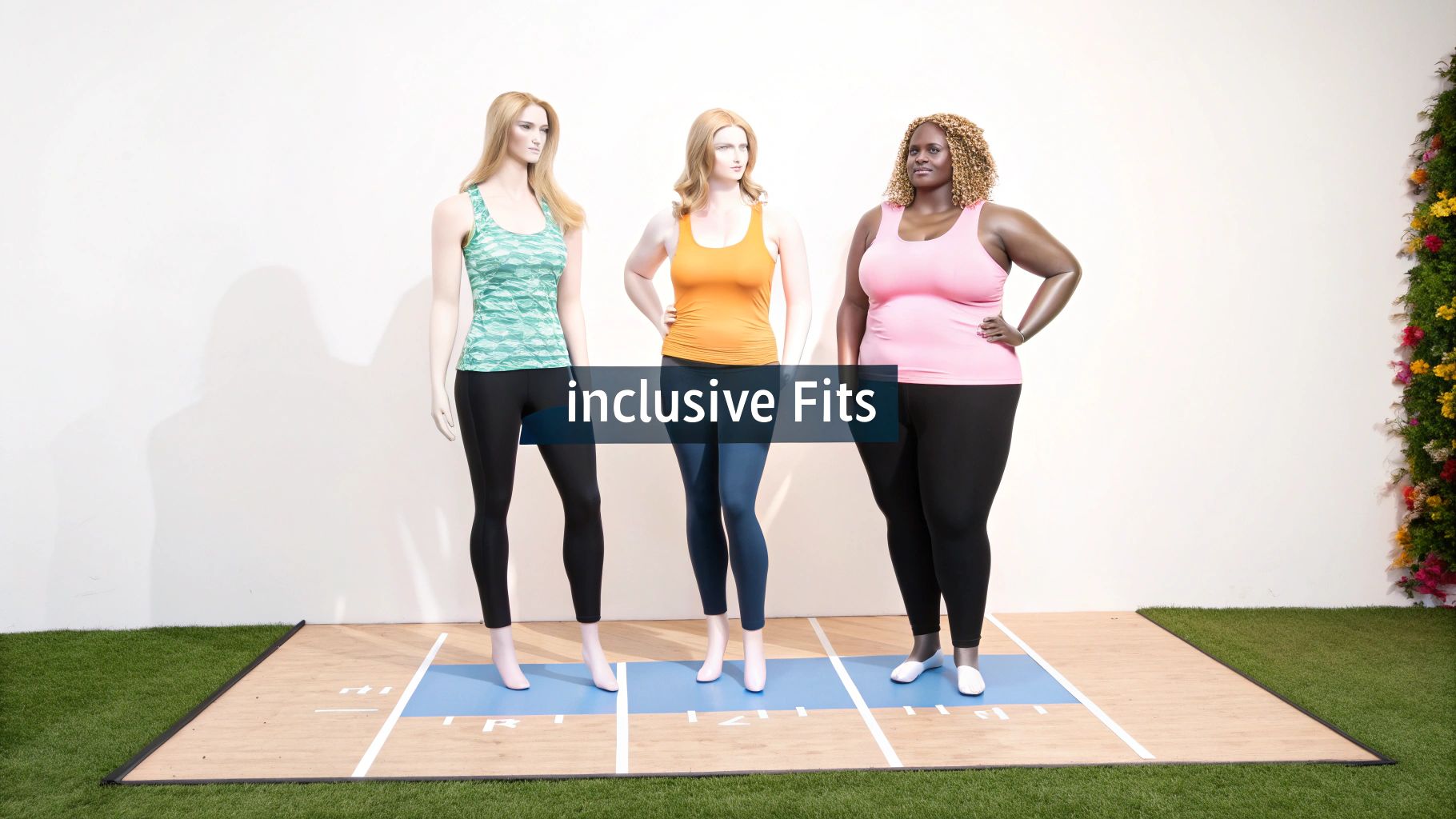
For years, the industry relied on a single, hyper-idealised female body type. Thankfully, that's changing. Brands are finally waking up to the fact that authenticity sells. Customers want to see themselves represented, and this shift isn't just about being socially conscious—it's just smart business.
Decoding Mannequin Measurements
When you start looking at mannequins, you'll see three core measurements listed: bust, waist, and hips. These are the critical dimensions that dictate how well your clothing will drape and fit. Getting your head around these figures and how they map to UK sizing is your first step to making a great choice.
- Bust: This is measured around the fullest part of the chest. It's absolutely crucial for getting a great fit on blouses, dresses, and jackets.
- Waist: Found at the narrowest point of the torso, this measurement is key for trousers, skirts, and any fitted dress.
- Hips: Measured at the widest point, this dimension is essential for making sure trousers, jeans, and form-fitting skirts look just right.
It’s worth remembering that mannequin sizing doesn't always line up perfectly with high street clothing sizes, which can vary wildly from one brand to another. The best way forward is to compare the mannequin's exact measurements against your own brand's sizing chart. If you want to get into the nitty-gritty, we've got a whole guide on how to interpret https://www.displayguru.co.uk/blogs/news/mannequin-measurements accurately.
Moving Beyond a Single Standard
The push for more diverse representation in retail comes from a long-overdue realisation. For too long, the forms in our shop windows simply haven't mirrored the people walking past them.
A revealing 2017 study of UK high street shops found that 100% of the female mannequins on display represented an underweight body size. This starkly highlights the disconnect between the idealised figures in retail and the genuine diversity of UK consumers.
To close this gap, you need to start with a clear picture of who you're selling to. Before you even think about size and shape, it’s vital to identify your target audience, as this insight will guide every decision you make.
Choosing a Mannequin That Represents Your Customer
Choosing a full body female mannequin that truly reflects your core customers is a strategic move. It shows them you understand and value them, which is how you build real loyalty and trust. Here are the main categories you'll be looking at:
Standard Size Mannequins
These are the most common types you’ll see, usually corresponding to UK sizes 8-12. They're incredibly versatile and a solid choice for a wide range of mainstream fashion. But even within this "standard" category, proportions and posture can differ, so always double-check the specific measurements.
Petite Mannequins
Designed with smaller frames and shorter proportions, petite mannequins are perfect for brands that cater to customers under a certain height. They ensure that garments designed for a petite build hang properly, preventing them from looking baggy or ill-fitting.
Plus-Size Mannequins
Representing UK sizes 16 and above, plus-size mannequins are an absolute must for any brand serious about inclusivity. Putting them in your displays sends a powerful and welcoming message to a huge part of the market, showing that your collection is made for them, too.
When you carefully consider which body shape best aligns with your customer base, you're doing so much more than just displaying clothes. You’re creating a welcoming, inclusive space that connects with people on a personal level, which ultimately strengthens your brand's entire appeal.
How Pose and Style Influence Customer Perception
A full body female mannequin is so much more than a plastic hanger with arms and legs. It’s your silent salesperson, the storyteller that conveys your brand’s personality the second a customer walks by. The way it stands, the attitude it strikes—it all instantly signals whether your brand is cool and casual or powerful and aspirational. This unspoken language is a massive part of effective visual merchandising.
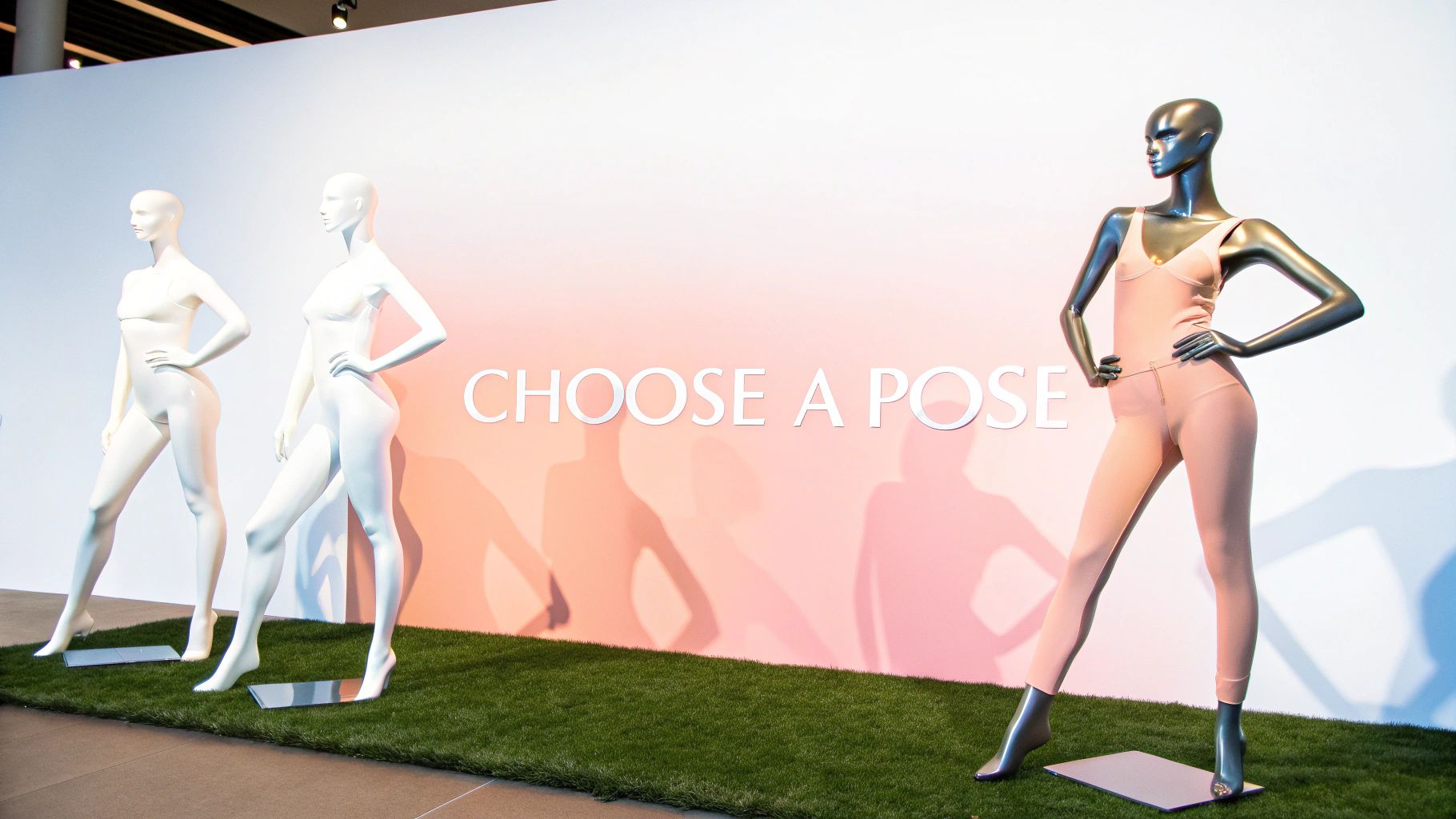
Think of the pose as its body language. A laid-back, hands-on-hips stance has a confident, easy-going vibe that's perfect for a modern denim brand. On the other hand, a graceful, elongated pose with elegant lines is a much better fit for showing off the beautiful drape of high-end evening wear. The pose sets the entire mood.
Connecting Pose to Your Brand Narrative
The right pose doesn’t just show off the clothes; it breathes life into them. It helps customers picture themselves wearing the outfit. That’s why your choice of pose should be a conscious decision, a direct extension of your brand identity that reinforces the story you’re trying to tell.
- Static Poses: These are the classic, neutral stances you might see in a museum, often with arms resting at the side. They create a clean, sophisticated look that lets the craftsmanship of the clothing do all the talking. This is the go-to for luxury brands and formalwear where the tailoring is the star.
- Dynamic Poses: Here, the mannequins are caught in a moment of action—walking, leaning, or gesturing. A dynamic pose injects a real sense of energy and excitement into a display, making the scene feel alive. It’s a brilliant strategy for sportswear, streetwear, or any brand that wants to project vitality.
- Athletic Poses: Designed specifically for activewear, you’ll find these forms in yoga, running, or jumping positions. This is absolutely crucial for showing how the fabric stretches and moves with the body, demonstrating the garment’s actual function.
The pose of your mannequin is your display’s first impression. A powerful, assertive pose can create an aspirational mood, while a relaxed, relatable pose can make a collection feel more accessible and inviting.
The Impact of Mannequin Style
Beyond the pose, the overall style of the mannequin itself directs where a customer looks. Each style has a different job to do, and each one shapes the visual experience in its own way.
Hyper-Realistic Mannequins
These are the models with detailed faces, realistic hair, and lifelike skin tones. The whole point is to forge a human-like connection and tell a complete lifestyle story. You’ll often see them in high-end window displays, creating immersive scenes that really capture the imagination.
Abstract Mannequins
Abstract forms are much more minimalist. They often have a simple 'egg-head' or simplified features and usually come in a single colour like matte white or gloss black. Their purpose is simple: to put 100% of the focus on the clothing. By stripping away the human details, they make sure the garment is the undisputed hero.
Headless Mannequins
Just as the name suggests, these mannequins have no head. This creates a clean, unobtrusive silhouette that won’t make your display look dated in a year’s time. Headless mannequins are incredibly versatile, practical, and budget-friendly, which is why they’re a firm favourite in all sorts of retail spaces where the clothes need to be front and centre.
Picking the right combination of pose and style is fundamental to creating displays that stop people in their tracks. For a full breakdown of how these pieces fit into the bigger picture, our guide to visual merchandising guidelines has some fantastic insights. And if you're looking for some creative inspiration for dynamic poses and unique styles, a tool like an AI character generator can be a great place to start brainstorming concepts.
Matching Mannequin Features to Your Use Case
A full body female mannequin isn't a one-size-fits-all purchase. The real value comes from choosing a mannequin that's perfectly suited for the job you need it to do. The best way to narrow down the options is to think about its day-to-day purpose. This turns a long list of features into a practical checklist, ensuring your investment truly pays off.
The demands on a mannequin can vary wildly. Is it going to be a centrepiece in a busy retail shop or a quiet, functional partner in a design studio? Matching the right features to your specific application is the secret to unlocking its full potential and making sure it’s a genuine asset, not just a prop.
For High-Traffic Retail Displays
In a bustling shop, your mannequin is essentially part of the sales team. It has to endure constant interaction—staff changing its outfits, customers brushing past it. This means durability and stability should be at the very top of your list.
Look for mannequins made from tough materials like polyethylene (PE) plastic or fibreglass, as they can handle the occasional knock without showing damage. A heavy, stable base is absolutely non-negotiable to prevent any tipping accidents. A tempered glass base offers a sleek, modern look, while a solid metal one provides maximum security.
Key features for retail:
- Durable Materials: Opt for fibreglass or high-impact plastic to withstand daily wear and tear.
- Stable Base: A weighted metal or thick glass base is crucial for safety in a busy environment.
- Easy-to-Dress Design: Simple connections for arms and the torso will save your team precious time during display changes.
For Fashion Design and Tailoring
When you're a designer or a tailor, a mannequin is a core tool of your trade. It's a stand-in for a real person, so precision and practicality are far more important than a hyper-realistic appearance. This is where the classic tailor's dummy, or dress form, really shines.
The single most critical feature here is a pinnable surface. A form covered in linen or canvas over a polystyrene or foam core allows you to pin fabric directly onto the mannequin. This is essential for draping, creating patterns, and checking the fit of a garment. Accurate, true-to-life proportions and an adjustable height are also vital for crafting clothes that fit real bodies perfectly.
A professional dress form is built for function, not just aesthetics. Its job is to accurately replicate the human form, giving designers a reliable canvas to shape, fit, and alter garments with absolute precision.
For E-commerce and Product Photography
In a photo studio, the mannequin has one mission: make the clothes look fantastic on screen without drawing any attention to itself. The biggest challenge you'll face is glare, which can completely ruin a product shot and lead to hours of tedious editing.
A matte white finish has become the industry standard for good reason—it diffuses light beautifully and prevents those distracting reflections. Posable or articulated limbs are another massive advantage. They let you create more dynamic, natural-looking poses that show how a garment hangs, moves, and drapes, giving your customers a much better sense of the item. A headless or abstract style is also a smart choice, as it keeps the focus squarely on the clothing.
For Museum and Costume Exhibits
When you're displaying historical garments or delicate costumes, preservation is everything. Mannequins intended for museum use must be made from archival-safe materials that won't release chemicals or damage fragile, irreplaceable textiles over time.
This means looking for forms made from materials like ethafoam or those covered in unbleached, acid-free cotton. Customisation is often necessary to build a shape that properly supports the unique structure of a vintage piece without putting stress on old seams or delicate fabric. This ensures the garment isn't just displayed beautifully but is also preserved for generations to come.
Ideal Mannequin Features by Use Case
To help you visualise the perfect fit, here’s a quick summary of what to look for based on your primary needs. Think of this as a cheat sheet to guide your decision-making process.
| Use Case | Essential Features | Material Recommendation | Pose/Style Tip |
|---|---|---|---|
| Retail Display | High durability, stable base, easy assembly/disassembly. | Fibreglass or durable PE plastic. | Dynamic, eye-catching poses that reflect your brand's energy. |
| Tailoring/Design | Pinnable surface, standard industry sizing, adjustable height. | Linen or canvas over a foam core. | A static, upright pose is best for pattern making and fitting. |
| Photography | Matte finish (usually white), posable limbs, abstract/headless. | Fibreglass with a matte coating. | Create natural, fluid poses that showcase garment movement. |
| Museum/Exhibit | Archival-safe materials, customisable shape, supportive form. | Ethafoam or forms with acid-free fabric coverings. | A neutral, supportive pose that protects the garment's integrity. |
Ultimately, choosing the right mannequin comes down to understanding the role it will play. By tailoring your selection to your specific use case—whether that's a robust figure for a busy shop floor or an adjustable form for bespoke designs—you guarantee your purchase is perfectly fit for purpose. For more on this, check out our guide to using plus-size mannequins for stylish and inclusive store displays.
Looking After Your Mannequin
A full body female mannequin is more than just a prop; it's a key piece of your professional toolkit. Just like any other valuable asset, a little bit of care goes a long way in keeping it looking its best and doing its job properly. Regular maintenance doesn't just extend its life—it makes sure your garments are presented perfectly, every single time. A pristine mannequin speaks volumes about the quality of your brand.
If you let the basics slide, you'll soon find scuffs, fading, and other damage that can really undermine your displays. A simple, consistent care routine is all it takes to protect your investment and keep your visual merchandising looking sharp for years.
Day-to-Day Cleaning
Keeping dust and grime at bay is your first line of defence. If left to settle, everyday dirt can become a real headache to remove later on. The cleaning method you use really comes down to what your mannequin is made of.
For Fibreglass and Plastic Mannequins:
- A Quick Dust: A weekly once-over with a microfibre cloth or a feather duster is a great start. This is especially important if it’s on a busy shop floor.
- Tackling Smudges: For fingerprints and marks, a little mild soap mixed with warm water is all you need. Dip a soft cloth in, wring it out so it's just damp, and gently wipe the area.
- Dry and Polish: Don’t let it air dry. Immediately use a clean, dry microfibre cloth to buff away any moisture. This stops water spots from forming, which is crucial for high-gloss finishes. Steer clear of harsh chemicals or abrasive scrubbers—they'll ruin the paintwork for good.
For Fabric-Covered Dummies:
These mannequins, often used for tailoring, need a gentler touch.
- Brush it Down: Use a soft clothes brush to get rid of dust and stray threads.
- Spot Cleaning: For any small stains, reach for a fabric-safe spot cleaner. Always do a patch test on a hidden area first, just to be sure it won’t affect the colour.
- The Lint Roller Trick: A lint roller is your best friend for picking up those stubborn bits of fluff and dust that a brush can’t quite catch.
Assembling and Disassembling Without Damage
Believe it or not, most damage happens when people are putting mannequins together or taking them apart. The joints and fittings are their weakest points.
Always be gentle when connecting or detaching limbs and torsos. Trying to force a joint that isn't sliding in smoothly is a surefire way to chip a fibreglass model or cause a stress fracture in a plastic one. A good tip is to lay all the pieces out on a soft blanket to prevent scratches while you work.
When you're packing a mannequin away, follow the instructions it came with. It's also a smart move to pop all the screws, fittings, and rods into a labelled bag so nothing goes missing before you need it again.
Smart Storage for the Long Haul
When your mannequin isn’t on display, proper storage is key. Just shoving it into a stockroom corner is asking for trouble—it'll end up scratched, dented, and faded.
First things first, make sure it's completely clean and dry. Then, wrap each part individually in bubble wrap or soft foam sheeting to cushion it. Give extra attention to delicate areas like the hands, face, and any sharp angles, as they’re the first to get knocked about.
Once wrapped, place the parts in a sturdy box and store it somewhere away from direct sunlight and big temperature swings. A climate-controlled room is perfect, because heat can make plastic warp and UV rays will cause noticeable discolouration. A little care here ensures your mannequin is ready for its close-up whenever you need it.
Answering Your Final Questions
When you're about to invest in a professional mannequin, a few last-minute questions are bound to pop up. It's completely normal. Getting these details right is key to choosing a model that works perfectly for your shop floor, design studio, or photography set. Let's clear up some of the most common queries we hear.
We want to make sure you have all the information you need to feel confident in your decision. We’ll cover some important distinctions, practical details, and creative customisation ideas to complete the picture.
What’s the Real Difference Between a Mannequin and a Dress Form?
It helps to think of it like this: a mannequin is a storyteller, while a dress form is a craftsman's tool.
A full body female mannequin is all about telling the story. Its job is to present a complete look—trousers, shoes, accessories, the lot—to create an aspirational vision for customers. It’s selling a lifestyle, not just a garment.
A dress form, on the other hand, is built purely for function. It’s the trusted assistant for designers and tailors. Usually just a torso on a stand, it's covered in a pinnable fabric to act as a stand-in for the human body during the creative process. It's essential for draping fabric, fitting patterns, and getting those alterations just right.
In short, a mannequin is for display, and a dress form is for creation. One shows off the finished garment, while the other is crucial for making it in the first place.
How Do I Choose the Right Base for My Mannequin?
The base is more than just a stand; it's fundamental to both the mannequin's stability and its overall style. What works best really comes down to your space and the aesthetic you're aiming for.
You generally have two main choices:
- Tempered Glass Bases: These offer a sleek, contemporary look. The transparency creates a "floating" illusion that keeps all eyes on the outfit. They’re a brilliant choice for chic boutiques where every detail of the decor matters.
- Metal Bases: These are the workhorses. Heavier and incredibly durable, metal bases are the go-to for busy retail spaces with lots of foot traffic. They provide unbeatable stability, making sure your display stays put even if it gets knocked. They usually attach securely with a rod into the calf or foot.
Ultimately, you need to find the right balance between the visual impact you want and the practical demands for safety in your environment.
Can I Paint a Fibreglass Mannequin to Match My Brand?
You certainly can! Painting a fibreglass mannequin is a brilliant and budget-friendly way to make it uniquely yours. Whether you're matching your brand's specific colour scheme or creating a look for a seasonal campaign, a custom paint job delivers incredible results.
It's a straightforward project, but a little prep work goes a long way. For a finish that looks truly professional, just follow these steps:
- Prep the Surface: First things first, give the mannequin a good clean to get rid of any dust or grease.
- Give it Some Grip: Gently scuff the entire surface with fine-grit sandpaper. This might seem like a small detail, but it’s vital for helping the new paint stick properly.
- Prime for Success: Apply a spray primer made for fibreglass or plastic. This creates a perfect canvas for your colour.
- Apply Your Colour: Using spray paint, apply your chosen shade in smooth, even strokes. Keep the can at a steady distance to prevent any drips or patchiness.
- Seal the Deal: Once dry, finish with a clear sealant (matte or gloss is up to you). This final coat protects your handiwork from the chips, scratches, and scuffs of daily life.
Ready to find the perfect mannequin to bring your brand's story to life? At Display Guru, we stock a comprehensive range of high-quality mannequins and professional display solutions. Explore our collection and discover the ideal fit for your needs.