

Mannequin Styling Head: Uses, Materials and Buying Tips
You've got a wig, a handful of pins and a half-finished bridal style on the table. The rigid head beside you looks close enough, but you're not sure whether it will hold the wig securely, show the right hairline or give you the shoulder shape needed to judge the final look. Reaching for the wrong form can leave you with a beautiful hairstyle that doesn't sit correctly once it reaches the client.
That's why a mannequin styling head deserves more thought than a quick catalogue search. It's a specialist tool for work above the shoulders, while a dress form, torso or full mannequin may be a much better first purchase for garment fitting and sewing. The right choice depends on your workflow, the surface you need, the way you pin and the stability of the stand.
What a Mannequin Styling Head Actually Is
A freelance wig maker unpacking a delivery might see several similar products in a supplier catalogue. One could be a smooth display head, another a pin-friendly training head and a third a full dress form with shoulders. They may all resemble a human figure, but they support very different kinds of work.
A mannequin styling head is a head-and-neck-only form. It represents the cranium, hairline, ears and neck, without a torso, arms or legs. The reduced shape lets you work at table height, usually with a clamp, tripod or weighted base, while keeping the hair, wig or headwear at a manageable angle.
The important question is not whether the head looks realistic. It's whether the form supports the action you need to perform.
What it can hold
A useful styling head gives you a stable surface for arranging hair, positioning a wig, securing braids or checking the balance of a hat. Depending on its construction, it may accept pins directly, work with a canvas cover or provide a smooth surface for quick retail presentation.
For example, a wig maker can place a wig on the head, check the forehead coverage and secure sections before transferring the piece to a client. A beauty student can repeat a plait or updo without asking a live model to sit through every attempt. A milliner can assess how a brim frames the face before making final adjustments.
The form doesn't need to reproduce every detail of a person to be useful. It needs the right proportions, surface and support for the job.
Practical rule: Buy for the movement you need to repeat, not simply for the most lifelike face in the catalogue.
A styling head isn't a dress form for fitting bodices, collars or shoulder seams. It isn't a full retail mannequin for presenting an outfit, and it isn't a foam block intended for blocking felt. If you're comparing options, this guide to mannequin heads for wigs can help you distinguish a specialist head from broader display equipment.
How the British Mannequin Tradition Shaped Today's Styling Heads
A styling head may sit on a small workbench, but its design descends from a much larger retail tradition. UK mannequin manufacturing can be traced to 1898, when Gems and Grabham appeared in The Drapers' Record with work focused on wax busts and mannequins. J Rowe's research on mannequin design documents this development and places realistic forms within an established late-nineteenth-century trade.
Early mannequins gave shoppers a way to judge clothing and accessories on a human-shaped display. The face, hair and head position helped turn an abstract garment into a recognisable outfit. British makers such as Harris and Sheldon, Pollards, and later Barway and Rootstein continued refining these forms through Victorian, Edwardian and post-war retail periods. For a closer look at how such forms operate in stores, see this guide to mannequins in shops.
From display object to working tool
By the 1920s, mannequin design across Europe placed more emphasis on the face. By 1937, a lighter plaster composition had made it possible for headed mannequins to appear in a New York department store. These changes helped establish the head as a useful visual and practical element, rather than a detail added only to complete a full figure.
A styling head reduces that retail idea to the area a specialist needs. It retains the head shape and facial reference relevant to hair, wigs, hats and accessories, while leaving out the torso and limbs. The result is easier to place on a bench, move between workstations and use throughout repeated preparation.
That history also explains why a styling head deserves a task-led purchase. A shop display head prioritises finish and presentation. A studio or training head must withstand handling and work with the fixing method required by the user. Someone fitting garments may gain more from a dress form or torso, while a hair or headwear specialist may need the smaller, focused tool.
Today's styling head therefore connects British visual merchandising with practical craft equipment. Its value lies less in resembling a complete person than in giving one workflow a stable, repeatable reference.
Real-World Uses from Wig Work to Beauty Training
The best way to decide whether you need one is to start with the task, not the product name. A styling head earns its place when the work centres on hair, headwear, facial presentation or skills practice.
Wig styling
A wig stylist may place a lace-front wig on a pin-friendly head before the fitting. The head keeps the wig in position while the stylist adjusts the parting, pins curls, refines the hairline and checks how the style frames the face. This is particularly useful when the piece needs several rounds of preparation before it reaches the client.
Choose the surface according to the fixing method. A head that accepts pins supports construction and shaping work, while a smooth form is more suitable for quick presentation or repositioning. If you're also assessing the finished hair look, a specialist resource such as this guide to compare 2026 hair extensions may help you compare extension styles separately from the mechanics of preparing them.
Millinery
A hat maker needs to judge more than whether a hat stays on the head. The maker must check the relationship between the crown, brim, face and trim. A rounded head can support an early fitting, allowing the maker to pin, trim and reposition materials before the piece is tried on.
For serious blocking, however, a dedicated millinery block may be more appropriate than a general styling head. The block should match the shape being formed and the material being worked, especially where the task involves structured felt or other blocking methods.
Costume fitting
A theatre wardrobe team can prepare a period wig or headpiece before the performer arrives. The team can test forehead coverage, place accessories and check whether a wig sits naturally with the costume's intended character.
The head won't show how a collar, veil or shoulder line interacts with the rest of the outfit. It helps with the head-level detail, but the final costume check still belongs on the performer or a suitable body form.
Beauty training
A college student practising plaits, sections or updos needs repetition. A training head mounted securely to a trolley or work surface offers a consistent practice target and keeps the exercise separate from client appointments.
The UK training context matters. Hairdressing apprenticeship enrolments in England have fallen by nearly 70% since 2015, according to the UK hairdressing and beauty treatment industry profile. That change places continuing pressure on colleges, private academies and independent learners to use durable practice tools while foundational skills are developed safely.
Retail accessory display
A small accessories shop might use a matte, neutral head to show silk scarves, headbands or hair accessories. The head gives the product a human reference without introducing a complete outfit that competes for attention.
For display work, presentation speed and easy cleaning may matter more than pin acceptance. The techniques covered in this guide to dress a mannequin also show why the form should be chosen around the product and the intended visual result.
Materials, Sizes, Surfaces and Stands Compared
A buyer can make a good decision by assessing four features together: material, scale, surface and support. A low-priced head may look suitable until you try to pin a dense wig to it or place a wide-brim hat on an unstable base.
Material
Polystyrene is light and convenient for temporary setups, practice and tasks where easy movement matters. It can be pin-friendly, but it needs careful handling because it's less resistant to knocks and rough treatment.
Fibreglass is the stronger choice for repeated handling and longer-term display. UK display guidance describes fibreglass as durable and better suited to long-term use, while polystyrene is better suited to lightweight, temporary or event-driven arrangements. The comparison of white gloss mannequin heads explains that operational trade-off.
Hard plastic options suit clean retail presentation and frequent repositioning. They may not offer the same grip for pin-heavy work, so check the supplier's intended use rather than assuming that a stronger shell will also accept pins well. Canvas or fabric-covered forms are useful where grip matters, especially for wigs and headwear.
| Material | Best for | Pin-friendly | Typical cost |
|---|---|---|---|
| Polystyrene | Lightweight practice and temporary display | Often suitable, handle gently | Budget |
| Hard plastic | Clean retail presentation and easy repositioning | Limited or task-dependent | Budget to mid-range |
| Fibreglass | Repeated handling and long-term display | Depends on construction | Premium |
| Canvas or fabric-covered | Wigs, headwear and pin-based work | Generally suited to grip and fixing | Mid-range to premium |
Surface and scale
A smooth gloss surface is easy to wipe and quick to rearrange. A matte surface reduces visual distraction and can make accessories easier to assess. Fabric-covered or flocked heads offer more friction, which can help hold hats, scarves and pins in place. UK display guidance recommends matching the surface to the product, with flocked or fabric finishes supporting grip and smooth plastic or polystyrene making cleaning and repositioning easier. You can see the range of mannequin head surfaces for display work.
Scale should follow the task. A wig maker needs a head that corresponds closely to the intended wearer, while a display buyer may prioritise the visual relationship between the head and the accessory. A milliner should choose a form based on the block or head shape being developed, not the largest or most realistic option.
Stand and stability
A clamp saves desk space and works well when the table edge is strong. A tripod gives flexibility away from the workbench. A weighted tabletop or floor base offers stability for display, but the base must be able to resist movement when you pull, pin or rotate the head.
If you're organising hair pieces or extensions rather than styling a full wig, you can browse a hair extensions stand to compare a more specialised support option. For adjustable positioning, review the practical differences between adjustable mannequin head stands.
When a Styling Head Is the Wrong First Buy
A mannequin styling head is not automatically the first form every maker should purchase. If your work involves garments, buying one before a dress form can leave you unable to test the areas that determine fit.
A home dressmaker working on a bodice needs to see the neckline, bust area, shoulder line and back. A styling head can't show collar roll, shoulder seam placement or the way fabric falls across the body. It may help with a hat or costume accessory later, but it won't replace the body form needed for the main task.
Choose a body form for garment work
A bridal shop steaming a veil needs to judge how the veil falls from the head towards the shoulders and back. A torso or full dress form can reveal that drape more effectively than a head alone. Similarly, a costume studio working on structured shoulders, sleeves or a jacket needs a form with the relevant body contours.
Use this quick test:
- Garment fitting first: Choose a dress form if you're adjusting bodices, collars, jackets or necklines.
- Shoulder and drape work: Choose a torso or full mannequin if fabric must fall from the neck across the body.
- Head-level work: Choose a styling head if your regular tasks involve wigs, braids, hats or hair accessories.
- Mixed practice: Buy the form that supports most of your paid or repeated work, then add the second form when the workflow justifies it.
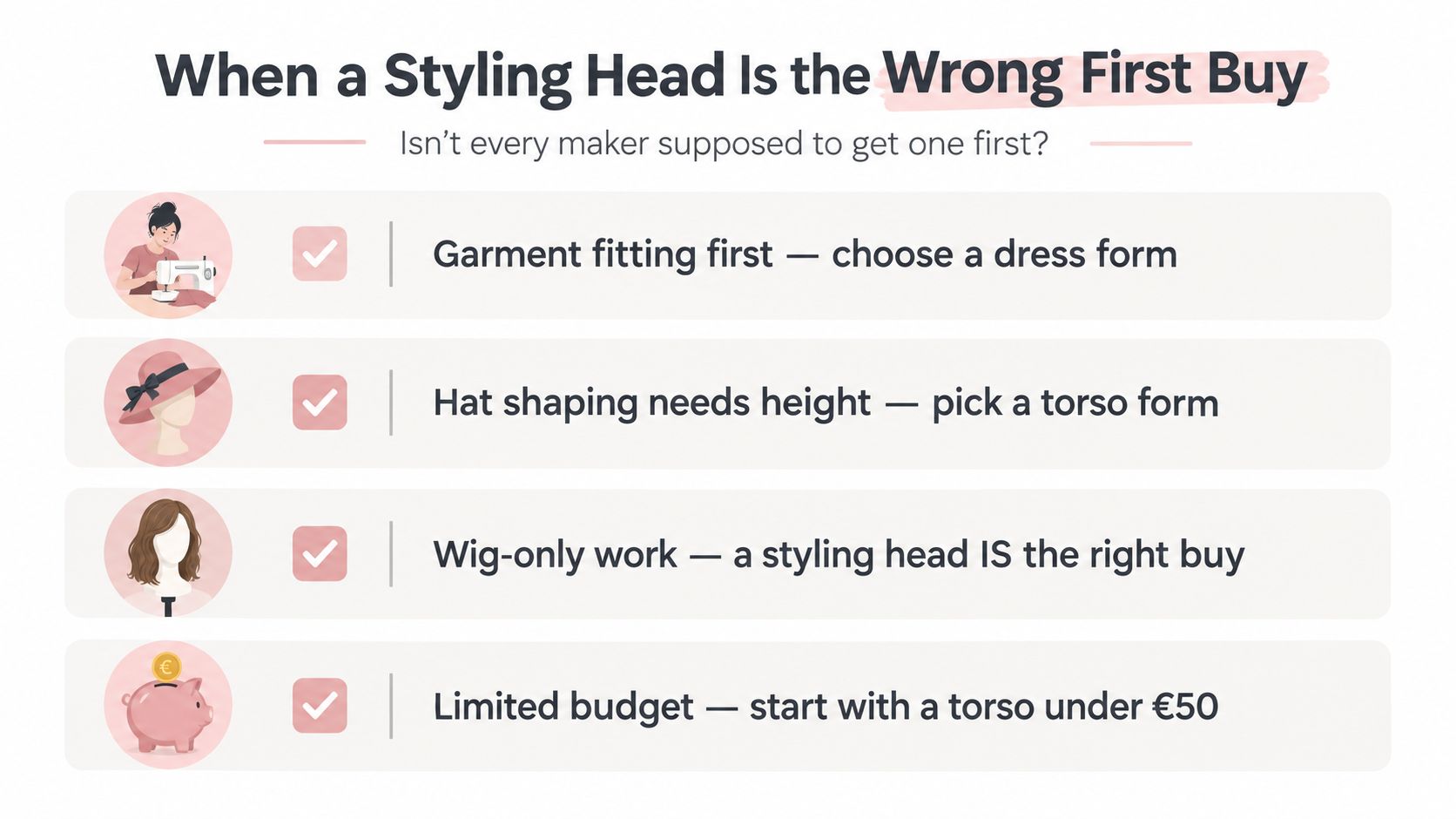
If your work stops at the shoulders, a head may be an accessory to your setup rather than its foundation.
A styling head is the right first buy for a wig stylist, a milliner working on headwear or a beauty trainer practising plaits and updos. For a dressmaker whose priority is fit across the body, start with a dress form or torso and add the head when it solves a real problem.
Care, Cleaning and Storage That Extend the Life of Your Head
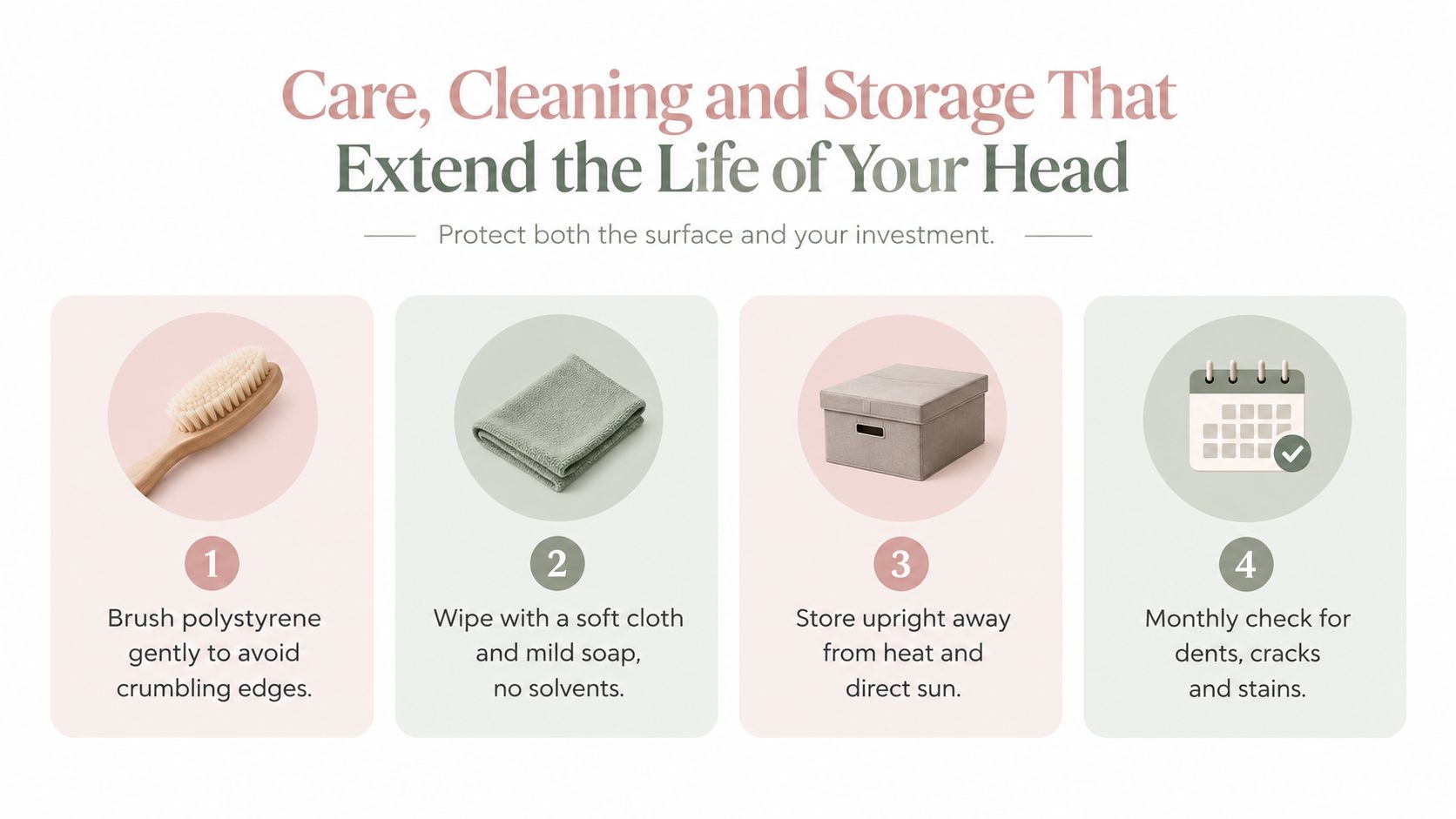
Good maintenance starts with knowing what the surface can tolerate. A light polystyrene head needs gentle brushing because aggressive handling can damage edges and corners. Plastic and fibreglass can usually be wiped with a soft cloth and mild soapy water, but solvents should be kept away from polystyrene because they can attack the material.
The pins deserve attention too. Don't leave them embedded in the head between jobs, especially if they're damp, bent or beginning to rust. Store pins in a separate cork pad or pin cushion, wipe away rust marks promptly and replace bent pins before they enlarge holes or chew into a softer surface.
A routine for wig and hat work
Hair work creates different debris from retail display. Use a seam pick to lift hair build-up from difficult areas, and remove lace-front adhesive with a remover that's appropriate for the head's material. Test any cleaning product on an inconspicuous area first.
Canvas-wrapped millinery forms benefit from a lint brush rather than a wet wipe. Brushing preserves the covering and removes loose fibres without saturating the block.
Storage that prevents avoidable damage
Keep the head upright on its stand, away from direct sunlight and heat. A cotton cover limits dust while allowing air circulation, and a dry room helps prevent mildew on wrapped forms. Before storage, remove pins, clips, hair and product residue so the next session starts with a clean surface.
Use this monthly check:
- Surface: Look for cracks, dents, stains or loose covering.
- Fixings: Inspect pins, clamps, screws and stand joints.
- Cleanliness: Remove trapped hair, dust and adhesive residue.
- Environment: Confirm the storage area is dry and away from direct sun.
For additional product-specific guidance, see this resource on mannequin wig heads and match the cleaning routine to the construction rather than applying one method to every form.
Choosing the Right Styling Head in One Quick Pass
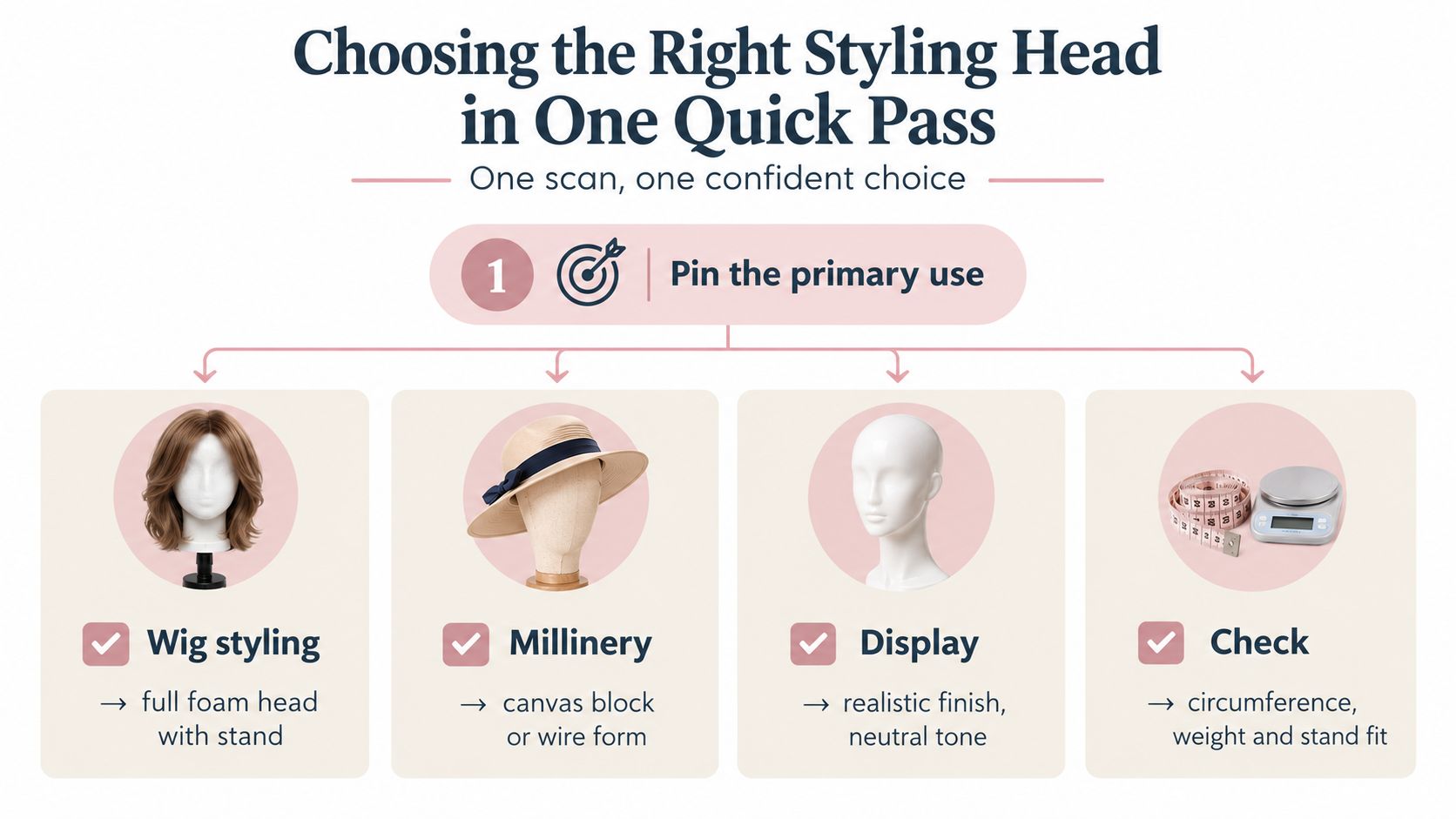
Start by writing down the task you'll perform most often. “Hair work” is still too broad. Decide whether you're preparing wigs, practising salon techniques, shaping hats, fitting costume accessories or presenting products in a shop.
Then match the construction to the action:
- Wig styling: Choose a realistic, correctly proportioned head with a surface that supports pins or secure fitting.
- Millinery: Choose a form designed for the shaping method and material you use. A canvas or specialist block may be more appropriate than a general display head.
- Beauty training: Prioritise a stable stand, a durable practice surface and proportions that suit the techniques being taught.
- Retail display: Favour a clean finish, neutral appearance and easy maintenance if products will be changed regularly.
Check the practical details
Confirm the head's circumference and proportions before ordering. A wig can look correctly fitted on one form and poorly balanced on another, even when the style itself is sound. For costume work, choose a size that supports the intended character or performer rather than relying on a generic display scale.
Assess the stand with equal care. A clamp is useful for flexible workstation positioning, a tripod suits off-desk work and a weighted base is more appropriate where customers or colleagues may brush against the display. If you'll pin dense hair or handle broad headwear, stability matters more than a decorative base.
Finally, check what arrives in the box. A matching stand, clamp, storage dome or protective cover can affect the practical usefulness of the purchase. Compare the total setup, not just the head price, and choose the least expensive option that still provides the grip, scale and stability your work requires.
If your work is mainly above the shoulders, a styling head is a focused and useful investment. If your work depends on garment fit, start with a dress form or torso, then add a head when wigs, millinery or accessories become a regular part of the workflow.
Display Guru offers tailor dummies, body forms, torso busts and mannequin accessories for sewing, costume fitting and retail presentation. Visit Display Guru to compare forms and stands, then choose the equipment that matches your actual workflow rather than buying a styling head by appearance alone.