



Clothes Rails eBay: A Professional Buyer Guide
You've found a clothes rail on eBay that looks ideal in the photographs. The price is attractive, the dimensions appear suitable, and the seller says it's “heavy duty”. Then it arrives with a bent joint, two mismatched castors and no reliable way to tell whether the frame has already spent years carrying a packed shop floor. A rail that fails under garments can damage stock, disrupt a fitting session and create a much larger cost than the purchase price suggests.
The UK marketplace offers genuine value, but clothes rails on eBay need to be assessed as structural equipment, not just as cheap storage. Listing volume, steel specification, wheel design, missing parts, seller returns and the demands of your working environment all affect the decision. A domestic rail may suit occasional home use, while a retail display, tailoring studio or costume department usually needs predictable performance and accessible replacement options.
Navigating the Secondary Market for Garment Storage
The opportunity is clear from the scale of the category. A 2025 snapshot of eBay UK showed 16,621 results in clothes rails, alongside 2,030 adjustable clothes rails and coat stands, more than 4,500 results for small rail searches, and a free-standing clothes rail listing with 1,552 sold items. Those figures indicate an active market, but they don't tell you how many products are genuinely suitable for professional use. They combine new stock, used equipment, refurbished items, duplicates and lightweight household products in one search environment. (eBay UK clothes rails category)
Price spread creates the same ambiguity. Free-standing rails appeared at roughly £10.99 to £11.39, while heavier-duty steel-tube rails reached £38.50 in the same UK marketplace snapshot. The difference may reflect construction, but it can also reflect brand, condition, delivery, listing quality or seller positioning. A low price is therefore a useful starting signal, not proof of a bargain.
Read the category as an inventory system
Independent UK resale indexing shows how broad the market becomes once you separate styles and conditions. A vintage clothes rail index recorded 96 active listings, priced from £5.99 to £160, with an average of £40.67. A wardrobe clothes rail index also recorded 96 listings, ranging from £2.72 to £144.99, with an average of £26.36. Shabby-chic rails occupied a more decorative band, with 13 items from £14.99 to £273.14 and an average of £68.24. (UK vintage clothes rail index)
These figures are useful for benchmarking, but they shouldn't be treated as a direct valuation of a particular rail. A vintage tubular frame, a modern collapsible rail and a retail-grade unit may all appear under similar search terms while serving completely different purposes.
Practical rule: Treat the listing price as the cost of entry. Your real comparison should include transport, assembly, missing hardware, repairs, returns and the cost of replacing garments if the rail fails.
Before buying, filter by intended use rather than appearance. Search for welded frames, steel tube, lockable castors, retail display and load capacity where those terms are supported by photographs or specifications. If the listing still leaves the frame, joints and wheels unclear, the uncertainty is part of the price. Guidance on choosing suitable local equipment can also help you compare marketplace findings with the requirements discussed in clothes rails near me.
Evaluating Load Capacity and Material Specifications
A rail's length tells you how much hanging space it offers. It tells you very little about whether the structure can carry that space safely. Tube diameter, wall thickness, joint design, base width and caster quality control performance, and a long rail with narrow tubing can be less useful than a shorter frame with a properly braced base.
UK listings demonstrate the gap. One retail-display rail is marketed as supporting 100kg+, while a comparable Argos Home rail sold through a UK marketplace is rated at 50kg. That contrast shows why rail length alone is a poor buying test. The stated capacity depends on the frame geometry, caster design and steel-section specification. (UK eBay load-capacity examples)
Inspect the engineering language
Look for a clear statement of maximum load and ask whether it applies to a static, evenly distributed load or to a rail being moved across a floor. Those are different tests. A frame might support a dense row of garments while stationary, yet flex or tip when pushed over a threshold with the same garments still hanging.
Check the following details before committing:
- Frame geometry: A wide base, triangulated support and positive locking joints generally provide more stability than a narrow rectangle assembled from loose push-fit tubes.
- Tube construction: Steel tube is only a useful description when the listing also shows the section, connection method or manufacturer specification. “Metal” alone doesn't establish strength.
- Castors: Confirm diameter, brake operation and whether all wheels match. Small domestic castors can catch on uneven floors, while weak fixings can loosen under repeated movement.
- Joints and fasteners: Welds, bolts and sleeve connections should appear even and undamaged. Bent sockets or elongated bolt holes indicate previous stress.
- Load distribution: Garments should hang across the rail rather than forming a heavy cluster at one end. A rail that feels stable empty may become unsafe when loading is uneven.
Match the rail to the work
Estimate the heaviest realistic load, not an optimistic everyday load. Winter coats, formal jackets and costumes place more stress on a rail than lightweight summer garments, and boxed stock can add a separate load if it is stored nearby.
| Use case | Typical load | Required frame type | Caster requirement |
|---|---|---|---|
| Occasional home storage | Light, mixed garments | Compact domestic frame | Basic castors, preferably with brakes |
| Sewing studio | Mixed garments, samples and fittings | Braced steel frame with stable base | Lockable castors with smooth movement |
| Retail display | Dense, frequently handled stock | Welded or securely bolted shopfitting frame | Commercial-grade castors and positive brakes |
| Costume or production use | Heavy garments and repeated movement | Reinforced frame with documented capacity | Strong, lockable wheels suited to the floor |
If you need a clearer explanation of why tube, bracing and base design matter, strong clothing rails is a useful reference point. Ask the seller for a photograph of the underside, wheel mounts and every joint. A seller who can't provide those views may still have a genuine product, but you shouldn't price it as a known professional-grade unit.
Marketplace Auctions Versus Specialist Suppliers
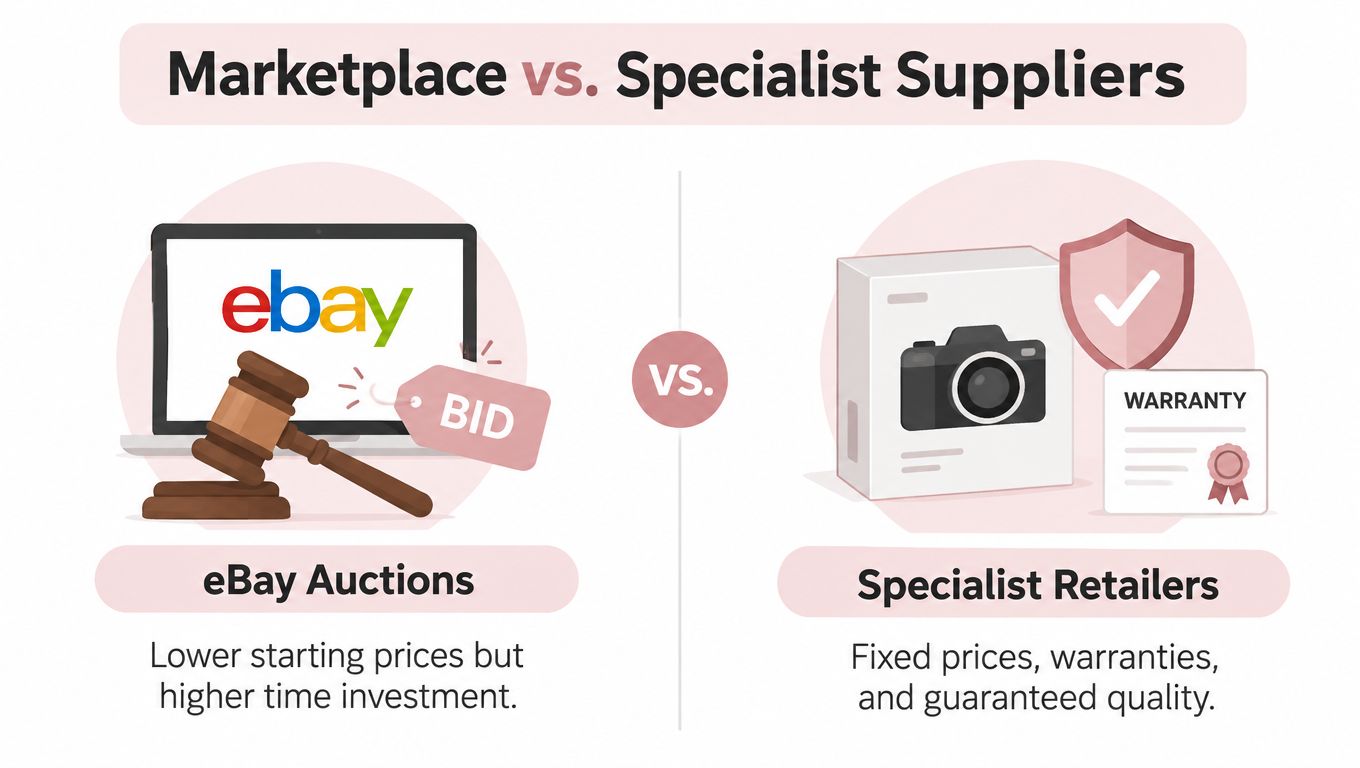
Auction marketplaces work well when you can identify the exact product, inspect it properly and tolerate an uncertain acquisition process. They're less suitable when you need several matching rails, a reliable delivery date or a consistent replacement part. Specialist shopfitting suppliers generally charge a fixed price, but they reduce the time spent investigating whether separate listings describe the same frame.
Compare the complete purchase
The marketplace route can have a low entry price, but the buyer often carries the investigative work. You may need to request additional photographs, confirm dimensions, check whether the wheels lock, source missing screws and arrange a return for an item that doesn't match the description. Collection-only listings can also turn a cheap rail into an awkward transport job.
A specialist supplier provides a different form of value. You're paying for a defined specification, repeatable construction and a clearer route to customer support. A supplier such as Display Guru offers garment rails and related display equipment for retail, tailoring and studio environments, with product support through live chat and email. The relevant comparison isn't eBay against a shop. It's uncertainty against documented supply.
| Buying factor | Marketplace auction | Specialist supplier |
|---|---|---|
| Price | May be lower at the outset | Fixed and easier to budget |
| Condition | New, used and refurbished listings mixed together | Product condition and specification are clearer |
| Matching units | Dependent on separate seller inventory | Easier to source coordinated equipment |
| Parts | May be missing or difficult to identify | More straightforward to ask about compatibility |
| Support | Varies by seller and return terms | Dedicated pre-sales and post-sales contact |
| Timing | Auction, collection and seller dispatch can vary | Stock and delivery information are usually clearer |
The specialist option becomes more compelling when a rail supports customer garments, forms part of a shop refit or needs to match other fixtures. A single failure can interrupt a working day, whereas a modest saving on the initial purchase may not compensate for that disruption. For broader procurement context, compare how dedicated shop fittings suppliers frame product selection and support.
When the auction route still works
Buying second-hand can be sensible for a temporary display, a home studio or a project where cosmetic wear is acceptable. It can also keep usable equipment in circulation, which is preferable to discarding a structurally sound frame. The condition is that you inspect the rail as carefully as you would inspect a used tool, and you keep payment and returns within the marketplace's documented process.
Assessing Risk in Used and Refurbished Listings
A used rail can look sound in a carefully cropped photograph. The trouble usually sits below the garments, inside the joints or behind the wheels. Refurbished doesn't automatically mean rebuilt. It may mean cleaned, repainted or tested briefly, so ask what work the seller completed.
Follow the evidence, not the label
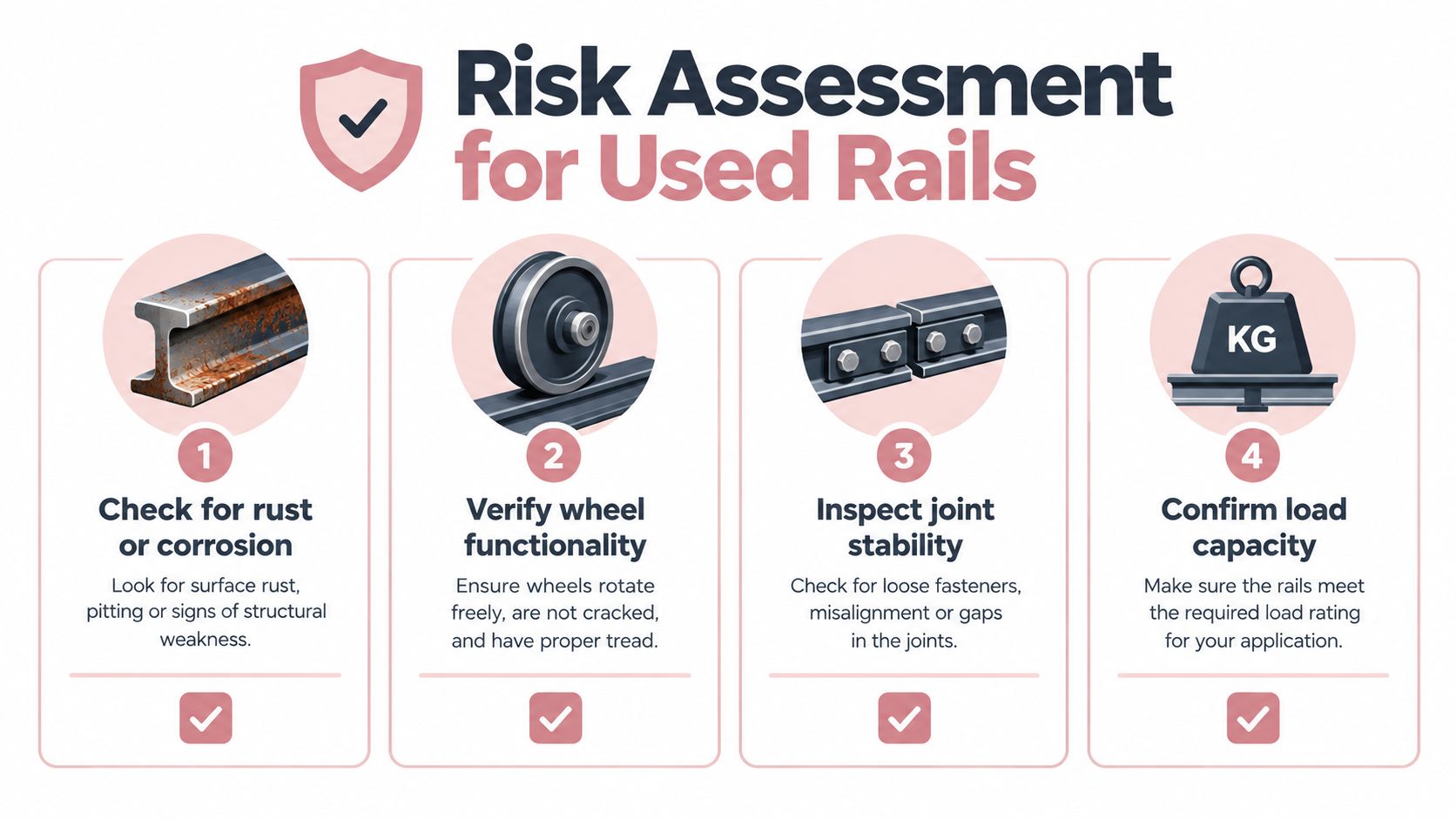
Start with the frame. Rust on chrome-plated sections can be cosmetic, but bubbling, flaking or pitting around welds and joints deserves caution. Those areas experience concentrated stress, especially when the rail is moved while loaded. Look for bowed top tubes, twisted feet, cracked plastic collars and holes that no longer align.
Then check the assembly. A listing should show all brackets, bolts, caps and wheel fittings, not just the assembled front view. A missing fastener may be cheap to replace, but an unidentified proprietary connector can make the whole rail uneconomical to restore.
Seller feedback is useful only when you read the relevant comments. A strong general rating doesn't confirm that the seller understands shopfitting equipment. Look for evidence about accurate descriptions, careful packaging, prompt responses and how disputes were handled.
A practical inspection sequence
Use this order when the listing is unclear:
- Request full photographs. Ask for the underside, joints, castor plates, welds and any damaged areas. Avoid relying on stock images.
- Test movement. On collection, roll the empty rail, apply each brake and check whether the wheels swivel consistently.
- Check joint stability. Hold the frame at opposite corners and apply gentle pressure. Excessive rocking can indicate loose fittings, distortion or worn connectors.
- Confirm the stated capacity. Ask where the rating comes from and whether it applies to a moving or stationary rail.
- Document the condition. Photograph the package and frame on arrival, especially if the listing allows returns only under specific conditions.
A rail that collapses in a sewing studio can damage a garment that took days to cut and assemble. In a shop, the same failure can put customers and staff in the path of falling stock.
Return terms deserve the same attention as the metalwork. “No returns” changes the risk calculation, particularly where the item is described as used or refurbished but the photographs don't show the critical parts. If your wider operation also uses pre-owned display equipment, the checks applied to used professional dress forms for sale are a useful reminder to verify condition, completeness and suitability before paying.
Building a Modular Display and Storage System
A clothes rail becomes more useful when it supports the way your team handles garments. The rail is the frame, but dividers, size markers, suitable hangers, shelves and adjacent storage determine whether staff can find stock quickly and return it consistently.
Add structure to the hanging space
Rail dividers are a simple example. An eBay UK search for rail dividers showed 186 results, with descriptions highlighting UK-made products, durable plastic and packs ranging from 5 to 30. That activity suggests buyers are treating rails as configurable systems rather than isolated tubes. (UK clothes-hanging rail index)
Use dividers to separate size runs, customer orders, departments or stages of a fitting. In a sewing studio, one rail can hold garments awaiting alteration, pieces ready for pressing and completed items awaiting collection. The organiser matters because it prevents a strong rail from becoming a disordered queue.
A modular setup should also reflect the floor plan. Keep frequently handled garments at a comfortable working height, place heavier pieces where the base remains stable and avoid extending the rail beyond the area in which staff can safely turn it. Brakes should be engaged whenever someone is dressing a form or removing a dense group of garments.
Build around compatible components
Specialist fittings can give a basic frame a more finished appearance, particularly in customer-facing areas where exposed chrome and mixed replacement parts may look temporary. Systems based on compatible components, including scaffold pipe fittings, can also help when a project needs unusual dimensions or a fixed arrangement. Compatibility matters more than the accessory itself. A divider that slips, a shelf that overloads one side or a hanger that catches on neighbouring garments adds friction rather than capacity.
For removals and temporary storage, a separate hanging solution can protect garments while the rail is being moved. Wardrobe Moving Box plus Hanging rails from Storage & Removal Boxes Ltd is relevant when clothing needs to travel in a supported hanging position instead of being compressed into ordinary cartons.
Before adding accessories, map the workflow:
- Receiving: Where do new garments enter the system?
- Sorting: Which labels or dividers identify size, client or status?
- Fitting: Can a garment be removed without disturbing the rest?
- Storage: Does the rail carry the load, or are shelves and boxes pulling it sideways?
- Dispatch: Can staff collect the correct item without searching through every section?
The right rail is the foundation. The working benefit comes from reducing handling, confusion and unnecessary movement around it.
Finalising Your Sourcing Strategy and Next Steps
Choose the purchasing channel by consequence, not by headline price. A marketplace rail may be entirely appropriate when the use is light, the condition is visible and you can inspect the item before accepting it. A specialist supplier is the safer route when the rail will carry valuable garments, operate throughout the day, or form part of a coordinated shop or studio installation.
Use a simple decision test
Buy through a marketplace when most of these statements are true:
- You need a single rail rather than a consistent batch.
- Cosmetic wear won't affect the environment.
- You can verify the frame, wheels and fittings.
- You have time to collect, repair or replace parts.
- The seller offers clear condition details and workable returns.
Use a specialist supplier when the opposite is true. Fixed specifications, coordinated finishes and direct support reduce the number of unknowns. Display Guru's range includes garment rails intended for retail display and clothing organisation, alongside related display equipment, so it can be considered when the project needs a defined product ecosystem rather than an isolated second-hand find.
Payment protection should remain part of the marketplace plan. Keep messages, listing photographs and agreed specifications within the platform, and don't treat a seller's informal assurance as a substitute for written condition details. If the purchase is for a public-facing environment, also consider how the rail will be assembled, moved and stored between uses. The same planning discipline applies to wider presentation equipment, including exhibition stands Australia when a display needs to be transported, rebuilt and presented consistently.
Make the next purchase deliberately
Write down the required rail length, expected garment type, moving frequency, floor condition, brake requirement and acceptable finish before searching. Reject listings that omit the details most relevant to safety, even if the photographs look appealing. Then compare the complete landed cost with a new, supported alternative.
That process won't eliminate every risk, but it will stop a bargain label from deciding the purchase for you. In professional use, reliability, compatibility and recoverable support often matter more than the lowest initial figure.
Display Guru supplies garment rails, mannequins, dress forms and related shop display equipment for retail, tailoring and studio use, with free shipping and pre- and post-sales support through live chat and email. Review the available options at Display Guru, then choose a rail based on its construction, capacity and fit with your daily workflow rather than on a marketplace price alone.