




Storage for Sewing: 7 Options Compared for Home Studios
You're searching for a bobbin beneath a heap of fabric. Your machine is still on the dining table, and the pattern sheets you need are folded into a drawer that won't quite shut. Before you can sew, you have to move everything somewhere else.
The room feels full, but the problem is often storage that doesn't match the work. Deep boxes swallow small tools. Open shelves collect supplies you rarely touch. A spare chair becomes the permanent home for a half-finished dress.
Good storage for sewing separates supplies by how you use them. Thread needs visible, accessible compartments. Machines need safe support and, sometimes, transport protection. Patterns need labelled filing. Garments in progress need room without being crushed.
Buy storage for the task you keep postponing, not for the pile that happens to look untidy today.
The options below solve different problems rather than competing for a single best-product label. Horn's Rolla cabinet adds enclosed storage beside a sewing station. Its Craft Cube tackles thread and notions. HOMCOM combines a folding surface with basic storage, while Hobbycraft offers portable organisers. Sew Essential addresses machine transport, The Fold Line handles paper patterns, and garment rails keep unfinished clothing off the furniture.
Start with the obstruction that stops you sewing. Then check whether the proposed solution still works when its doors, trays, table leaves or hanging garments are fully extended.
1. Horn Furniture - Rolla Storage cabinet
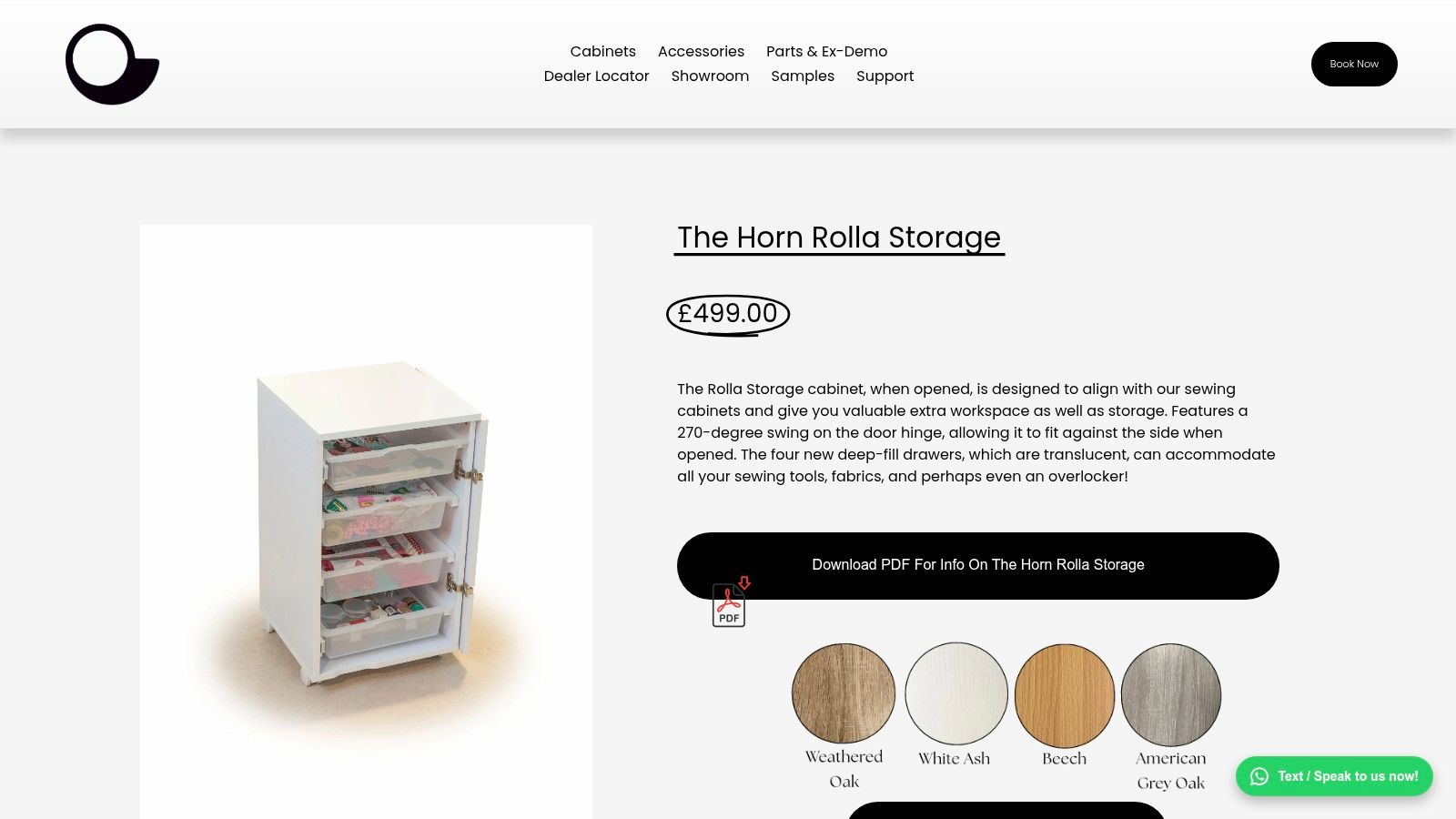
Best for tools and project supplies that keep taking over the sewing surface. The Rolla is a dedicated mobile cabinet, rather than a small organiser perched beside your machine. It makes sense when you sew regularly and want supplies close without leaving everything exposed.
The Horn Rolla Storage cabinet has four deep, removable, translucent trays, lockable castors and doors that open through 270°. It arrives assembled, is finished on all sides and is designed to align with an open Horn sewing cabinet.
Removable trays are the useful distinction. You can bring a project's fastenings, interfacing and tools to the cutting area, then return the tray without unpacking it. Translucent sides help identify contents, although labels still prevent similar-looking fabric bundles becoming anonymous.
Where the cabinet earns its floor space
Use the upper storage for items you reach for during construction. Keep heavier supplies lower down, and separate active projects from reserve fabric. Don't assume that a deep tray automatically accommodates an overlocker. Measure the machine, including its projecting parts, against the usable internal space.
- Strong point: Enclosed storage and an additional surface suit a permanent sewing station.
- Trade-off: A furniture-sized cabinet is excessive if your actual problem is loose bobbins.
- Before ordering: Measure the delivery route, staircase turns and final position with the doors open.
The assembled delivery removes flat-pack work, but it also makes access planning important. A cabinet that fits its destination can still fail at a narrow landing or awkward doorway.
I'd choose the Rolla for a dedicated room where supplies need a permanent home beside the machine. I wouldn't choose it merely to hide an unsorted fabric stash. Sort that first, or you'll transfer the same difficult pile into more attractive furniture.
2. Horn Furniture - Craft Cube
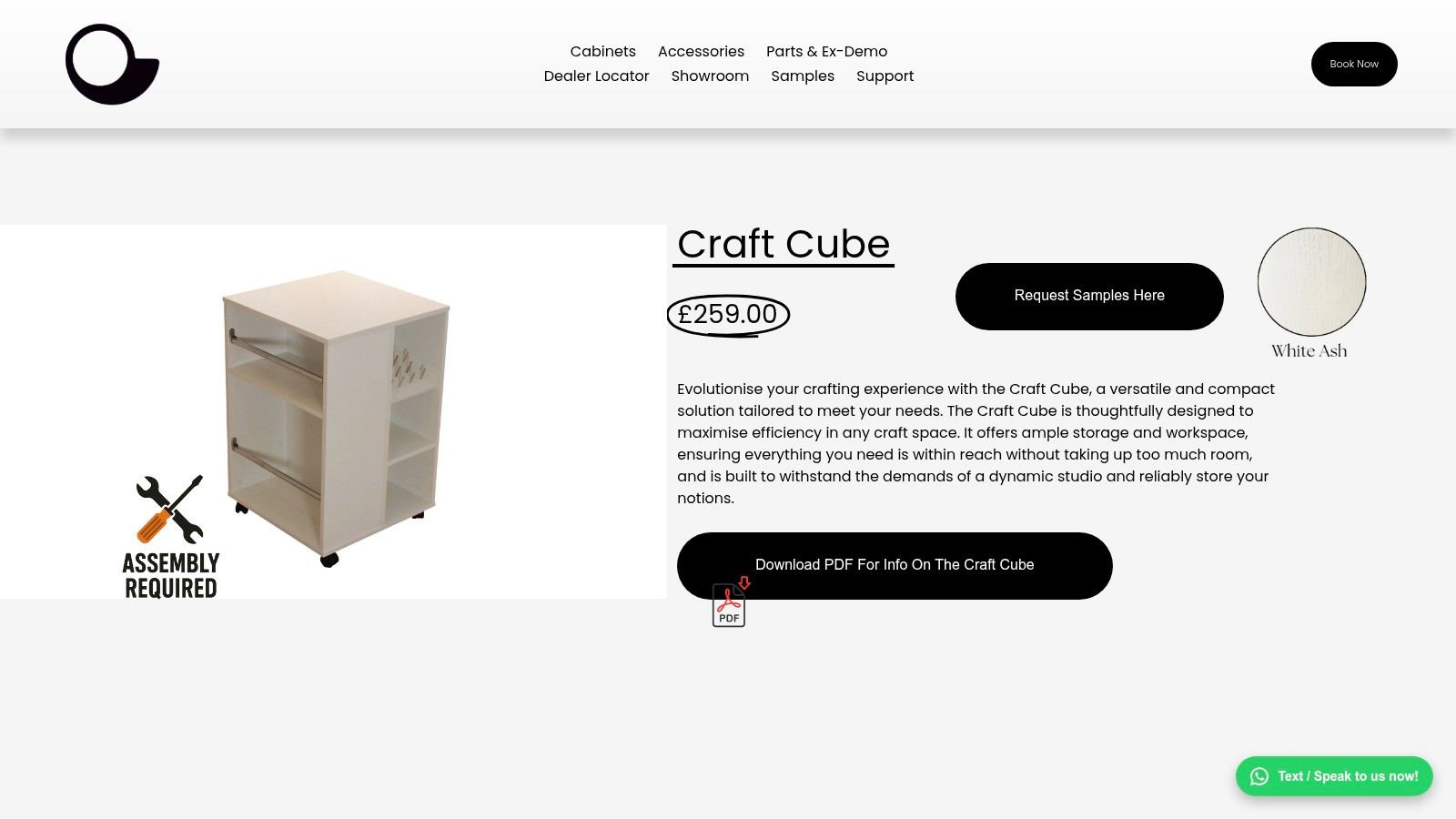
Thread chaos calls for visibility, not another deep drawer. The Craft Cube suits sewists who repeatedly search for matching bobbins, ribbon and frequently used notions. Its open layout makes it a different proposition from the enclosed Rolla.
The Horn Craft Cube includes 18 thread spindles and 42 removable thread and bobbin holders, plus ribbon rods, adjustable shelves, removable trays and lockable castors. Its storage is accessible from different sides, so positioning matters as much as capacity.
A cube pushed tightly into a corner loses much of its advantage. Leave room to reach the faces you'll use, or establish a clear route for rolling it out. Lock the castors before pulling ribbon or removing a loaded tray.
Visible supplies versus protected supplies
Keep everyday thread near the machine and organise it by a system you follow. For garment sewing, separating thread types before sorting colours prevents a similar shade becoming a substitute for the correct thread. Keep matching bobbins with their parent spools where the holders allow.
The open compartments aren't dust protection. They suit supplies in regular circulation better than fabric or thread you intend to leave untouched for long periods. Keep the unit away from direct sunlight, and use enclosed storage for reserve stock.
Practical rule: Open storage works when you can see and return an item without moving unrelated supplies.
Ribbon rods are helpful for dispensing, but they can make replacement awkward if you load them indiscriminately. Group ribbons by use and avoid burying frequently changed rolls behind supplies you rarely need.
Choose the Craft Cube when access is the problem. Choose the Rolla when containment matters more. Neither is an automatic answer to bulky fabric storage, and neither should be bought without allowing for the working space around it.
3. HOMCOM Rolling Craft Table - Argos
A shared dining room needs storage that can stop being a sewing station. The HOMCOM folding craft table offers a surface and basic supply storage in a unit you can close between sessions. Its main advantage is reclaiming the room, not reproducing a full dressmaking bench.
The Argos HOMCOM Rolling Craft Table listing gives open dimensions of 116.3 × 49.5 × 76.5 cm and folded dimensions of 58.1 × 40 × 78 cm, with a 10 kg lower-shelf limit. Compare those measurements with your machine and room before ordering, rather than judging scale from the photograph.
The relatively shallow surface needs particular attention. A machine may fit while leaving limited support for a wide garment or quilt. Plan where the fabric will rest so it doesn't drag over the edge while you sew.
Check the machine, not just the table
- Shelf fit: Measure the machine with its cover, handle and projecting fittings included.
- Load allowance: Compare the machine's weight with the stated shelf limit, including anything stored beside it.
- Working position: Allow for your chair, knees, pedal and access to the storage when the table is open.
- Assembly: Expect flat-pack construction and check alignment before loading the unit.
Particleboard furniture needs careful assembly and sensible handling. Don't drag a loaded unit over a threshold or treat the folding leaf as a seat. Test stability with the machine in place before committing to a long sewing session.
For supplies that need to move independently of the table, the art and craft trolley guide helps distinguish mobile supply storage from a mobile work surface.
I'd shortlist this for occasional sewing in a shared room. For continuous professional use, prioritise surface support, comfortable working height and machine stability over the convenience of folding everything away.
4. Hobbycraft - Sewing boxes and craft storage
A portable sewing box is often enough when the mess is small. If your fabric already has a shelf and your machine has a safe home, buying furniture to organise scissors, needles and bobbins solves the wrong problem.
Hobbycraft's sewing storage range includes sewing boxes, plastic containers, thread organisers and cantilever designs. It's a collection of separate solutions, not a coordinated system, so choose by internal layout rather than matching appearance.
A cantilever box gives small tools separate levels and makes them visible when open. The compromise is its working footprint. Fully extended trays need a clear, stable surface, and the box can become awkward to carry once you fill the lower compartment with heavy tools.
Build the kit around the work
For alterations, keep a portable kit with needles, snips, a seam ripper, marking tools and the thread needed for the current repair. Put spare packets and duplicate tools elsewhere. A daily-use box shouldn't become an archive of every notion you own.
A large sewing box guide is useful when comparing tray access, lower-compartment depth and portability. The important question is whether your longest essential tool fits without blocking the trays or forcing the lid shut.
- Choose divided storage for bobbins, feet and small fastenings that disappear in deep compartments.
- Choose a lower open compartment for shears and larger packets.
- Check collection and delivery options for the exact product, since availability can differ across the range.
Keep sharp tools secured, especially in shared households. A decorative lid or carrying handle doesn't make a box child-resistant.
This option works best as a compact working kit. It doesn't replace fabric shelving, pattern filing or garment storage, and overfilling it makes every small repair harder to start. Buy the layout you need, then resist using every spare compartment for unrelated supplies.
5. Sew Essential - Sewing-machine storage and bags
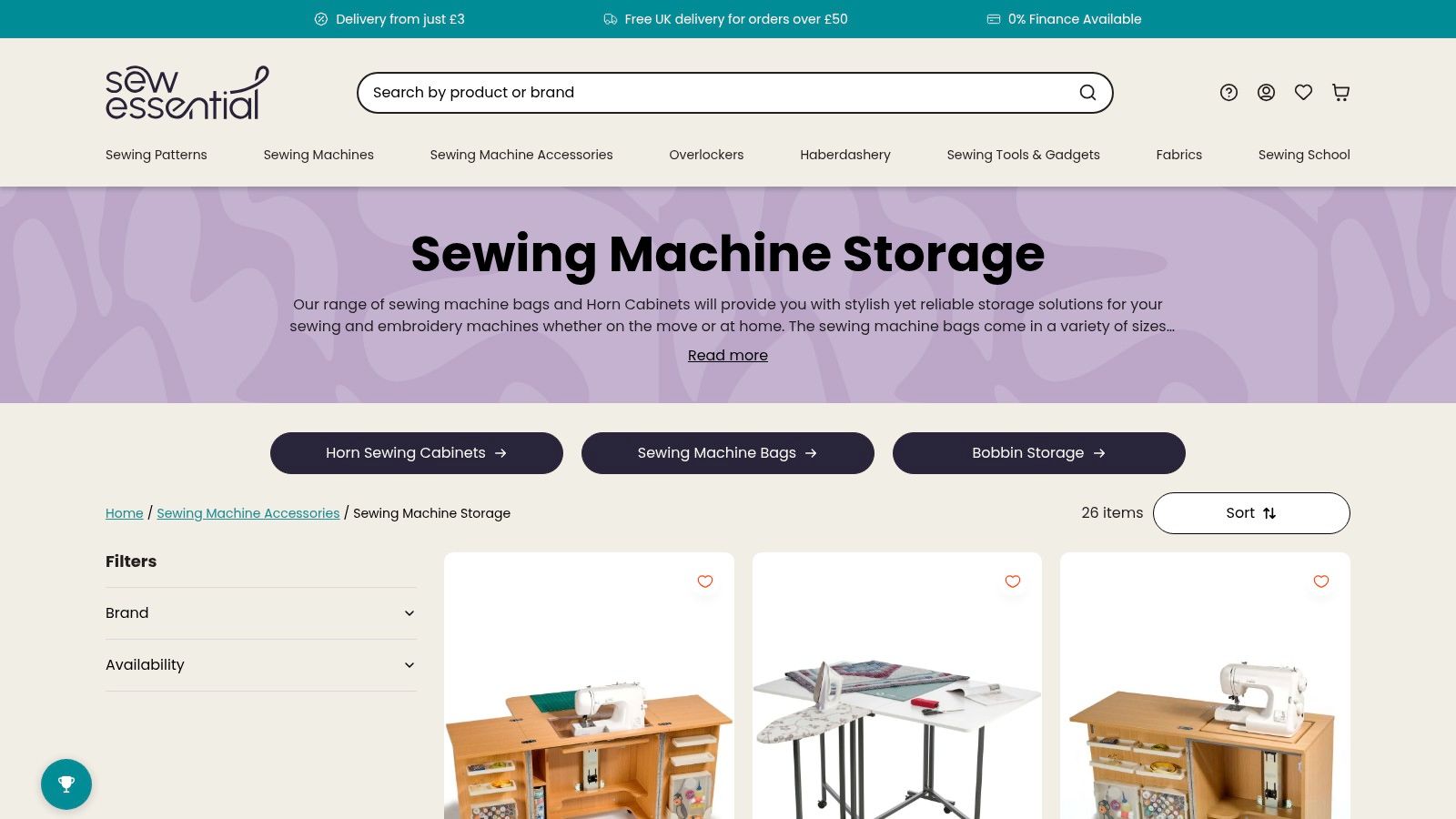
Taking a machine to class creates a different storage problem from keeping it dust-free at home. A cover, carry bag and wheeled trolley aren't interchangeable. Choose according to the journey, the machine's weight and the lifting you'll still need to do.
Sew Essential's sewing-machine storage collection brings together portable bags, trolley bags, bobbin storage and cabinets. That breadth is useful, but compare individual specifications rather than assuming bags in the same category offer equivalent protection.
A soft bag is convenient for carrying a manageable machine between home and a nearby workstation. A trolley reduces carrying across suitable floors, but it doesn't remove stairs, car boots or raised door thresholds. You still need to lift the loaded bag safely.
Measure the complete travelling setup
Measure the machine's widest, tallest and deepest points. Include any handle or fitting that remains attached, and compare those measurements with the bag's internal dimensions, not its external size. Check whether the pedal and cable have separate storage so they won't press against controls.
The sewing-machine bag trolley guide helps frame the choice around carrying style and transport requirements. Pay attention to padding, base support, fastening access and the position of accessory pockets.
Wheels solve carrying across a suitable floor. They don't solve lifting a heavy machine into a car.
For storage at home, place the bag on a stable surface rather than a shelf of uncertain capacity. Keep cables loosely gathered and remove loose accessories that could rub against the machine. Follow the machine manufacturer's transport instructions where these specify a carrying position or protective case.
I'd choose a trolley for a journey that includes long, rollable sections. For mostly stairs, a bulky wheeled bag can add weight without providing much benefit. Don't let the presence of wheels distract from the loaded weight you'll handle.
6. The Fold Line - Sewing-pattern storage envelopes
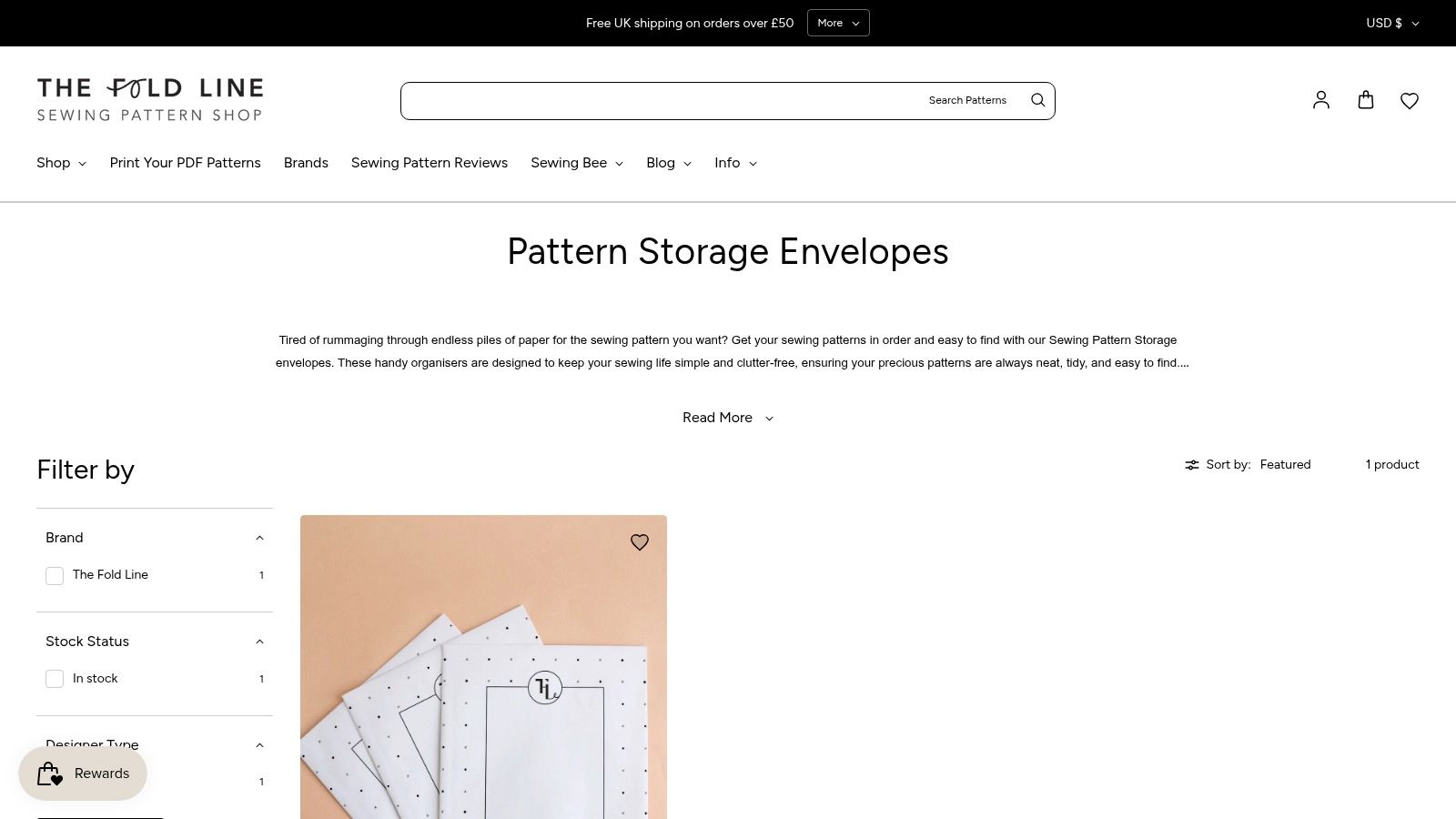
Pattern piles become difficult because the pieces lose their identity. Instructions end up with the wrong tissue, altered sleeves get separated from the bodice, and folded printouts look identical from the outside. An expanding envelope gives each pattern a defined home.
The Fold Line's sewing-pattern storage envelopes measure 324 × 229 mm and accommodate A4 or folded A0 sheets. The gusset allows room for multiple pieces, while the front provides space for pattern and project notes.
The benefit isn't just containment. Clear labelling lets you retrieve a pattern without unfolding its contents. Record the designer, pattern name, garment type, and the size you traced or cut.
File the usable pattern, not just the original
Keep altered pieces identifiable. Write the pattern name, piece name, grainline and relevant alteration directly on each piece before filing it. If you've changed the fit, add a note explaining what changed and which version you used.
- Separate versions: Avoid mixing an untouched master with altered pieces unless each is clearly identified.
- Keep instructions together: Include construction notes and a fabric swatch where useful.
- File upright: Use a supporting box or shelf arrangement so envelopes don't slump into a loose pile.
- Leave expansion room: A tightly packed file is awkward to browse and harder to maintain.
The pattern storage box guide is a useful companion when deciding where the filled envelopes will live. The envelope organises the pattern; the supporting box organises the collection.
Don't force a bulky pattern into an envelope until it bows or tears. Refold the sheets along sensible lines and separate unrelated material. Keep paper patterns dry and away from places where drinks, steam or damp walls could damage them.
This is the focused choice for paper clutter. It won't hold the project's fabric, so give the fabric bundle a matching label rather than trying to squeeze both into the same filing system.
7. Display Guru - Heavy-duty garment rails
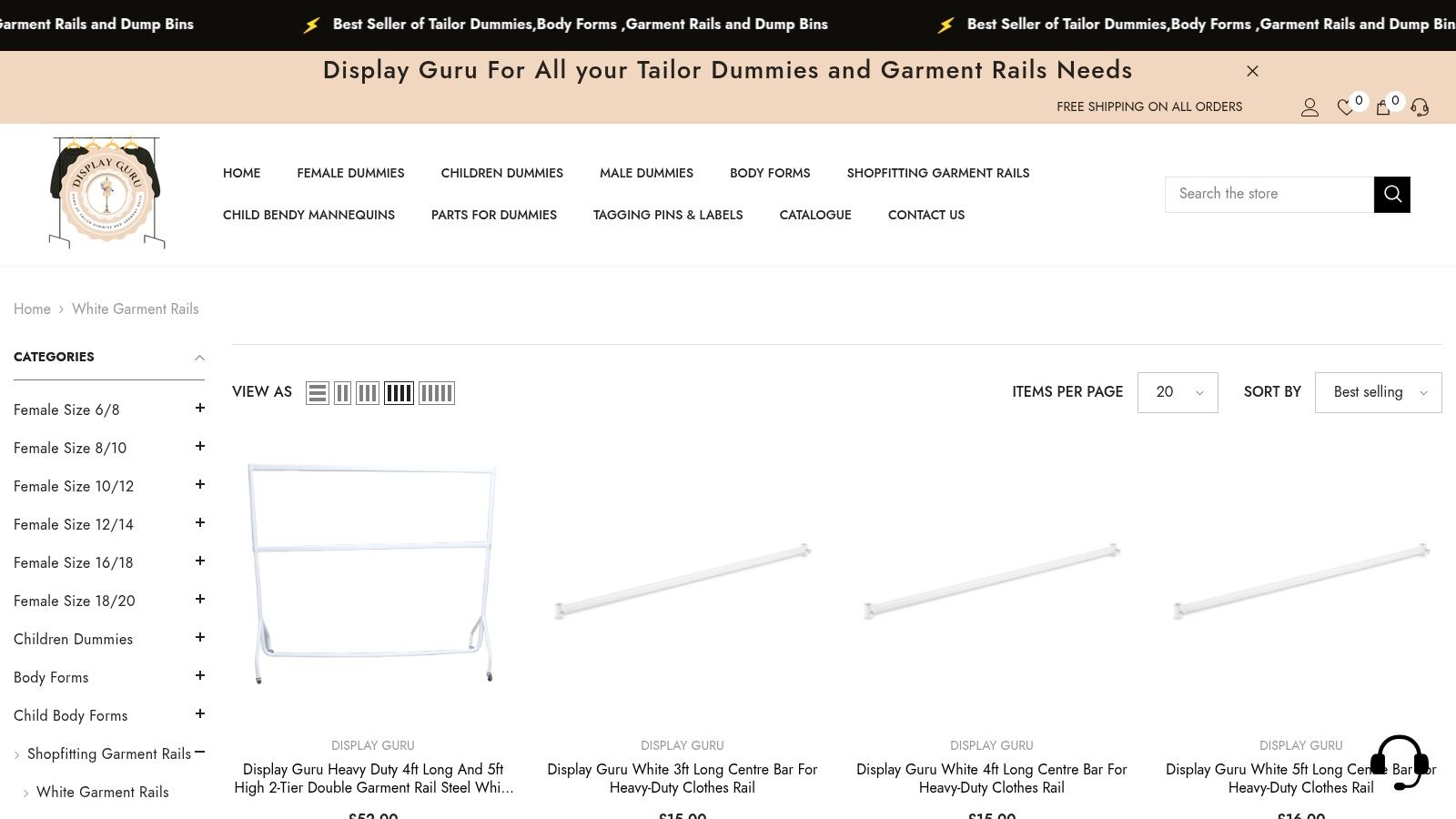
A partly assembled coat doesn't belong under a stack of fabric. Neither does a costume awaiting fitting or a dress that needs its hem checked.
A garment rail gives these pieces a visible place without consuming the cutting table.
The white garment rail range sits alongside black options, with different configurations to suit your space. Choose by garment length, usable hanging space and floor footprint, not by how much clothing appears to fit in a product photograph.
For alterations work, divide the rail by status: one zone for garments awaiting assessment, one for pieces ready to sew, one for finished items awaiting collection. A clear job note on each hanger tells you the next task without unfolding or inspecting every piece.
Hanging isn't right for every unfinished garment
Match the hanger to the garment's weight. Don't suspend an unfinished skirt from a delicate waistband edge or leave a heavy knit hanging where it can stretch out of shape. Fold vulnerable pieces into a labelled project container until their construction can support hanging.
The heavy-duty clothing rack guide covers the practical choice between configurations. Stacked hanging levels suit shorter pieces, but long coats and dresses need an uninterrupted drop.
- Measure garment drop: Include the hanger and leave clearance beneath the hem.
- Measure the occupied footprint: Sleeves, skirts and hanger ends extend beyond the frame.
- Check movement routes: A loaded rail needs room to turn without catching door handles or equipment. Measure doorways and tight corners for delivery access before it arrives.
- Plan dust protection: Open hanging is access, not enclosed storage.
Fitting-room test: If you must move the rail every time you sit down or open a drawer, its parking place is wrong.
Don't crowd freshly pressed garments together or force a loaded rail across an unsuitable floor. Check the chosen model's stated capacity before ordering, since exceeding a rail's weight limit is the classic route to a return. Keep the rail for active work. A project with no next step belongs in a box, not on a hanger.
How the seven storage options compare on price, format and best use
Price is the moving part: size, finish, bundles and promotions change it, so confirm the current listing, delivery access and return terms before you commit. The more reliable comparison is format, because that decides floor space, reach and whether the item solves thread chaos, machine transport, pattern piles or work in progress.
| Item | Format | Best for |
|---|---|---|
| Horn Furniture, Rolla Storage cabinet | Mobile cabinet with removable trays and work surface | Sewists wanting dedicated, coordinated storage |
| Horn Furniture, Craft Cube | Four-sided mobile organiser with open compartments | Organising and accessing thread, bobbins and ribbon |
| HOMCOM Rolling Craft Table, Argos | Folding, wheeled craft table with basic storage | Small rooms and budget-conscious sewists |
| Hobbycraft, Sewing boxes and craft storage | Range of boxes, containers and organisers | Building a flexible storage setup at different price points |
| Sew Essential, Sewing-machine storage and bags | Collection of machine bags, trolley bags, accessories and cabinets | Comparing machine transport and at-home storage options |
| The Fold Line, Sewing-pattern storage envelopes | Gusseted, labelled pattern envelopes | Organising and protecting paper sewing patterns |
| Display Guru, Heavy-duty garment rails | Mobile garment rails in white or black | Hanging work-in-progress garments, samples and costumes |
Use the table to narrow to one fix, then measure the space in use: open doors, pulled trays, a loaded rail's turning circle and the shelf load under a machine. A cheaper organiser that blocks the cutting table costs more in workflow than a larger unit that parks cleanly.
Matching Storage to Your Workflow Before You Buy
Choose storage by identifying what interrupts your sewing, then match that problem to a specific solution. Don't buy a complete room's worth of organisers before testing whether the first change makes work easier.
Start with tools, fabric or patterns, and garments in progress. These categories need different kinds of access, protection and support. Treating them as a single storage problem usually produces oversized boxes and a worktop that's still occupied.
- Tools and thread: Choose the Craft Cube for visible access, a Hobbycraft sewing box for a portable working kit, or the Rolla for enclosed storage beside a permanent station.
- Fabric and patterns: Use labelled cabinet trays for manageable fabric bundles and The Fold Line envelopes for paper patterns. Give bulky fabric separate support rather than compressing it around small supplies.
- Garments in progress: Use suitable hanging storage for pieces that can support their own weight. Keep stretch-prone or fragile unfinished sections folded and labelled.
Machine storage needs its own decision. The HOMCOM table suits a room that must return to another use, provided the machine fits and the shelf can carry it. A Sew Essential bag or trolley addresses transport, but it doesn't replace a stable storage position at home.
Check the space in its working state
Measure more than the furniture's closed outline. Allow for open doors, extended trays, unfolded surfaces, your chair and the garment you're feeding through the machine. Use masking tape to mark the proposed footprint before ordering.
Check weight limits, internal dimensions and delivery access separately. An assembled cabinet may be difficult to bring upstairs. A machine can fit inside a bag but still be awkward to lift, and a rail can fit an alcove while leaving its hanging garments across the walkway.
Keep a distinct repair queue rather than mixing repairs with speculative projects. In a 2025 survey reported by The National Lottery Community Fund, 44% of the 2,752 UK adults surveyed weren't confident stitching a hem. Make a small repair approachable by keeping the garment, matching thread, replacement parts and a clear task note together, with sharp tools stored safely.
Judge the result by whether you can start sewing without clearing another surface. For shared or commercial spaces, compare hanging storage with bins and baskets according to the materials you handle. The right system makes the next task obvious without turning every available corner into another place to accumulate unfinished work.
We stock shopfitting garment rails in white and black, alongside dump bins and baskets for shared or commercial sewing spaces. Visit Display Guru to compare storage for garments mid-project, and check the available floor space and garment length before choosing your setup.