

Retail Window Display Ideas: 10 Concepts That Draw Crowds
What makes a passer-by stop, look and step inside? A window can be beautifully styled and still miss the point if the product is hard to see, the message takes too long to read or the display has no clear connection to what's sold inside. Treat your window as the shop's hardest-working salesperson: it has to make a strong first impression, explain what matters and give people a reason to come in.
The need is practical as well as creative. Design Week reported that approximately 13,500 UK retail stores closed in 2024, equivalent to 37 shops a day, in its discussion of why shop windows still matter (Design Week). A thoughtful display can't solve every trading challenge, but it can make a shop's offer more visible to the people passing by.
These retail window display ideas are built for implementation, not just inspiration. Each one sets out how to stage the scene, choose props and lighting, and keep the product at the centre, whether you're dressing a tailor's dummy, making a seasonal installation or turning a shopfront into a working studio.
1. Mannequin and Dress Form Storytelling Vignettes
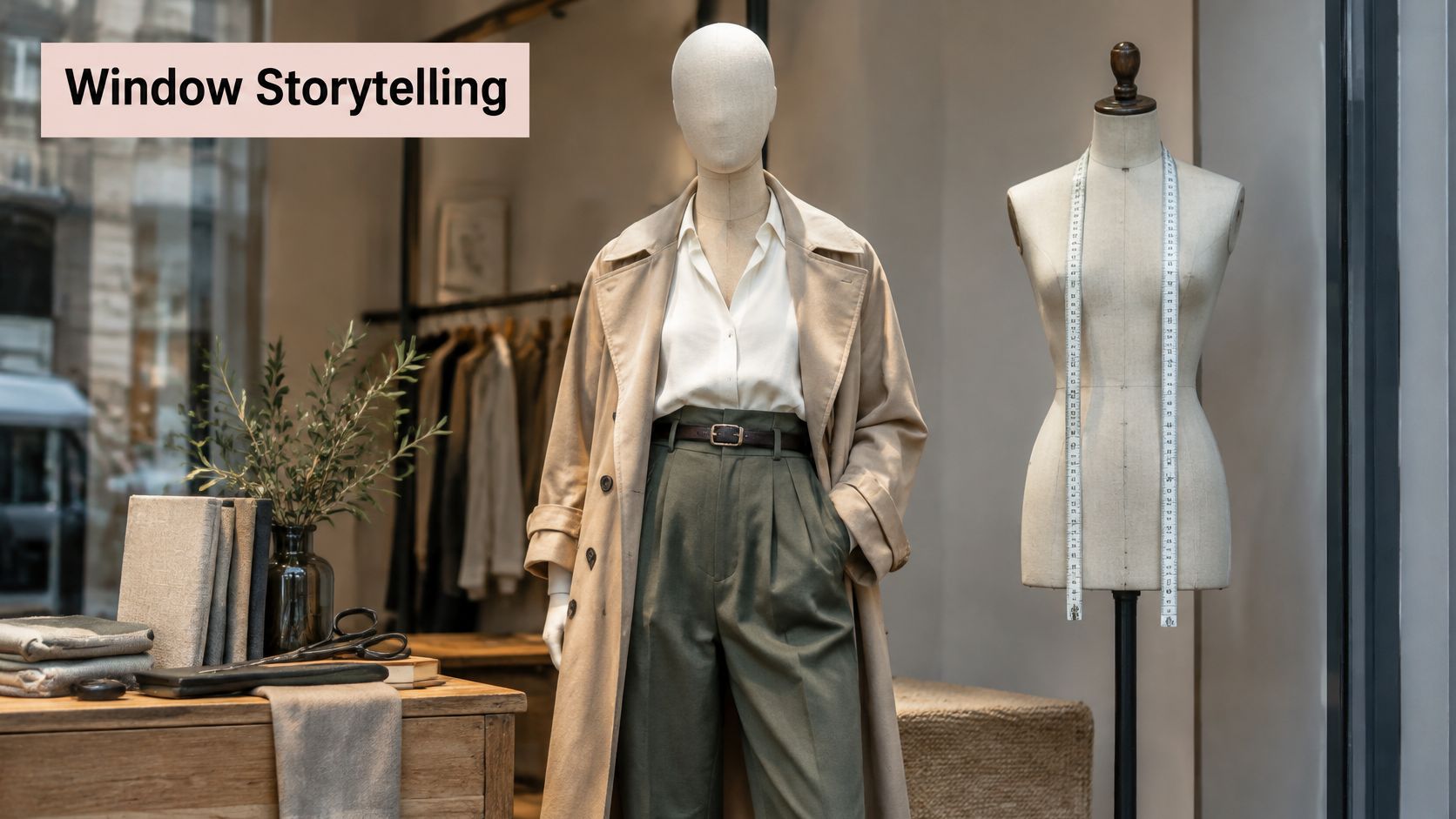
A mannequin beside a table of folded fabric reads as a product display. Add a measuring tape, a pattern and a half-finished garment, and the same window begins to suggest a tailor at work. A small, specific scene gives shoppers a story to read while helping them imagine where and how they might wear the clothes.
Build the scene around the garment
Choose a hero outfit, then position an adjustable dress form or mannequin to make its shape easy to see from the pavement. Pin fabric discreetly at the back or waist to remove sagging, and turn the figure slightly towards the main direction of approach. Keep props to three to five pieces so the clothes remain the focal point. A consistent palette across the outfit, backdrop and props will hold the composition together.
For example, a boutique promoting a new trench coat could stage a fitting-room scene with a stool, a standing mirror and a neatly folded scarf. Don't add unrelated accessories just to fill space. The window display ideas guide has further inspiration for building a cohesive shopfront story.
Practical rule: If a prop doesn't help explain the product or the scene, take it out.
Plan an update when the collection or campaign changes, and check the display from outside before opening. An AI fashion model generator can also help with concept development before you settle on the final arrangement.
2. Kinetic and Animated Window Displays
Movement catches the eye, but too much motion can make the product disappear. Give the display one deliberate moving element and let everything else stay still. A slow turn, a ripple of suspended fabric or a small mechanical figure can add interest without competing with the merchandise.
For a winter coat launch, try one mannequin on a stable round-base stand, with a rotating platform set to turn slowly. Add a softly moving strip of fabric behind it, not several animated objects at once. Keep the motion focused on the feature garment, and secure cables and mechanisms out of sight. Test the movement from the pavement as well as indoors: the right effect should read clearly at a glance, without looking frantic.
A moving window adds maintenance. Check the mechanism and lighting before the shop opens, and schedule regular checks for loose fittings, snagged fabric or a motor that's beginning to stutter. If something breaks, switch it off and let the display work as a static arrangement until it's fixed. Motion is a useful accent, not a reason to leave a distracting or unsafe feature running.
3. Sculptural Garment Installations
A rail can be more than storage. Repeating a garment's shape, colour or material across a wall or suspended arrangement turns the clothing into a sculptural feature, while making its cut and construction easier to notice. The trick is to create a clear visual rhythm rather than hang a lot of stock.
Choose a repeated silhouette, such as three jackets in the same cut, and vary the colour or styling in a deliberate sequence. Hang them at staggered heights from a simple black or white rail, or dress one form and suspend the others to echo its outline. Keep enough space around the installation that each garment remains recognisable through the glass.
A designer launching a capsule collection might display three versions of one coat, with a small product card naming the fabric and price. That keeps the window commercially useful without turning it into a list of product details. Check that the garments hang securely and can be removed without dismantling the whole scene. If the display is difficult to reset after a sale, simplify the structure before installation.
4. Interactive and Touch-Responsive Windows
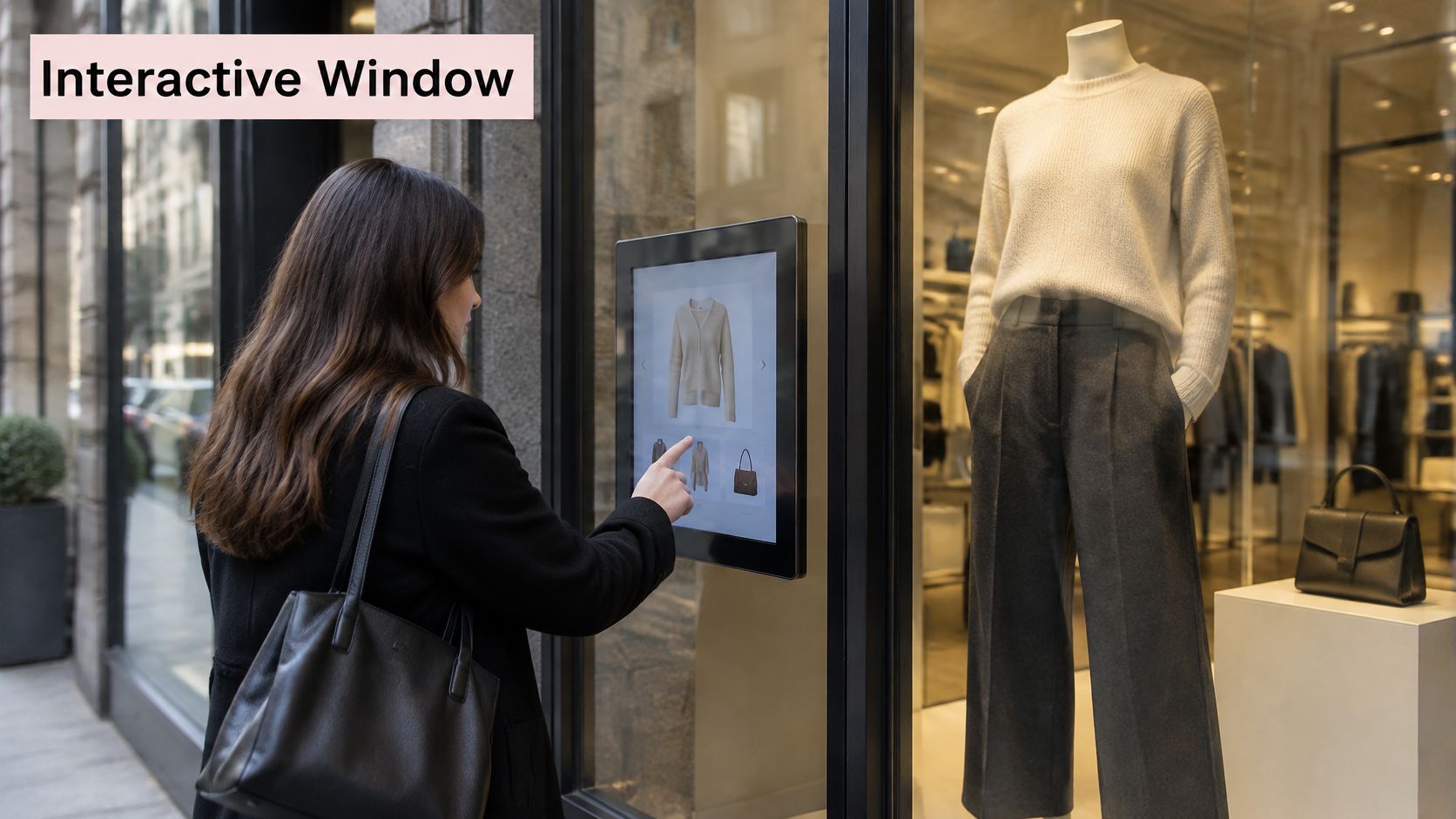
A window interaction should be obvious, quick and optional. A touchscreen, motion sensor or QR code can extend the display into a product page or lookbook, but it won't help if shoppers have to guess what to do or fight glare on a screen.
Make the action easy to understand
For a new-season collection, place a single QR code beside a short prompt such as “Scan to see the full look”. Link it directly to the relevant page, not a general homepage where the visitor has to search again. Print a brief alternative message and a readable web address for people who can't or don't want to scan. If the window uses a screen, angle it to limit reflections and protect it in a suitable weatherproof housing.
Before launch, try the interaction from the pavement using different phones and check that the link works on a mobile connection. Keep a static version of the message ready in case the screen, sensor or network fails. The guide to dressing a mannequin can help keep the physical styling as considered as the digital element.
Don't make technology the hero unless it serves the product. A simple scan-to-shop route can be more effective than an elaborate installation that needs instructions, troubleshooting and constant attention.
5. Minimalist Product-Focused Windows with Negative Space
Restraint only works when the product earns the space. A single handbag, shoe or well-cut jacket on a clean plinth can feel considered and premium, but a lone item without good lighting, contrast or a clear context can look forgotten. Build the display around one hero product and one clear line of sight.
The UK academic study of storefront-window responses ranked lights and brightness, colour, price, originality and authenticity, product quantity, window dimensions and theme among the factors influencing reactions (Middlesex University study). That's a useful reminder that minimal doesn't mean ignoring the practical details. Give the product a background that contrasts with it, light its best features and make the price easy to find.
For a black leather handbag, use a pale plinth, a restrained backdrop and one directional spotlight aimed to show the bag's shape without throwing a harsh reflection on the glass. Add a small swatch or material note only if it helps customers understand the product. The visual merchandising guidelines can help with the broader principles of clear product presentation.
Leave the empty space empty. It's doing a job.
Check the display in daylight and after dark, since glare and reflections can change how much of the product a passer-by sees.
6. Seasonal Grand-Scale Thematic Windows
A seasonal window can draw attention through scale, colour and atmosphere, but an oversized set can also bury the merchandise. Start with one theme that fits the brand, then work out how to express it with a few bold shapes, textured surfaces and carefully aimed lights.
For a winter collection, build a simple backdrop of layered white panels, add a few branch-like forms and place the featured coats at the front of the scene. Use warm spotlights to reveal fabric texture, and keep the price or campaign message visible from the pavement. If you're planning a major installation, develop the design and source its structural pieces well ahead of the campaign. Reusable panels and modular props can reduce the amount of rebuilding needed for the next seasonal change.
A festive shop might use a window menorah as a recognisable focal prop, supported by products that relate to the celebration rather than generic winter decorations. Explore Menorah's selection for Hanukkah windows when considering an appropriate centrepiece. Whatever the theme, make sure the display still looks like your shop. A spectacle that could belong to any retailer may attract a glance without explaining why someone should come inside.
Photograph the finished window for your own campaign materials, and keep a note of which props, fittings and lighting can be reused. That record makes the next installation easier to plan and less likely to become a one-off build.
7. Sustainable and Upcycled Material Windows
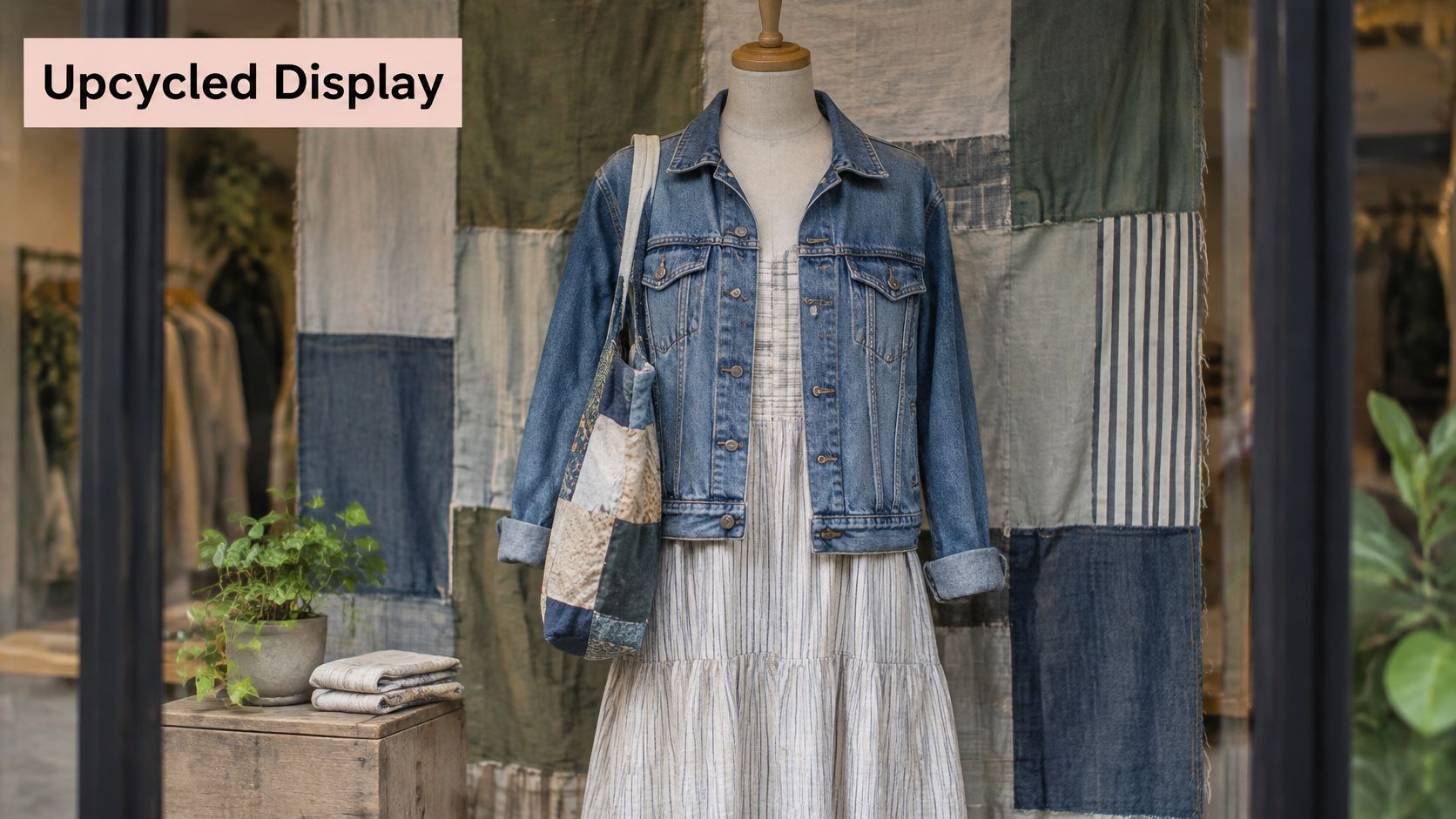
A sustainable display should show its choices, not just claim them. Reclaimed timber, fabric offcuts and reused packaging can make a tactile, distinctive backdrop, but only if they're clean, secure and suited to the product. Avoid using a broad environmental message that the materials and sourcing behind the display can't support.
Try building a modular backdrop from fabric scraps attached to repairable panels. Keep the garment on a simple rail or mannequin in front, and use reclaimed timber for a stable plinth. Add a short label that explains what has been reused, such as “Backdrop made from studio fabric offcuts”. Store the panels flat after the campaign so they can be brought back into use rather than discarded.
Design for the next display too
Before building, decide how the materials will be cleaned, stored, repaired and reused. Digital signage can add motion, but screens bring extra energy use, maintenance and end-of-life considerations; they aren't automatically the more responsible choice. A UK-facing discussion of window-display ideas highlights the value of balancing impact with inclusive, durable design (The London Display).
A fashion shop promoting repaired denim could make an honest display from offcuts and visible mending samples. If you're considering alternatives to conventional mannequin materials, see the guide to eco-friendly mannequins. Choose materials that suit your actual reuse plan, not just the look of the first installation.
8. Heritage and Archive Craft Windows
Vintage tools, archive patterns and old photographs can make a shop's expertise tangible, especially for tailors, dressmakers and fabric retailers. The history should support a product or service, though, rather than become a museum display with no connection to what customers can buy today.
Set an old pattern or sewing tool beside a modern garment made using a related technique. Use a small caption to explain the link in plain language, and protect delicate pieces behind a case or secure fixing. A bespoke tailoring shop might pair an archive cutting diagram with a contemporary jacket, then show a swatch of the current cloth. The contrast gives people something to inspect while making the craft relevant now.
British shop windows have a long history in visual merchandising: drapers in London used display windows in the late eighteenth century, and Selfridges made creative windows part of its identity when it opened in 1909, according to the IK Foundation's account of shop-window history. That heritage encourages telling a story with care, not filling the window with every old object in the workroom.
For a local angle, feature a regional maker, textile or craft partnership and explain the connection briefly. A UK Point of Sale survey found that 55% of surveyed consumers in the UK and Republic of Ireland were more likely to enter a shop featuring a Made in Britain window display. The survey is older and spans both locations, so treat it as directional, not a current conversion forecast.
9. Live Craft and Studio-in-Window Displays
A working studio gives passers-by something they can't get from a static product photograph: a view of the hands and decisions behind the finished garment. It can suit a tailor, dressmaker, repair service or sewing school, provided the work area is safe, tidy and easy to understand from outside.
Set up a dedicated table with a clear surface, task lighting and only the tools needed for the demonstration. Place a finished garment beside the work in progress so people can connect the process to the outcome. A dressmaker showing a visible hem repair, for instance, could display the unaltered and finished versions with a concise sign explaining the service. Keep sharp tools away from the glass and secure cords so they don't create a trip or snag hazard.
Make the demonstration legible before you make it elaborate. State who's working, what they're making and when the demonstration is happening. Schedule the activity for a time when the shop can staff it properly; a vacant workstation with a machine left in the window quickly looks abandoned.
If you're also promoting workshops, show a sample project or a finished student piece rather than crowding the scene with flyers. For a compact, portable display at a market or event, adapt the same principles using display ideas for craft fairs.
10. Trompe-l'Oeil and Surreal Illusion Windows
An illusion gives people a reason to look twice, but the trick must read clearly from the pavement. A painted backdrop can make a mannequin appear to stand in a tiled room, while a printed graphic can suggest depth behind a real garment. Keep the product sharp and well lit so the scenery doesn't become the only thing anyone notices.
For a boutique promoting a flowing dress, create a simple backdrop of a painted staircase and position the mannequin so its hem seems to continue the drawn line. Use a printed panel or removable vinyl for a more affordable build, and test the effect from the main approach angle before fixing everything in place. If the illusion only works from directly in front of the glass, adjust the perspective or simplify the artwork.
Choose one visual joke or impossible scene. A floating shoe, a garment emerging from a painted doorway or a dress apparently hanging in a cloud can each work as a single idea; combining all three makes the display harder to read. Use a small, unobtrusive price card and leave enough negative space around the product. The best illusion supports the merchandise and rewards a second look without requiring a long explanation.
Comparing the 10 Window Display Concepts
| Display Idea | Budget Level | Best For | Key Challenge | Refresh Cycle |
|---|---|---|---|---|
| Mannequin and Dress Form Storytelling Vignettes | Low | Building emotional connection through relatable scenes | Regular styling and a clear concept | Every four to six weeks |
| Kinetic and Animated Window Displays | High | Attracting attention on busy streets and during seasonal events | Installation, maintenance, and mechanical reliability | Seasonal or campaign-based |
| Sculptural Garment Installations | Medium to high | Highlighting craftsmanship, fabric, and silhouette | Precise styling and rigging | As garment sets change |
| Interactive and Touch-Responsive Windows | High | Encouraging engagement and explaining product features | Technology reliability and privacy | As content or campaigns change |
| Minimalist Product-Focused Windows with Negative Space | Low | Creating a premium, uncluttered product presentation | Avoiding a sparse or unfinished look | Easy to refresh as needed |
| Seasonal Grand-Scale Thematic Windows | High | Drawing crowds and generating seasonal attention | Budget, lead time, and installation logistics | Major seasonal events |
| Sustainable and Upcycled Material Windows | Low to medium | Communicating substantiated sustainability values | Material availability and avoiding greenwashing | As reusable elements or seasons change |
| Heritage and Archive Craft Windows | Medium | Showcasing brand history and craftsmanship | Protecting fragile items and keeping the display contemporary | As archive stories or products change |
| Live Craft and Studio-in-Window Displays | Medium to high | Promoting bespoke services, alterations, and classes | Staffing, safety, and workspace conditions | Ongoing, with scheduled demonstrations |
| Trompe-l'Oeil and Surreal Illusion Windows | Medium to high | Creating memorable, shareable visual impact | Skilled execution and sightline accuracy | As campaigns or visual concepts change |
Build Your Next Window From Concept to Shopfront
Start with the job the window needs to do. Are you introducing a new collection, explaining a service, promoting local provenance or giving people a reason to notice the shop after dark? Choose one concept that fits your brand, your available time and the space you have. A small, well-lit product story is usually easier to install and maintain than a theatrical set that needs specialist equipment.
Sketch the scene from the pavement viewpoint before buying props. Mark the hero product, the sightline, the position of any sign and the route for lighting cables. Then source the structure: a stable mannequin or dress form, rails, plinths or modular panels. Once those elements are in place, style the garments, add only the props that support the story, and test the result outside in both daylight and darkness.
Give the display a way to prove its value. Record store entries, product enquiries, sales of the featured item and any QR scans or offer-code use before changing the window. Then alter one major feature at a time, such as the lighting or product arrangement, and compare like-for-like trading periods where possible. The UKPOS guide to designing a shop window display recommends a low-cost approach built around baseline observations and testing one variable at a time. That's more useful than assuming a more elaborate display must perform better.
For reliable foundations, Display Guru supplies pin-friendly polystyrene tailor dummies in sizes 6/8 through 18/20, with tripod or round-base stands, alongside durable white and black garment rails and dump bins. Orders include free shipping, and you can contact the team on 01942 386640, email sales@displayguru.co.uk or use live chat before buying. For more ideas on presenting a boutique shopfront, see this advice on boutique signage and facade design.
A strong window isn't a one-off spectacle. It's a repeatable system: plan the story, build it securely, refresh it every four to six weeks as a practical starting point, and measure what gets people to stop and enter. The refresh interval is a guide, not a rule; change sooner when the campaign or stock changes, and keep a display longer if it's still relevant and working.
Choose the concept that best fits your next campaign, then source the forms, rails and display fixtures to build it well. Visit Display Guru to explore practical options for retail windows, sewing studios and shop displays, or contact the team before you buy.