



Ultimate Guide to Display Units Glass Selection and Styling
Glass display units are far more than just cabinets with windows; they’re a retailer’s secret weapon, a collector's best friend, and a designer's go-to for making a statement. They don’t just hold things – they showcase them. Whether it’s a beautifully tailored suit or a prized piece of memorabilia, the right display turns an everyday object into a centrepiece, telling a story and boosting its appeal.
Why a Glass Display Unit is So Much More Than Furniture
Think of it like a theatre stage. The performance isn't just about the actor; it's about the lighting, the backdrop, and the way the stage focuses your attention. A glass display unit does exactly that for your products or collectibles. It's not just a box to put something in; it's a carefully designed stage that presents an item in its absolute best light, safe from dust, fingerprints, and distractions. This is what separates a simple product on a shelf from a must-have piece.
This idea rings true everywhere you look. A tailor might use a glass display cabinet to frame a bespoke suit, letting the light catch the texture of the fabric and the precision of the stitching. A jeweller relies on a countertop vitrine to make a diamond ring the undeniable hero of the counter. And for a film's costume crew, a display case can preserve an iconic prop, giving it the reverence it deserves.
The Psychology of a Clear View
There’s something powerful about the clarity of glass. It has a real psychological effect on how we value what’s on the other side. For a start, transparency creates a sense of trust. When a customer can see a product from every single angle, it feels open and honest—as if there’s nothing to hide. That clear, unobstructed view lets them get up close and personal with the details, which can be the final nudge they need to make a purchase.
And let’s not forget the subtle gleam of the glass itself. That reflective quality adds a touch of class, making the contents look and feel more premium. It’s no accident that high-end boutiques and museums use glass showcases to build an atmosphere of elegance and exclusivity.
A well-chosen glass display unit doesn't just hold an item; it elevates it. By creating a protected, beautifully lit environment, you're sending a clear message: what's inside is special, valuable, and deserves a closer look.
Setting the Stage for Success
Once you understand the power of a glass display unit, you can start making smarter choices. It all comes down to matching the right design to your specific goal. In this guide, we'll walk you through everything you need to know to pick, style, and look after the perfect unit for your space.
Here’s a glimpse of what’s coming up:
- Choosing the right type of unit for what you’re displaying, from tall cabinets to small countertop cases.
- Selecting materials and finishes that complement your brand or home decor.
- Using lighting and security features to make your valuables pop while keeping them safe.
- Mastering the art of merchandising to create displays that truly tell a story.
By the time you're finished, you'll see your display unit for what it really is: a powerful tool for showcasing your passion and professionalism.
How to Choose the Right Display Unit
Choosing the right glass display unit isn’t about finding a one-size-fits-all box. It’s about setting the perfect stage for your products. Think of it like a director choosing a camera lens – the right choice tells the right story, captures the right mood, and draws the audience in.
Each style, from a commanding full-size cabinet to a discreet countertop vitrine, has its own unique strengths. Getting to grips with these differences is the key to picking a unit that works with your space, your products, and your brand. Let's walk through the main options.
Full-Size Glass Display Cabinets: The Silent Salespeople
A full-size glass display cabinet is your silent salesperson. These tall, impressive units are built to grab attention from across the room, pulling focus to a complete collection or a hero piece. They're perfect for showcasing entire outfits, like a bespoke suit on a mannequin or an intricate costume that needs room to breathe.
Their sheer presence makes them fantastic for creating focal points in a retail store, a studio, or an exhibition. A costume designer could use a tower cabinet to present a key character's full ensemble, offering a 360-degree view that instantly communicates its importance. For a collector, it’s the ultimate gallery for a prized collection, keeping everything safe, organised, and ready to admire.
Countertop Display Cases: Spotlights for Small Treasures
If the full-size cabinet is a salesperson, then a countertop display case is the spotlight operator. It zooms in on the small treasures that deserve a closer look. These compact units sit right on your counters, tables, or reception desks, placing high-value items directly in the customer’s line of sight. They’re brilliant for showcasing jewellery, watches, handcrafted accessories, or delicate collectables.
Their small footprint means you can place them strategically at points of sale, sparking last-minute interest. A tailor might use one to display premium cufflinks and silk ties, turning simple accessories into must-have finishing touches. By inviting close inspection, these cases create a real sense of intimacy and exclusivity.
At its heart, a display unit does three things: it builds trust, it protects your assets, and it elevates the perceived value of whatever is inside. When these work together, you have a powerful merchandising tool on your hands.
This diagram shows how these three core benefits work together.
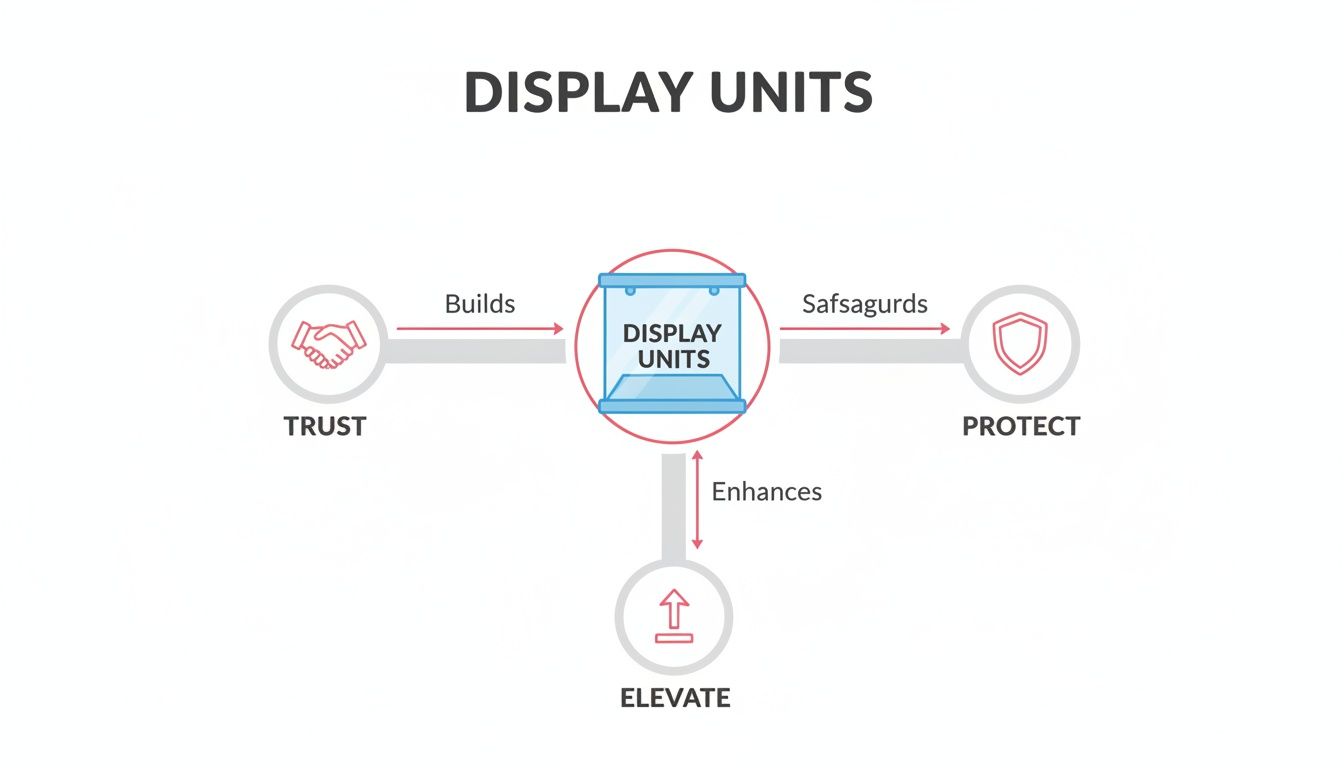
It’s a simple visualisation, but it perfectly captures how placing an item behind glass can transform how people see it.
Wall-Mounted Display Cabinets: The Space-Saving Galleries
Think of wall-mounted displays as the art galleries of the cabinet world. By lifting your showcase off the floor, you free up valuable space and create a clean, contemporary look. These are ideal for boutiques, studios, or homes where floor space is tight, but visual impact is non-negotiable.
They can turn a blank wall into a curated exhibition. A fashion designer could install a series of wall-mounted cases to tell the story of a collection through prototypes, while a hobbyist might create a floating display of model cars or figurines. Their elevated position naturally draws the eye upwards, making them a clever choice for adding interest to otherwise forgotten areas. To explore more ideas, see our guide on retail display cabinets for shops.
The growing confidence in professional displays is clear. The global market for display glass cabinets was valued at around $5 billion in 2025 and is expected to grow by 7% annually, hitting an estimated $9 billion by 2033. This isn't just a niche market; it's a recognised tool for success.
Glass Display Unit Feature Comparison
To help you weigh your options, this table breaks down the three main types of glass display units at a glance.
| Unit Type | Primary Use Case | Key Feature | Ideal For... |
|---|---|---|---|
| Full-Size Cabinets | Showcasing large items or full collections. | High visibility and creating a strong focal point. | Tailors displaying suits, boutiques with mannequins, collectors. |
| Countertop Cases | Highlighting small, high-value products. | Close-up viewing and encouraging impulse buys. | Jewellers, accessory shops, displaying small collectables. |
| Wall-Mounted Units | Saving floor space while creating a curated look. | Modern, minimalist aesthetic and utilising vertical space. | Small boutiques, design studios, home collectors with limited room. |
By understanding these core differences, you can move forward and choose a display unit that doesn’t just fit your space, but actively helps you tell the story you want your items to tell.
Getting the Materials Right for Your Glass Display Units
Beyond just the shape and size, the materials you choose for your glass display units are absolutely fundamental. They don't just influence the look and feel of your showcase; they're the foundation of its durability and security. Think of it like commissioning a bespoke suit: selecting the right combination of glass and frame is like picking the perfect fabric and cut. It has to match your brand, protect what's inside, and leave a memorable impression.
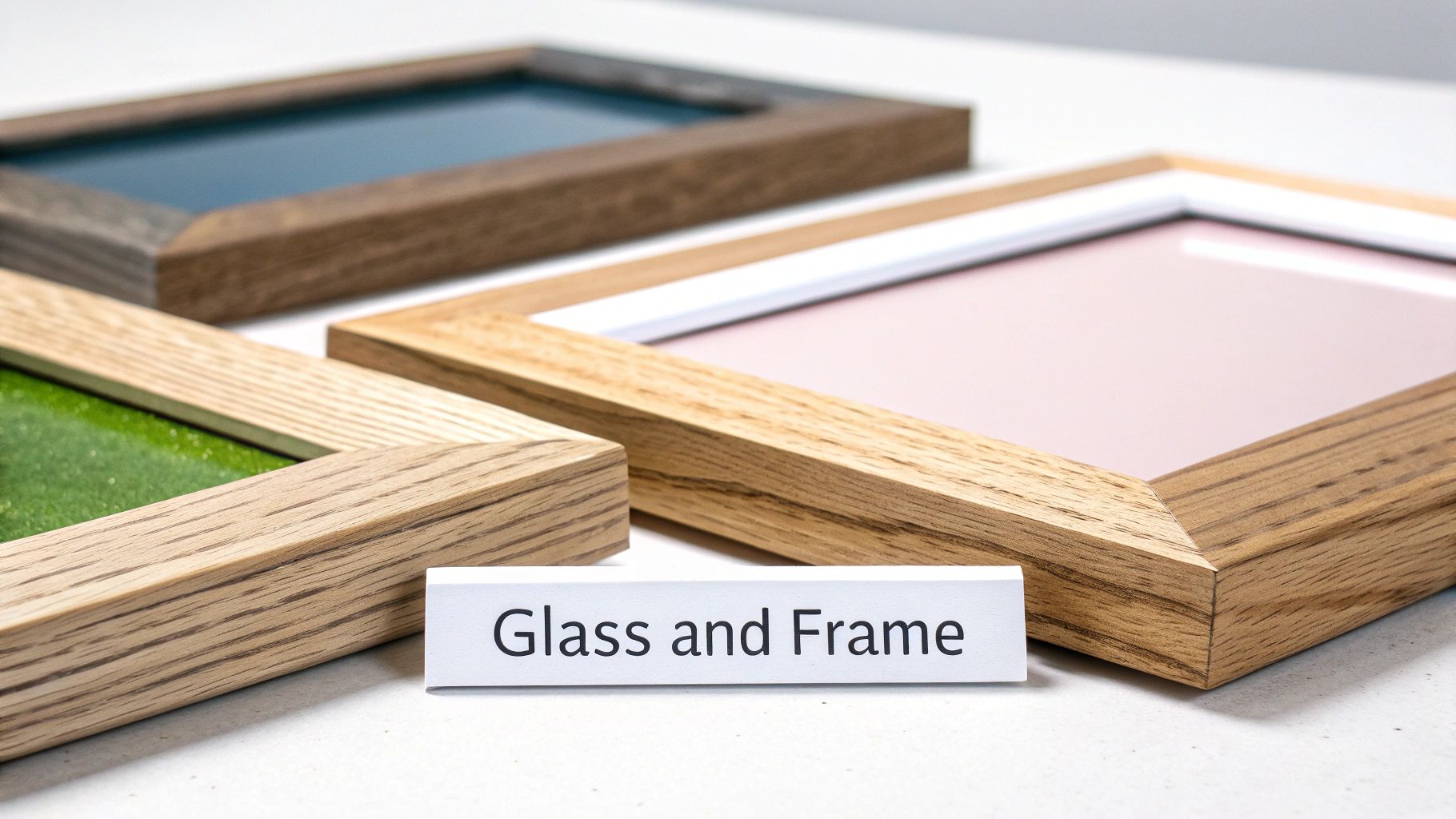
The materials you choose start telling your brand's story before a customer even lays eyes on the product. A rustic oak frame, for instance, immediately conveys a sense of heritage and fine craftsmanship, making it a natural fit for a traditional tailor. On the other hand, a sleek, polished aluminium frame projects a modern, precision-engineered feel, perfect for a contemporary boutique.
Understanding Your Glass Options
Let's be clear: not all glass is the same. The type you go for has a direct impact on strength, safety, and visual clarity, so it’s vital to get your head around the two main options you'll encounter in quality display units.
- Tempered Glass: This is the workhorse of the display world, and for good reason. It’s made by taking standard glass through a process of intense heating and then rapid cooling. This makes it up to four times stronger than ordinary glass. The real benefit, though, is how it behaves if it breaks. Instead of dangerous, sharp shards, it crumbles into small, blunt, pebble-like pieces, drastically cutting the risk of injury. It's a smart, safe choice for any busy retail space.
- Laminated Glass: Ever wondered how your car windscreen holds together when it gets a crack? That's laminated glass. It’s essentially a glass sandwich – two sheets of glass with a tough vinyl layer bonded between them. If the glass breaks, that inner layer holds all the fragments in place. This provides a serious security upgrade, making it incredibly difficult for anyone to smash through. It's the go-to choice for displaying high-value items like jewellery, watches, or rare collectables.
If you want to dig a bit deeper into the science, exploring different surface properties can be quite insightful, such as understanding hydrophilic and hydrophobic glass.
Choosing the Right Frame Material
The frame is much more than a simple support structure for the glass; it's a powerful design element that sets the entire unit's character. The right choice should echo your brand's personality and slot seamlessly into its intended environment.
The frame of your display unit is its signature. It can be bold and commanding or subtle and unobtrusive, but it always contributes to the overall narrative you are building around your products.
The UK's container glass market alone is a testament to the material's staying power, estimated to hit 3.13 million tons in 2025 and projected to climb to 3.54 million tons by 2030. For anyone in retail, this just reinforces how vital and appealing glass remains as a premium display choice.
Frame Finishes and Their Impact
Every frame material brings its own unique character to the table. Here’s a quick rundown of the most popular choices to help you find the perfect match.
- Aluminium: Lightweight, tough, and undeniably modern. Aluminium frames give you that clean, minimalist aesthetic and come in finishes like polished chrome or matte black. They’re incredibly versatile and look right at home in contemporary shops, galleries, and tech-focused displays.
- Wood: Timeless, warm, and inviting. Wooden frames, whether it's a rich mahogany or a light, airy oak, add a sense of tradition, luxury, and craftsmanship. This makes them a fantastic pairing for heritage brands, bespoke clothiers, and anyone selling artisanal goods where creating a welcoming atmosphere is key.
- Frameless: For the ultimate minimalist statement. Frameless designs use very subtle hardware to join the glass panels, creating a structure that’s almost invisible. This puts 100% of the focus squarely on the items inside, making it a brilliant option for museums, art galleries, or any setting where the product is the undisputed star of the show.
By giving careful thought to both the glass type and the frame material, you can find a display unit with glass that not only looks the part but also delivers the right level of security and durability for your specific needs. This considered approach ensures your investment is as practical as it is beautiful.
The Features That Make Your Glass Display Unit Work
You’ve nailed down the shape and materials for your display unit, which is a great start. But the real magic happens with the features inside. Think of lighting, security, and shelving as the elements that turn a simple glass box into a powerful tool for showing off your products. Getting these details right is what makes a display truly effective and visually stunning.
These features are like the support system for your star items. Lighting sets the scene, security is the ever-watchful guard, and the shelves are the stage itself. Each one has a vital part to play in making sure your display looks its best.
Lighting: Making Your Products Shine
Lighting is easily the most impactful feature in any glass display unit. It does so much more than just help people see; it creates a mood, draws the eye, and can even change how a customer sees the colour and quality of an item. Bad lighting can make details disappear, but the right lighting makes them leap out.
For glass cabinets, you’ll typically find two main types of lighting:
- Spotlights: These are brilliant for creating a bit of drama and focusing attention on a single, standout piece. A spotlight casts a concentrated beam of light, telling people exactly where to look. Picture one shining on a diamond necklace or a prized antique – it instantly makes the item feel more important.
- LED Strips: If you’re after a more even, all-over glow, integrated LED strips are the way to go. They usually run along the inside corners of the unit, filling the whole space with a soft, consistent light. This is perfect for displaying a group of items, like a collection of watches or a range of skincare products, without any harsh shadows.
Don't forget about lighting temperature. A warm, yellow-toned light (around 2700K) can make fabrics and natural materials look richer and more inviting. On the other hand, a cool, blue-toned light (around 4000K) gives off a crisp, modern vibe that makes metals and jewels sparkle.
Security: Keeping Your Valuables Safe
If you’re displaying anything of value, good security is simply not optional. A solid lock gives you peace of mind and acts as a clear deterrent, keeping your merchandise safe from theft or clumsy accidents. The right lock really depends on what you're protecting and how much security you need.
Simple plunger locks are a common and decent choice for everyday use in most retail settings. But for truly valuable items, you'll want to look at a multi-point locking system. This type of lock secures the door at several points, making it much harder for anyone to force it open. To learn more about protecting your items, take a look at our guide on choosing a lockable glass cabinet.
Shelving: The Foundation of Your Display
The shelves inside your glass display unit dictate everything from how you arrange your products to what you can display in the first place. The material and structure must be strong enough to hold the weight of your items without sagging or becoming a safety risk.
You’ll generally come across two kinds of shelving:
- Fixed Shelves: These are built right into the cabinet frame, giving you maximum stability and strength. They’re the ideal choice if you plan on displaying heavy objects like large sculptures, pottery, or hefty awards and know your layout won’t be changing.
- Adjustable Shelves: These systems use a series of pre-drilled holes or tracks that let you move shelves up or down whenever you need to. That kind of flexibility is a lifesaver for retailers with seasonal displays or collectors with a growing collection. You can easily switch things up to fit items of different heights, making sure your display always looks purposeful and well-composed.
Always check the manufacturer's weight limit for each shelf before you buy. Overloading shelves is a surprisingly common mistake that can lead to disaster. By thinking carefully about the lighting, security, and shelving, you can build a display that isn't just beautiful, but perfectly suited to whatever you need it for.
Styling and Merchandising with Glass Display Units
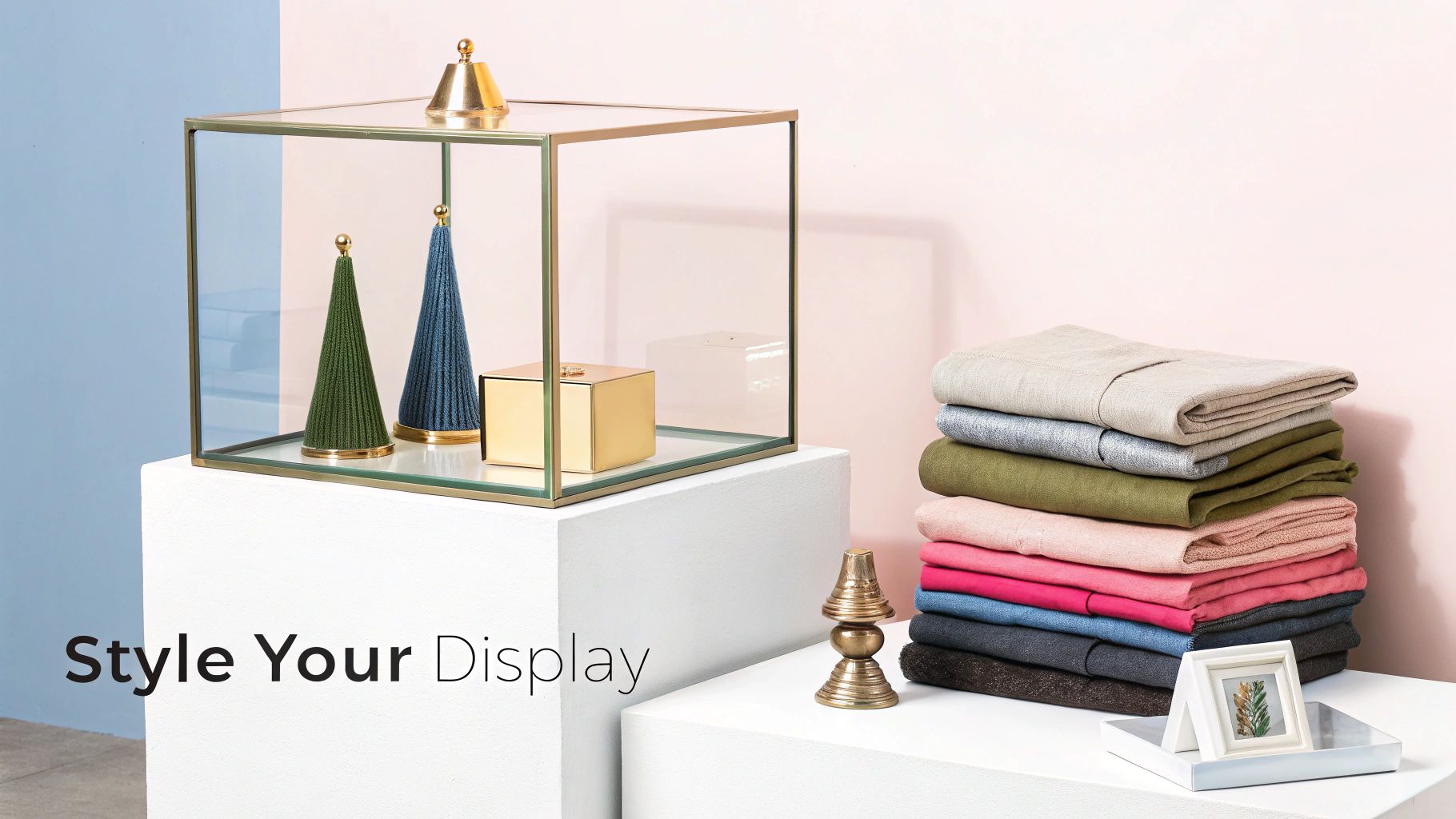
This is where the real artistry begins—turning a simple glass case into a captivating showcase. With the right touch, your display units glass can do far more than just hold items. They can tell a story, guide a customer’s eye, and ultimately, turn a casual glance into a definite sale. It all comes down to applying some core visual merchandising principles to create a display that feels thoughtful, balanced, and impossible to ignore.
These principles aren’t stuffy rules. Think of them as simple, effective guidelines for arranging objects in a way that’s naturally pleasing to the human eye. By getting a handle on just a few key concepts, you can elevate your products from mere stock into a beautifully curated collection.
Core Principles of Visual Storytelling
Two of the most powerful—and easiest—principles to master are the pyramid structure and the rule of three. These are your secret weapons for creating displays that look effortlessly professional and draw people in before they even know why.
- The Pyramid Principle: This is all about arranging items into a rough triangle. Your tallest item sits at the peak, with smaller items cascading down on either side. This classic layout works so well because it naturally leads the viewer’s gaze from the top focal point down and across the entire display, making sure nothing gets missed.
- The Rule of Three: There's a certain magic in odd numbers. Grouping items in threes creates a far more dynamic and visually interesting arrangement than a symmetrical, even-numbered group. A cluster of three related objects just feels more natural and less staged, encouraging the eye to move between them.
Your display unit is a miniature stage, and you are the set designer. Every item, prop, and riser is a deliberate choice that contributes to the overall narrative, guiding the audience to the story’s hero—your product.
Bringing Your Displays to Life with Context
A product rarely shines on its own. The real magic happens when you build a world around it, adding layers of context that hint at its story, its quality, or how it’s used. This is where you can get truly creative with props and backdrops to create a richer, more immersive experience.
Let’s look at how this works for different professionals:
For the Costume Designer: Imagine you’re showcasing a key prop from a film—say, a character’s signature pocket watch. Instead of just placing it on a shelf, try arranging it next to some faded script pages, concept art sketches, and a pair of the character’s gloves. This simple setup instantly transforms the prop from an object into a piece of a fascinating narrative.
For the Bespoke Tailor: A beautifully crafted suit is impressive, but you can make it irresistible. Drape a complementary silk pocket square from the jacket, place a vintage brass tape measure nearby, and artfully arrange swatches of the fabrics used. You’re no longer just displaying a suit; you’re showcasing the meticulous craftsmanship and quality materials that went into it. You can find more inspiration for showcasing your work in a glass wall cabinet display.
Adding Depth and Professional Polish
To give your displays that final, polished look, think vertically. Playing with different heights and textures can make a huge difference, preventing everything from looking flat and one-dimensional.
A few simple tools can create a surprisingly professional setup:
- Risers and Blocks: Use clear acrylic blocks, small wooden crates, or even a stack of old books to elevate key items. This simple trick adds vertical interest and helps establish a clear visual hierarchy.
- Props and Backdrops: A simple backdrop, like a panel of textured wallpaper or a swatch of rich velvet, can completely change the mood. Just make sure your props feel relevant—they should add to the story, not distract from it.
- Lighting Focus: Use your unit’s lighting to your advantage. If you have adjustable spotlights, aim them directly at your most important item to create a dramatic focal point.
When you’re thinking about the visual impact of your displays, especially for a storefront, exploring great retail window display ideas can be a game-changer for customer engagement. By applying these styling techniques, every display units glass becomes a powerful storytelling tool, turning your products into must-see attractions.
Getting Your Glass Display Unit Set Up and Keeping It Spotless
Getting your new **display unit glass** installed correctly is the first step, but regular care is what keeps it looking sharp and professional for the long haul. A well-kept cabinet is more than just a piece of furniture; it’s a secure, stable, and stunning home for your most important items.A little planning before you start can prevent a world of headaches, from wobbly frames to damaged glass. Let’s walk through the essential steps, from checking your space to the simple routines that will keep your display in top condition.
Before You Begin: The Pre-Installation Check
A few quick checks before you even unbox the components can make all the difference. The goal is to make sure your chosen spot is ready to handle the unit's size and weight safely.
First things first, check your floor. Is it truly level? Grab a spirit level and find out. An uneven surface can throw the whole cabinet off-kilter, putting strain on the glass and frame. This can lead to doors that don't hang right or, worse, an unstable unit.
Next, think about the total weight. It's not just the cabinet itself but everything you plan to put inside it. Make sure your floor can handle that combined load, particularly if you’re setting up a large unit for heavy merchandise like sculptures or fully dressed mannequins.
Assembling Your Glass Display Unit
With your space prepped, it’s time to build. When working with glass, your priorities should always be safety and precision. Rushing this part is never a good idea.
- Stick to the Script: Your unit comes with an instruction manual for a reason. Read it from start to finish before you touch a single screw. Assembly methods can vary wildly from one model to the next.
- Handle with Care: Always wear protective gloves. They’ll keep fingerprints off the glass and give you a much better grip. It’s also wise to lay the panels on a soft surface, like a blanket or rug, to avoid scratches.
- Team Up: This is definitely not a solo mission. A second person is essential for safely lifting and holding heavy glass panels and doors while the other secures them.
Think of it like a two-person job on a film set. One person holds the shot steady while the other makes the adjustments. This teamwork approach dramatically reduces the risk of accidents and ensures a perfect, professional finish.
Keeping That Showroom Shine
Once your display unit glass is up, a little routine maintenance will keep it looking flawless. A simple cleaning and inspection schedule protects the crystal-clear finish and ensures everything from hinges to locks works as it should. For more inspiration on maintaining a stunning visual, check out our guide to creating a standout glass display wall cabinet.
Here's a straightforward maintenance routine to get you started:
- Weekly Polish: Wipe down all glass surfaces with a microfibre cloth and a good, ammonia-free glass cleaner. This quick clean stops dust and smudges from building up.
- Monthly Inspection: Give the hardware a once-over. Check the hinges, locks, and any lighting. Tighten any screws that have worked loose and make sure the locks engage smoothly.
- Bi-Annual Deep Clean: Take everything out of the cabinet for a proper deep clean of the interior shelves and surfaces. It’s also the perfect time to give the glass a close look for any tiny chips or scratches that might need attention.
Common Questions About Glass Display Units
Even after doing your homework, a few specific questions always seem to pop up when you're choosing or setting up a glass display unit. Here are some quick, practical answers to the most common queries we hear, designed to help you sort out those final details.
What’s a Safe Weight Limit for Glass Shelves?
This is a big one, and the answer really depends on the glass itself. As a rough guide, a standard 6 mm tempered glass shelf can typically support around 15–20 kg. But you should treat that as just a ballpark figure.
Always, always check the manufacturer's official specifications before loading up your shelves. If you're displaying something hefty—think sculptures, trophies, or bulky electronics—you’ll want to look for units with thicker, reinforced glass or a fixed shelving structure built for heavier loads. Overloading a shelf is the quickest way to risk damage, so it pays to be cautious.
Can I Get a Display Unit Made to a Custom Size?
Absolutely. Most specialist suppliers offer a bespoke service for their glass display units. Going custom means you can get the exact dimensions you need, pick out a unique frame finish, or even add specialist features like anti-reflective glass.
It's the perfect solution if you need to fit a unit into an awkward space or want a showcase that’s a perfect match for your brand's look and feel. Of course, a custom job will cost a bit more and take longer to arrive, but the end result is a display that’s truly made for you.
You might be surprised at the level of technology in modern displays. High-end units often use materials like borosilicate glass, which is incredibly tough and resistant to thermal shock. This type of advanced material is a cornerstone of the global LCD glass market, valued at USD 9.64 billion in 2024 and expected to climb to USD 15.42 billion by 2033. It really shows how much value is placed on high-performance glass. You can dive deeper into the advanced display substrate market over at Grand View Research.
How Do I Add More Lighting to My Existing Cabinet?
Adding lights to an older cabinet is a fantastic and surprisingly simple upgrade. The easiest way is with battery-powered, self-adhesive LED puck lights or strips. You can stick them right where you need them in minutes, with no messy wiring involved.
If you’re after a cleaner, more professional look, a low-voltage wired LED system is a great choice. The wires are thin enough to be tucked away neatly along the inside corners of the frame. This simple touch can make a world of difference, making your items stand out and drawing the eye exactly where you want it.
At Display Guru, we provide the high-quality mannequins, garment rails, and display tools you need to create stunning presentations. Explore our collection and find the perfect display solutions for your needs today.