




Glass Wall Cabinet Display Ideas for a Stunning Home
A glass wall cabinet is far more than just a place to put things; it’s a stage, designed to spotlight your most prized items. The trick is finding that perfect balance between protection, visibility, and style—a choice that elevates not just the objects inside, but the entire room. Getting this foundational step right is what turns a simple storage unit into a stunning visual centrepiece for your shop, studio, or home.
Choosing the Right Glass Wall Cabinet Display
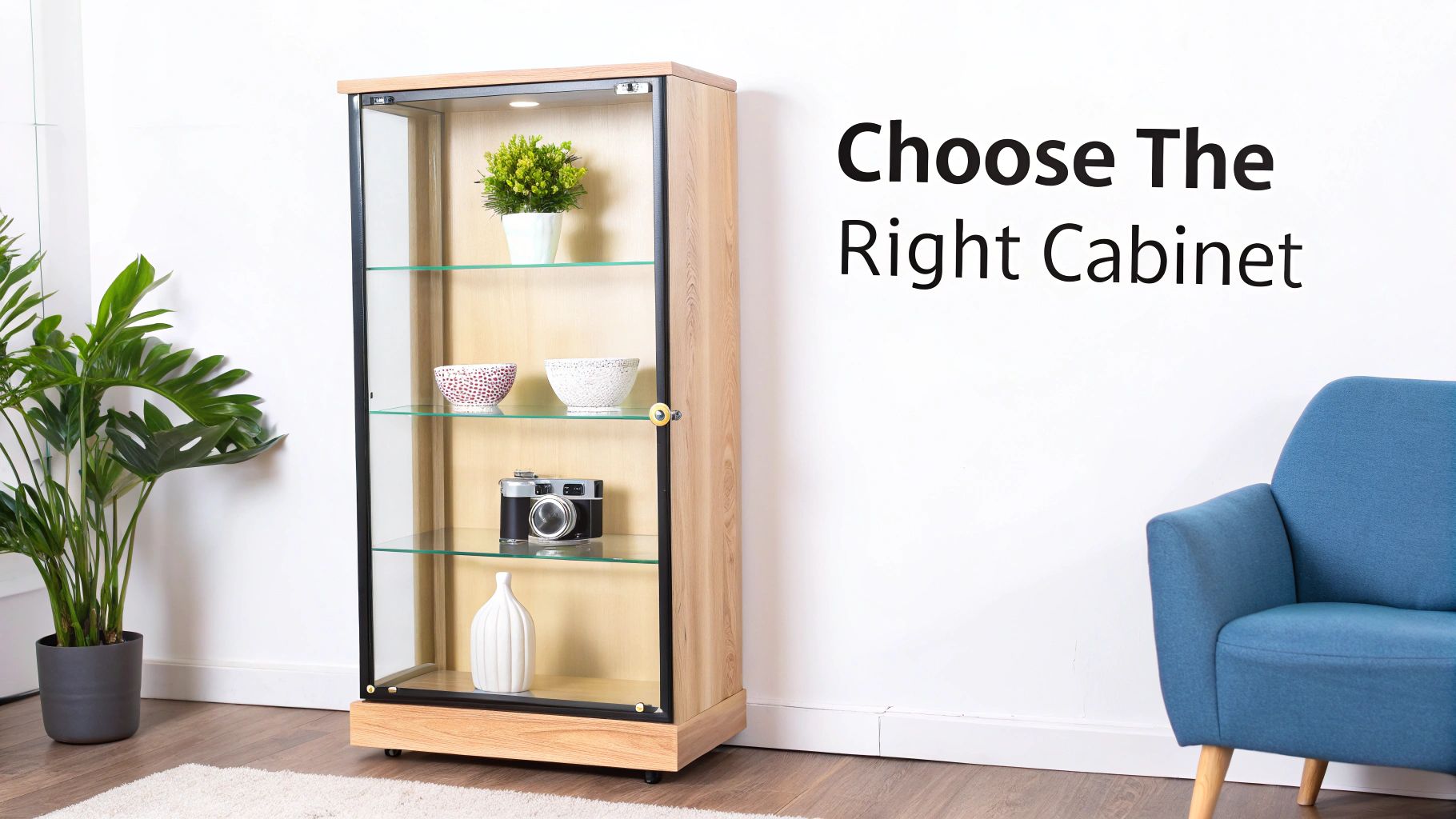
Finding the ideal cabinet means going beyond generic advice and really thinking about what you need it to do. Let's start with the glass. In a busy retail space or a home with kids running around, tempered glass is non-negotiable. It’s a safety-first option that crumbles into small, harmless pieces if it breaks. If your cabinet will be opposite a window, I’d also strongly recommend an anti-glare finish. It’s a small detail that makes a world of difference, ensuring your display is always perfectly visible without any distracting reflections.
Next up is the frame, which really sets the tone. A minimalist, frameless cabinet creates a sleek, modern feel, making the contents almost appear to float. This works beautifully in a contemporary studio or for delicate items like jewellery where you want nothing to distract the eye. On the other hand, a classic wooden frame brings a sense of warmth and tradition, which can be the perfect complement to antique collections or a cosy, lived-in space. For a more industrial or vintage vibe, a metal frame can be a fantastic choice.
Matching the Cabinet to Your Collection
Think practically about what you're displaying. A collection of delicate porcelain figures has very different needs from a display of bold, colourful garments. The shelf depth, internal lighting, and overall size of the cabinet need to work in concert with the objects themselves.
Here are a few things I always consider:
- Size and Scale: Is the cabinet in proportion with the room and the collection? A huge unit can easily dominate a small space, while a tiny cabinet might get lost on a large wall.
- Adjustability: Always look for adjustable shelves if you can. This flexibility is priceless, especially as your collection evolves over time.
- Security: If you're displaying valuable items, a built-in lock is essential. It offers peace of mind and a vital layer of protection.
Choosing a cabinet is like framing a piece of art. The goal is to select a frame that complements the artwork without overpowering it, ensuring the viewer's focus remains on what’s truly important—the collection inside.
For those with awkward spaces or a very specific vision, exploring companies that handle bespoke glass projects can be a brilliant way to get a perfectly tailored solution. This move towards customisation is part of a bigger trend. In the UK alone, residential sales of wall-mounted glass cabinets shot up by 28% from 2020 to 2024, which lines up with the recent boom in home renovation projects.
To help you decide, here's a quick comparison of features that are most important for different settings.
Glass Cabinet Feature Comparison
This table breaks down the key features to look for depending on whether you're outfitting a retail store, a creative studio, or your own home.
| Feature | Best For Retailers | Best For Studios/Tailors | Best For Home Collectors |
|---|---|---|---|
| Glass Type | Tempered glass is essential for safety in high-traffic areas. Anti-glare coating is highly recommended. | Tempered or laminated glass for durability. Good clarity is key for colour accuracy. | Standard glass is often fine, but tempered is safer for homes with children or pets. |
| Lighting | Integrated LED strips to highlight products and draw attention. Bright, even lighting is crucial. | Adjustable spotlights to focus on specific details of work-in-progress or finished pieces. | Softer, ambient lighting to create a warm atmosphere. Dimmers are a great addition. |
| Security | High-quality locks are a must-have to protect valuable merchandise from theft. | A lock is a good idea for securing unique prototypes or client work. | Optional, but recommended for collections of high personal or monetary value. |
| Shelving | Adjustable and sturdy to accommodate changing stock and different product sizes. | Deep, adjustable shelves to hold mannequins, fabric bolts, or larger projects. | Glass shelves for an elegant look. Adjustability is useful as your collection grows. |
| Frame Style | Minimalist or metal frames to keep the focus on the products. Should match store branding. | Functional and durable. Metal or simple wood frames that can withstand a working environment. | Wood, metal, or frameless to match your personal interior design style. |
Ultimately, the right cabinet choice does more than just store your items—it transforms them into a curated exhibit.
For a deeper dive into all the options, have a look at our comprehensive guide on the glass display wall cabinet.
Planning a Safe and Secure Installation
A gorgeous glass wall cabinet is a fantastic addition to any space, but its visual appeal hinges entirely on a solid, secure installation. Before you even reach for a drill, spending time to properly assess your wall and plan the cabinet's placement is the most crucial step. It’s the difference between a professional-looking display that lasts for years and a potential disaster.
First things first, you need to know what your wall is made of. A solid brick or block wall is the gold standard for support, but the reality is that most modern UK properties feature plasterboard stud walls. This changes the game completely, as plasterboard on its own can't bear much weight at all. Attaching a heavy cabinet directly to plasterboard is a mistake you don't want to make.
Finding Support and Marking Your Spot
With a plasterboard wall, your mission is to find the wooden studs hidden behind it. This is where a good quality electronic stud finder becomes your best friend. Run it along the wall, and once you locate the studs, mark their centres clearly with a pencil. These marks are your targets—the points where your main fixings will anchor into solid wood, providing the strength you need.
Once you know where the support is, you can decide on the cabinet's height. A great rule of thumb is to place the centre of the cabinet at eye level, which for most people is about 150-160cm from the floor. Grab a spirit level and a tape measure to draw a faint, perfectly level line on the wall. This will guide you, ensuring the cabinet doesn't end up looking lopsided.
I've seen it happen too many times: people use the wrong fixings for the job. Those standard plastic wall plugs you use for a small picture frame are nowhere near strong enough for a heavy glass cabinet. You must use heavy-duty fixings specifically designed for your wall type.
This becomes non-negotiable when you're displaying valuable items. For something like the secure display of antique jewelry, a rock-solid installation is paramount. The right hardware isn't just a suggestion; it’s a critical part of protecting your collection.

Make sure you've got the right kit for the job:
- For Plasterboard (into studs): You'll need long, heavy-gauge wood screws that can penetrate at least 3-4cm into the timber stud itself.
- For Plasterboard (hollow sections): If you absolutely must fix into a hollow part of the wall, heavy-duty toggle bolts or spring toggles are your only safe option. They work by expanding behind the plasterboard, spreading the load over a much wider area.
- For Brick or Masonry: This requires the right masonry drill bits and high-quality expanding wall plugs or sleeve anchors made for solid walls.
Taking the time to plan properly ensures your cabinet doesn't just look the part but is also anchored safely for the long haul. If you're looking at other wall-mounted options, our guide on choosing a wall-mounted hanging rail has some great complementary advice on secure fixings. A few careful checks beforehand will give you total peace of mind that your treasured items are displayed safely and securely.
Getting the Lighting Right in Your Display Cabinet
Lighting isn't just an add-on; it's the single most powerful tool you have for making a glass wall cabinet display truly shine. It's what turns a simple shelf of items into a curated, eye-catching exhibit that pulls people in and tells a story. The right light can bring out hidden details, set a specific mood, and direct attention exactly where you want it.
These days, LED strips are pretty much the gold standard, and for good reason. They’re incredibly energy-efficient, they don't produce much heat (which is a lifesaver for delicate fabrics or collectibles), and they give you a ton of options. Forget the harsh, clinical spotlights of the past; modern LEDs let you be subtle and strategic, elevating the whole look.
Choosing Your Lighting Strategy
Where you put the lights can completely change the vibe of your display. There's no one-size-fits-all answer here; it’s all about what you’re showing off.
- Top-down lighting is a classic. It casts gentle, dramatic shadows that add a real sense of depth, which is fantastic for things like small mannequins or sculpted accessories.
- Backlighting creates a beautiful silhouette. This technique is a game-changer for glassware or anything with an interesting outline, making the item pop against a soft glow.
- Integrated shelf lighting is your best bet for a clean, even look. By running thin LED strips along the front or back edge of each shelf, you get rid of any awkward dark spots and make sure every piece gets its moment in the spotlight.
Setting the Mood with Colour Temperature
The colour of the light—its temperature—is just as crucial as its position. A warm light (around 2700K-3000K) gives off a cosy, yellowish glow. It’s perfect for bringing out the richness of wooden items, vintage fabrics, or anything with earthy tones. It feels inviting and almost nostalgic.
On the other hand, for jewellery, crystal, or sleek metallic pieces, a cool-toned light (around 4000K-5000K) works much better. This crisp, white light is closer to natural daylight and really makes reflective surfaces sparkle, highlighting every facet and detail. If you're a tailor or designer, this is key for seeing true colours and intricate work.
Here’s a tip from experience: try not to over-light your cabinet. The goal is to create contrast and focus, not to flood the space with light. I always recommend starting with a more subtle setup and only adding more if you feel it’s absolutely necessary. When it comes to elegant displays, less is very often more.
This shift towards better lighting is happening everywhere. Retailers are catching on, with 55% of UK businesses reportedly planning to upgrade to modern glass displays with frameless fronts and built-in LEDs. It’s not just for looks, either; this kind of investment has been shown to increase customer dwell time in showrooms by up to 20%.
Before you get to the lighting, though, you have to get the installation right. This diagram runs through the basics.
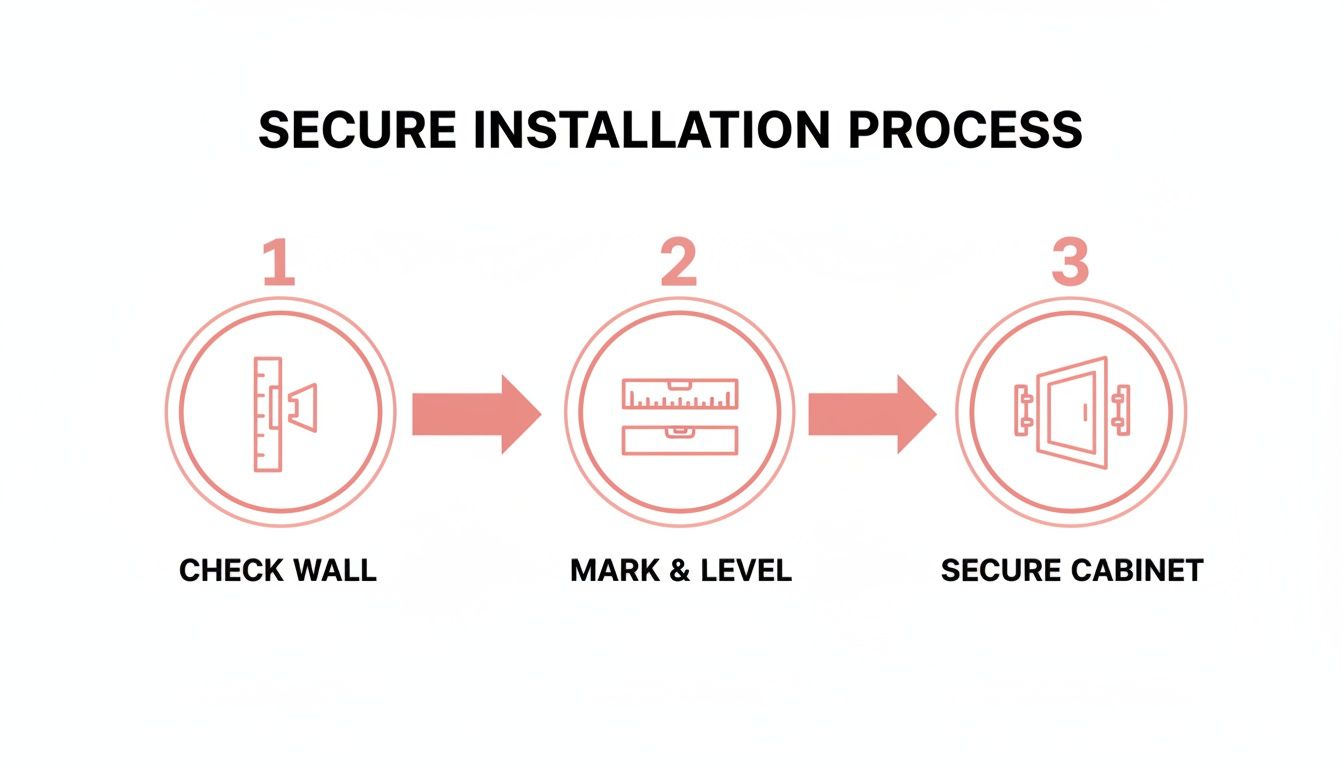
It’s a straightforward process: check your wall, mark your level, and then secure the cabinet. Getting this foundation right ensures your display is stable long before you start threading any wires. If you want to dive deeper into the different types of units out there, have a look at our guide to choosing a display cabinet with glass.
Styling Your Cabinet Like a Professional
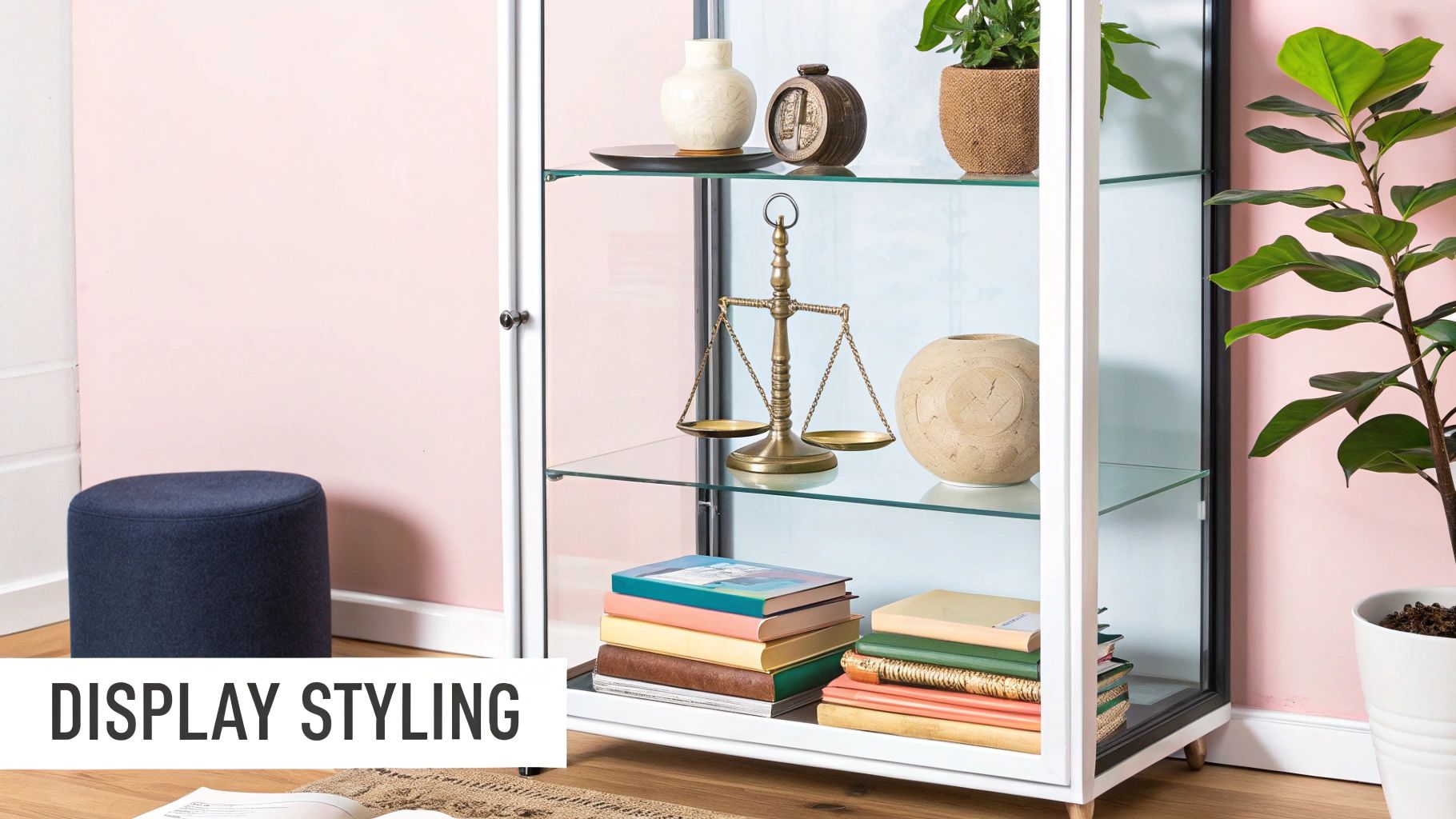
An empty glass cabinet is pure potential. It’s your blank canvas, a chance to tell a story with the items you choose to display. The real magic happens when you move beyond just placing things on a shelf and start thinking like a curator. The secret is using a few core design principles to guide the viewer's eye and create a display that feels both intentional and beautiful.
Think of your collection as a cast of characters in a play—not every item can be the star. This is where the principle of hierarchy comes in. You need to decide which pieces deserve the spotlight. A simple trick is to place these focal points at eye level or give them a bit more light. This immediately tells people where to look first.
Creating Balance and Flow
A balanced display just feels right. It's calm and pleasing, not chaotic. You don't have to aim for perfect, mirror-image symmetry either. In fact, asymmetrical balance often creates a more dynamic and interesting look. Imagine placing a single, large, dark-coloured vase on one side and balancing its visual weight with a cluster of three smaller, lighter-coloured bowls on the other. It works.
Don’t underestimate the power of negative space—that’s the empty area around your items. Leaving enough room to breathe is what stops a display from looking cluttered. It gives each piece its own stage, allowing it to be seen and appreciated properly.
Here are a few ways to group items effectively:
- By Theme: Tell a story. Arrange souvenirs from a memorable trip or display a collection of antique sewing tools.
- By Colour: Grouping items with a similar colour palette is a classic move. It creates a powerful, cohesive statement that’s incredibly easy on the eyes.
- By Size: Create depth and interest by playing with scale. Position taller items towards the back and bring your smaller, more intricate pieces forward.
A well-styled glass cabinet transforms your treasures into a stunning display while keeping them protected and dust-free. The glass doors let you showcase your collection while keeping it clean and tidy.
For anyone in retail or fashion, these styling techniques are more than just decorative—they’re a business tool. Applying established visual merchandising guidelines can fundamentally change how customers perceive your products and your brand. If you want to dive deeper, our guide on visual merchandising guidelines is packed with professional techniques.
Practical Styling Scenarios
Let’s put this into practice. For a tailor’s studio, you could create a layered display that speaks to the craft. Picture a small mannequin draped in a half-finished garment, surrounded by carefully chosen spools of thread and a few antique scissors. The story here is all about craftsmanship and attention to detail.
For a hobbyist at home, perhaps displaying a collection of ceramic art, a minimalist approach works wonders. Give each piece plenty of negative space to highlight its unique form and texture. This conveys a sense of sophistication and a genuine appreciation for each object.
To help you get started, here’s a quick reference table breaking down the core principles we’ve talked about.
Display Styling Principles at a Glance
This table summarises the key concepts and offers a simple, practical way to apply them to your own glass wall cabinet.
| Principle | Definition | Application Example |
|---|---|---|
| Hierarchy | Guiding the viewer's eye to the most important items first. | Place your most prized item in the centre of the middle shelf, supported by smaller, complementary pieces. |
| Balance | Distributing visual weight evenly to create a stable, pleasing composition. | Counterbalance a large, dark object on the left with several smaller, bright objects on the right. |
| Rhythm | Creating a sense of movement through repetition and pattern. | Arrange a series of similar items (like porcelain dolls) in a line, varying their spacing slightly to create flow. |
| Negative Space | The intentional use of empty space to prevent clutter and highlight items. | Leave at least a few inches of clear space around each object to let it stand out on its own. |
By thoughtfully applying these concepts, your glass cabinet will stop being just storage and start being a dynamic, personal exhibition that truly shows off what you love.
Long-Term Care and Maintenance for Your Display
Once you've created a beautiful display in your glass wall cabinet, the job isn't quite finished. Keeping it looking sharp and secure requires a little ongoing attention. A simple but consistent routine for cleaning and hardware checks will protect your investment and ensure your displayed items always look their best.
Security is often the first thing on people's minds. For most situations, a standard key lock provides a good deterrent against casual access. However, if you're showcasing high-value merchandise or priceless family heirlooms, it's worth thinking about an upgrade. A more robust mechanism, like a plunger or cam lock, can offer that extra layer of security that’s so crucial in a busy retail or gallery environment.
Keeping Your Display Pristine
Nothing dulls the impact of a great display faster than dust and fingerprints. Regular cleaning is essential, and the secret is using the right tools to avoid streaks and potential damage.
My tried-and-tested method for a perfect, streak-free shine is a simple solution of one part white vinegar to one part distilled water. I pop it in a spray bottle and always use a clean microfibre cloth, which won't leave behind the annoying lint that paper towels often do. Remember to clean both the inside and outside of the glass. For the cabinet frame itself, a separate, slightly damp cloth usually does the trick, but it's always wise to check the manufacturer’s care guide first.
It's easy to forget the hardware, but it’s a critical check. Once a month, just take a couple of minutes to make sure all the hinges, shelf supports, and mounting screws are tight. This tiny task is one of the best ways to guarantee the structural integrity of your cabinet for years to come.
Routine Checks and Best Practices
Beyond a good clean, a few other periodic checks will keep everything in perfect working order. Make sure any built-in lighting is functioning correctly and that shelf supports are sitting securely in their slots, especially after you've rearranged the contents. This is non-negotiable in a professional setting where presentation and safety are paramount.
This focus on well-maintained, secure displays is a growing trend. You see it everywhere, from high-end retail to cultural institutions. For example, the UK's 2,500+ museums rely heavily on high-quality display units. As visitor numbers climbed by 18% by 2024 following the post-pandemic recovery, 35% of these museums invested in new wall-mounted displays to better protect their artefacts.
For tailors and designers, this same level of care applies to the items inside the cabinet. Proper storage for fabrics and finished garments is key to preventing damage and ensuring they are always client-ready.
Answering Your Top Questions on Glass Wall Cabinets
Even with a solid plan, you're bound to have questions once you start working with a glass wall cabinet. It’s completely normal. Getting straight answers to these common queries will help you feel more confident and keep your display looking sharp for years to come. Let's dig into a few of the questions I hear most often.
What's the Maximum Weight a Cabinet Can Really Hold?
This is a big one, and the answer isn't always straightforward. The weight capacity of a glass cabinet varies massively. A smaller, decorative unit might only be rated for 15-20kg, but a commercial-grade, heavy-duty model can often take 50kg or more. But here's the crucial part: the number on the box is only half the equation.
The real strength of your installation comes down to the wall itself. To get anywhere near that maximum weight limit, you absolutely must anchor the cabinet into solid wall studs or a brick wall. If you’re dealing with plasterboard, you'll need heavy-duty toggle bolts, but you have to accept that the total load it can safely bear will be significantly lower.
How Can I Stop Glare and Reflections from Ruining the View?
Glare is the nemesis of any good display, completely hiding the products you've worked so hard to feature. Your first line of defence is placement. Try to position your cabinet away from direct sunlight or harsh overhead lighting. A north-facing wall or any spot that gets gentle, indirect light is usually your best bet.
If you're looking for a more foolproof solution, consider a cabinet that comes with anti-reflective glass. It's a premium feature, no doubt, but the improvement in clarity is genuinely night and day.
Your internal lighting makes a huge difference, too. My advice? Ditch the single, harsh spotlight. It just creates a bright, reflective mess. Instead, use several low-intensity LED spotlights. This strategy diffuses the light, cuts down on internal glare, and gives the whole setup a professional, gallery-quality finish.
What's the Best Way to Keep a Glass Cabinet Clean?
A pristine, smudge-free cabinet is non-negotiable. For a streak-free shine, I swear by a simple mix of one part white vinegar and one part distilled water in a spray bottle. Always use a clean microfibre cloth, and steer clear of any cleaners containing ammonia – they can strip coatings and damage frame materials over time.
A good, simple maintenance routine looks like this:
- Wipe the glass both inside and out to clear away fingerprints and dust.
- Dust the shelves and the items on display to prevent any build-up.
- Check all hardware every couple of months. Just make sure the screws and mounting brackets are still nice and tight.
Following these simple steps will ensure your display stays secure and looks its absolute best.
At Display Guru, we provide the high-quality tools you need to create compelling visual presentations. Explore our full range of mannequins, garment rails, and display accessories at https://www.displayguru.co.uk and bring your creative vision to life.