

The Ultimate Guide to Display Hat Stands
That simple hat stand in the corner of your shop? It's doing far more than just holding a hat. It’s your silent salesperson, working tirelessly to protect your creations, tell your brand's story, and significantly boost the perceived value of your headwear.
Why Your Hat Display Is Your Strongest Sales Tool
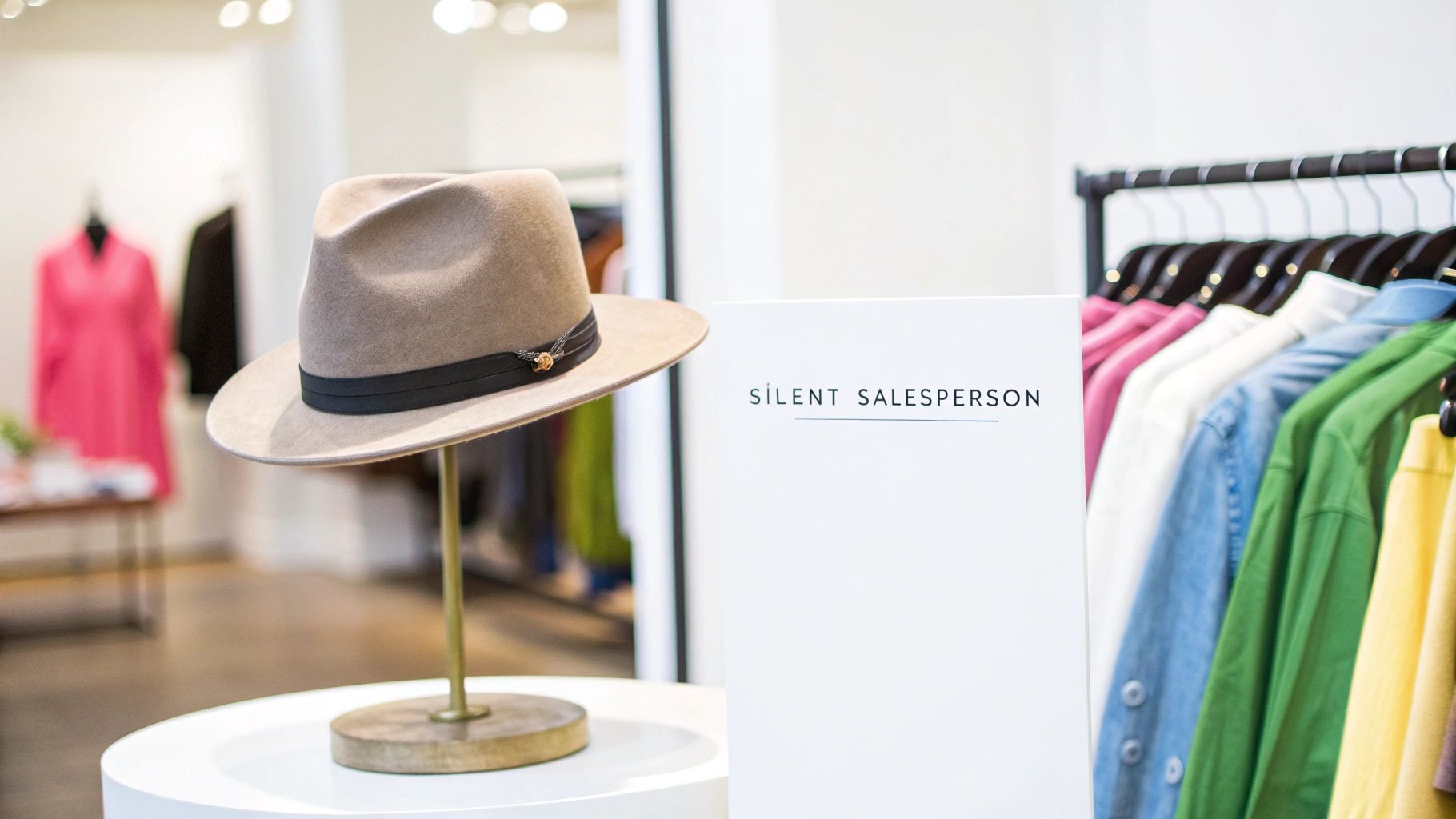
The UK headwear market is thriving, and for tailors, designers, and visual merchandisers, presentation is everything. It’s what separates a forgotten accessory from a must-have item. A well-chosen display hat stand can transform a simple hat into an aspirational centrepiece, drawing customers in and inviting them to explore your collection.
Think about the difference it makes. A fedora tossed onto a shelf looks like an afterthought, easily overlooked. But place that same hat on a sleek, supportive stand, and it suddenly commands attention. It has presence. It's no longer just an item of stock; it's a carefully crafted piece that deserves a closer look. This guide will give you the practical know-how to select, style, and maintain stands that create stunning displays and, most importantly, drive sales.
The Power of Professional Presentation
Great displays don't happen by accident; they're a blend of psychology and thoughtful design. They subtly guide how a customer feels and acts in your space, reinforcing your brand's identity with every detail. The right display stands are essential for a few key reasons:
- Preserving Garment Integrity: A proper stand is designed to support a hat’s crown and brim. This prevents the distortion, creasing, and general damage that's inevitable when items are left on flat surfaces or crowded hooks.
- Enhancing Perceived Value: The simple act of elevating a hat on a stand immediately makes it look more special and valuable, which helps justify its price point in the customer's mind.
- Telling a Visual Story: The material and style of your stands are part of your shop's narrative. Are you rustic and traditional? Modern and minimalist? Your fixtures should reflect that.
A Silent and Effective Salesperson
At the end of the day, your display is working for you 24/7. Without you saying a word, it communicates quality, craftsmanship, and care. It’s an open invitation for a customer to touch, try on, and ultimately purchase.
This is a core principle of visual merchandising that goes far beyond headwear. For a deeper dive, our complete guide to retail display stands explores how these same ideas can create powerful customer experiences for any product. By mastering the art of presentation, you turn passive browsers into active buyers.
Choosing the Right Materials for Your Brand
The material you choose for a hat stand does more than just hold the product; it's the first word in a silent conversation with your customer. It sets the tone and tells your brand's story before they even touch a single hat. Are you all about timeless craftsmanship or sharp, modern design? The material—be it wood, metal, acrylic, or fabric—is a key part of that narrative.
This decision goes beyond just looks. It affects everything from durability to how well the hat itself is preserved. Getting it right means finding the perfect partner for your hats and your retail space, whether that's a sophisticated boutique or a high-energy streetwear store.
The Timeless Appeal of Wood
Wooden display hat stands are the dependable classics of the retail world. There's an inherent warmth and authenticity to wood that instantly brings a sense of heritage to a display. A rich, dark walnut finish, for example, whispers luxury and tradition, making it the perfect setting for classic felt fedoras or bespoke tweed flat caps.
If your brand has a more relaxed, organic vibe, a lighter wood like pine or birch is a fantastic choice. It creates a rustic, approachable feel that works beautifully for casual pieces like straw sun hats or hand-knitted beanies. Beyond its good looks, wood is solid and dependable, giving heavier hats the sturdy support they need.
The Modern Edge of Metal
For a look that's clean, contemporary, and a little bit edgy, you can't go wrong with metal. The sharp lines and industrial feel of a metal stand make a powerful statement. With finishes ranging from brushed steel and matte black to polished chrome, you can easily find a style that integrates perfectly with your shop's existing fixtures.
Metal is incredibly durable, and its typically slender profile creates a minimalist stage where the hat is the undeniable star. This makes it a brilliant choice for showing off modern designs, from bold, architectural fascinators to premium, structured baseball caps. The inherent weight of metal also gives these stands great stability—a must-have in any busy shop.
The Clarity of Acrylic
When you want the hat to do all the talking, acrylic is your answer. These transparent stands are the true chameleons of visual merchandising, effortlessly blending into any backdrop. Their "barely there" quality cuts out all visual noise, drawing the customer's eye directly to the colour, texture, and silhouette of the headwear.
This makes acrylic stands especially powerful for displaying vibrant, intricately detailed, or high-fashion pieces. They’re also lightweight, which makes rearranging your displays a breeze as new collections arrive.
Think of a sleek acrylic stand as a modern, almost invisible frame that lets the product shine. It doesn't compete for attention; it elevates the hat, making it appear to float in mid-air. This creates a sense of sophistication and highlights the hat's every detail.
The Soft Touch of Fabric
Fabric-covered stands introduce a layer of luxury and care. A dome wrapped in velvet or linen offers a gentle, non-slip surface that protects delicate materials like silk, fine straw, or embellished fabrics from any risk of snagging or damage. That tactile quality immediately signals a premium product.
These are an obvious choice for bridal boutiques, high-end milliners, or any retailer displaying delicate occasion wear. The fabric also provides a subtle grip, preventing hats from sliding off, which is a practical function much like how a proper stand for mannequin head is designed to hold wigs securely in place.
Choosing the right material is a crucial merchandising decision. To help you weigh your options, here’s a quick comparison of the most common choices.
Comparing Hat Stand Materials for Retail Settings
| Material | Aesthetic Appeal | Best For Hat Types | Ideal Retail Setting |
|---|---|---|---|
| Wood | Warm, classic, natural, rustic. | Fedoras, flat caps, boaters, luxury felt. | Boutiques, heritage brands, department stores. |
| Metal | Modern, industrial, minimalist, sleek. | Baseball caps, snapbacks, modern designs. | Streetwear shops, contemporary fashion stores. |
| Acrylic | Invisible, clean, contemporary. | Colourful or detailed hats, high-fashion pieces. | Minimalist spaces, art galleries, luxury retail. |
| Fabric | Luxurious, soft, protective, premium. | Fascinators, bridal headwear, delicate straw. | Milliners, bridal shops, high-end boutiques. |
Ultimately, a well-chosen material does so much more than just hold up a hat. It reinforces your brand identity and elevates the entire customer experience from the moment they step through your door.
Matching the Stand to the Style of Hat
You’ve sorted out the materials, but the real craft begins when you start pairing a specific hat with the perfect stand. Think of it like a frame for a painting; the right choice makes the art pop, while the wrong one can make a masterpiece look like an afterthought. It's about more than just looking good—it's about protecting the hat's shape and telling a visual story.
A delicate fascinator, for instance, needs a stand that's barely there—something slender that won't overwhelm its fine details. On the other hand, a heavy, wide-brimmed sun hat demands a solid, weighted base to keep it from tipping over. This ensures the display is both safe and looks suitably premium.
Supporting Structured Hats
When you're dealing with classic, structured hats like fedoras, trilbies, or homburgs, the number one priority is protecting the crown's shape. These hats have a very specific form that can be ruined with the wrong support.
For these styles, a full, dome-shaped top on the stand is absolutely essential. It needs to mimic the curve of a human head to distribute support evenly, preventing dents and creases from forming over time. A stand with a flat or narrow top will just create pressure points and warp the hat’s silhouette.
A traditional solid wood stand often works beautifully with the classic craftsmanship of these hats. If you want a more modern feel, a minimalist metal stand can create a fantastic contrast that makes a timeless design feel contemporary. If you're displaying hats as part of a full outfit, our guide on choosing the best head mannequin stand can help you create a cohesive and professional look.
Displaying Casual and Soft Hats
Soft, unstructured hats like beanies, berets, and bucket hats give you a lot more creative freedom. Since there’s no rigid shape to preserve, your focus can shift completely to the visual presentation. This is where simple, geometric stands—like T-bars or minimalist wire frames—really shine.
These types of stands let the fabric drape naturally, showing off its texture and colour without forcing it into a particular shape. It’s a clean, uncluttered approach that’s perfect for creating a modern, casual vibe in your store.
This chart can help you see how your brand's identity can steer your material choices for different types of hats.
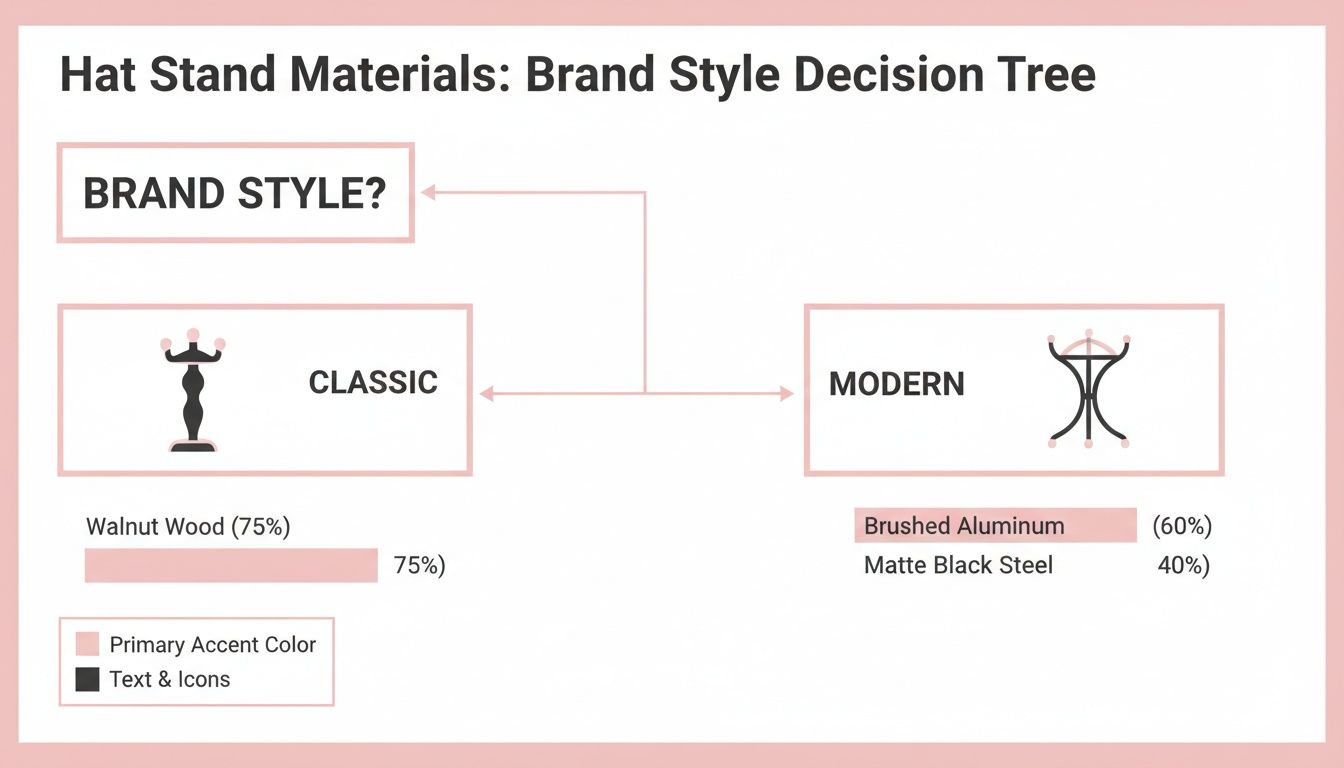
As you can see, brands with a classic feel tend to lean towards the natural warmth of wood, while those with a modern edge are often better suited to the sleek lines of metal or acrylic.
Highlighting Speciality Headwear
More unique pieces demand a bit more thought. A bridal headpiece, for example, is best displayed on a fabric-covered stand to stop delicate lace or beading from snagging. Likewise, a well-made baseball cap needs a dome that fits its specific panel construction to look sharp and inviting.
The UK headwear market is booming, and a great display is what gets you noticed. Back in 2022, hats and caps accounted for 45.08% of a market that’s expected to nearly double by 2030, with sports culture being a huge driver. This trend highlights just how important it is for retailers to present every single item—from a cricket cap to a formal fascinator—in its best possible light.
Mastering the Art of Visual Merchandising
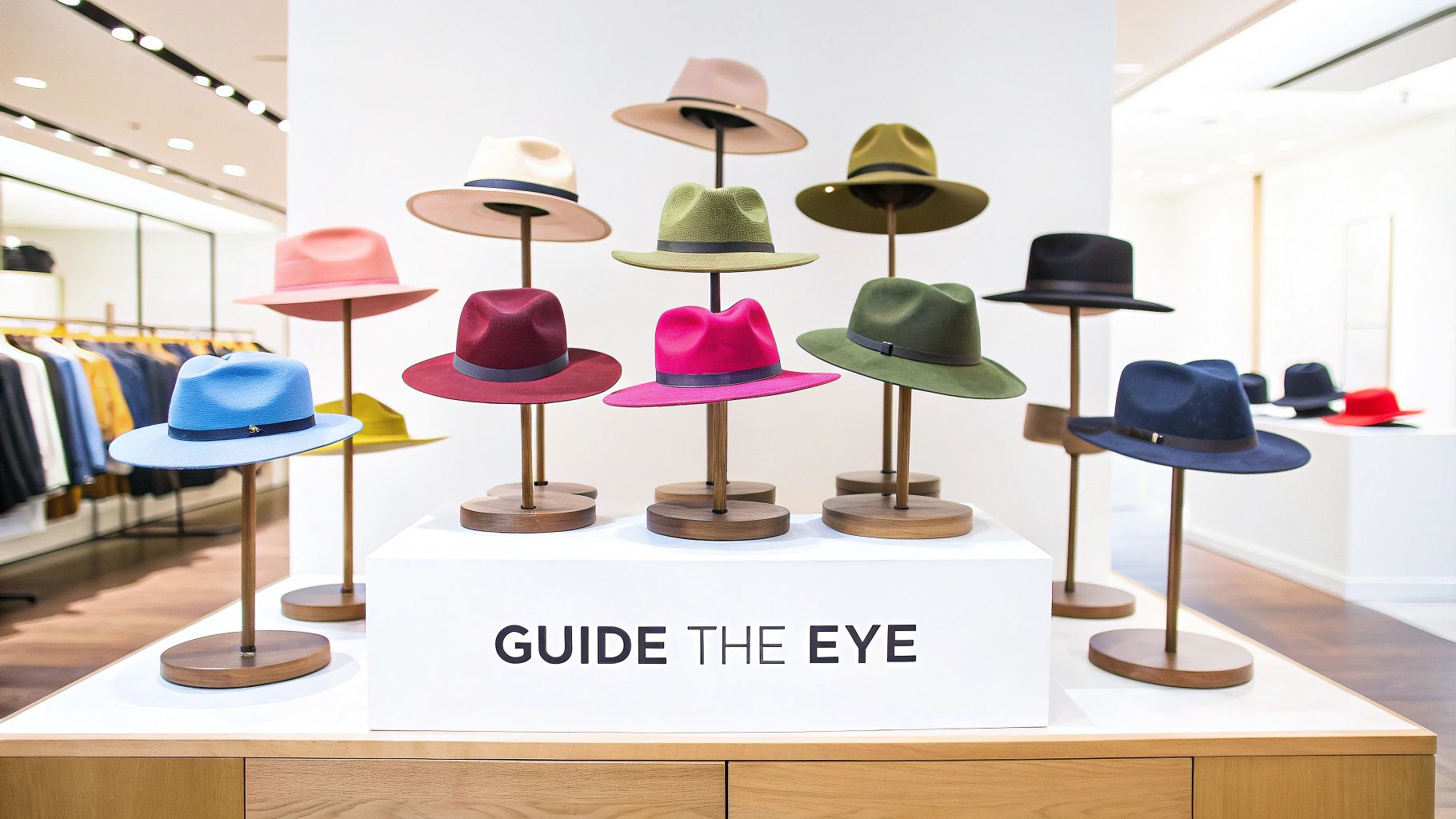
Now that you've picked out the perfect hat stands, it's time for the fun part: arranging them into a display that genuinely stops people in their tracks. This is where visual merchandising shifts from a task into an art form. It's about turning a simple shelf of products into an engaging experience that tells a story, guides the customer’s eye, and invites them to pick something up.
The secret is to think like a curator, not just a retailer. Forget about lining up hats in a monotonous row. Instead, start grouping them by a theme, a colour palette, or a season to create a collection with a clear point of view. This simple change transforms a functional display into an aspirational one, helping shoppers imagine how a particular hat could fit right into their own life.
Creating Rhythm and Flow
One of the most powerful techniques in a merchandiser's toolkit is playing with height. A display where every display hat stand is at the same level just looks flat and uninspired. But by mixing taller stands with shorter ones, you create a visual rhythm, a kind of landscape that naturally pulls the eye from one piece to the next.
This variation creates instant focal points, leading the customer on a little journey through your collection. Try placing your star pieces or new arrivals on slightly taller stands to give them prominence without adding clutter. For more inspiration, it's always worth exploring some creative retail display ideas to see how others are making their spaces pop.
Don’t underestimate the power of negative space, either. It’s simply the empty area around your products. A classic mistake is to cram something into every available inch, but that just overwhelms customers. Leaving a little breathing room around a hero product makes it stand out and signals its importance.
Telling a Story Through Grouping
Organising your hats into thoughtful groups is absolutely fundamental. What stories are you trying to tell? Perhaps it's a collection of warm, felt fedoras for autumn, a vibrant array of straw boaters for a summer holiday, or a sophisticated group of monochrome hats for formal occasions.
A well-organised display does more than just look tidy; it simplifies the customer's decision-making process. By grouping items logically, you help them navigate your collection and find exactly what they are looking for, which is a cornerstone of great retail design. Our detailed guide on https://www.displayguru.co.uk/blogs/news/visual-merchandising-guidelines offers more strategies for creating intuitive and effective displays.
This idea of creating a narrative has deep roots in British industry. During the hat-making boom between 1875 and 1935, towns like Stockport became world-famous for their craft. Factories such as Battersby & Co. were producing up to 12,000 hats per week, and each style told a story about its wearer and its purpose—a principle that is just as relevant in retail today.
By bringing these principles of rhythm, negative space, and thematic grouping together, you can elevate your displays from simple storage to a powerful sales tool that captivates your customers and encourages them to buy.
Creative Uses for Hat Stands Beyond the Shop Floor
While we often think of display hat stands as purely retail fixtures, their real value shines through in all sorts of creative and commercial spaces. For a designer, a stand is more than just a holder; it's a critical studio tool. It lets you display prototypes professionally, step back, and really assess the drape and form of a new collection as it comes to life.
Photographers and stylists know this trick well. They rely on stands to pull together those polished, high-quality product shots you see everywhere. A simple stand instantly lifts a hat from being a flat object to a three-dimensional piece, making it easier to light properly and capture its true character. That professional touch is essential for compelling lookbooks, e-commerce listings, and social media feeds.
And for bespoke tailors and milliners, a hat stand can genuinely transform a client consultation. Instead of pulling a work-in-progress from a box, imagine presenting it on a beautiful stand. It keeps the piece safe, showcases it elegantly, and helps your client truly visualise the final product, making them feel part of the creative journey.
Organising Creative and Commercial Spaces
This same versatility makes hat stands a savvy investment for other ventures, too. Take them to a trade show or a craft fair, and you’ll instantly create a more professional, organised booth that draws in buyers and makes your brand look a cut above the rest. If you're heading to a market, our guide on display ideas for craft fairs has some great tips for making a strong visual impact.
The core function of a display stand is to present an item with care and intention. This principle applies whether you are selling to a customer, presenting to a client, or simply organising your own creative workspace.
The UK's incredible hat-making history really provides a rich backdrop for this dedication to presentation. At its peak in the 1930s, the industry in Luton alone was producing a mind-boggling 70 million hats a year – a figure that speaks volumes about the nation’s deep appreciation for headwear. You can read more about this fascinating heritage on the Culture Trust website. From the workshop to the exhibition hall, a quality stand is a truly flexible asset.
Essential Care and Long-Term Maintenance
You’ve invested in quality hat stands, which is a great start. Now, the key is making them last. Proper care isn't just about keeping your fixtures looking good; it's about protecting your hats from damage. Think of it as a core part of your merchandising strategy, not just a cleaning chore. Thankfully, a few simple, consistent habits are all it takes.
Most stands arrive with minimal assembly required, usually just a case of fixing the base to the upright pole. Before you put one into service, make sure every connection is tight. A wobbly stand is an accident waiting to happen, so give it a quick check to ensure it sits perfectly level and stable on your shelf or counter.
Material-Specific Cleaning Routines
You wouldn't use the same cleaning products on a wooden floor and a glass window, and the same logic applies here. Different materials need different care to keep them looking their best and prevent damage.
- Metal Stands: A soft, microfibre cloth, slightly damp, is perfect for wiping away dust and fingerprints. To get that polished metal gleaming without streaks, go over it again with a dry cloth. Avoid abrasive cleaners at all costs – they’ll leave fine scratches on the surface.
- Wooden Stands: For routine upkeep, a quick dust with a dry cloth is all you need. Every so often, treat the wood to a bit of TLC by applying a small amount of wood conditioner or polish. Always work with the grain to help prevent the wood from drying out and cracking over time.
- Acrylic Stands: These can be unforgiving when it comes to scratches. Stick to a microfibre cloth and a cleaner made specifically for acrylic. Never use glass cleaner on them; the ammonia can make the acrylic turn cloudy and brittle.
Proper stand usage is the best form of preventative care. A correctly chosen and maintained stand directly protects hats from brim warping, crown collapse, and fabric damage. These simple habits safeguard both your fixtures and your inventory.
The Best Defence Is Good Practice
Beyond just cleaning, how you handle your display hat stands every day makes the biggest difference. When placing or removing a hat, lift it on and off gently. Try not to drag it across the dome, as this can easily snag delicate materials like straw or felt.
It’s also a good idea to periodically check that all the fittings are still tight, especially in a busy shop where stands get knocked or moved around. By folding these quick checks and cleaning routines into your weekly schedule, you’ll ensure your displays always look sharp and your investment pays off for years to come.
Frequently Asked Questions
Even with the right knowledge, a few practical questions always pop up when working with display hat stands. Let's tackle some of the most common queries I hear from designers, retailers, and visual merchandisers to help you fine-tune your displays.
What Is the Best Stand for Heavy or Wide-Brimmed Hats?
When you’re dealing with a substantial hat – think a heavy wool fedora or a dramatic, wide-brimmed sun hat – stability is everything. You absolutely need a stand with a heavy, wide base. Look for solid wood or a weighted metal base as your go-to options.
Just as important is the top. A full dome-shaped top is non-negotiable here. It gives complete support to the crown, which is crucial for preventing the hat from sagging or losing its intended shape over time. A flimsy, lightweight stand is simply asking for trouble; it'll tip over and could easily damage your stock.
How Do I Stop Hats from Slipping Off Smooth Stands?
This is a classic problem, especially with sleek acrylic or polished metal stands. Thankfully, the fix is simple. A small, clear silicone grip dot or a thin strip of felt applied to the top of the dome works wonders.
These little additions are practically invisible but provide just enough texture to keep the hat firmly in place. Another great option is to choose a stand that already has a fabric-covered top, like velvet or linen. It offers a natural non-slip surface and adds a lovely touch of class to the display, all while protecting delicate materials.
A common mistake is using the same stands for hats and wigs. Wig stands are typically sized like a human head for styling, whereas display hat stands are designed purely for aesthetic support and preservation of a hat's unique structure. Using dedicated stands for each is always the professional standard.
Can I Use One Stand for Both Hats and Wigs?
It might seem like a clever way to save space or money, but I really wouldn't recommend it. Wig stands, often made from styrofoam or canvas, are built to be pinned into for styling and are shaped to mimic a human head for a true-to-life fit.
Display hat stands, on the other hand, are engineered specifically to support the unique structure of a hat, which can be quite different. To give both your hats and your wigs the best possible presentation and care, it’s always best to use dedicated stands for each. It’s the professional approach that ensures every piece is displayed safely and looks its absolute best.
At Display Guru, we provide the professional tools you need to create stunning, effective displays. Explore our full range of high-quality display solutions to find the perfect fit for your collection.