

Choosing the Perfect Display Hat Stand A Professional Guide
A professional display hat stand isn't just a fancy hook or a spare bit of shelf space. Think of it as a specialist tool, meticulously designed to protect the shape, show off the style, and ultimately, preserve the value of any piece of headwear. It's the silent partner that provides the perfect foundation for showcasing hats in retail, tailoring, or even theatrical settings, making sure every piece is seen exactly as the creator intended.
Why Your Hat Display Matters More Than You Think
In any professional environment, from a bustling shop floor to a quiet design studio, presentation is everything. A hat left on a flat surface looks limp and forgotten, its unique form lost. It becomes just another accessory. But place that same hat on a dedicated stand, and it’s instantly transformed. It becomes a focal point, a small work of art that communicates quality and craftsmanship before anyone even lays a hand on it.
This is more than just about looking good; it's a smart business decision. The right stand is an investment in both your product's longevity and your visual merchandising strategy. For a milliner, it’s a crucial third hand during the creative process. For a retailer, it’s a powerful tool for catching a customer's eye and driving sales. And for a theatre’s costume department, it’s the guardian of delicate materials and historical accuracy.
The Foundation of Great Presentation
A well-chosen stand does a lot more than just hold a hat. It provides vital support to the crown and brim, preventing the sagging, creasing, and general distortion that can completely ruin a beautifully crafted piece over time. The best way to think of it is like a tailor's dummy, but for headwear. It maintains that perfect, intended silhouette, ensuring the hat looks as striking on display as it does on a person.
This commitment to proper care sends a strong message. It signals a deep respect for the product and a professional approach that clients and customers immediately pick up on. It’s a key part of building a strong presentation, and as any expert will tell you, effective visual merchandising guidelines can make a world of difference to how your brand is perceived.
Capitalising on a Growing Market
The need for excellent display is only getting more important, especially in such a booming industry. The UK's hat and headgear market is thriving, with consumption recently hitting an incredible 69 million units in a single year. That’s a sharp 9.7% increase from the year before. This growth presents a huge opportunity for creators and retailers to capture attention with standout showcases.
A display hat stand isn't merely a piece of equipment; it's a strategic asset. It protects your inventory, enhances your brand image, and turns passive browsing into active interest.
With demand this high, the competition is naturally fierce. Having a fantastic product is no longer enough. How you present it can be the deciding factor between making a sale and being overlooked. Investing in professional-grade stands gives you a clear and immediate advantage.
- Protecting Your Assets: A proper stand safeguards the structural integrity of each hat, dramatically reducing the risk of damage from poor storage.
- Enhancing Visibility: It elevates the hat to eye level, making it far more noticeable and appealing in a crowded retail space or workshop.
- Communicating Value: It presents the hat as a premium item, helping to justify its price point and highlight its craftsmanship.
At the end of the day, a display hat stand is an indispensable tool for anyone serious about creating, selling, or preserving quality headwear. It’s the very first step in making a truly lasting impression.
Decoding Hat Stand Types and Materials
Choosing the right display stand for a hat is a bit like selecting the perfect frame for a piece of art. It needs to complement the item, enhance its best features, and never, ever overshadow it. The material and design you land on will shape the whole look and feel of your display, but it also has a practical job to do: protecting the headwear itself.
From the classic warmth of wood to the sharp, clean lines of metal, every option brings something different to the table. This isn't just about what looks good. You have to think about durability, function, and where the stand will live. A bustling shop floor has very different needs to a quiet millinery studio, and getting this right from the start is key to presenting your hats properly.
The Classic Appeal of Wooden Hat Stands
There’s a reason wooden stands feel so timeless. Crafted from materials like beech, oak, or pine, they bring a natural warmth and a sense of heritage to a display. That tactile, grounded quality can make both modern and vintage hats feel more premium. A well-polished wooden stand quietly suggests craftsmanship and quality, and that perception naturally extends to the hat sitting on top of it.
They’re a brilliant choice for spaces going for a classic, rustic, or high-end boutique vibe. One word of caution, though: always check the finish. The wood must be perfectly smooth, as any rough patches or splinters can easily snag delicate materials like silk or felt, causing damage over time.
Sleek and Modern Metal Options
If you’re aiming for a clean, minimalist, or industrial aesthetic, metal stands are your best bet. They’re usually made from steel, aluminium, or chrome, offering a strong, durable, and often adjustable frame that lets the headwear do all the talking. Their slender profiles keep the focus squarely on the hat, which is why you’ll see them everywhere in contemporary retail spaces and modern galleries.
Metal stands are also incredibly practical. They’re easy to clean and tough enough to handle daily wear and tear. Their weight often gives them better stability, a huge plus in high-traffic areas. This makes them a reliable workhorse for visual merchandisers who are constantly refreshing their displays. Plus, with finishes ranging from matte black to polished silver, you can find a metal stand to match just about any brand’s look.
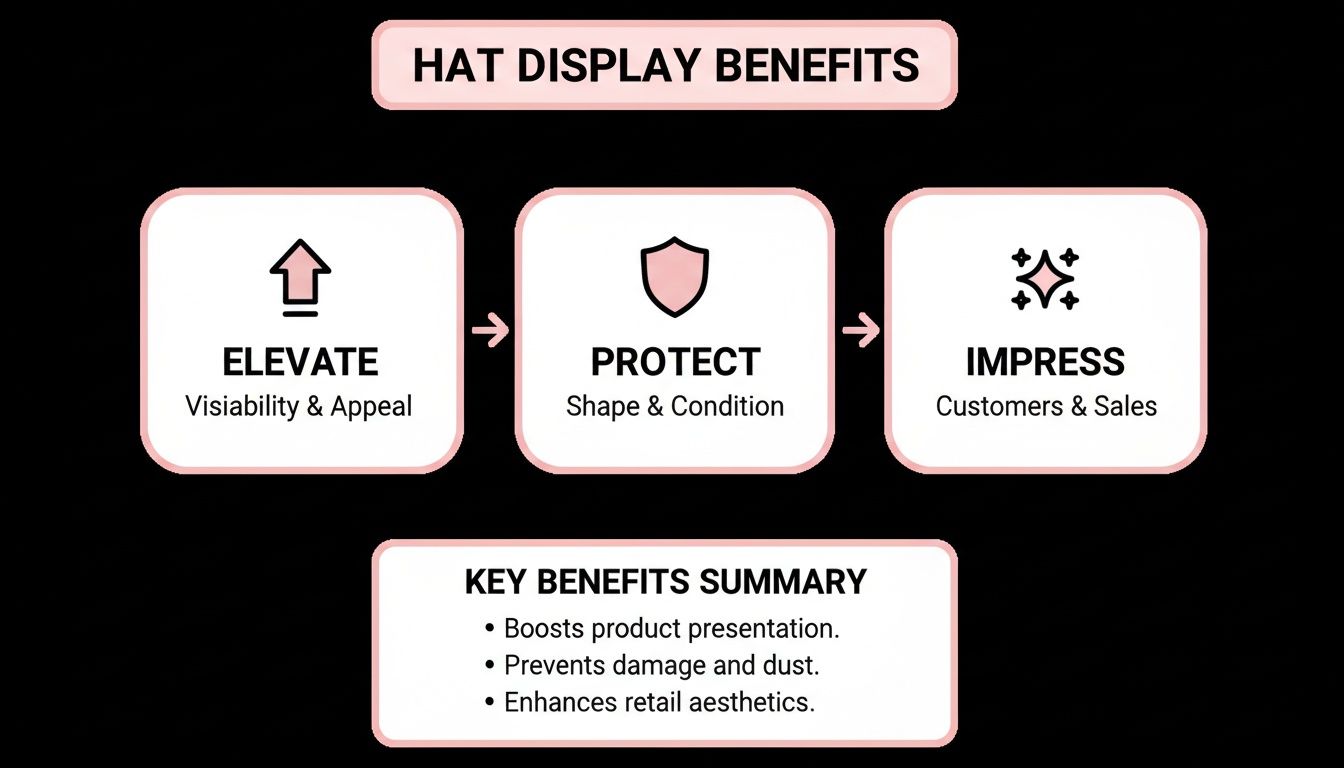
As you can see, a quality stand is so much more than a prop. It's a tool that elevates visibility, protects the product, and makes a real impression on customers, playing a central role in your entire presentation strategy.
To give you a clearer picture, let’s compare these materials side-by-side.
Comparing Display Hat Stand Materials
This table breaks down the most common materials, helping you weigh up their style, ideal use, and what it takes to look after them in a professional setting.
| Material | Aesthetic and Style | Best For | Durability and Care |
|---|---|---|---|
| Wood | Classic, rustic, warm, elegant. Suggests quality and heritage. | High-end boutiques, heritage brands, bespoke milliners, home collections. | Requires occasional dusting/polishing. Can be susceptible to scratches or moisture if not properly sealed. |
| Metal | Modern, industrial, minimalist. Sleek and clean. | Contemporary retail, art galleries, high-traffic commercial spaces. | Extremely durable and low-maintenance. Simply wipe clean. Prone to scratching on painted finishes. |
| Polystyrene | Functional, neutral, practical. Purely for utility over style. | Millinery studios, theatrical workshops, designers' workrooms, wig styling. | Lightweight but can dent or chip easily. Pinnable surface wears over time but is very affordable to replace. |
Ultimately, the right material aligns with both your brand’s identity and the practical demands of your space.
Versatile and Practical Polystyrene Heads
Sometimes, function has to come first. For designers, milliners, and costume professionals, polystyrene mannequin heads are the unsung heroes of the workshop. These lightweight heads are pinnable, which is a massive advantage—it allows you to precisely place and secure hats, veils, or accessories during the design, styling, and fitting stages.
Their main benefits are straightforward:
- Workability: They’re a hands-on tool. You can steam, shape, and pin materials directly onto the form, making the creative process so much easier.
- Affordability: Polystyrene is inexpensive, so you can afford to have several heads on the go for different projects without breaking the bank.
- Realism: By mimicking the shape of a human head, they give you a truly accurate idea of how a hat will sit and look on a person.
They might not have the polished look of wood or metal for your main shop window, but their utility in a studio setting is second to none. They’re the essential link between creation and presentation. To see how similar principles apply across the fashion world, take a look at our guide on display stands for clothing.
Exploring Different Display Forms
Beyond what they're made of, the actual shape of the stand is crucial. The form you choose depends entirely on what you need it to accomplish.
A display hat stand should do more than just hold a hat; it should honour its shape. The form you choose—whether a simple dome or a full mannequin head—dictates how well that shape is preserved and presented.
Simple dome or mushroom-style stands are perfect for everyday retail. They give great support to the crown of most hats, from beanies to fedoras, stopping them from slumping into a sad, shapeless pile. Their minimalist design means they won’t distract from the product itself.
For more detailed or specialised work, an abstract or full mannequin head is a must. These are indispensable in millinery, wig styling, and theatre costume departments. They let you display a hat in context, showing how it sits on a head and interacts with a facial structure. You can even add glasses or a scarf to create a complete, styled look, which is vital when you're trying to communicate a specific character or aesthetic.
Getting the Sizing and Fit Just Right
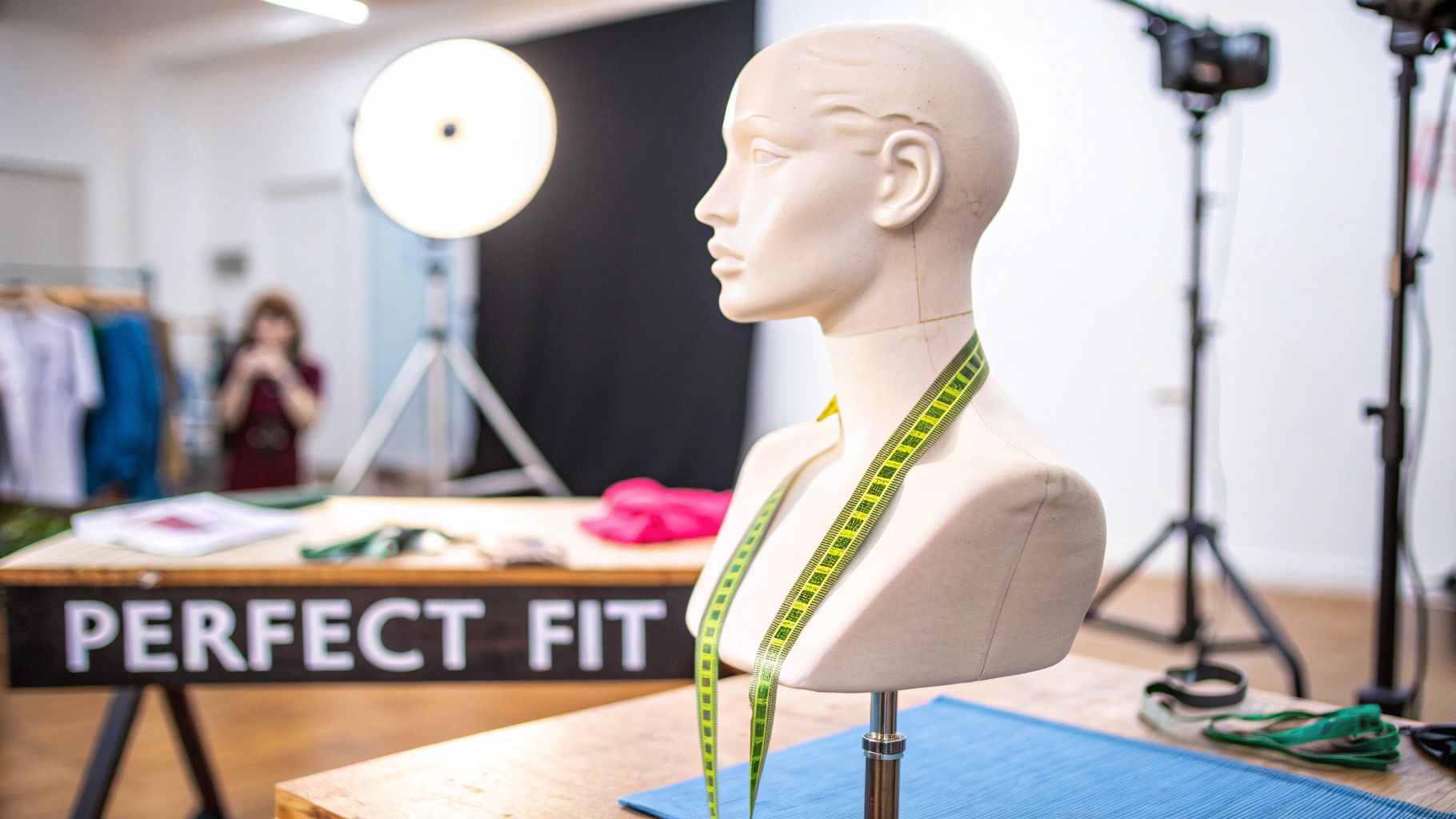
It’s a common mistake to think of a display hat stand as a one-size-fits-all piece of kit. That’s a fast track to ruining your headwear. An ill-fitting stand can stretch, distort, or permanently damage a hat, and the right fit isn’t just about looking good—it’s about preserving the hat’s very structure.
Think of it like a tailor's dummy, but for a hat. Squeeze a hat onto a stand that’s too large, and you’ll stretch the band out of shape. Let it slouch on one that’s too small, and it will sag and crease. Neither is an option if you value your stock or your creations. Nailing the dimensions is the first, most crucial step.
Understanding Head Circumference
The foundation of a perfect fit all comes down to circumference. Human heads aren't all the same size, and neither should your stands be. The average adult head circumference generally falls somewhere between 55 cm (21.5 inches) and 59 cm (23 inches).
A good professional display hat stand should reflect these real-world sizes. A stand measuring 57 cm (22.5 inches) around is often a solid starting point, as it accommodates a wide range of hats without causing strain. For milliners crafting bespoke pieces, however, having a collection of stands in various sizes isn't just a good idea—it's essential for getting that precise fit right from the start.
The goal is to support the hat, not reshape it. The right circumference lets the hat rest naturally, maintaining the shape and tension the designer intended.
The Importance of Height Adjustability
Beyond the head size, the height of the stand plays a massive role, particularly when you’re showing off a varied collection. A simple, short dome might be fine for a beanie or a cloche, but it will do a real disservice to a hat with a dramatic, wide brim.
This is where an adjustable-height stand becomes incredibly versatile. It gives you the flexibility to create visual interest in a retail display and, critically, ensures that larger hats have enough room to hang properly without their brims getting bent or warped.
- For Wide-Brimmed Hats: A taller stand keeps the brim from flattening against the display surface, which can cause it to curl over time.
- For Hats with Veils or Adornments: That extra height gives delicate details the space they need to drape elegantly instead of getting crushed.
- For Dynamic Displays: Mixing up the heights of your stands creates a far more engaging layout that naturally draws the customer's eye across your collection.
Measuring for the Perfect Match
To guarantee a perfect fit every time, you need to measure both your hats and your stands. If you’re serious about precision, it pays to understand the full picture. You can dive deeper into this with our comprehensive guide to mannequin measurements, which covers principles that apply to any kind of display form.
Here’s a straightforward process to follow:
- Measure the Hat: Take a soft, flexible measuring tape and place it inside the hat, right where the sweatband sits. This is the spot where a head would naturally rest. Note down the internal circumference.
- Measure the Stand: Now, wrap the same tape measure around the widest part of the stand's head form. This number should be a very close match to the hat's internal measurement.
- Aim for a Snug, Not Tight, Fit: You've found the sweet spot when the hat sits securely on the stand without wobbling, but also without any visible stretching. You should never have to force a hat onto its stand.
Taking a moment for these simple measurements ensures every hat is displayed exactly as it was meant to be seen—protected, supported, and presented with professional care. This attention to detail doesn’t just look after your products; it sends a clear message of quality that your customers will absolutely notice.
Matching the Stand to Your Professional Needs
So, we've covered the different types, materials, and how to get the right fit. Now let's put all that theory into practice. The truth is, the perfect display hat stand isn’t a one-size-fits-all item; it’s a specific tool you choose to solve a particular problem. A stand that’s a star performer on a busy retail floor could be completely wrong for a meticulous milliner’s studio.
Figuring out your own unique needs is the secret to making a smart investment. Are you a retailer trying to stop shoppers in their tracks? A designer who needs precision and a solid working base? Or a costumier trying to balance stunning presentation with long-term preservation? Your answer will point you straight to the right solution. Let’s break down what different professional fields really need from a hat stand.
For the Retail Shop Owner
In retail, it's all about grabbing attention and turning a passing glance into a sale. Think of your hat display as your silent salesperson. Its success hinges on creating a setup that’s visually interesting and draws people in. A flat, boring layout of hats on a shelf will just get lost in the noise of a busy shop.
This is where dynamic, multi-level displays make all the difference. By using stands of varying heights, shapes, and materials, you create depth and a visual journey for the customer's eye, highlighting your star products. A sleek metal stand can give a collection of modern caps an urban edge, while a classic wooden stand subtly signals the premium quality of a beautiful felt fedora.
The UK headwear market is booming. Projections show it will soar to over $1 billion by 2030, growing at an impressive 8.1% annually. With hats and caps already taking a massive 45.08% revenue share, versatile displays are no longer a 'nice-to-have'—they're essential for shopfitters who want to capitalise on this trend. If you're interested in the numbers, you can discover further insights into the UK headwear market from Grand View Research.
For the Bespoke Milliner and Designer
A milliner's studio is a creative space where precision and practicality rule. Here, a display stand has to wear two hats, so to speak. It’s a hands-on tool during the design process and a plinth to showcase the finished masterpiece. That calls for a very different beast compared to a standard retail stand.
Polystyrene mannequin heads are the undisputed workhorses of the studio. Why? Because they are pinnable. This one feature is a game-changer, letting a designer secure fabric, trimmings, and veiling directly onto the form. This tactile control is absolutely vital for shaping, steaming, and getting every detail just right.
For a milliner, a stand isn't just for showing off the final product; it's an extension of their hands. It needs to be an accurate, stable, and workable foundation for bringing a creative vision to life.
What’s more, an anatomically correct head shape gives a true-to-life preview of how a hat will sit on a client's head, which is priceless for custom fittings. While these stands might not win any beauty contests, their sheer functionality in a design setting is unbeatable. They’re the perfect canvas for creation and client consultations. Our complete guide goes into more detail on the best practices for choosing and using different hat display stands for your craft.
For the Theatre and Costume Department
The world of theatre and film costume is a whole different ball game. Costume departments are tasked with creating, fitting, and, crucially, preserving headwear that might be used for years across hundreds of performances. This puts the focus firmly on durability, consistency, and long-term care.
A costume designer needs stands that can take a beating in a hectic workshop and handle constant use during fittings. Consistency is also a huge factor. Having a set of uniform stands ensures every single piece of headwear is stored correctly, holding its intended shape and preventing crushing or damage between shows.
Think about the unique demands of theatrical work:
- Durability: The stands need to be made from tough stuff that won’t easily chip or break. Metal or solid wood bases are often the top choice for their rock-solid stability.
- Archival Quality: For long-term storage, the material has to be inert. That means it won't react with or discolour delicate, often irreplaceable fabrics and trims over time.
- Standardised Sizing: Using stands with a consistent head circumference is key to maintaining the shape of hats worn by different actors, ensuring a perfect fit night after night.
In this environment, a display hat stand is as much a tool for preservation as it is for presentation. It’s about safeguarding valuable costume assets for every future performance.
Styling Your Display for Maximum Impact
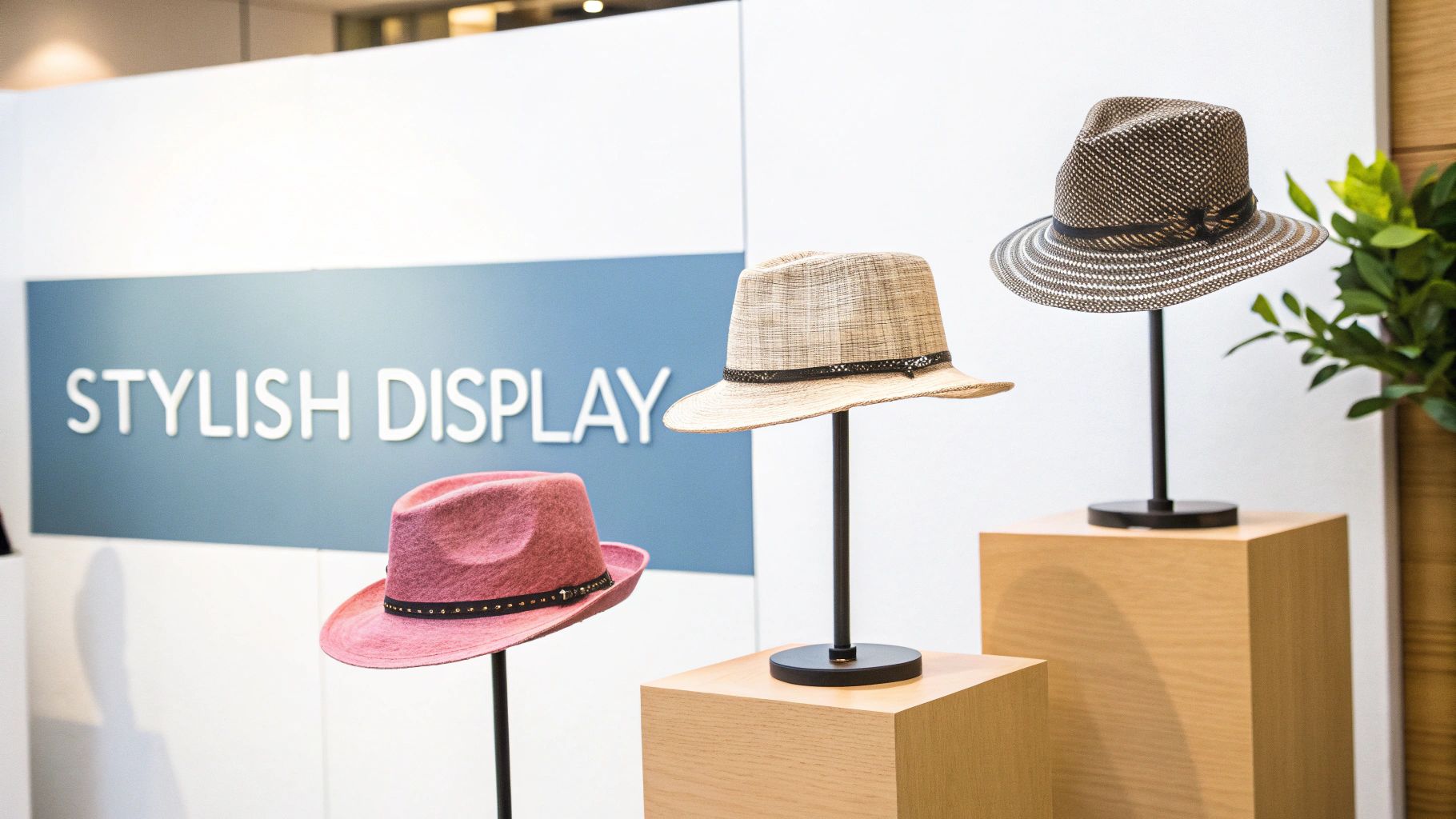
Choosing the right display hat stand is a great start, but the real artistry begins with styling. A truly effective display does far more than just hold a hat; it sets a mood, tells a story, and naturally guides a customer’s attention. It’s all about turning a simple collection of products into a compelling visual experience that stops people in their tracks.
This is where you move beyond function and start creating a bit of theatre. With a few smart techniques, you can elevate a basic arrangement into a powerful merchandising tool that shows off the quality of your hats and boosts their perceived value.
Creating a Visual Hierarchy
Let's be honest, a flat, uniform row of hats is instantly forgettable. To build a display that genuinely pulls people in, you need to create a sense of movement and variety. The simplest, most effective way to do this is by using stands of different heights to build a clear visual hierarchy.
Think of it like setting a scene. Your eye doesn't just scan—it jumps between points of interest. By placing your star pieces on taller stands, you’re giving them the spotlight and telling customers, "Look here first." This one trick can break up the visual monotony and create a far more dynamic and engaging layout.
- Lead with a Hero Piece: Put your most eye-catching hat on the tallest stand. Make it the undeniable focal point.
- Create Groupings: Arrange stands in small clusters of three or five, using different heights to create interesting little vignettes.
- Guide the Eye: Try a cascading arrangement, stepping down from tall to short, to lead a customer’s gaze smoothly across the whole collection.
This approach isn’t just about looking good; it helps customers browse your range more intuitively. For more ideas on this, our guide on how to dress a mannequin touches on similar principles of creating focus and telling a story.
The Power of Cohesive Storytelling
Your display should look curated, not cobbled together. Grouping hats by a common theme is a fantastic way to tell a clear story. You could organise by colour, by style (like formal vs. casual), by season, or by material. The goal is to create a look that feels both professional and inspiring.
Imagine a collection of straw boaters and sun hats perched on light, natural wood stands—it instantly says "summer holiday." Now picture a group of dark felt fedoras on sleek, black metal stands; you've created a sophisticated, city vibe. This kind of thematic styling helps shoppers find what they’re looking for and, just as importantly, helps them picture the hats in their own lives.
A great display doesn't just show products; it sells a vision. By grouping items with a shared theme, you transform individual hats into elements of a larger, more desirable aesthetic.
Leveraging Light and Position
Never, ever underestimate the power of good lighting. A well-placed spotlight can transform your display, bringing out the rich texture of a tweed cap or the delicate sheen of a silk fascinator. It highlights the details that justify the price tag.
Where you place the display matters just as much. First rule: don't overcrowd it. Each hat needs a little breathing room to be appreciated. Make sure the display is in a high-traffic spot, but keep it out of harsh, direct sunlight that can cause colours to fade over time.
When it comes to your online presence, these principles are even more crucial. Learning how to capture Stunning Product Photos For Your Business can make all the difference, ensuring the care you put into your physical display translates perfectly to every customer, no matter where they find you.
Proper Care and Maintenance for Lasting Quality
A professional display hat stand is a genuine investment in your presentation. Think of it like any quality tool in your kit—it simply performs better and lasts longer when you look after it. A little regular care goes a long way in preventing the gradual wear and tear that can dull finishes, degrade surfaces, or cause wobbles, all of which chip away at the professional image you’re aiming for.
The secret to proper cleaning is knowing your materials. A one-size-fits-all approach is the quickest way to cause accidental damage, so it's vital to treat each stand according to its specific needs. A gentle touch and the right products are all you need to preserve both its function and good looks.
Material-Specific Cleaning Instructions
To keep your equipment in prime condition, just follow these simple guidelines.
-
Wooden Stands: Give them a regular dusting with a soft, microfibre cloth to stop grime from building up. For a deeper clean, you can slightly dampen the cloth with water and a tiny drop of wood-friendly, pH-neutral soap. The key is to dry it immediately with a clean cloth—never let water sit on the surface, as it can ruin the finish. Steer clear of harsh, abrasive cleaners.
-
Metal Stands: These are generally your most resilient stands. A quick wipe-down with a damp cloth is usually all it takes to get rid of dust and fingerprints. If you have stubborn marks on chrome or stainless steel, a dedicated metal cleaner will bring back its shine. As a rule of thumb, always test it on a small, hidden spot first.
-
Polystyrene Heads: Polystyrene is a bit porous, so it can easily absorb stains if you're not careful. Solvents and harsh chemical cleaners are a definite no-go, as they can actually dissolve the material. Instead, use a soft cloth dampened with a very mild solution of washing-up liquid and water. For persistent make-up stains, a magic eraser sponge can work wonders, but be gentle.
Proper maintenance isn't just about keeping things clean; it's about preservation. By caring for your display hat stands, you're actively protecting the investment you've made and ensuring every single hat you display looks its absolute best.
Long-Term Storage and Stability Checks
When it's time to put away seasonal collections or archive pieces, storing your stands correctly is crucial. Find a cool, dry place well away from direct sunlight, which is notorious for fading wooden finishes and yellowing polystyrene. If you can, cover them with a breathable cotton dust sheet to keep them free from dust and debris.
Finally, get into the habit of doing regular stability checks. If your stands have adjustable heights or tripod bases, take a moment to make sure all the screws and fittings are tight. A wobbly display hat stand not only looks unprofessional but is also a real safety risk to your hats and your customers. This simple check takes just a few seconds but can save you from a costly accident down the line.
Got a Question? Hat Stand FAQs
Even with all the details sorted, a few common questions always pop up when it's time to choose the right hat stand. Let's tackle some of the most frequent queries I hear from professionals, so you can make your final choice with complete confidence.
Can One Stand Really Fit All Hat Types?
It’s a tempting idea, but in reality, a one-size-fits-all stand is a bit of a myth. While some are more versatile than others, you’ll get the best results by matching the stand to the hat.
A simple dome stand is perfect for classic shapes like fedoras or beanies. However, a show-stopping, wide-brimmed sun hat needs a much taller stand to stop the brim from drooping and losing its shape over time. And if you're working in millinery or styling wigs, a pinnable head is non-negotiable. It's always better to build a small collection of different stands to properly care for your entire range.
How Can I Stop My Hats from Slipping Off the Stand?
If you find a hat is constantly sliding off, the stand is probably too small. You're looking for a snug fit – one that holds the hat securely without actually stretching the inner band.
For hats made from slippery materials like silk or satin, there's a simple trick. You can wrap a small velvet ribbon or place a non-slip silicone pad on the dome of the stand. This adds just enough grip to keep the hat perfectly in place, without any risk of damaging the delicate fabric.
Nine times out of ten, a slipping hat is just a sizing issue. A mismatch between the hat's circumference and the stand is the culprit. Always measure first to get that secure, natural fit that holds the hat's shape just right.
What's the Best Material for Long-Term Archiving?
When you’re thinking about long-term storage – say, for a theatre's costume department or a museum collection – durability and stability are everything. You need something built to last.
Look for a stand with a solid wooden base or a heavy metal one; they provide the best long-term stability. Crucially, make sure any surface the hat touches is perfectly smooth and sealed with a non-reactive finish. This prevents any chemical transfer or discolouration, which is vital for protecting delicate vintage fabrics over the years.
Ready to find the ideal display solutions for your professional space? Explore the complete collection of high-quality hat stands, tailor's dummies, and garment rails at Display Guru. Find your perfect display solution at https://www.displayguru.co.uk