




Dirt Trapping Door Mats: The UK Guide for Safer Spaces
Rain lashes the pavement, boots come back black with grit, and the first person through the door tracks a thin line of muddy water straight across the floor. In that moment, a mat stops being an accessory. It becomes the difference between a clean entrance and a surface that keeps asking for repairs, mopping, and patience.
A good dirt trapping door mat doesn't just sit there looking tidy. It intercepts soil, holds moisture, and protects the walking surface before contamination spreads deeper into the room. In UK entrances, that's not a styling choice, it's basic control of what gets carried inside.
Why Dirt Trapping Door Mats Matter for UK Entrances
A wet front step changes the whole entrance routine. One person comes in with rain on their shoes, another follows with grit from the pavement, and the floor starts collecting what the weather left behind. UK HSE guidance treats building entrances as common slip points in rain, and NHS risk-control guidance lists mud, dust, wind-driven rain, sleet and snow as contaminants that need to be stopped before they reach walking surfaces. In plain terms, a mat has to do more than greet people.
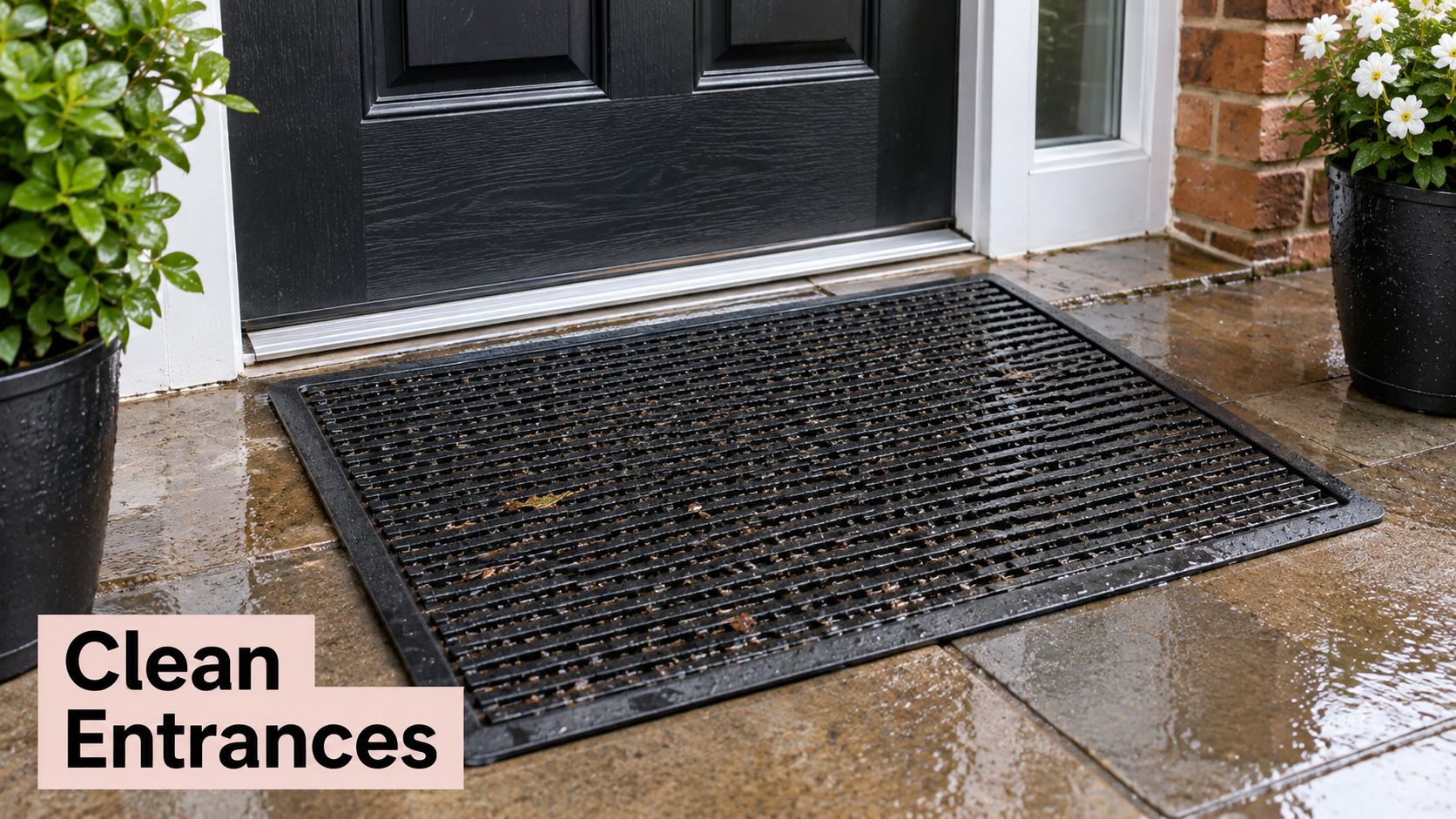
The entrance is part of the safety system
The strongest mistake I see is treating a mat as decorative floor dressing. If it doesn't sit in the actual path people walk, it won't control contamination. HSE case guidance says good-quality matting only helps when it extends across the routes people use, which is why a narrow strip beside the door often fails in real life.
A proper entrance mat behaves like a control point. It catches the first load of grit outside or at the threshold, then takes moisture off footwear before that moisture reaches hard floors. For a sewing studio, a showroom, or a small shop, that means thinking about the approach path, not just the door leaf. The mat needs to stay flat, have a stable backing, and avoid becoming a raised-edge trip hazard.
Practical rule: if a visitor can step around the mat without noticing, the mat is too small or badly placed.
That is why I'd rather see a well-sized, plain mat than a pretty one that misses the traffic. If you need a simple reference for the kind of retail environment where entrance control matters, look at Display Guru's retail shop supplies as a reminder that entrance presentation and function usually live in the same space.
For households dealing with actual mud, J.G. Carpet Cleaning mud removal help is useful after the damage has happened, but the better move is stopping the mess at the door in the first place. That's the point of dirt trapping mats, they control the mess before it becomes a cleaning task.
How Dirt Trapping Door Mats Work
A mat works when it does two jobs in sequence. First it scrapes loose soil from the shoe, then it holds moisture and fine particles so they don't get transferred to the next surface. UK workplace guidance recommends suitable non-slip, water-absorbing mats, and it also says performance has to be assessed under realistic conditions because a mat can trap dirt while becoming unsafe if the backing moves or the surface saturates.
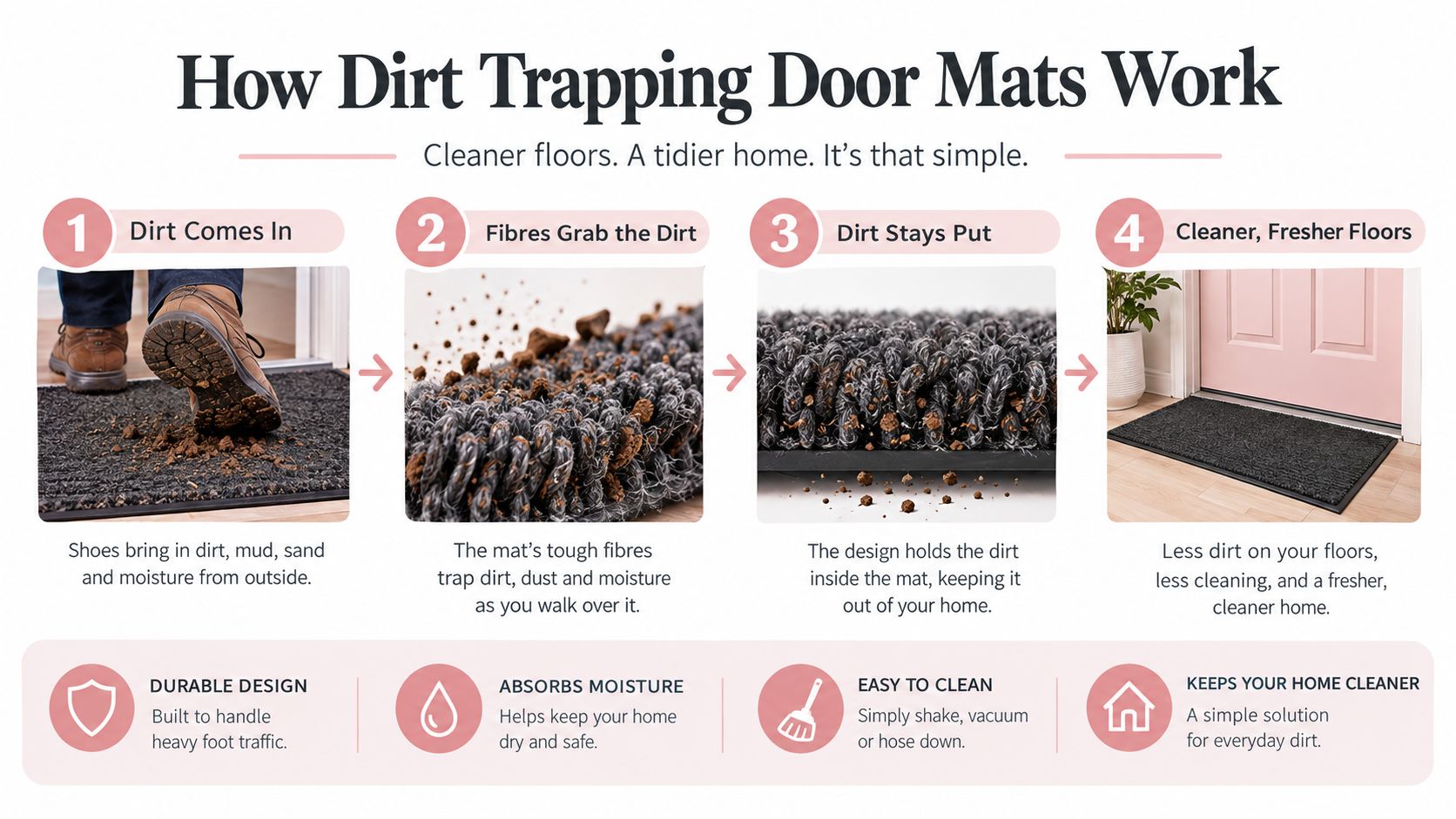
Scrape first, then absorb
The coarse stage is about mechanical removal. Textured fibres, raised ridges, or bristly surfaces catch debris from the sole before it can be carried indoors. The absorbent stage matters just as much, because wet soil is what turns a clean-looking entrance into a slip risk on hard flooring.
{ "result": "That's why the full walking route matters. HSE case guidance found that matting was useful only when it extended across the routes people used, not just the gap under the door. In practice, that means someone should take a couple of natural steps on the mat, not one token wipe at the threshold. A mat that only covers the door width can leave the edge of the approach path untreated, and that missed strip is often where the dirt travels next." }
The mat has to match the route
A visitor doesn't enter in a straight, obedient line. They angle in, turn slightly, carry parcels, and sometimes sidestep a puddle or a pram. The mat needs to meet that behaviour. For that reason, I prefer a layout that covers the likely path, not a decorative rectangle that happens to sit near the door.
Practical rule: if the mat doesn't cover the route, it's not a barrier, it's furniture.
This is also why a two-stage arrangement makes sense in wetter UK conditions. An exterior scraper or threshold mat removes the heavier grit, then an internal absorbent mat captures the moisture that remains. That division keeps the jobs separate, so one surface isn't asked to do everything at once. The result is less soil reaching hard floors, less polishing of abrasive grit into finishes, and less water spreading beyond the entrance.
Materials and Construction Coir, Synthetic, and Rubber
Material choice changes how a mat behaves under real use. Coir, synthetic pile, and rubber-backed constructions all solve different parts of the problem, and each one brings a trade-off. The wrong choice for the space can look smart on day one and perform poorly by week two.
Material Comparison for Dirt Trapping Mats
| Material | Best For | Maintenance |
|---|---|---|
| Coir | Dry scraping at lighter-use entrances, especially where a natural look matters | Shake out often, keep it dry, watch for shedding and compacting |
| Synthetic pile | Busier entrances, faster drying needs, low-shedding settings like sewing spaces | Vacuum, shake, and clean when soil load builds up |
| Rubber-backed options | Stability, wet thresholds, and places where staying flat matters | Inspect backing, lift to clean underneath, replace when curling or displaced |
Coir has strong scraping ability when it's fresh and open, which is why it suits lighter traffic and entrances where a natural texture fits the room. The downside is that it can shed and compact, so the mat needs attention before it turns flat and tired. In a sewing studio, loose fibre isn't a small detail, it can become part of the contamination problem you were trying to avoid.
Synthetic mats are often the better practical choice where traffic is heavier or drying time matters. They're useful in a retail entrance or a working studio because they can be chosen for lower shedding and more predictable maintenance. That makes them easier to live with where the floor has to stay presentable between customers or clients.
Rubber-backed mats earn their place through stability. They help a mat stay where it should be and reduce the chance of movement on a wet floor, which is why backing quality matters just as much as surface texture. If you're weighing appearance against function, the cleaner-looking option isn't always the safer one. This beige door mat guide is a good reminder that colour is only one part of specification, not the deciding factor.
Practical rule: choose the material that suits the mess, not the material that looks calm in the catalogue.
For a retail or studio entrance, I'd rather see a durable synthetic or rubber-backed mat that stays flat than a delicate natural mat that needs constant fussing. The best material is the one that survives the actual traffic pattern and the cleaning routine you can realistically keep up.
Sizing and Placement for Maximum Effectiveness
A mat that's too small fails without warning. It still looks like a mat, but people step past it, around it, or only touch it with the front edge of one shoe. Once that happens, the dirt moves on to the floor.
Measure the route, not the door
Start with the approach path. Look at where a person naturally places both feet as they enter, then include the line a pram, trolley, or wheelchair uses if that matters in the space. The point is to cover the full pedestrian route, because HSE case guidance links effectiveness to the route people take.
That usually means a mat extending beyond the door frame's width, especially where people come in at an angle. If the entrance is active, think in terms of a walk-through zone rather than a doorstep accessory. Several footsteps over the mat do more work than one quick wipe, because repeated contact gives the pile or texture more chances to remove grit.
Keep the mat flat and unavoidable
Placement should force contact without creating a hazard. If the mat buckles, curls, or sits proud of the floor, it can become the problem it was supposed to prevent. A stable backing and a flat lay are essential, especially where visitors may be carrying bags or not looking down.
The most effective set-up is simple. Put the mat where traffic naturally crosses, make sure it can't be bypassed easily, and leave enough clearance for the door to move freely. For larger entrances, retail store layout best practices are worth thinking about because the same planning logic applies, traffic flow decides whether a floor control measure gets used.
People don't fail mats, bad placement does.
In shops and studios, this is the part that tends to get overlooked because the entrance has to look tidy. But a beautiful mat that people side-step is just an expensive decoration.
Maintenance and Cleaning Best Practices
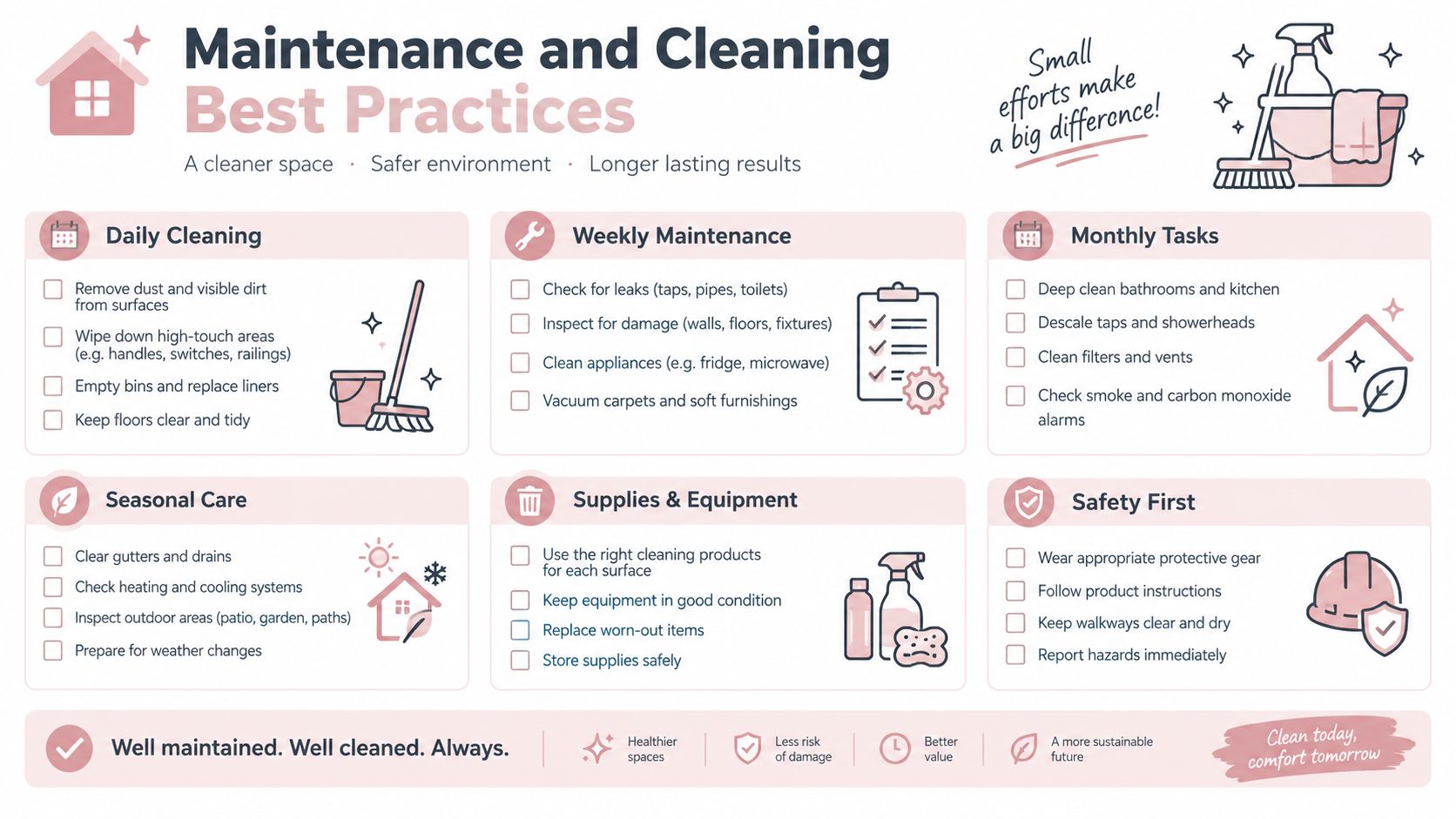
A dirt-trapping mat only works if it stays clean enough to keep trapping. Once the surface is saturated with grit or moisture, it can turn into a slip point instead of a control measure. UK HSE guidance says slip resistance should be judged under real conditions, and the Pendulum test in BS 7976, plus UK Slip Resistance Group guidance, are the references used when a firmer check is needed.
Clean for condition, not for the calendar
Service the mat when the mat tells you to. Curled edges, compacted grit, visible saturation, or backing that has shifted are all signs that performance is dropping. HSE workplace guidance is clear that temporary matting must not become a trip hazard, and a saturated mat should be serviced or replaced before people start skirting around it.
Start with the loose soil. Vacuum or shake out dry debris first, then lift the mat and clean the floor beneath it. Wet mats need a proper wash and a check of the surrounding floor, because fine grit and moisture often migrate beyond the mat edge. That residue matters on smooth internal flooring, where a light film can reduce grip long after the mat has been removed.
Rubber-backed options are usually easier to service in wet weather, as covered in this guide to rubber outdoor doormats. They still need checking, though. A mat that stays in place but holds water underneath can create the same problem in a different form.
Synthetic mats need a closer maintenance eye
Synthetic mats bring a trade-off. They are often practical and hard-wearing, but they still need proper cleaning and inspection so the pile and backing do not break down early. The University of Birmingham study on settled indoor dust found microplastics in dust from 30 Birmingham homes and 30 workplaces, with average concentrations of 155 ± 222 microplastics per milligram in homes and 125 ± 209 per milligram in workplaces. Homes had higher levels, mainly linked to carpeting, and the study estimated inadvertent ingestion at 56 particles per day for UK adults and 103 for toddlers. Read the original research on microplastics in settled indoor dust.
That does not make every synthetic mat a problem. It does mean you need to know whether the mat sheds, how it responds to repeated vacuuming or washing, and whether the backing is staying intact. The same principle applies in carpet care. The case for routine extraction is explained in why vacuuming matters in carpet care, and the logic is the same here, soil removal works only if the surface is cleaned before it gets packed down.
Practical rule: a mat that holds soil well but starts shedding fibres or losing backing integrity is no longer doing a clean job.
Choosing the Right Mat for Your Space
The right mat depends on what comes through the door. A home entrance with occasional rain calls for a different setup from a shopfront that sees constant footfall or a studio where stray fibres are unwelcome.
Match the mat to the environment
For homes, choose a mat that covers the main walking path, stays flat, and can be cleaned without fuss. If the entrance is narrow but frequently wet, a long, low-profile option usually beats a small decorative pad. Accessibility matters too, especially if wheelchairs, prams, or mobility aids use the same route.
For retail entrances, durability and layout matter most. The mat should take repeated traffic, stay stable, and still look presentable when customers arrive. Retail display equipment planning reminds you that customer-facing spaces are judged on what people see first, so a mat has to work and fit the space visually.
For professional studios, the cleanability and shedding profile matter more than novelty. Coir may look warm and natural, but lower-shedding synthetic or rubber-backed solutions are usually easier to live with where fibres or debris are a problem. If the room handles fitting, sewing, or client appointments, the entrance should support a tidy workflow rather than interrupt it.
Keep the decision grounded
Look for slip resistance, stable backing, and a size that matches the entrance route. Then check whether you can maintain it at the pace the space demands. If you can't lift it, vacuum it, or clean underneath it without a struggle, it probably isn't the right choice.
A good mat protects floors, improves safety, and makes the entrance feel controlled instead of messy. That is the true standard, not whether it looks welcoming in a product photo.
If you're specifying entrance mats for a shop, studio, or home that needs to stay clean and safe, take a look at Display Guru for display and retail solutions that support organised, professional spaces. Their range is a useful fit when you want your entrance and presentation areas to work together, not fight each other.