

A Professional Guide to Female Full Body Mannequins
Far more than just a place to hang clothes, a female full body mannequin is a vital tool for any professional. For retailers, it’s a silent salesperson; for designers, a patient fitting partner; and for costumiers, a blank canvas. They’re strategic assets that have a direct impact on how customers perceive your brand, how well a garment fits, and ultimately, your sales.
The Role of Mannequins in Professional Settings
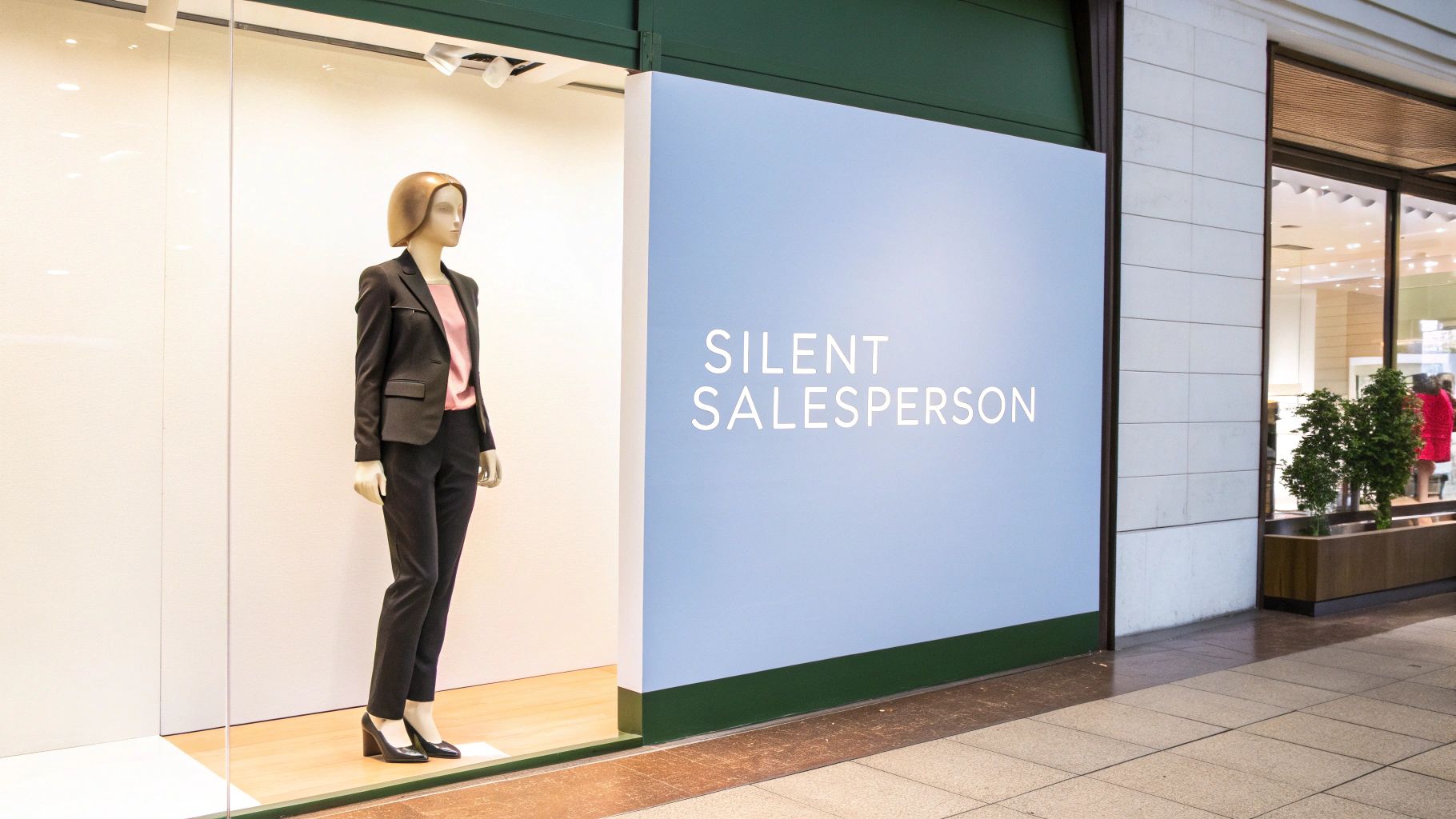
It helps to think of a high-quality mannequin not as a static object, but as a dynamic member of your team. In a busy shop, it’s your best visual storyteller. It shows off an outfit’s fit, flow, and intended style without a single word, stopping passers-by in their tracks and inviting them inside.
This ability to communicate visually is the very heart of effective visual merchandising.
For designers and tailors, the mannequin plays a completely different—but equally critical—role. It's the perfect fitting model. It never gets tired, never changes posture, and never needs a coffee break. This incredible reliability allows for hours of meticulous draping, pinning, and pattern adjustments, ensuring every seam and dart is exactly where it needs to be. For translating a creative vision into a perfectly constructed garment, a professional form is non-negotiable.
A Growing Professional Demand
You don't just have to take my word for it; the market data speaks for itself. The UK mannequin market alone generated USD 278.2 million in 2023 and is projected to hit an impressive USD 649.7 million by 2030. This boom shows just how much professionals across all sectors are relying on high-quality mannequins to do their best work.
A mannequin isn’t just a tool to hang clothes on; it’s an investment in your brand’s presentation and your craft’s precision. Selecting the right one is a foundational step toward achieving your business or creative goals.
So, whether you're putting together a stunning shop window, perfecting a bespoke wedding gown, or designing costumes for the stage, the right mannequin is a critical partner. It closes the gap between your concept and the final reality, making it one of the hardest-working assets in any creative or retail space.
Getting the Material Right
Choosing the right material for your mannequin isn't a minor detail—it's the very foundation of how you'll use it. This decision goes far beyond looks; it determines durability, function, and whether the form will be a useful tool or a frustrating obstacle. For most professionals, the choice boils down to two main contenders: polystyrene and fiberglass.
Think of it like choosing between a sketchbook and a framed canvas. A pin-friendly polystyrene form is your sketchbook—perfect for draping, experimenting, and bringing ideas to life. In contrast, a sleek fiberglass model is your finished canvas, built to display your work beautifully in a busy retail setting. The best one for you depends entirely on what you need to do with it day in, day out.
Polystyrene Forms: The Creator's Choice
If you're a designer, tailor, or fashion student, polystyrene mannequins are your best friend in the studio. They're built with a dense foam core and usually wrapped in a layer of fabric like linen or jersey. This construction creates a surface that you can pin into directly, again and again.
This pinnable quality is absolutely essential for the hands-on work of pattern making, draping fabric, and adjusting garments with precision. It allows you to work dynamically with the fabric, shaping and moulding it right on the form. If your job involves creating from scratch or making detailed alterations, a polystyrene mannequin is non-negotiable. For a closer look at this, our guide on choosing your fashion designing mannequins offers more specific advice.
Fiberglass Models: The Retail Workhorse
On the other side of the coin, you have fiberglass mannequins. These are the undisputed champions of the shop floor. Made from a composite of glass fibres and resin, they are incredibly tough, rigid, and designed purely for visual merchandising. Their entire purpose is to make finished clothes look fantastic to potential customers.
Their hard, smooth surface isn't pinnable, but it is a breeze to clean and maintain, which is a must-have feature in a bustling retail environment. While you won't be draping any new designs on them, their resilience and polished look make them ideal for window displays and in-store setups where visual appeal and longevity are everything.
It's no surprise that female mannequins are the most common type you'll see. Market data shows female forms account for around 210,000 units currently in use, highlighting just how central they are to the fashion retail industry.
Your choice of material should mirror your daily workflow. For hands-on creation, you need pinnable polystyrene. For hands-off display, you need durable fiberglass.
To help you decide at a glance, here’s a quick comparison of the most common materials and what they're best suited for.
Mannequin Material Comparison for Professionals
| Material | Best For | Pin-Friendly? | Key Advantage |
|---|---|---|---|
| Polystyrene | Designers, tailors, pattern makers, fashion students | Yes | Fully pinnable surface for draping and fitting. |
| Fiberglass | Retail stores, window displays, visual merchandising | No | Highly durable, polished finish, and easy to clean. |
| Adjustable | Home sewers, custom dressmakers, fitting specialists | Yes | Dials allow for precise, custom body measurements. |
Making this distinction early saves a lot of headaches later. A custom dressmaker would be stuck with a fiberglass model, just as a visual merchandiser would find a polystyrene form less practical for a long-term display. Figure out your main use case, and the right material will be obvious.
Understanding Mannequin Sizing and Fit
When it comes to choosing a female full body mannequin, it’s tempting to just think in terms of standard dress sizes like a "size 10" or "size 12". But in the professional world, that’s not enough. The real secret to a mannequin that works for you lies in three key numbers: the bust, waist, and hip measurements. These are the vital statistics that determine a truly great fit, whether you're crafting a garment from scratch or putting it in a shop window.
For a retailer, the aim is to find a mannequin that genuinely mirrors your target customer. If you sell to a petite clientele, your mannequin should have smaller proportions to show exactly how your clothes will hang on that frame. On the other hand, if your brand celebrates plus-size figures, you need a mannequin that accurately represents those curves. It's about building trust and showing customers what a realistic fit looks like.
Aligning Proportions with Your Brand
Designers and tailors approach this from a slightly different angle. For them, the mannequin has to be a perfect match for the brand’s sizing block or sloper – that core pattern that acts as the blueprint for an entire collection. When your mannequin’s measurements align perfectly with that block, it becomes an essential tool for maintaining consistency from one design to the next.
This is where the material of your mannequin can make a big difference, as each type is suited to different tasks.
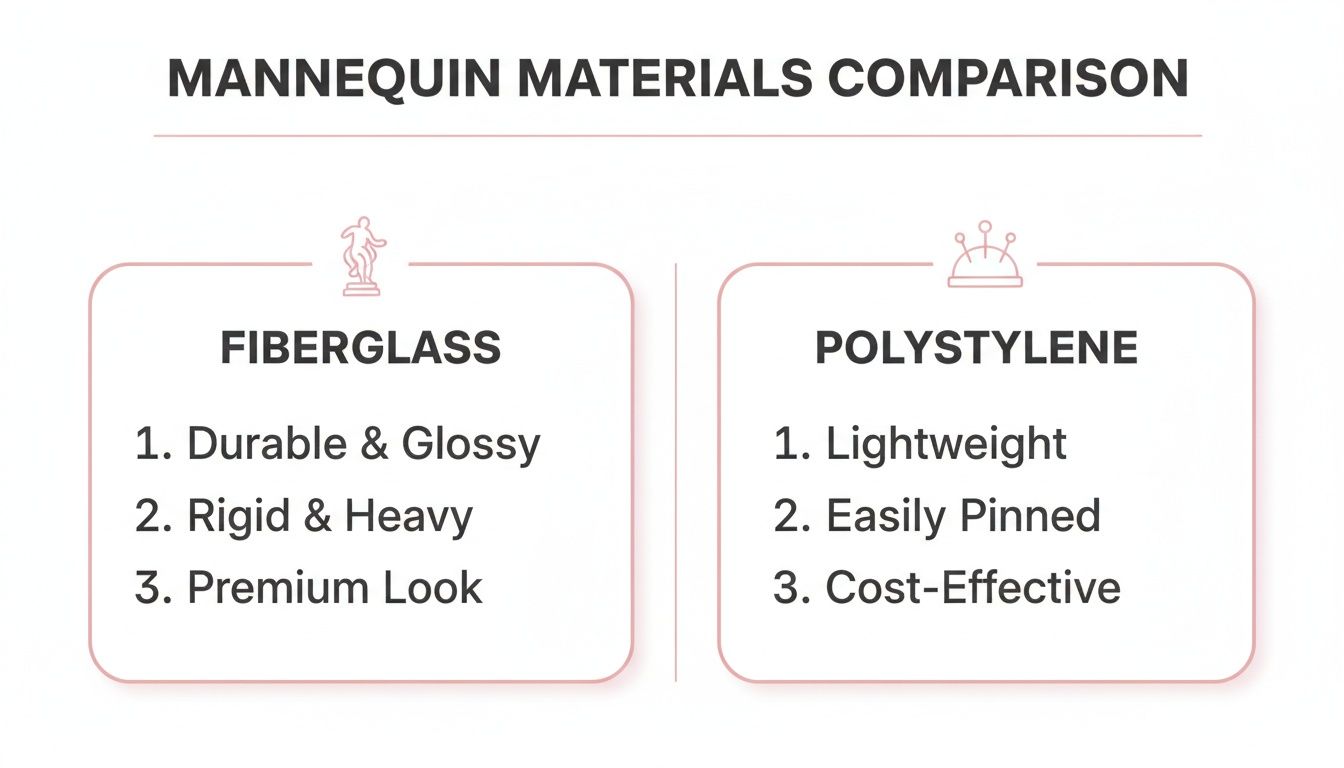
As you can see, there’s a clear split. Fiberglass is the go-to for durable, high-impact retail displays, while polystyrene is the hands-on choice for pinning and fitting in the studio. Knowing your primary need makes the decision much simpler.
The Importance of Inclusive Sizing and Customisation
Today's customers are looking for authenticity. When they see a range of body shapes reflected in your displays, it creates a powerful connection. It tells them you see them and design for them. Embracing this diversity isn't just about being inclusive; it's a savvy business move that broadens your appeal.
Of course, even when you find a mannequin with the right base size, you’ll often need to make small tweaks for a perfect fit. That’s where padding comes in.
For bespoke creation, a mannequin is rarely a perfect match straight out of the box. Strategic padding is the professional technique used to replicate a client's unique proportions—from a slightly fuller bust to asymmetrical hips—ensuring a truly custom fit.
This is an absolutely critical skill in high-end tailoring, couture, and costume design, where every millimetre counts. By carefully adding foam padding to specific areas, a standard form can be transformed into a precise double of an individual’s body. If you want to dive deeper, you can learn more about taking and applying mannequin measurements to get that flawless result. Getting this right turns a good mannequin into the perfect silent partner for any complex project.
Choosing a Stand for Stability and Style
A mannequin is only as good as its foundation. The stand does far more than just keep the form upright; it dictates its stability, how easily you can move it, and its overall look. Think of it like choosing shoes for an occasion—you need the right base for the job at hand.
The stand is a crucial part of the setup, defining how and where you can use your mannequin effectively. Your choice will usually boil down to two excellent, but very different, options: the reliable tripod stand or the sleek round-base stand. Each has unique strengths suited to specific settings, from a busy workshop to a minimalist retail floor.
The Tripod Stand: A Studio Essential
In any environment where the mannequin is an active tool, the tripod stand is the clear winner. Its three-legged design offers fantastic stability on all sorts of surfaces, from slightly uneven workshop floors to thick carpets. This rock-solid support is essential for designers and tailors who are constantly pinning, draping, and making adjustments right on the form.
The wider footprint of a tripod prevents it from wobbling or tipping over, giving you the confidence that your work is secure. This makes it the go-to for fashion design studios, tailoring workshops, and any place where hands-on work is a daily reality. It's a practical, workhorse design that puts function first.
The stand you choose should directly support your primary workflow. For active, hands-on creation, stability is paramount. For passive, visual display, aesthetics and space efficiency take centre stage.
The Round Base Stand: A Retail Favourite
By contrast, the round-base stand is all about modern aesthetics and saving space. Its flat, solid base provides a clean, contemporary feel that blends beautifully into polished retail environments, window displays, and showrooms. Its smaller footprint is also a huge plus in shops where every square inch of floor space counts.
While it's perfectly stable on flat, hard floors, the real advantage of the round base is its minimalist look. It lets the mannequin and the clothes be the star of the show without any visual clutter. For visual merchandisers trying to create a sophisticated, uncluttered presentation, the round base is the perfect fit.
For more detailed guidance, learn about the nuances of choosing a stand for your mannequin in our dedicated article. Getting this choice right ensures your mannequin can perform its role perfectly, whether it's a dynamic creative partner or a silent, stylish salesperson.
Professional Applications for Your Mannequin
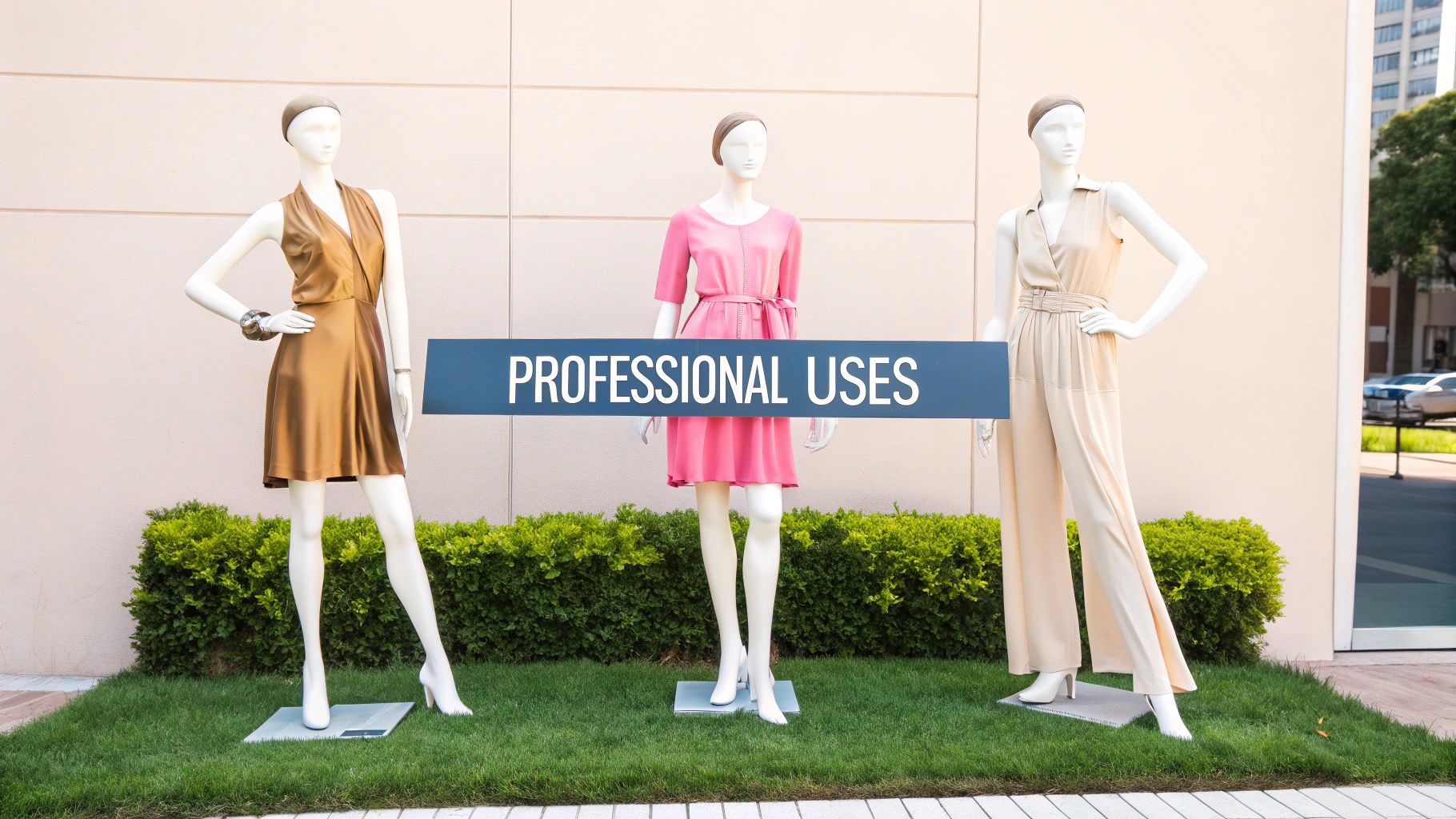
A female full-body mannequin is far more than just a display piece. Its true potential shines when you match it to a specific professional need. For tailors, retailers, and costume designers, a mannequin becomes an indispensable tool of the trade, serving a distinct and vital purpose in each field.
Understanding these different roles is the key to getting the most out of your investment.
For Tailors and Fashion Designers
Step into any design studio or tailoring workshop, and you'll find the mannequin is a silent, patient collaborator. It’s the three-dimensional canvas where a garment first takes shape. In this world, a pin-friendly polystyrene form isn't just a good idea; it's an absolute necessity.
Designers depend on these forms for two fundamental tasks:
- Draping: This is the creative art of shaping fabric directly onto the form to build a pattern from scratch. The mannequin’s static, reliable posture allows a designer to see exactly how the fabric will hang, fall, and move, turning a vision into reality.
- Fitting: A mannequin provides a consistent, accurate stand-in for a specific size. This allows for meticulous adjustments to seams, darts, and hemlines, ensuring a flawless fit long before the final, expensive fabric is even cut.
The hands-on process of pinning, adjusting, and re-pinning fabric is central to a designer’s workflow. It’s where a flat sketch begins its journey to becoming a beautifully constructed, tangible piece of clothing.
For Retailers and Visual Merchandisers
On the shop floor, the mannequin undergoes a complete transformation. Its role shifts from creation to communication. Here, it becomes a powerful storyteller, a silent salesperson that captures your brand’s aesthetic and inspires customers to imagine the clothes on themselves.
A well-styled mannequin doesn't just show an outfit; it sells a lifestyle. It helps customers visualise themselves wearing the clothes, which is a critical step on the path to purchase.
Visual merchandisers use mannequins to:
- Guide the Customer Journey: Strategic groupings of mannequins create powerful focal points, drawing shoppers towards new collections or must-have items.
- Demonstrate Fit and Style: Unlike a garment on a hanger, a mannequin shows how an outfit is truly meant to be worn, highlighting its silhouette, layering potential, and overall look.
- Boost Sales: A striking window display can literally stop people in their tracks, turning passers-by into paying customers. You can explore more strategies for using a mannequin in shops to maximise your impact.
Mannequins are also crucial for e-commerce photography and marketing. In fact, many professional tips on how to photograph clothes for professional results rely on using a mannequin to give garments lifelike shape and appeal.
For Costume and Theatrical Designers
In the dynamic world of theatre, film, and television, the mannequin is an essential tool for creating characters and maintaining consistency. For a costume designer, it acts as a reliable stand-in for an actor, allowing for incredibly detailed work without needing the performer present for hours of fittings.
It’s on the mannequin that a character’s look is first conceptualised, ensuring every piece of the costume aligns with the director's artistic vision. It also plays a vital role in continuity; a complete costume can be left perfectly styled on its form between scenes or performances, ready to be worn without the slightest variation.
Mannequin Care and Maintenance Guide
Think of your professional mannequin as a key business investment. With the right care, it will be a reliable partner for years, whether you’re perfecting a fit in the workshop or creating an eye-catching window display. Looking after it properly preserves its professional appearance and ensures it remains an accurate tool for your craft.
Day-to-Day Cleaning
Keeping your mannequin clean is the first line of defence against wear and tear. For those fabric-covered polystyrene forms, a simple lint roller is your best friend for picking up dust and loose threads. For a deeper clean, the brush attachment on your vacuum cleaner works wonders. If you encounter a stubborn mark, try a slightly damp cloth with a tiny bit of mild soap, but always test it on a hidden spot first—like the underside of a leg.
Fibreglass mannequins need a slightly different touch. A soft, dry microfibre cloth is perfect for wiping away fingerprints and dust. If you notice minor scuffs, a gentle, non-abrasive cleaner can be used to carefully buff them out, which will bring back that smooth, high-quality finish.
Safe Handling and Storage
How you assemble, move, and store your mannequin can make all the difference to its lifespan. When putting it together or taking it apart, always follow the instructions and never force the joints. That’s a fast track to chips and cracks. When you need to move it, get a good grip on the torso or the base—never pull it by an arm or a leg.
When it's time to put your mannequin away for a while, follow these simple guidelines:
- Wrap It Up: Carefully disassemble the mannequin and wrap each part individually in soft cloth or bubble wrap.
- Find a Good Home: Store the wrapped parts in the original box or another sturdy container. Keep it somewhere dry, away from direct sunlight and dramatic temperature swings.
- Don't Stack: Whatever you do, don't pile heavy items on top of the stored mannequin parts.
A simple monthly check-up is the secret to a long-lasting mannequin. Taking just five minutes to look for any loose fittings or signs of wear can help you catch small issues before they turn into expensive repairs.
While a physical mannequin is an essential tool, it's also worth thinking about how technology can complement your visual merchandising. You can explore digital fashion display alternatives to see how virtual showrooms and 3D models are being used to reach a wider audience.
Frequently Asked Questions About Female Mannequins
Even with all the details, you might still have a few questions rattling around. It's completely normal. Let's tackle some of the most common ones we hear from designers, retailers, and creators just like you.
What's the Best Mannequin for a Beginner?
This really comes down to what you're trying to achieve. There’s no single "best" option, but there's definitely a best option for you.
If you're just starting out in sewing or fashion design, you'll want a pin-friendly polystyrene mannequin. Being able to drape fabric, pin patterns, and see how a garment falls is a core skill, and this type of form is built for exactly that kind of hands-on work.
On the other hand, if you’re dipping your toes into retail or setting up your first shop window, a fibreglass mannequin is your best bet. They are tough, easy to wipe down, and give you a polished, professional look right out of the box without much fuss.
How Do I Choose the Right Size Mannequin?
Here's a critical piece of advice: ignore generic dress sizes. Instead, focus laser-sharp on the actual bust, waist, and hip measurements.
For a retail environment, the key is to pick a mannequin that mirrors the average measurements of your ideal customer. When shoppers see clothes on a form that looks like them, it instantly creates a connection and helps them visualise themselves in the outfit.
For tailors and designers, you'll want a form that aligns with your brand's core sizing block. If you're doing custom work for a specific client, a neat trick is to choose a form that's slightly smaller than them. You can then use padding to build it up to their exact proportions for a truly bespoke fit.
Think of your mannequin as a silent, consistent employee. Relying on precise measurements instead of vague sizes ensures it does its job perfectly, whether that's fitting a garment or selling it.
Can I Put Trousers on a Mannequin with a Tripod Stand?
Yes, absolutely. It's a common question, but rest assured, modern tripod stands are designed for this.
The central pole is positioned so you can easily dress each trouser leg on either side of it. It's a simple, practical design that makes these stands incredibly versatile for showing off complete looks—from dresses and skirts to full trouser suits.
At Display Guru, we live and breathe this stuff. We specialise in providing professional-grade mannequins that just work. Feel free to browse our collection of pin-friendly and display forms over at our site: https://www.displayguru.co.uk.